


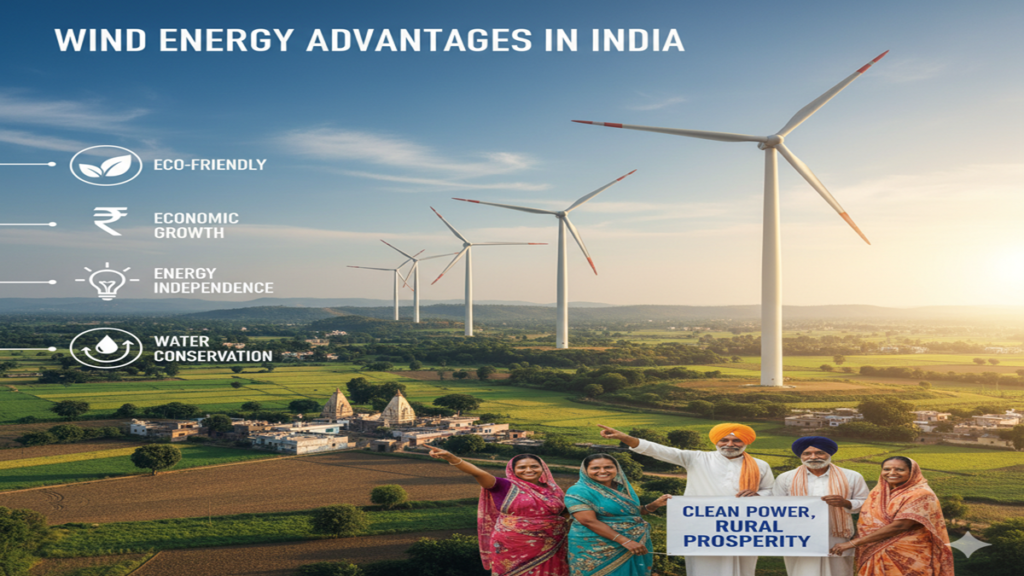
Wind Energy Advantages In India 2026: पवन ऊर्जा के वो फायदे, जो भारत को बना रहे हैं ग्लोबल एनर्जी पावरहाउस!
Wind Energy Advantages In India 2026: Introduction: क्या आपने कभी सोचा है कि तेज हवाएँ न केवल पेड़-पौधों को हिलाती हैं, बल्कि भारत के घरों में बिजली भी पहुँचाती हैं? भारत आज दुनिया के सबसे तेजी से विकसित होने वाले देशों में से एक है, और इस विकास के लिए ऊर्जा की मांग भी बढ़ रही है। जीवाश्म ईंधन (कोयला और तेल) के सीमित भंडार और पर्यावरण प्रदूषण के दौर में Wind Energy (पवन ऊर्जा) भारत के लिए एक वरदान साबित हो रही है। आज के इस लेख में हम विस्तार से चर्चा करेंगे कि Wind Energy Advantages In India क्या हैं और 2026 में यह किस प्रकार भारत की ऊर्जा सुरक्षा का आधार स्तंभ बन गई है।
1. पवन ऊर्जा क्या है? (What is Wind Energy?)
Wind Energy Advantages In India 2026: पवन ऊर्जा एक ‘नवीकरणीय’ (Renewable) ऊर्जा का स्रोत है। इसमें बड़ी-बड़ी पवन चक्कियों (Wind Turbines) का उपयोग हवा की गतिज ऊर्जा को यांत्रिक ऊर्जा में और फिर बिजली में बदलने के लिए किया जाता है। चूंकि हवा कभी खत्म नहीं होती, इसलिए यह ऊर्जा का एक अटूट स्रोत है।
2. भारत में पवन ऊर्जा के प्रमुख लाभ (Key Advantages)
Wind Energy Advantages In India 2026: A. पर्यावरण के अनुकूल (Environmentally Friendly): पवन ऊर्जा का सबसे बड़ा फायदा यह है कि यह बिजली उत्पादन के दौरान बिल्कुल भी प्रदूषण नहीं फैलाती। इसमें कार्बन उत्सर्जन (Carbon Emission) शून्य होता है, जिससे जलवायु परिवर्तन (Climate Change) से लड़ने में मदद मिलती है।
Wind Energy Advantages In India 2026: B. ऊर्जा सुरक्षा (Energy Security): भारत अपनी ऊर्जा जरूरतों के लिए भारी मात्रा में कोयला और कच्चा तेल आयात करता है। पवन ऊर्जा स्वदेशी है, जिससे भारत की विदेशों पर निर्भरता कम होती है और विदेशी मुद्रा (Foreign Exchange) की बचत होती है।
C. कम परिचालन लागत (Low Operating Costs): एक बार पवन चक्की स्थापित हो जाने के बाद, बिजली उत्पादन की लागत बहुत कम हो जाती है। हवा मुफ्त है, इसलिए भविष्य में बिजली की कीमतों में बार-बार उतार-चढ़ाव होने की संभावना नहीं रहती।
D. ग्रामीण और दूरदराज के क्षेत्रों का विकास: भारत में अधिकांश पवन चक्कियां तटीय और ग्रामीण क्षेत्रों में स्थापित की जाती हैं। इससे उन इलाकों में सड़कें, बिजली का बुनियादी ढांचा और स्थानीय लोगों को रोजगार के नए अवसर मिलते हैं।
3. भारत में पवन ऊर्जा का भविष्य (Future Potential 2026)
Wind Energy Advantages In India 2026: २०२६ तक भारत ने अपनी पवन ऊर्जा क्षमता में काफी विस्तार किया है। तमिलनाडु, गुजरात, महाराष्ट्र, और राजस्थान जैसे राज्य इसमें अग्रणी हैं।
- ऑफशोर विंड प्रोजेक्ट्स (Offshore Wind): समुद्र के बीचों-बीच लगाए जाने वाले विंड फार्म अब भारत की नई ताकत बन रहे हैं। यहाँ हवा की गति जमीन की तुलना में अधिक और स्थिर होती है।
- हाइब्रिड मॉडल: भारत अब ‘विंड-सोलर हाइब्रिड’ प्रोजेक्ट्स पर काम कर रहा है, जहाँ एक ही जगह पर सौर और पवन दोनों ऊर्जा का उत्पादन होता है। इससे जगह का बेहतर उपयोग होता है।


4. पवन ऊर्जा बनाम सौर ऊर्जा (Wind vs Solar)
Wind Energy Advantages In India 2026: अक्सर लोग पूछते हैं कि दोनों में क्या अंतर है?
- पवन ऊर्जा: रात के समय भी बिजली पैदा कर सकती है (जब हवा चलती हो)।
- सौर ऊर्जा: केवल दिन के समय ही प्रभावी है। दोनों का मेल ही भारत को 24×7 बिजली देने में सक्षम बनाता है।
4. अक्सर पूछे जाने वाले प्रश्न (FAQs)
Q1: भारत का सबसे बड़ा पवन ऊर्जा पार्क कहाँ है?
Ans: तमिलनाडु का ‘मुप्पंडल पवन फार्म’ (Muppandal Wind Farm) भारत का सबसे बड़ा और दुनिया के प्रमुख पवन फार्मों में से एक है।
Q2: क्या पवन ऊर्जा बहुत शोर करती है?
Ans: आधुनिक पवन चक्कियां बहुत ही शांत हैं। रिहायशी इलाकों से दूर होने के कारण इनसे होने वाली ध्वनि प्रदूषण की समस्या न के बराबर है।
Q3: क्या निजी घर के लिए पवन चक्की लगाना लाभदायक है?
Ans: बड़े स्तर पर यह बहुत लाभदायक है। हालांकि, घरों के लिए छोटे आकार की पवन चक्कियां (Small Scale Turbines) भी अब बाजार में उपलब्ध हैं, लेकिन यह हवा की गति पर निर्भर करती हैं।
Conclusion: एक हरित भविष्य की ओर!
Wind Energy Advantages In India यह स्पष्ट करते हैं कि हम एक ऐसे युग में हैं जहाँ हमें अपनी प्रगति को पर्यावरण से जोड़ना ही होगा। पवन ऊर्जा न केवल बिजली का बिल कम करती है, बल्कि हमारे बच्चों के लिए एक साफ और सुरक्षित वातावरण भी छोड़ती है। 2026 में, भारत का पवन ऊर्जा क्षेत्र यह साबित कर रहा है कि प्रकृति की ताकत से ही हम आत्मनिर्भर भारत का निर्माण कर सकते हैं।
Harnessing the Gale: The Transformative Advantages of Wind Energy in India
Wind Energy Advantages In India India stands at a critical juncture in its developmental trajectory, grappling with the dual imperatives of fueling explosive economic growth and addressing the pressing challenge of climate change. In this high-stakes energy dilemma, wind energy emerges not merely as an alternative, but as a cornerstone of the nation’s sustainable future. With a coastline of over 7,500 kilometers, significant inland potential, and a policy landscape increasingly geared towards green solutions, India is uniquely positioned to harness the power of the wind. The advantages of wind energy for India are profound, multifaceted, and extend far beyond simple electricity generation, offering a blueprint for energy security, economic revitalization, and environmental stewardship.
1. The Bedrock of Energy Security and Diversification
Wind Energy Advantages In India 2026: India’s insatiable appetite for energy has long been met by a heavy reliance on fossil fuels, particularly coal, which accounts for nearly 70% of electricity generation. This dependence creates vulnerabilities: exposure to volatile international fuel prices, supply chain disruptions, and the geopolitical complexities of energy imports. Wind energy provides a powerful antidote to this insecurity.
- Indigenous and Infinite: The wind is a domestic resource, free from import tariffs, geopolitical strife, or depletion. By tapping into this homegrown potential, India can significantly reduce its fossil fuel import bill, which stands as a massive drain on foreign reserves. Every megawatt-hour generated by the wind directly displaces coal or gas that would otherwise be purchased or mined, strengthening the nation’s trade balance and insulating the economy from global energy shocks.
- Complementing Solar: India’s renewable energy strategy brilliantly leverages the complementarity of wind and solar. Solar generation peaks during the day, while wind patterns in many regions, especially coastal and southern states, see higher intensities in the evening and during monsoons. This natural synergy helps flatten the generation curve, providing more stable and predictable power to the grid and reducing the reliance on costly and polluting peaking power plants.
- Distributed Generation Potential: Unlike massive coal or nuclear plants, wind farms can be developed at varying scales, including smaller projects closer to demand centers. This reduces transmission losses and enhances grid stability, particularly in remote or rural areas where extending the national grid is challenging and expensive.
2. An Economic Powerhouse: Investment, Jobs, and Rural Revitalization
Wind Energy Advantages In India 2026: The wind sector is a significant engine of economic growth, creating a virtuous cycle of investment, employment, and infrastructure development.
- These roles range from high-skilled engineering and data analysis positions to semi-skilled technical work, offering broad-based employment opportunities. The Ministry of New and Renewable Energy (MNRE) estimates that the renewable sector, with wind as a major component, has the potential to create millions of jobs in the coming decades.
- Boosting Manufacturing and “Atmanirbhar Bharat“: India’s wind sector has made remarkable strides in domestic manufacturing. From towers and blades to hubs and nacelles, a strong indigenous manufacturing base has been established. Government policies like the Production Linked Incentive (PLI) scheme for high-efficiency solar PV modules and advanced battery storage are poised to extend benefits to the wind sector, further bolstering the “Make in India” initiative. This not only cuts costs but also positions India as a potential exporter of wind technology to other emerging markets.
- Financial Empowerment for Landowners and Rural Communities: Wind farms are often developed on leased agricultural or non-arable land. This provides landowners with a steady, long-term source of supplementary income without displacing them or ceasing agricultural activity entirely. The influx of projects also stimulates local economies through improved infrastructure like roads and power lines, and demand for local services.
3. The Imperative of Environmental and Health Benefits
Wind Energy Advantages In India 2026: The environmental argument for wind energy in India is perhaps the most urgent. As one of the world’s most climate-vulnerable nations, facing extreme heat, water stress, and erratic monsoons, India’s shift to clean energy is a matter of national resilience.
- Drastic Reduction in Greenhouse Gases: Wind energy generates electricity with virtually zero operational emissions. Large-scale displacement of coal-fired power directly translates to lower emissions of carbon dioxide (CO2), the primary driver of climate change. 2005 levels by 2030.
- Clearing the Air: Beyond CO2, coal plants are major emitters of lethal particulate matter (PM2.5, PM10), sulfur dioxide (SO2), and nitrogen oxides (NOx). These pollutants are the leading cause of the smog that chokes Indian cities, leading to a public health crisis of respiratory and cardiovascular diseases. The Central Electricity Authority (CEA) estimates that renewable generation has already saved billions of tonnes of CO2 and prevented thousands of premature deaths. Wind energy is a direct investment in cleaner air and healthier citizens.
- Wind Energy Advantages In India 2026: Water Conservation: In a water-stressed country, the water footprint of energy sources is critical. Thermal and nuclear power plants require vast quantities of water for cooling. Wind turbines, in contrast, require negligible water for their operation, preserving this precious resource for agriculture, industry, and human consumption.
4. Technological Leapfrogging and Grid Modernization
Wind Energy Advantages In India 2026: The adoption of wind energy is driving innovation and modernization across India’s power sector.
- Wind Energy Advantages In India 2026: Evolution of Turbine Technology: The sector has moved rapidly from fixed-speed turbines to sophisticated variable-speed machines with taller towers and longer blades. This allows for efficient energy capture at lower wind speeds, effectively expanding the viable resource area within India. The advent of hybrid projects—combining wind, solar, and battery storage on a single plot—is optimizing land use and providing near-firm, dispatchable renewable power.
- Catalyst for a Smarter Grid: Integrating variable renewable energy (VRE) like wind necessitates advancements in grid management. This is accelerating the deployment of smart grid technologies, forecasting tools, and grid-scale energy storage solutions. These innovations enhance the overall efficiency, reliability, and resilience of the national power system, benefiting all connected consumers.
- Wind Energy Advantages In India 2026: Offshore Wind: The New Frontier: With its vast coastline, India’s potential for offshore wind is enormous, particularly in states like Gujarat and Tamil Nadu. Offshore wind farms benefit from stronger, more consistent winds and can be located near coastal load centers, avoiding land-use conflicts. The government has identified sites and is formulating a policy framework to kickstart this nascent industry, which could become a game-changer in the next decade.
5. Challenges and the Path Forward
Wind Energy Advantages In India 2026: Despite its clear advantages, the wind energy journey in India faces headwinds. Land acquisition remains complex. Grid evacuation infrastructure, particularly in high-potential states, needs strengthening. There are occasional payment delays from financially stressed Discoms (distribution companies). The initial capital investment, though with low lifetime costs, remains high.
storage and digital management solutions.
Conclusion: Riding the Wind to a Self-Reliant Future
Wind Energy Advantages In India 2026: Wind energy in India is more than just kilowatt-hours; it is a transformative force. It represents a strategic pivot from fuel-dependent insecurity to resource-independent confidence. It is an economic narrative of jobs, manufacturing, and rural prosperity. It is an environmental imperative for clear skies, stable climates, and conserved water. And it is a technological catalyst pushing the entire energy system towards a smarter, more resilient future.
Wind Energy Advantages In India 2026: As India aspires to become a $5 trillion economy, the choice of its energy pathway will define its sustainability, security, and sovereignty. By fully embracing the wind, India can power its growth with clean, homegrown electrons, ensuring that its development is not at the expense of its environment or its people, but in harmony with them. The wind is blowing; the imperative is to set our sails decisively.
5 Frequently Asked Questions (FAQs) on Wind Energy Advantages in India
1. Is wind energy reliable enough to meet India’s baseload power demands, especially when the wind isn’t blowing?
Wind Energy Advantages In India 2026: This is a common concern. While a single wind farm is variable, the entire wind resource across India is more predictable and consistent when viewed at the system level. More importantly, wind energy is not envisioned as a standalone solution. It is a key part of a diversified renewable mix. Its generation profile often complements solar (stronger in evenings/monsoons when solar dips). Furthermore, integration with other renewables, hydropower, and a growing focus on grid-scale battery storage and pumped hydro is creating “hybrid” and “firm” power solutions. The goal is a resilient grid powered by multiple clean sources, not reliance on one.
2. Don’t wind turbines harm birds and wildlife? What is the environmental trade-off?
Wind Energy Advantages In India 2026: Studies show that properly sited wind turbines have a minimal impact on bird populations compared to other human-made structures like buildings and power lines. The climate change mitigated by wind energy poses a far greater threat to ecosystems and wildlife habitats. In India, reputable project developers conduct thorough Environmental Impact Assessments (EIAs) to avoid critical migratory routes and sensitive ecological zones. The monumental environmental benefits—reducing air pollution, combating climate change, and conserving water—overwhelmingly outweigh the localized, and largely manageable, risks.
3. Are wind projects economically viable without heavy government subsidies?
Wind Energy Advantages In India 2026: The economics of wind energy have improved dramatically. Wind power is now one of the cheapest sources of new electricity generation in India, often cheaper than new coal-fired plants when considering long-term fuel costs. The initial investment (capital expenditure) is high, but the “fuel” (wind) is free for the project’s 20-25 year lifespan. Government support today is less about direct subsidies and more about creating a stable policy framework, ensuring grid access, and facilitating contracts (Power Purchase Agreements). The focus is on driving down costs through scale, competition, and technological innovation, making it viable on its own merits.
4. How does wind energy benefit rural communities where these projects are typically located?
Wind Energy Advantages In India 2026: Wind farms provide significant direct and indirect benefits to host communities:
- Land Lease Income: Farmers and landowners receive steady, long-term rental income for hosting turbines on their land, which often remains usable for grazing or agriculture.
- Jobs: Projects create local employment during construction and for long-term operations and maintenance (O&M).
- Infrastructure Development: Developers often build or upgrade local roads, power lines, and sometimes water facilities, benefiting the wider community.
- CSR Initiatives: Many companies invest in Corporate Social Responsibility (CSR) projects in education, healthcare, and sanitation in surrounding villages.
5. What about the noise and visual impact of wind turbines on local residents?
Wind Energy Advantages In India 2026: Modern turbine technology has significantly reduced mechanical noise. The primary sound is the aerodynamic “swish” of blades passing the tower, which at a distance of 300-400 meters (standard setback norms) is typically no louder than background noise in a rural area. On visual impact, perceptions vary. While some may find them imposing, others see them as symbols of progress and clean energy. Proper community engagement and siting decisions that respect residential proximity are key. The tangible benefits of cleaner air, local investment, and contributing to national energy goals are increasingly shaping positive public perception.