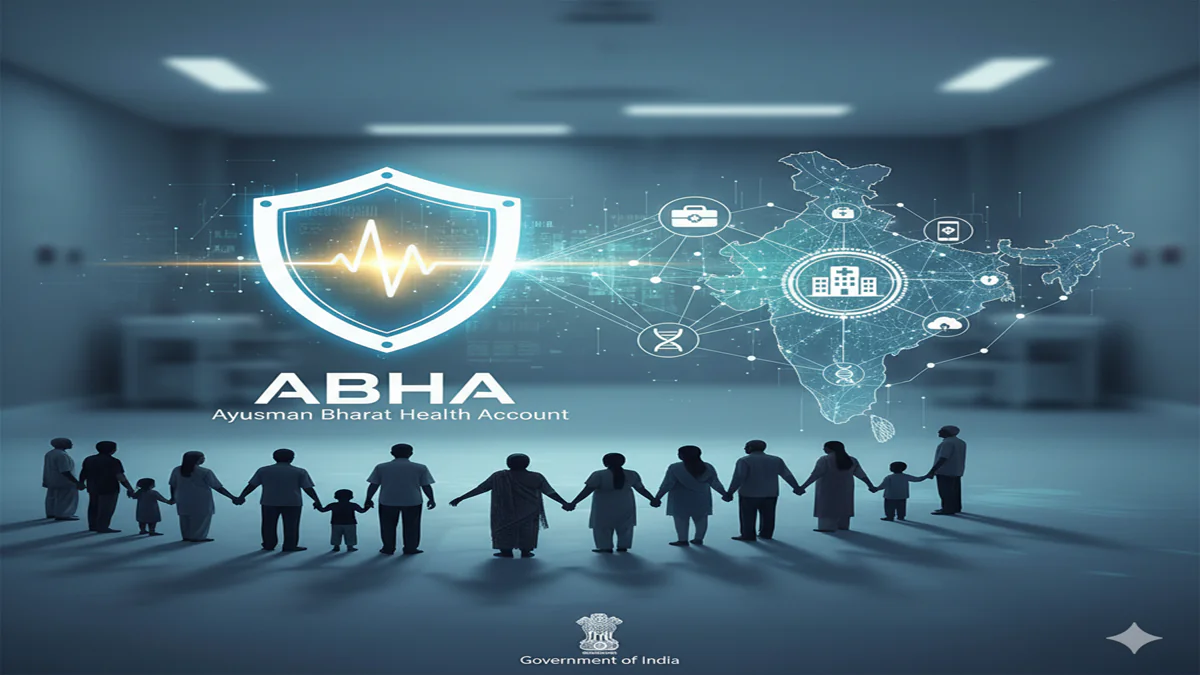
The Abha Yojana: Building India’s Digital Health Backbone and Empowering Citizens
What is Abha Yojana In the vast and complex landscape of Indian governance, few initiatives hold as much transformative potential for the everyday citizen as theAbha Yojana. Officially known as theAyushman Bharat Health Account (ABHA) scheme, it is not merely a digital tool but a foundational pillar in India’s ambitious vision to create a unified, accessible, and efficient National Digital Health Ecosystem (NDHE). More than just an ID, Abha represents a paradigm shift—from fragmented, paperwork-heavy healthcare to a future of seamless, data-driven, and patient-centric wellness. This article delves into the essence of the Abha Yojana, exploring its origins, mechanics, profound benefits, persistent challenges, and its pivotal role in redefining healthcare for 1.4 billion people.
Genesis: From Idea to Digital Infrastructure
To understand Abha, one must first look at the broader Ayushman Bharat program, launched in 2018. Ayushman Bharat rests on two pillars: Pradhan Mantri Jan Arogya Yojana (PM-JAY), providing health insurance coverage for secondary and tertiary care hospitalization, and Health and Wellness Centres (HWCs), aimed at strengthening primary healthcare. While PM-JAY addressed the financial shock of hospitalization, a critical gap remained: the lack of a cohesive system to integrate health records across India’s sprawling public and private healthcare spectrum.
Patients faced a familiar ordeal: carrying brittle files of medical history, repeating tests at every new clinic or city, losing crucial information in transitions, and having no portable summary of their own health. This fragmentation led to inefficiencies, duplicated costs, clinical risks, and a system where data existed in isolated silos, owned by institutions, not individuals.
The National Digital Health Mission (NDHM), announced in 2020 (now an integral part of the National Health Authority), was conceived as the digital spine to connect this disjointed ecosystem. At the heart of the NDHM lies the Abha (Ayushman Bharat Health Account) Number—a unique, randomly generated 14-digit identifier designed to link all of a citizen’s health interactions digitally. The Abha Yojana is the citizen-facing manifestation of this vision, the gateway for individuals to step into this new digital health universe.
What Exactly is an Abha ID and How Does It Work?
An Abha ID is more than a number; it’s a secure and consent-based framework for health data management.
- The Abha Number: This is the core, permanent identifier (e.g., 14-4145-4141-1441). It remains constant for a lifetime.
- Abha Address (Optional): For easier interaction, users can create a unique, self-selected username linked to their Abha Number, typically in the format
yourname@abdm(e.g.,ramesh.sharma@abdm). This functions like an email ID for health purposes.
Creating an Abha ID is designed to be simple and inclusive:
- Online: Via the official Abha (ABHA) app or the ndhm.gov.in website using an Aadhaar card, driving license, or other KYC documents.
- Offline: At any government or empanelled private hospital, health fair, or through ASHA (Accredited Social Health Activist) workers, where an official can assist in generation without needing a smartphone.
- Self-Declaration: A mobile number and name can be used to generate a “lite” version, which can later be upgraded with KYC.
Once created, the Abha ID acts as a key. It allows citizens to:
- Digitally store and access their health records: Lab reports, prescriptions, discharge summaries, and vaccination records can be linked to the Abha ID from registered healthcare providers.
- Create a Personal Health Record (PHR): Using applications like the ABHA app or other government-approved PHR apps, users can voluntarily consolidate their health data from multiple sources into a single, longitudinal view they control.
- Share records securely with consent: The most powerful feature. Before any doctor or hospital can access records, they must request permission. The citizen receives this request on their phone and can approve or deny it, choosing the specific documents to share and for how long. This ensures data privacy and patient autonomy.
- Access teleconsultation services: Platforms integrated with the NDHM allow easy login and medical history sharing using the Abha ID.
- Streamline hospital registrations: Eliminates the need to fill lengthy forms at every visit; a quick scan of an Abha barcode (in the app) can fetch basic details.
The Multifaceted Benefits: A Win for Citizens, Doctors, and the System
The Abha Yojana’s impact resonates across the entire healthcare value chain.
For Citizens (The Biggest Winners):
- Empowerment and Ownership: Abha transforms patients from passive recipients to active managers of their health data. The health record is no longer locked in a hospital file; it’s in their digital pocket.
- Continuity of Care: A doctor in Mumbai can, with consent, view the treatment history from a clinic in Varanasi, leading to better-informed diagnoses, especially in emergencies or for chronic conditions like diabetes or hypertension.
- Cost and Time Savings: Reduces redundant diagnostic tests, saving significant out-of-pocket expenditure. It also cuts down administrative delays.
- Convenience: A single, portable health identity simplifies every interaction with the health system, from booking appointments to claiming insurance.
For Healthcare Providers (Doctors, Hospitals, Labs):
- Comprehensive Clinical View: Access to a patient’s past records provides clinical context, reducing guesswork and enhancing treatment quality and safety.
- Operational Efficiency: Digital records reduce paperwork, streamline administrative processes, minimize errors in data entry, and optimize hospital workflows.
- Enhanced Trust: Transparent, consent-based sharing builds stronger patient-doctor relationships.
For the Public Health System and Policymakers:
- Data-Driven Governance: Aggregated and anonymized data from the ecosystem can provide invaluable insights into disease patterns, epidemic outbreaks, drug efficacy, and public health program effectiveness. This enables evidence-based policymaking and targeted interventions.
- Strengthening Ayushman Bharat PM-JAY: Seamless verification of beneficiaries and potential integration for smoother claim settlements.
- Catalyzing Innovation: A standardized digital infrastructure unlocks opportunities for health-tech entrepreneurs to build new applications for analytics, preventive health, and personalized medicine on top of this “health stack.”
Navigating the Challenges: The Road Ahead is Not Without Hurdles
Despite its visionary potential, the Abha Yojana faces significant implementation challenges:
- Digital Divide and Literacy: A large section of India’s population, particularly in rural areas and among the elderly, lacks consistent internet access, smartphones, or the digital literacy to navigate the ecosystem. The success of the “offline creation” and assisted modes is critical.
- Interoperability and Integration: For the vision to be realized, a massive number of heterogeneous entities—large corporate hospitals, small nursing homes, diagnostic chains, and government clinics—must upgrade their Health Management Information Systems (HMIS) and Laboratory Information Management Systems (LIMS) to be ABDM (Ayushman Bharat Digital Mission) compliant. This requires significant investment and technical hand-holding.
- Data Privacy and Security Concerns: In a post-Puttaswamy judgment era (which established the right to privacy as fundamental), handling sensitive health data demands the highest security protocols. While the framework is consent-based, robust protection against data breaches and misuse is paramount. The yet-to-be-implemented Digital Information Security in Healthcare Act (DISHA) is expected to provide the necessary legal teeth.
- Behavioral Change and Trust Deficit: Convincing citizens to digitize their health records and share them, and persuading doctors to adopt new digital workflows, requires a massive change management exercise. Building trust in the system’s security and utility is an ongoing task.
- Infrastructure Gaps: Consistent power supply and internet connectivity in remote healthcare facilities are prerequisites that are still being realized across the country.
Abha in Action: Use Cases Transforming Real Lives
The theoretical benefits materialize in practical scenarios:
- The Migrant Worker: A construction worker from Bihar in Chennai can walk into a hospital, share his Abha ID, and grant the doctor access to his past records from his village, ensuring continuous care for his tuberculosis treatment.
- The Chronic Disease Patient: A diabetic patient’s linked lab reports over time allow her and her doctor to track HbA1c trends effortlessly, enabling proactive management.
- In an Emergency: An unconscious accident victim’s Abha ID (found on a card or phone) can give emergency room doctors immediate access to blood group information, existing allergies, and current medications, potentially saving critical minutes.
Conclusion: The Foundation of a Healthier India
The Abha Yojana is a monumental undertaking—a classic “leapfrogging” attempt to use digital technology to solve a structural problem. It is not a magic wand that will instantly fix all of India’s healthcare challenges, such as doctor shortages or infrastructure gaps. Rather, it is the essential plumbing—the data highway—that makes every other component of the system work more intelligently and cohesively.
Its success will not be measured merely by the number of Abha IDs generated (which has crossed 50 crore as of early 2024), but by the depth of its adoption and the quality of transactions it enables. It requires a collaborative “whole-of-society” effort: government push, private sector integration, medical community adoption, and, most importantly, citizen awareness and participation.
In empowering individuals with their health data, fostering interoperability, and creating a foundation for innovation, the Abha Yojana is quietly laying the groundwork for a future where healthcare in India is not a privilege mired in complexity, but a seamless, accessible, and empowering right. It is a cornerstone in the building of Arogya Bharat—a healthy India—for the 21st century.