


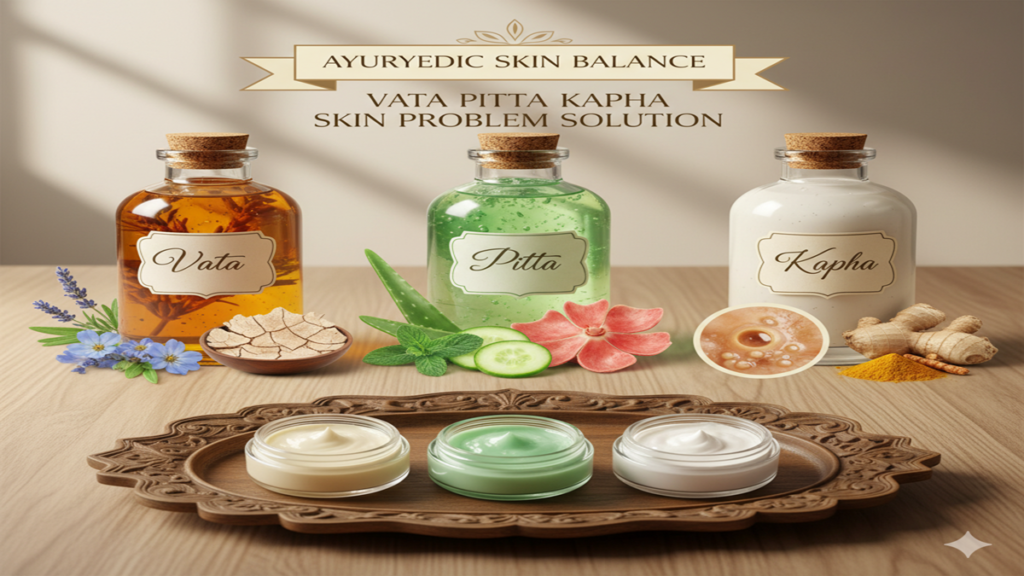
A Holistic Guide to Balancing Vata, Pitta, and Kapha for Radiant Skin
Vata Pitta Kapha Skin Problem Solution In the ancient wisdom of Ayurveda, radiant skin is not merely a product of topical treatments; it is a reflection of internal balance. Ayurveda, the 5,000-year-old “science of life” from India, teaches that our skin’s health is intrinsically linked to the state of our doshas—the three fundamental bio-energies known as Vata (Air When these doshas are in harmony, we experience clear, luminous, and resilient skin. When they fall out of balance, specific skin problems arise.
This comprehensive guide will explore the distinct skin characteristics and challenges associated with each dosha, provide tailored dietary and lifestyle solutions, and integrate modern skincare wisdom with timeless Ayurvedic principles. Our goal is to empower you with the knowledge to identify your dominant skin type and create a personalized routine for lasting skin health.
Vata Pitta Kapha Skin Problem Solution
Part 1: Understanding Your Ayurvedic Skin Type
Every individual has a unique combination of the three doshas, with one or two typically being dominant. Your skin provides clear visual and sensory clues to your doshic imbalance.
Vata Skin: The Delicate Canvas
- Characteristics: Thin, delicate, dry, and cool to the touch. Prone to early fine lines, wrinkles, and a feeling of tightness, especially in cold or windy weather. The complexion may appear dull or ashy.
- When Imbalanced: Skin becomes excessively dry, flaky, cracked, and prone to rough patches. It can feel sensitive, easily irritated, and may develop eczema-like conditions. Circulation can be poor, leading to a dull appearance.
- Key Needs: Nourishment, Moisture, Warmth, and Grounding.
Pitta Skin: The Fiery Sensitivity
- Characteristics: Fair, warm, soft, and of medium thickness. Often has freckles, moles, or a ruddy complexion. It’s the “sun-sensitive” skin type that tans easily but burns faster.
- When Imbalanced: Inflammation is the hallmark. This manifests as acne, rosacea, rashes, hives, or angry red breakouts. The skin feels hot to the touch, and conditions often worsen with heat, sun exposure, or emotional stress (like anger or frustration).
- Key Needs: Cooling, Soothing, Anti-inflammatory Care, and Calm.
Kapha Skin: The Grounded Resilience
- Characteristics: Thick, oily, soft, cool, and supple. This skin type ages slowly, with fewer wrinkles. It has a natural glow and excellent moisture retention.
- When Imbalanced: Excess oil (sebum) production leads to enlarged pores, blackheads, whiteheads, cystic acne, and a persistently shiny complexion. Skin can feel congested, heavy, and be prone to fungal infections or water retention (puffiness).
- Key Needs: Stimulation, Detoxification, Lightness, and Deep Cleansing.
Part 2: Dosha-Specific Solutions: From the Inside Out
True skin transformation in Ayurveda begins internally. Here’s how to pacify each dosha through diet and lifestyle.
Calming Vata Skin: The Ritual of Nourishment
- Diet: Favor warm, cooked, moist, and slightly oily foods. Embrace healthy fats like ghee, olive oil, and avocados. Cook with grounding spices like ginger, cumin, and cardamom. Stay consistently hydrated with warm water or herbal teas (like licorice or ginger). Avoid excessive raw, cold, dry, or crunchy foods.
- Lifestyle: Prioritize a regular routine. Go to bed and eat meals at consistent times. Engage in gentle, grounding exercise like yoga, Tai Chi, or walking in nature. Avoid over-scheduling and excessive stimulation. Practice daily self-massage (Abhyanga) with warm sesame or almond oil to nourish the skin and calm the nervous system.
- Key Herbs: Ashwagandha (for inner resilience), Shatavari (nourishing), Triphala (gentle detox).
Cooling Pitta Skin: The Path of Serenity
- Diet: Emphasize cool, sweet, bitter, and astringent foods. Favor sweet fruits, cucumbers, leafy greens, coconut, and dairy like milk and ghee (in moderation). Crucially, avoid excessively hot, spicy, oily, sour, or fermented foods (like vinegar, hot sauces, and deep-fried items), which fuel the inner fire.
- Lifestyle: Avoid the midday sun (the peak of Pitta time). Exercise during cooler parts of the day and choose swimming or moonlit walks. Cultivate a peaceful environment and practice stress-management techniques like meditation and moon gazing. Let go of perfectionism.
- Key Herbs: Aloe Vera (internal and external), Neem (blood purifier), Brahmi (cooling for the mind), Shatavari, Manjistha.
Revitalizing Kapha Skin: The Energy of Movement
- Diet: Choose light, warm, dry, and spicy foods. Favor plenty of cooked vegetables, legumes, and light grains like barley and millet. Use stimulating spices like black pepper, turmeric, ginger, and chili. Avoid heavy, oily, sweet, and salty foods (like excessive dairy, fried foods, and processed sugars), which exacerbate congestion.
- Lifestyle: Embrace vigorous, regular exercise! This is crucial for Kapha to stimulate metabolism and circulation. Wake up early (before 6 am) and avoid daytime naps. Seek variety and new experiences to break monotony. Dry brushing (Garshana) before a shower is excellent for stimulating lymphatic flow and exfoliating the skin.
- Key Herbs: Trikatu (a blend of ginger, black pepper, and long pepper), Guggulu (detoxifying), Turmeric.
Part 3: The External Rituals: Ayurvedic Skincare Routines
Pair your internal balance with these targeted external practices.
Vata Skin Care Routine: Hydrate & Protect
- Cleanse: Use a creamy, non-foaming cleanser or a cleansing oil/milk. Avoid hot water and harsh soaps.
- Exfoliate: Very gently, 1x/week with a superfine paste of oatmeal or chickpea flour with honey and milk.
- Tone/Mist: Use a hydrating rose water or sandalwood mist.
- Moisturize & Oil: This is non-negotiable. Apply a rich, nourishing cream or balm. Follow with a few drops of warm sesame oil or a vata-pacifying blend.
- Mask: Weekly, use a hydrating mask of avocado, honey, and a pinch of turmeric.
Pitta Skin Care Routine: Soothe & Calm
- Cleanse: Use a gentle, non-drying, cooling cleanser. Coconut oil can work for some.
- Exfoliate: Gently, 1-2x/week with a powder of neem, sandalwood, or rose petals.
- Tone/Mist: Aloe vera juice or rose water with a drop of sandalwood oil is perfect.
- Moisturize & Oil: Use a light, non-comedogenic moisturizer. For oil, choose cooling coconut oil or sunflower oil.
- Mask: Weekly, apply a cooling mask of aloe vera gel, cucumber juice, and a teaspoon of sandalwood powder.
Kapha Skin Care Routine: Purify & Invigorate
- Cleanse: Use a foaming cleanser or a washing paste of neem and turmeric powder. Double cleansing can be beneficial.
- Exfoliate: 2-3x/week with a stimulating scrub like finely ground oatmeal or almond meal mixed with honey and a pinch of ginger.
- Tone/Mist: Use an astringent toner like witch hazel or rose water with a drop of tea tree oil.
- Moisturize & Oil: Use a light, gel-based moisturizer. For oil, a light jojoba oil (which mimics skin’s sebum) or mustard oil in tiny amounts can help balance.
- Mask: Weekly, use a purifying mask of bentonite clay, honey, and a few drops of neem oil.
Part 4: Modern Problems, Ancient Wisdom: Addressing Specific Concerns
- Acne: Primarily a Pitta (inflamed, red, painful) or Kapha (cystic, congested, oily) imbalance. Internal cooling/detox is key. Topically, neem, turmeric, and sandalwood are powerful allies.
- Aging & Wrinkles: A Vata imbalance. Internal nourishment with healthy fats and adaptogens is essential. External regular oil massage (Abhyanga) with sesame or almond oil is the premier anti-aging treatment in Ayurveda.
- Eczema & Dryness: A Vata (dry, cracked) or combined Vata-Pitta (dry + inflamed) issue. Focus on intense internal and external hydration, avoiding triggers. Oatmeal baths and coconut/neem oil blends can soothe.
- Rosacea & Redness: A classic Pitta aggravation. Strictly avoid internal and external heat triggers. Aloe vera, rose, and sandalwood become daily staples. Manage stress diligently.
Conclusion: Skin as a Mirror
Ayurveda invites us to see our skin not as an isolated organ but as a vibrant billboard advertising the state of our internal landscape. By moving beyond a one-size-fits-all approach and tuning into the unique needs dictated by our Vata, Pitta, and Kapha influences, we unlock the door to truly sustainable skin health.
The journey begins with observation: Identify your dominant skin patterns. Start by integrating one dietary change and one lifestyle practice for your dosha. Introduce a simple, dosha-specific skincare ritual. Be patient and consistent. As you pacify internal imbalances, you will witness the external transformation—a shift from problematic skin to skin that is resilient, balanced, and naturally radiant. Your skin’s journey to health is, ultimately, a profound journey back to your own natural equilibrium.
FAQs: Vata, Pitta, Kapha Skin Problems & Solutions
1. I seem to have characteristics of more than one dosha in my skin (e.g., both dry and inflamed). What should I do?
This is very common and indicates a dual-dosha imbalance (like Vata-Pitta). Prioritize balancing the dosha that seems most aggravated currently. For dry and inflamed skin, first follow the Pitta-cooling diet to reduce inflammation, while using ultra-gentle, nourishing (Vata) skincare. You can also cycle routines—focus on Pitta pacification for a few weeks, then incorporate more Vata-nourishing practices. Always address inflammation first if it’s present.
2. Can I use Ayurvedic principles alongside my modern skincare products (like retinoids or vitamin C)?
Yes, but with wisdom. Ayurveda provides the foundational “why” and “how” for your skin’s behavior. You can use this knowledge to choose modern products that align with your dosha. For example, a Pitta type should avoid harsh retinoids but may tolerate a gentle retinaldehyde; a Kapha type might benefit from a salicylic acid cleanser. Always prioritize your skin’s barrier health. Introduce actives slowly and pair them with your dosha-specific nourishing practices (like oil massage for Vata).
3. How long does it take to see results from an Ayurvedic skincare approach?
Ayurveda is a holistic, long-term philosophy, not a quick fix. You may notice subtle improvements in skin texture and comfort within 2-4 weeks of consistent dietary and routine changes. For more significant issues like persistent acne or eczema, it may take 3-6 months of dedicated practice to see major, lasting changes as the body detoxifies and rebalances from the inside out. Patience and consistency are key.
4. Is drinking ghee (clarified butter) good for all skin types?
Ghee is a revered food in Ayurveda, but its effects are dosha-specific. It is excellent for Vata skin, providing deep internal lubrication and nourishment. It is good in moderation for Pitta, as it is cooling but still oily. It is not recommended for Kapha in large amounts, as it is heavy and can increase congestion. Start with 1/2 to 1 teaspoon daily for Vata/Pitta, and monitor your skin’s response.
5. What is the single most important Ayurvedic practice I can start for my skin?
Daily self-massage (Abhyanga) is arguably the most powerful and accessible practice. For Vata, it’s essential for hydration and grounding. For Pitta, a light, cool oil massage (with coconut oil) is soothing. For Kapha, a vigorous dry-brush massage before a shower stimulates the system. This practice nourishes the skin, calms the nervous system, promotes lymphatic drainage, and builds a profound connection between mind and body—the true foundation of radiant skin. Start with just 5 minutes before your shower.