


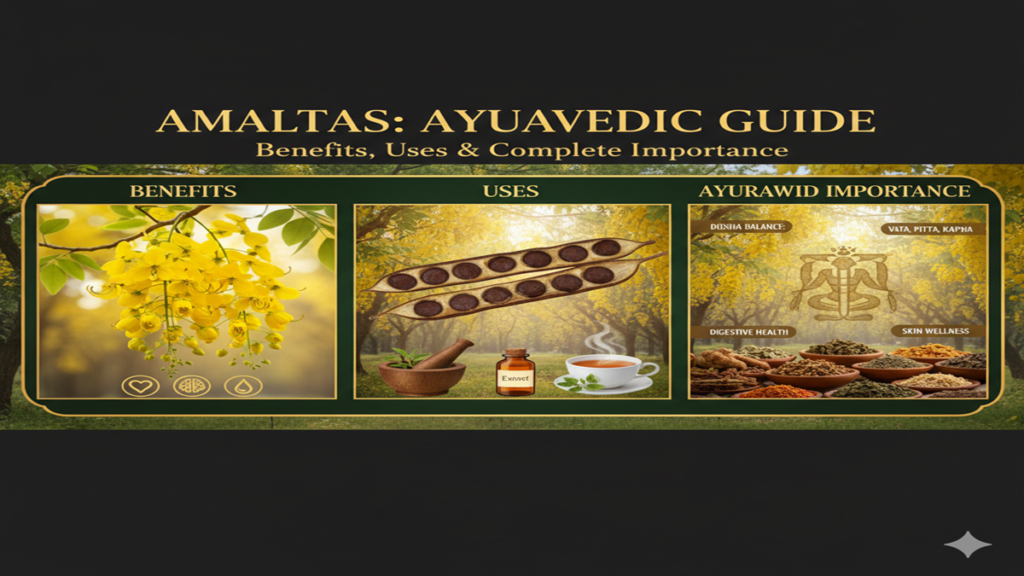
Amaltas Tree: बागेचे सौंदर्य वाढवणारे आणि आरोग्याचे रक्षण करणारे ‘अमलतास’; जाणून घ्या फायदे आणि लागवड पद्धत!
Amaltas Tree उन्हाळ्याच्या दिवसात जेव्हा सर्व झाडे सुकलेली दिसतात, तेव्हा रस्त्याच्या कडेला सोन्यासारख्या पिवळ्याधमक फुलांनी डवरलेले एक झाड सर्वांचे लक्ष वेधून घेते—ते म्हणजे ‘अमलतास’ (Amaltas Tree). याला इंग्रजीमध्ये ‘Golden Shower Tree’ आणि शास्त्रीय भाषेत ‘Cassia fistula’ असे म्हणतात. हे झाड केवळ शोभेचे नसून, आयुर्वेदात याला ‘आरोग्य देणारे झाड’ मानले जाते.+1
या लेखात आपण अमलतास झाडाचे महत्त्व, त्याचे औषधी उपयोग आणि ते आपल्या बागेत कसे वाढवावे, याबद्दल सविस्तर माहिती पाहणार आहोत.
१. अमलतास झाडाची ओळख (Introduction)
Amaltas Tree अमलतास हे मध्यम आकाराचे पानझडी झाड आहे. उन्हाळ्यात (एप्रिल ते जून) या झाडाला पानांपेक्षा फुले जास्त येतात. लांबसडक लोंबणाऱ्या पिवळ्या फुलांच्या माळांमुळे याला ‘सुवर्ण वर्षा’ (Golden Shower) असेही म्हटले जाते. ही फुले सुकल्यानंतर याला लांब, काळ्या रंगाच्या शेंगा येतात, ज्यामध्ये औषधी गर असतो.
२. अमलतासचे औषधी फायदे (Medicinal Benefits)
Amaltas Tree आयुर्वेदात अमलतासला ‘शमन’ आणि ‘विरेचन’ गुणधर्मांसाठी ओळखले जाते.
- पोटाच्या विकारांवर प्रभावी: अमलतासच्या शेंगेचा गर बद्धकोष्ठतेच्या (Constipation) त्रासावर गुणकारी आहे. रात्री कोमट पाण्यासोबत याचा गर घेतल्यास पोट साफ होण्यास मदत होते.
- त्वचेचे विकार: जर तुम्हाला खाज, पुरळ किंवा त्वचेवर डाग असतील, तर अमलतासच्या पानांची पेस्ट लावल्याने आराम मिळतो.
- रोगप्रतिकारशक्ती: या झाडामध्ये अँटी-ऑक्सिडंट्स मुबलक प्रमाणात असतात, जे शरीराची प्रतिकारशक्ती वाढवण्यासाठी मदत करतात.
- ताप आणि सांधेदुखी: अमलतासच्या मुळांचा काढा तापावर आणि सूज कमी करण्यासाठी वापरला जातो.
३. घराच्या बागेत लागवड कशी करावी? (How to Grow)
Amaltas Tree जर तुम्हाला तुमच्या बागेत किंवा घरासमोर अमलतास लावायचे असेल, तर खालील गोष्टी लक्षात ठेवा:
- हवामान: हे झाड उष्ण हवामानात चांगले वाढते. कडक उन्हाचा यावर चांगला परिणाम होतो.
- लागवड पद्धत: बियांपासून किंवा कलमाद्वारे याची लागवड करता येते. पावसाळ्याच्या सुरुवातीला बिया लावणे उत्तम ठरते.
- पाणी आणि खत: सुरुवातीच्या काळात झाडाला नियमित पाणी द्यावे लागते. एकदा झाड मोठे झाले की, याला खूप कमी पाण्याची गरज भासते.
- जागा: हे झाड मोठे होत असल्याने याला मोकळी जागा आणि भरपूर सूर्यप्रकाश आवश्यक असतो.
४. अमलतासचे सांस्कृतिक महत्त्व
Amaltas Tree भारतात अमलतासला ‘सोनसळा’ असेही म्हणतात. केरळमध्ये ‘विशू’ सणादरम्यान या फुलांचा वापर मोठ्या प्रमाणावर केला जातो. हे झाड थायलंडचे राष्ट्रीय फूल देखील आहे. निसर्गाचे संतुलन राखण्यासाठी आणि पक्ष्यांना आकर्षित करण्यासाठी अमलतास झाड लावणे अत्यंत फायदेशीर आहे.
निष्कर्ष (Conclusion)
Amaltas Tree हे निसर्गाचा एक अमूल्य ठेवा आहे. हे केवळ डोळ्यांना सुखद वाटत नाही, तर मानवी आरोग्यासाठी एक नैसर्गिक फार्मसी आहे. जर तुमच्याकडे मोकळी जागा असेल, तर एक अमलतासचे झाड नक्की लावा. हे केवळ तुम्हाला सावली आणि फुले देणार नाही, तर तुमच्या आरोग्याचेही रक्षण करेल.
Quick Facts Table
| वैशिष्ट्य (Features) | माहिती (Details) |
| मराठी नाव | अमलतास / बावा / बहावा |
| इंग्रजी नाव | Golden Shower Tree / Indian Laburnum |
| फुलांचा हंगाम | एप्रिल ते जून (उन्हाळा) |
| औषधी भाग | पाने, मुळे, शेंगांचा गर |
| उपयोग | सौंदर्य, औषध आणि सावली |
The Amaltas Tree: A Golden Legacy of Health, Healing, and Harmony (Complete Guide)
Amaltas Tree, a name that evokes images of cascading golden sunshine, is far more than just a visual spectacle. Known botanically as Cassia fistula and colloquially as the Indian Laburnum, Golden Shower, or Pudding-Pipe Tree, it is a living testament to nature’s pharmacy and India’s profound Ayurvedic wisdom.
When summer reaches its peak and the earth thirsts, the Amaltas tree defiantly bursts into vibrant, pendulous yellow blooms, a breathtaking contrast to the parched landscape. But beneath this ornamental grandeur lies a deep reservoir of therapeutic power, ecological significance, and cultural reverence. This comprehensive guide delves into the myriad benefits, traditional uses, and profound Ayurvedic importance of the Amaltas tree, offering a holistic understanding of this golden marvel.
The Botanical Emissary: An Introduction to Amaltas
Amaltas Tree Cassia fistula is a medium-sized, deciduous tree native to the Indian subcontinent and Southeast Asia. It belongs to the Fabaceae (legume) family. Its most striking feature is the long (30-60 cm), cylindrical, hanging racemes of bright yellow flowers, which give it the “Golden Shower” moniker. Following the flowers come the fruit: long, cylindrical, blackish-brown pods containing numerous seeds, embedded in a sticky, sweetish-black pulp. This pulp, along with other parts of the tree, is the primary source of its medicinal value.
The tree is hardy, drought-resistant, and thrives in well-drained soil under full sun, making it a common sight along roadsides, in gardens, and in dry forests across India. Its beauty has led to its adoption as the national flower of Thailand and the state flower of Kerala in India.
Ayurvedic Importance: A Pillar of Traditional Healing
Amaltas Tree In Ayurveda, India’s ancient system of holistic medicine, Amaltas holds a place of high esteem. It is known by several Sanskrit names, each revealing its properties:
- Aragvadha: “Disease Destroyer”
- Chaturangula: Referring to its four-angled pods
- Rajataru: “The King of Trees”
- Shampaka: Indicating its use for purification
Rasa (Taste): Madhura (Sweet), Amla (Sour)
Guna (Qualities): Guru (Heavy), Snigdha (Unctuous, Oily)
Virya (Potency): Sheeta (Cooling)
Vipaka (Post-Digestive Effect): Madhura (Sweet)
Dosha Effect: Primarily pacifies Pitta and Kapha doshas due to its cooling and cleansing properties. In excess, its sweet and heavy qualities may aggravate Kapha and Vata.
Primary Actions (Karma): Amaltas is celebrated as one of the best Rechana (mild, laxative) herbs. It is not a harsh purgative but rather a Virechana or Sramsana dravya—a substance that promotes gradual, natural evacuation and cleansing of the intestines, particularly the colon (Purishashaya). This deep cleansing action forms the cornerstone of its therapeutic applications in Panchakarma detox therapies.
Therapeutic Benefits and Medicinal Uses of Different Parts
Amaltas Tree Every part of the Amaltas tree, from root to flower, offers distinct health benefits.
1. The Fruit Pulp (The Most Prized Part):
Amaltas Tree The dark, sticky pulp from the ripe pods is the most extensively used part in medicine.
- Natural Laxative & Digestive Aid: Its most renowned use is for treating chronic constipation. Unlike harsh chemical laxatives, Amaltas pulp softens stools, increases bulk, and stimulates peristalsis without causing dependency or cramping. It is a classic remedy for Vata-type constipation (dry, hard stools).
- Detoxification (Virechana): In Panchakarma, specially processed Amaltas pulp (Suvarnarakta Aragvadha) is administered to induce therapeutic purgation, eliminating excess Pitta and toxins (Ama) from the liver, gallbladder, and small intestines.
- Cardiac Tonic (Hridya): Ayurvedic texts highlight its benefits for heart health, helping to maintain healthy cholesterol levels and circulation.
- Skin Health: By cleansing the blood and reducing Pitta-related heat, it helps manage skin conditions like acne, rashes, and inflammation.
- Anti-pyretic: Its cooling nature helps reduce fever, especially those of Pitta origin.
2. The Flowers:
Amaltas Tree The beautiful yellow flowers are more than ornamental.
- Anti-hemorrhoidal: A decoction of flowers is used to treat bleeding piles (hemorrhoids).
- Laxative: Milder than the fruit, flower infusion can be used for mild constipation.
- Antimicrobial: Traditional uses include managing infections and purifying wounds.
3. The Leaves:
- Skin Applications: Leaf paste is applied topically to manage skin infections, ringworm, swelling, and joint pain.
- Anti-malarial: In some folk traditions, leaf extracts are used for managing malaria symptoms.
4. The Bark:
- Astringent & Anti-microbial: Bark decoction is used for gargling in sore throat, mouth ulcers, and as a wash for skin infections and wounds.
- Anti-diabetic: Some studies and traditional practices indicate its potential in helping regulate blood sugar levels.
5. The Root:
Amaltas Tree Used in specific formulations for its Pitta-reducing and anti-inflammatory properties, often for severe fevers and systemic conditions.
Modern Scientific Perspectives
Contemporary research has begun to validate many of Amaltas’s traditional claims.
- Phytochemistry: The plant is rich in bioactive compounds including anthraquinones (like rhein, fistulin), flavonoids, tannins, and glycosides, which contribute to its pharmacological effects.
- Pharmacological Studies: Research indicates promising laxative, hepatoprotective (liver-protecting), anti-inflammatory, antimicrobial, antioxidant, and anti-diabetic activities. Studies on rhein, a key component, show potential anti-arthritic effects.
- Important Note: While research is promising, it often focuses on isolated compounds or extracts. The holistic synergy of the whole herb, as emphasized in Ayurveda, is a distinct paradigm.
Practical Uses and Home Remedies
1. For Chronic Constipation:
- Take 1-2 teaspoons of the ripe, clean fruit pulp (available as Aragvadha Ghana or pulp extract) with a cup of warm water or milk at bedtime.
- Classic Recipe: Aragvadha Ksheera Paka – Soak 5-10 grams of pulp in a cup of water for 4-5 hours. Strain, add ½ cup of milk, boil until reduced to half. Consume warm at bedtime.
2. For Skin Health & Pitta Reduction:
- Consume 1 tsp of pulp with 1 tsp of aloe vera gel and a pinch of turmeric in warm water, once daily.
3. For Sore Throat:
- Gargle with a decoction made from Amaltas bark (boil 10g bark in 2 cups water until reduced to half).
4. As a Gentle Detox:
- Under guidance, a short course (3-7 days) of Amaltas pulp with warm water in the morning can support seasonal cleansing.
Ecological and Cultural Significance
- Ecological Role: As a legume, it fixes nitrogen in the soil, improving soil fertility. It provides shade and serves as a food source for bees, birds, and insects. Its hardy nature makes it excellent for afforestation in dry regions.
- Cultural Symbolism: In Indian literature and art, the blooming Amaltas symbolizes the arrival of the hot season and is often associated with beauty, joy, and the vibrancy of life. Its wood is used in religious ceremonies, and its flowers are offered to deities.
Precautions and Contraindications
Amaltas Tree While a safe and gentle herb when used correctly, certain precautions are essential:
- Dosage is Key: Overuse can lead to excessive purgation, cramps, electrolyte imbalance, and aggravation of Vata.
- Not for Everyone: Avoid during pregnancy, lactation, acute diarrhea, and in cases of intestinal obstruction or inflammatory bowel diseases (like Crohn’s, ulcerative colitis).
- Medical Conditions: Those with pre-existing gastrointestinal conditions, dehydration, or on medication (especially diuretics or heart medications) should consult a healthcare provider.
- Consult an Expert: For therapeutic use, especially for Panchakarma or chronic conditions, always seek guidance from a qualified Ayurvedic practitioner. Self-prescribing for serious conditions is not advised.
Conclusion: Embracing the Golden Healer
Amaltas Tree The Amaltas tree is a perfect embodiment of the Ayurvedic principle that nature provides in abundance for human health and well-being. It moves beyond being a mere “laxative tree” to a holistic healer that offers detoxification, cooling, and rejuvenation.
In an era dominated by harsh pharmaceuticals and hurried lifestyles, Amaltas reminds us of the gentle, yet profound, power of botanicals aligned with natural bodily rhythms. By understanding and respectfully incorporating this “Disease Destroyer” into our wellness paradigms—under expert guidance—we can harness its golden legacy to cultivate a state of balanced, vibrant health, just as its blossoms herald the resilient beauty of nature.
Frequently Asked Questions (FAQs)
1. Is Amaltas safe for daily use as a laxative?
No, it is not recommended for daily long-term use. Amaltas is a therapeutic laxative best used for short periods to address chronic constipation or as part of a guided detox program. Daily use without supervision can lead to dependency, electrolyte loss, and Vata aggravation. For habitual constipation, focus on dietary (high-fiber), lifestyle, and root-cause corrections with an Ayurvedic doctor.
2. Can Amaltas help in weight loss?
While it is not a direct weight-loss herb, its detoxifying and bowel-regulating properties can support weight management efforts. By cleansing the digestive tract (Kostha Shuddhi), it may improve metabolism (Agni) and eliminate accumulated toxins (Ama), which can be a barrier to weight loss. However, it should be used as part of a comprehensive plan involving diet and exercise.
3. What is the difference between Amaltas (Cassia fistula) and Senna (Cassia angustifolia)?
Both are laxative herbs from the Cassia genus, but they differ in potency and action. Senna (Indian Senna) contains stronger anthraquinones and acts as a more potent, stimulant laxative, often causing cramping. Amaltas is considered a milder, gentler, and more cooling laxative (Sramsana) that also nourishes the intestines. Ayurveda generally prefers Amaltas for sustainable, long-term management of Vata-type constipation.
4. How can I identify and use raw Amaltas pods at home?
Mature pods are long, cylindrical, and turn dark brown to black. They should rattle when shaken (seeds inside). To use, break open the pod, scrape out the sticky, dark-brown pulp. Soak this pulp in warm water for several hours, then strain through a muslin cloth to separate the fibrous seeds. This liquid or the strained pulp can be used in the recommended doses. However, due to variability in potency, commercially prepared and standardized pulp or tablets from a reputable Ayurvedic brand are often safer and more reliable.
5. Can Amaltas be used for children?
It can be used for children, but only under strict medical supervision from a qualified Ayurvedic pediatrician (Kaumarabhritya expert). The dosage is critically small and age-dependent. Commonly, a very small amount of the mild Aragvadha Ksheera Paka (milk decoction) might be prescribed for infantile constipation. Never self-administer to children.