


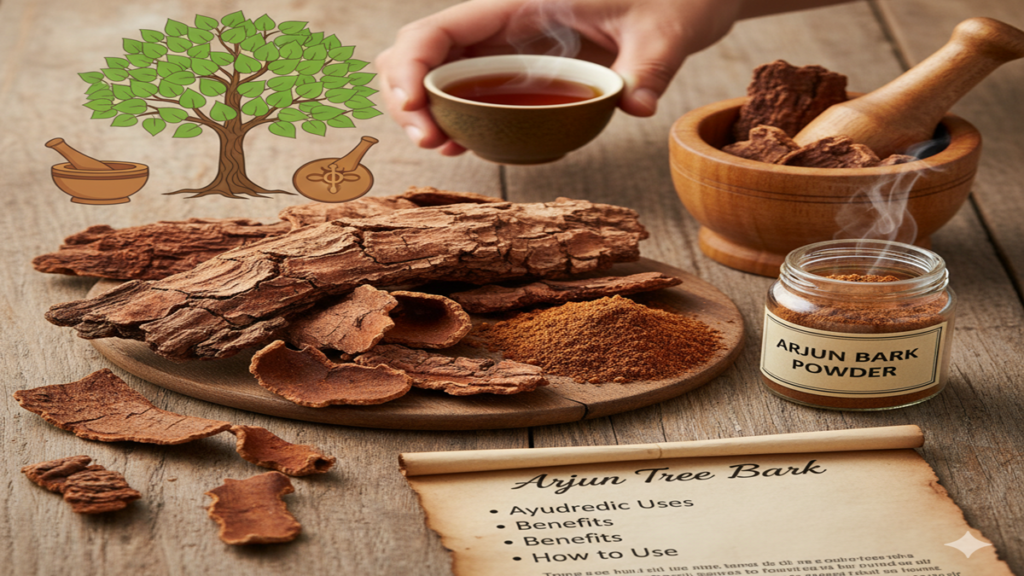
Arjun Tree (अर्जुन वृक्ष): हृदय रोगों के लिए प्रकृति का वरदान! जानें इसके फायदे, उपयोग और सही तरीका।
Arjun Tree Benefits: Introduction: आयुर्वेद में अर्जुन वृक्ष (Arjun Tree) को हृदय के लिए सबसे उत्तम औषधि माना गया है। हजारों सालों से ऋषि-मुनि और आयुर्वेदिक चिकित्सक दिल की बीमारियों के इलाज के लिए ‘अर्जुन की छाल’ का उपयोग करते आ रहे हैं। आधुनिक विज्ञान भी अब अर्जुन के पेड़ (Terminalia Arjuna) में मौजूद औषधीय गुणों को स्वीकार कर चुका है।
यदि आप बढ़ते कोलेस्ट्रॉल, हाई ब्लड प्रेशर या दिल की कमजोरी से परेशान हैं, तो Arjun Tree Benefits आपके लिए जीवनदायी साबित हो सकते हैं। इस लेख में हम विस्तार से जानेंगे कि अर्जुन की छाल का उपयोग कैसे करें और इसके स्वास्थ्य लाभ क्या हैं।
1. अर्जुन वृक्ष के मुख्य स्वास्थ्य लाभ (Health Benefits)
Arjun Tree Benefits: १. हृदय के लिए ‘हार्ट टॉनिक’ (Excellent Heart Tonic): अर्जुन की छाल में ‘कोएंजाइम Q10’ प्रचुर मात्रा में होता है, जो हृदय की मांसपेशियों को मजबूती देता है। यह हार्ट बीट को नियमित करता है और हृदय में रक्त के संचार (Blood Circulation) को सुधारता है।
२. हाई ब्लड प्रेशर और कोलेस्ट्रॉल (High BP & Cholesterol): यह शरीर से खराब कोलेस्ट्रॉल (LDL) को कम करने और अच्छे कोलेस्ट्रॉल (HDL) को बढ़ाने में मदद करता है। इसके सेवन से धमनियों (Arteries) में जमा हुआ ‘प्लाक’ साफ होता है, जिससे ब्लड प्रेशर नियंत्रित रहता है और हार्ट अटैक का खतरा कम होता है।
Arjun Tree Benefits: ३. मधुमेह में राहत (Diabetes Management): अर्जुन की छाल में एंटी-डायबिटिक गुण होते हैं। यह किडनी और लीवर की कार्यक्षमता को बढ़ाकर ब्लड शुगर लेवल को स्थिर रखने में मदद करता है।
४. वजन घटाने में सहायक (Weight Loss): अक्सर मेटाबॉलिज्म धीमा होने के कारण वजन बढ़ता है। अर्जुन की छाल का काढ़ा पीने से शरीर का मेटाबॉलिज्म तेज होता है और अतिरिक्त चर्बी बर्न करने में मदद मिलती है।
Arjun Tree Benefits: ५. हड्डियों की मजबूती (Healing Fractures): आयुर्वेद के अनुसार, अर्जुन की छाल हड्डियों को जोड़ने (Bone Healing) में बहुत प्रभावी है। कैल्शियम की कमी को दूर करने के लिए इसका दूध के साथ सेवन करना फायदेमंद होता है।
2. अर्जुन की छाल का उपयोग कैसे करें? (How to Use)
१. अर्जुन की छाल की चाय/काढ़ा: एक चम्मच अर्जुन की छाल के पाउडर को दो गिलास पानी में उबालें। जब पानी आधा रह जाए, तो उसे छानकर चाय की तरह पिएं।
Arjun Tree Benefits: २. दूध के साथ सेवन (Best for Heart): आधा चम्मच अर्जुन की छाल का पाउडर एक गिलास दूध में डालकर उबालें। रात को सोने से पहले इसका सेवन करना हृदय के लिए सबसे लाभकारी माना जाता है।
३. अर्जुनारिष्ट (Arjunarishta): यह एक तरल आयुर्वेदिक दवा है जो बाजार में आसानी से उपलब्ध है। इसे चिकित्सक की सलाह पर पानी के साथ लिया जा सकता है।
3. अर्जुन की छाल लेते समय सावधानियां (Precautions)
- गर्भावस्था: गर्भवती महिलाओं को इसका सेवन करने से पहले डॉक्टर की सलाह लेनी चाहिए।
- अति सेवन: इसकी तासीर शीतल होती है, इसलिए बहुत अधिक मात्रा में सेवन करने से पाचन संबंधी समस्या हो सकती है।
- लो ब्लड प्रेशर: जिनका बीपी पहले से ही बहुत कम रहता है, उन्हें इसका सेवन सावधानी से करना चाहिए।
4. अक्सर पूछे जाने वाले प्रश्न (FAQs)
Q1: अर्जुन की छाल कितने समय तक लेनी चाहिए?
Ans: आमतौर पर इसे 1 से 2 महीने तक लिया जा सकता है, लेकिन किसी भी गंभीर बीमारी में आयुर्वेदिक चिकित्सक की सलाह जरूर लें।
Q2: क्या अर्जुन की छाल खून साफ करती है?
Ans: हाँ, इसमें मौजूद एंटीऑक्सीडेंट्स खून को साफ करने और शरीर से टॉक्सिन्स बाहर निकालने में मदद करते हैं।
Q3: क्या मैं रोजाना अर्जुन की चाय पी सकता हूँ?
Ans: हाँ, हृदय स्वास्थ्य को बनाए रखने के लिए रोजाना एक बार इसका सेवन करना सुरक्षित और लाभकारी है।
Conclusion: हृदय का सच्चा मित्र – अर्जुन!
Arjun Tree प्रकृति का एक अनमोल उपहार है। खराब खान-पान और तनाव के इस दौर में अपने दिल का ख्याल रखना हमारी जिम्मेदारी है। अर्जुन की छाल को अपनी जीवनशैली में शामिल करना दिल की बीमारियों से बचने का एक सरल और प्राकृतिक तरीका है।
Arjun Tree Bark: Ayurvedic Uses, Benefits & How To Use
Introduction: The Heart’s Ancient Guardian
Arjun Tree Benefits: In the rich tapestry of Ayurvedic medicine, few herbs are as revered for cardiovascular health as the Arjun tree. Known scientifically as Terminalia arjuna, this majestic deciduous tree has been a cornerstone of traditional Indian healing for over three millennia. Its distinctive, smooth, grey-white bark peels off in large flat sheets, revealing a core that has been meticulously documented in ancient texts like the Charaka Samhita and Sushruta Samhita for its profound healing properties.
The Arjun tree is often found lining the banks of rivers and streams across the Indian subcontinent, its presence both calming and vital. In Ayurveda, it is classified as a “Rasayana” (rejuvenator) and specifically a “Hridya” – a herb that strengthens and nourishes the heart. Beyond its physical applications, the tree holds cultural and spiritual significance, often associated with strength and resilience in Indian mythology.
This comprehensive guide explores the multifaceted world of Arjun bark, delving into its traditional uses, modern scientific validations, practical applications, and important considerations for safe use.
Historical & Ayurvedic Perspective
The Ayurvedic Profile: Rasa, Virya, and Vipaka
Arjun Tree Benefits: According to the principles of Ayurveda, every substance possesses a unique combination of qualities that determine its therapeutic effect. Arjun bark is characterized by:
- Rasa (Taste): Kashaya (astringent), Madhura (sweet)
- Guna (Qualities): Laghu (light), Ruksha (dry)
- Virya (Potency): Sheeta (cooling)
- Vipaka (Post-digestive effect): Katu (pungent)
This combination makes it exceptionally effective in balancing both Pitta and Kapha doshas. Its cooling nature soothes Pitta-related inflammation and heat, while its drying, light qualities help reduce excess Kapha, which can manifest as congestion, heaviness, and high cholesterol. It has a neutral effect on Vata in normal doses but can aggravate it if used in excess due to its drying quality.
Traditional Indications
Arjun Tree Benefits: Classical Ayurvedic texts prescribe Arjuna for a wide range of conditions, primarily but not exclusively related to the circulatory system:
- Hridroga: All types of heart disease, including pain, palpitations, and weakness of the cardiac muscle.
- Raktapitta: Bleeding disorders such as hemoptysis (coughing up blood) and hemorrhages, thanks to its potent astringent action.
- Bhagna: Bone fractures, used as a paste to accelerate healing.
- Kshaya: General debility and wasting diseases, as a restorative tonic.
- Medoroga: Conditions related to lipid metabolism, akin to modern hyperlipidemia and obesity.
Modern Scientific Benefits & Active Constituents
Arjun Tree Benefits: Modern phytochemical research has identified the key bioactive compounds in Arjun bark responsible for its therapeutic fame. These include:
- Tannins (especially Arjunic acid, Ellagic acid, Gallic acid): Provide antioxidant, anti-inflammatory, and astringent properties.
- Triterpenoid saponins (Arjunetin, Arjungenin): Contribute to its cardioprotective and hypolipidemic effects.
- Flavonoids (Arjunone, Luteolin): Offer strong antioxidant protection.
- Minerals: Rich in calcium, magnesium, zinc, and copper, essential for cardiac and bone health.
Here’s how these compounds translate into evidence-based benefits:
1. Cardioprotective & Heart Tonic
- Improves Cardiac Muscle Function: It acts as a natural inotrope, gently strengthening the heart’s contractile force without overstimulating it. Studies show it can be beneficial in managing congestive heart failure (CHF), improving ejection fraction and reducing angina symptoms.
- Antianginal: By improving coronary artery blood flow and reducing ischemia, it helps alleviate chest pain.
- Hypotensive: Exhibits a mild blood pressure-lowering effect, primarily through a diuretic action and possible vasodilation.
- Antioxidant for the Heart: Protects cardiac tissues from oxidative damage caused by free radicals, a key factor in many chronic heart diseases.
2. Hypolipidemic Agent
Arjun bark has demonstrated a consistent ability to support healthy lipid profiles.
- It helps reduce serum levels of total cholesterol, LDL (“bad” cholesterol), and triglycerides.
- The mechanism is believed to involve reduced cholesterol synthesis in the liver and increased fecal bile acid excretion.
3. Supports Mental Health & Stress Resilience
Ayurveda intrinsically links the heart and mind. Arjuna’s calming (sattvic) nature is used for:
- Emotional Heartache: Used traditionally for grief and emotional trauma held in the heart.
- Stress & Anxiety: Its adaptogenic properties may help modulate the stress response, particularly stress that manifests with palpitations or high blood pressure.
4. Promotes Wound Healing & Skin Health
The high tannin content gives Arjuna bark potent astringent and antimicrobial properties.
- Topical Application: A paste of the bark powder can be applied to wounds, ulcers, and acne to promote faster healing, reduce inflammation, and control infection.
- Internal Use for Bleeding: Its hemostatic action helps manage bleeding gums, hemorrhoids, and excessive menstrual bleeding (menorrhagia).
5. Strengthens Bones
While less known, Arjuna’s high mineral content, particularly calcium and magnesium, supports bone density and recovery. Traditionally, its decoction is given to accelerate the healing of fractures.
How to Use Arjun Bark: Forms & Methods
Arjun bark is available in several forms. The quality of the source is paramount—look for organic, sustainably harvested products from reputable suppliers.
1. Powder (Churna)
The most common and versatile form.
- Dosage: Typically 1-3 grams, twice daily, taken with an adjuvant (anupana) to enhance effects and digestibility.
- How to Take:
- For Heart Health: With warm milk (balances Vata), honey (enhances tonic effect), or ghee.
- For High Cholesterol/Weight: With warm water and a teaspoon of honey.
- For Bleeding Disorders: With cold water or rice wash water (kanji).
- Preparation: The powder can be mixed directly into the liquid. It’s often recommended to start with a lower dose (500 mg) and gradually increase.
2. Decoction (Kashayam/Kwath)
A stronger, more concentrated water-based extract.
- Recipe: Boil 1 teaspoon (approx. 5 grams) of coarse Arjun bark powder in 2 cups (approx. 500 ml) of water.
- Dosage: 30-60 ml, once or twice daily on an empty stomach.
- Use: Preferred in acute conditions or for a more potent effect.
3. Arjunarishta
An Ayurvedic fermented liquid preparation (medicated wine). It is more palatable, easily absorbable, and preserved.
- Dosage: 10-20 ml, twice daily, diluted with an equal amount of water, usually after meals.
- Note: Contains a small amount of naturally occurring alcohol from fermentation.
4. Tablets/Capsules
A convenient, standardized form. Follow the manufacturer’s dosage instructions, which usually align with 1-3 grams of bark powder daily.
5. External Use
- Paste: Mix powder with rose water, honey, or plain water to make a thick paste. Apply on wounds, ulcers, or acne-prone skin. Leave for 15-20 minutes before rinsing.
- Mouthwash/Gargle: Use a cooled decoction to soothe bleeding gums or mouth ulcers.
Safety, Precautions & Contraindications
Arjun bark is generally safe for long-term use when taken at recommended doses. However, careful consideration is needed.
- Drug Interactions: It may potentiate the effects of blood pressure medications, antiplatelet/anticoagulant drugs (like warfarin, aspirin), and other cardiac medicines. Concurrent use should only be under medical supervision.
- Pre-existing Conditions: Use with caution in individuals with severe liver or kidney disease.
- Side Effects: High doses may cause constipation, gastritis, or headaches due to its strong astringent and drying nature. Always start with a low dose.
- Vata Imbalance: Those with severe Vata aggravation (extreme dryness, emaciation, anxiety) should use it cautiously, always combined with a suitable anupana like ghee or oil.
The Golden Rule: Do not self-prescribe Arjun bark for serious heart conditions. It is a powerful supportive herb, not a replacement for conventional cardiology. Always consult with both your cardiologist and a qualified Ayurvedic practitioner to create an integrated, safe plan.
Integrating Arjuna into a Holistic Lifestyle
For optimal results, Arjuna should be part of a heart-healthy lifestyle (Hridya lifestyle), as per Ayurveda:
- Diet (Ahar): Follow a Pitta-Kapha pacifying diet—favor leafy greens, apples, pears, oats, and lean proteins. Minimize fried, processed, and excessively salty or sour foods.
- Lifestyle (Vihar): Engage in gentle, regular exercise like walking or swimming. Practice stress-reducing techniques such as yoga (especially gentle backbends and heart-opening postures), pranayama (Bhramari, Anulom Vilom), and meditation.
- Timing: Ayurveda often recommends taking heart tonics like Arjuna in the early morning on an empty stomach for better absorption.
Conclusion
Arjun tree bark stands as a timeless testament to the wisdom of Ayurveda—a natural, holistic cardioprotective agent whose traditional uses are increasingly validated by modern science. It embodies the Ayurvedic principle of supporting the body’s innate healing intelligence, offering a multifaceted approach to heart health that encompasses the physical, emotional, and energetic realms.
Whether used as a powdered churna, a fortified arishta, or a simple decoction, its integration into daily life promises strength and vitality. By honoring its power, respecting its precautions, and using it under informed guidance, we can harness the strength of the mighty Arjun tree to nurture one of our most vital organs—the heart.
Frequently Asked Questions (FAQs)
1. Can Arjun bark replace my prescription heart medication?
No. Arjun bark is a potent herbal supplement that can be an excellent supportive therapy, but it should not be used to replace prescribed cardiac medications unless explicitly advised and monitored by both your cardiologist and a qualified Ayurvedic doctor. Abruptly stopping prescription medication can be dangerous.
2. How long does it take to see the benefits of Arjun bark?
This depends on the individual and the condition being addressed. For subjective feelings of well-being and mild stress-related palpitations, some may notice effects within 2-4 weeks. For measurable changes like improved lipid profile or blood pressure, it may take 2-3 months of consistent use. Chronic conditions require longer-term use as part of a holistic regimen.
3. Can someone with a normal, healthy heart take Arjun bark?
In Ayurveda, Arjuna is also classified as a Rasayana (rejuvenative tonic). A low maintenance dose (e.g., 500mg-1g daily) can be used by healthy individuals as a preventive measure to support cardiovascular strength and resilience, particularly during stressful periods. However, it’s best to cycle its use (e.g., 5 days a week or for 3 months, then a break).
4. What is the best time to take Arjun bark?
The classic Ayurvedic recommendation is to take it on an empty stomach in the morning for optimal absorption. If taking twice daily, the second dose can be taken in the late afternoon or before dinner, at least 30 minutes before a meal. Taking it with an adjuvant (anupana) like warm milk or water is crucial.
5. Are there any common side effects?
The most common issues arise from its drying (Ruksha) quality and include:
Constipation: Counteract by drinking plenty of water and including ghee or healthy oils in your diet.
Mild gastric discomfort or dryness: Taking it with milk or a small amount of ghee usually prevents this.
If you experience persistent side effects, reduce the dose or discontinue use and consult your practitioner.