


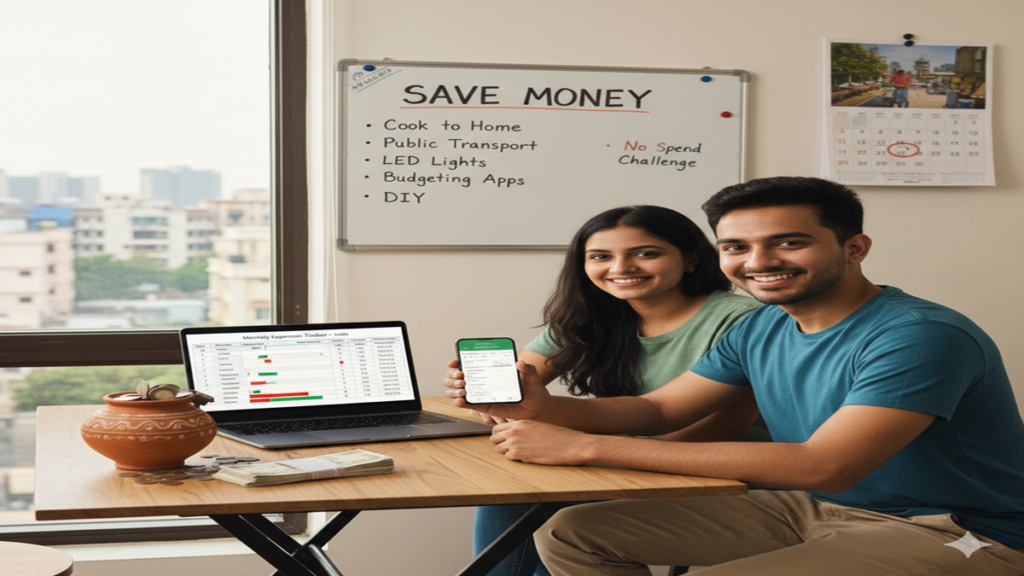
The Ultimate Guide to Slashing Your Monthly Expenses in India (Without Sacrificing Your Lifestyle)
Save Money On Monthly Expenses India In a country where the price of onions can dictate political discourse and fuel prices dominate dinner table conversations, mastering the art of managing monthly expenses isn’t just a financial skill—it’s a survival superpower. For the average Indian household, monthly outgoings are a complex tapestry woven from essentials, aspirations, and unforeseen emergencies. The good news? With strategic planning, a shift in mindset, and the smart use of technology, you can significantly reduce your financial outflow, build savings, and achieve your financial goals faster.
This comprehensive guide moves beyond simplistic advice to offer actionable, India-specific strategies across every major spending category.
Part 1: The Foundation – Audit, Mindset, and Budgeting
Before you can save, you must know where your money is going.
1. The Ruthless Expense Audit: For one month, track every single rupee. Use a notebook, a notes app, or a budgeting tool. Categorize each expense: Groceries, Fuel, Eating Out, Utilities, Subscriptions, Impulse Purchases, etc. The goal is not judgment, but awareness. You’ll likely discover “money leaks”—small, recurring expenses that add up to a significant sum.
2. The 50/30/20 Rule (Indianised): This classic budgeting framework is an excellent starting point.
- 50% on Needs (Roti, Kapda, Makaan & Essentials): Rent/EMI, groceries, utilities, basic transport, essential insurance, and minimum loan repayments.
- 30% on Wants (Zindagi): Dining out, entertainment, OTT subscriptions, hobbies, shopping for non-essentials, and vacation funds.
- 20% on Savings & Debt Repayment (Kal): Emergency fund, SIPs, extra loan prepayments, FD/RD, and investments.
The key is to adjust these percentages to your reality. A young professional in Bengaluru paying high rent might operate at 60/20/20, while someone living with family might aim for 40/30/30.
3. The Mindset Shift: Value Over Cost:
- Differentiate Between Cheap and Frugal: Cheap is buying a low-quality appliance that breaks in a year. Frugal is investing in a durable, energy-efficient model that saves money for a decade.
- The “Cost-Per-Use” Mentality: Before any non-essential purchase, calculate its cost-per-use. A ₹5,000 jacket worn 50 times costs ₹100 per use. A ₹1,000 trendy top worn twice costs ₹500 per use. Which offers better value?
- Embrace the “Delayed Gratification” Muscle: Implement a 24-48 hour “cooling-off” period for any unplanned purchase above a set amount (say, ₹1,000). More often than not, the urge passes.
Part 2: Targeted Attacks on Major Expense Categories
1. Housing & Utilities (The Big Fixed Costs)
- Rent Negotiation & Relocation: If renting, research market rates. If you’ve been a reliable tenant, you may have leverage to negotiate a freeze or a minimal hike. Consider moving to a slightly less central but well-connected locality. The rent difference can be substantial.
- EMI Prepayment: For home loans, use any bonus, windfall, or surplus savings to make partial prepayments. Even small, regular prepayments can shave off years and lakhs in interest. Check your bank’s terms for any prepayment charges.
- Electricity Bill Slash:
- The LED Revolution is Real: Replace every bulb with an LED. The savings are dramatic.
- Go BEE 5-Star: For ACs, refrigerators, and geysers—your biggest energy guzzlers—a 5-star BEE rating is non-negotiable for long-term savings.
- Solar for the Ambitious: If you own a home, explore subsidized rooftop solar installations. The initial cost is high, but long-term savings and potential earnings from excess power are significant.
- Behavioural Hacks: Use geysers with timers, service your AC filters regularly, and harness natural light and cross-ventilation.
- Water Bill: Fix leaks immediately. Install aerated faucets and low-flow showerheads.
- Internet & Mobile Plans: You are likely overpaying. Every 3-6 months, check competitor offers and call your provider’s retention department to ask for a better plan. Consider family postpaid plans for multiple connections. Use Wi-Fi calling whenever possible.
2. Groceries & Kitchen Management
- Create a shopping list based on it and do not deviate. Avoid shopping on an empty stomach.
- Embrace Local & Seasonal (Desi Superfoods): Mangoes in summer, leafy greens in winter. Explore local mandis versus premium supermarkets.
- Club with friends/neighbours for extra bargaining power.
- Reduce Food Waste: Store food correctly. Use leftovers creatively (last night’s sabzi becomes today’s paratha filling). Understand “best before” vs “use by” labels.
- Cut Down on External “Chai-Coffee”: A ₹20 chai twice a day = ₹1,200/month. Brewing at home costs a fraction.
3. Transportation – Taming the Fuel & Commute Monster
- The Car Conundrum: Is it a necessity or a status symbol? Calculate the true cost: EMI/Depreciation + Insurance + Fuel + Maintenance + Parking. It often exceeds ₹15,000-20,000/month.
- Carpool: Coordinate with colleagues or neighbours. Apps like Quick Ride can help.
- Fuel Smart: Use fuel price tracking apps (e.g., MyPetrolPrice) to find cheaper pumps. Maintain optimal tyre pressure and drive at steady speeds (50-80 kmph).
- Public Transport + Last-Mile Cab: For certain routes, combining metro/train with an occasional cab can be cheaper and less stressful than daily driving.
- Two-Wheeler Efficiency: Regular servicing and correct tyre pressure can improve mileage by 10-15%.
- The Ride-Sharing Code: For daily office commute, see if monthly passes or subscription plans from Uber/Ola offer better value than point-to-point bookings.
4. Entertainment, Dining & Lifestyle Creep
- The Subscription Audit: List every subscription: OTT (Netflix, Amazon, Disney+), music (Spotify, YouTube Premium), news, apps. How many do you actively use? Share with family/friends (where permitted). Rotate subscriptions—watch one platform’s content per month.
- Dining Out & Food Delivery:
- Set a monthly limit (e.g., twice a week).
- Leverage “Happy Hours,” early bird discounts, and credit card offers.
- Choose weekday lunches over weekend dinners—prices are often lower.
- Master 5-10 go-to home recipes for your favourite cuisines. Cooking a good butter chicken at home can be 1/4th the cost.
- Fitness: Re-evaluate that expensive gym membership. Consider YouTube workout channels, park runs, badminton with friends, or cheaper local municipal gyms.
5. Financial Products & Insurances (The Silent Wealth Eaters)
- Credit Card Debt: This is emergency-level priority. If you’re revolving debt and paying 36-48% interest, consolidate it with a lower-interest personal loan or a balance transfer to a card with a 0% introductory period. Destroy the card until the debt is gone.
- Insurance Review:
- Term Life Insurance: You need it, but buy it online for the best rates. Avoid ULIPs or endowment plans as primary insurance.
- Health Insurance: Increase your deductible (voluntary co-pay) to lower premium. Consider a Super Top-Up plan over a high-base plan for more coverage at lower cost. Opt for a family floater if it makes sense.
- Bank Account Fees: Do you maintain the Minimum Average Balance (MAB)? If not, switch to a zero-balance or digital bank account (like Kotak 811, AU Small Finance Bank, or Fi/Slice). They often offer better features and rewards.
Part 3: Advanced & Long-Term Strategies
- Negotiate Everything: From local cable bills to furniture purchases in a local market, polite negotiation is expected and can save you 5-15%.
- DIY & Skill Swap: Learn basic repairs (clothing, minor appliances), cooking, and grooming. Swap skills with friends—you tutor their kid in math, they help you with your car.
- Leverage Community & Second-Hand: For books (libraries, book swaps), furniture (Olx, Facebook Marketplace), and even electronics, the second-hand market offers tremendous value. Join local housing society or Resident Welfare Association (RWA) groups for giveaways and deals.
Conclusion: It’s a Marathon, Not a Sprint
Saving on monthly expenses is not about deprivation; it’s about conscious allocation. It’s redirecting funds from things that don’t matter to you towards things that truly do—financial security, a dream vacation, your child’s education, or an early retirement.
Start with one category. Master it. Then move to the next. Celebrate small victories. The cumulative effect of saving ₹100 on groceries, ₹500 on electricity, ₹1000 on fuel, and ₹1500 on subscriptions is a staggering ₹37,200 saved in a single year—without a change in income. That’s the power of mindful spending. In the dynamic Indian economy, your greatest financial asset isn’t just your salary; it’s your ability to optimize, adapt, and spend with powerful intentionality.
FAQs: Saving Money on Monthly Expenses in India
1. I’m already on a tight budget. Where can I possibly cut more?
Start with a ruthless audit of your last 3 months of bank statements. You’ll often find hidden leaks in:
- Subscriptions: Unused OTT/app subscriptions.
- Impulse Purchases: Small online shopping adds up.
- Inefficient Bills: Can you shift to a cheaper mobile/data plan? Are your fans/ACs consuming excess power due to poor maintenance?
- Food Waste: Track what you throw away. Planning meals around perishables can save hundreds.
Focus on negotiating fixed costs (internet, insurance) and eliminating the small, unconscious spends first.
2. Is it worth buying expensive 5-star rated appliances to save on electricity?
Absolutely, but with a caveat. Do the math:
- Check the annual electricity consumption (in kWh) of a 3-star vs. a 5-star model.
- Multiply the difference by your electricity cost per unit (e.g., ₹8).
- Compare the annual savings with the price difference.
For appliances that run for long hours (AC, Refrigerator, Inverter), the 5-star model almost always pays for the price difference within 2-3 years and then continues saving you money for its entire 10+ year lifespan. It’s the definition of a value purchase.
3. How can I reduce expenses if I have a home loan and car loan EMIs eating up half my income?
This is a critical situation requiring strategic action:
- Prioritize High-Interest Debt: Typically, car loans have higher interest rates than home loans. Use any surplus to make partial prepayments on the car loan first.
- Refinance/Balance Transfer: Explore banks offering lower interest rates on car loans for balance transfers. Even a 1% reduction can save you thousands.
- Increase EMI Tenure (Temporary Relief): For your home loan, you can request to increase the tenure to lower the EMI burden temporarily. Commit to reverting or prepaying when your income improves.
- Radical Transport Change: Consider if selling the car and switching to a combination of two-wheeler/public transport/cabs for a few years is feasible. This frees up the EMI, insurance, and high fuel costs, allowing you to tackle other debt faster.
4. Are “buy now, pay later” (BNPL) schemes and EMI options actually saving me money?
No, they are spending tools, not saving tools. They make spending easier, often leading to overshooting your budget. While they offer “interest-free” periods, the pitfalls are:
- Mental Accounting: You feel you’ve spent less, leading to more purchases.
- Clutters Your Budget: Multiple small EMIs complicate cash flow management.
Use them extremely sparingly and only for planned, essential purchases. Never use them for discretionary spending you couldn’t afford to pay for upfront.
5. What’s the single most effective habit to start with for saving on monthly expenses?
The “Weekly 30-Minute Money Review.” Every Sunday, spend 30 minutes:
- Review all expenses of the past week (use an app or your notebook).
- Plan and book groceries/essentials for the coming week.
- Check and pay any upcoming bills to avoid late fees.
- Quickly scan your bank and credit card statements for fraudulent charges.
This one habit builds awareness, prevents waste, encourages planning, and puts you in control. Consistency with this practice is more powerful than any one-time cutback.