


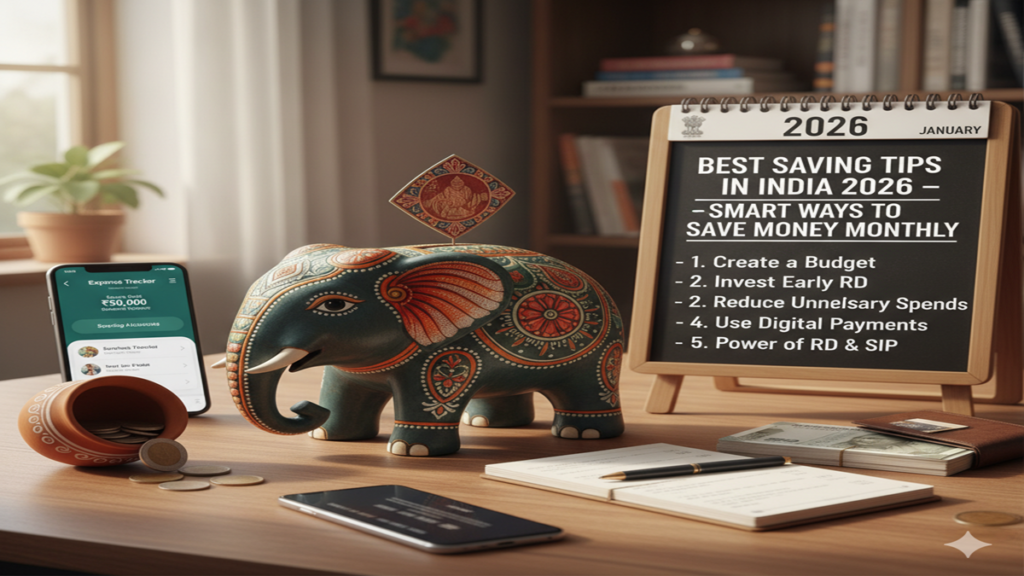
The Ultimate Guide to the Best Saving Tips in India for 2026: Master Your Money Month-on-Month
In the ever-evolving economic landscape of India, the art of saving money is no longer a passive habit but a dynamic, strategic necessity. As we step into 2026, marked by technological integration, regulatory shifts, and a recovering yet complex global economy, the rules of personal finance are being rewritten. For the Indian saver—from the gig economy worker to the seasoned professional—mastering monthly savings is the cornerstone of financial security and future prosperity.
This comprehensive guide delves beyond clichéd advice to provide a forward-looking, actionable blueprint for smart monthly savings in 2026, tailored to the unique opportunities and challenges of the Indian context.
The 2026 Indian Saver’s Mindset: Proactive, Tech-Enabled, and Goal-Oriented
Gone are the days of saving being a residual activity—what’s left after expenses. In 2026, saving is the first and most crucial expense. It demands a mindset that is:
- Proactive: Using data from apps to anticipate spending and automate savings.
- Inflation-Aware: Recognizing that a 6-7% inflation rate silently erodes idle cash, making investment-linked saving non-negotiable.
- Holistic: Viewing savings not in isolation but as part of a larger ecosystem of earning, spending, investing, and protecting.
Part 1: The Foundational Framework – Building Your Savings Engine
Before diving into specific tips, establish this unshakable foundation.
1. The 50/30/20 Rule – Recalibrated for 2026: The classic rule (50% Needs, 30% Wants, 20% Savings/Debt) needs a 2026 twist. Given rising costs, the “Needs” category may push to 55-60% for metro dwellers. The key is the 20% Savings. In 2026, this should be split:
- 10% to Emergency Fund & Short-Term Goals.
- 5% to Retirement (NPS, Mutual Funds).
- 5% to Goal-Based Investments (Child’s education, down payment).
This is a minimum benchmark. Aim to push the total savings rate to 30% if possible.
2. Zero-Based Digital Budgeting: Utilize apps like CoinTracker (for crypto too), ETMoney, or YNAB linked to your bank accounts. Assign every incoming rupee a “job” at the month’s start—down to zero. This granular visibility is the first step toward plugging leaks.
3. The Emergency Fund Imperative: In an era of job market flux, this is your financial airbag. Target: 6-12 months of essential expenses. Park this in a high-yield Savings Account (like those offered by Kotak 811, AU Small Finance Bank) or a Liquid Mutual Fund for slightly higher returns with instant redemptions. Revisit this corpus every six months.
Part 2: Smart Monthly Saving & Spending Strategies for 2026
Here’s where tactical action meets daily life.
A. Slash Fixed & Recurring Costs:
- Tech-Stack Your Utilities: Use IoT devices (smart plugs, efficient ACs) to cut electricity bills. Opt for annual or bi-annual subscription plans for OTT, cloud storage, and software—they are invariably cheaper than monthly packs. Conduct a quarterly “subscription audit.”
- Telecom & Internet: With 5G becoming mainstream, leverage fierce competition. Use platforms like MyPlanet (by TRAI) to compare and switch to the most cost-effective data/voice plans quarterly. Consider family plans for added savings.
- If buying a home, in 2026, consider co-living or co-ownership models that are gaining traction for cost-sharing.
B. Revolutionize Your Grocery & Dining:
- D2C & Farm-to-Fork Subscriptions: For staples (dal, rice, oil), subscribe to D2C brands or farmer cooperatives (like Country Delight, BigBasket’s BB Royal). They offer better quality, competitive pricing, and eliminate impulse buys.
- AI-Powered Shopping Lists: Use apps that analyze past spending, suggest recipes based on on-sale items, and generate optimized shopping lists to reduce waste and unnecessary purchases.
- The “No-Restaurant” Month Challenge: Designate one month where you explore home-chef platforms, master meal prepping, and discover local dabbawalas or cloud kitchens that offer healthier, cheaper alternatives to traditional restaurant dining.
C. Transform Transportation & Mobility:
- Electric Vehicle (EV) Ecosystem: If you commute regularly, 2026 is the year to seriously consider an EV (two-wheeler or car). The total cost of ownership (charging vs. fuel, lower maintenance) is becoming advantageous. Use government subsidies (FAME III, if announced) and state incentives.
- Mobility-as-a-Service (MaaS): For urban dwellers, rely on integrated apps that combine metro, bus, cab, and bike-sharing for the cheapest and fastest multi-modal route instead of owning a vehicle or defaulting to cabs.
- “Work-From-Anywhere” Negotiation: Formally negotiate a remote-work allowance with your employer to offset home office costs, or seek a slight salary adjustment in lieu of commuting expenses.
D. Navigate Finance & Debt Smartly:
- The UPI Max-Out Strategy: Set a strict weekly UPI spending limit on your app. Once exhausted, it forces a spending pause, curbing micro-transactions.
- Credit Card as a Tool, Not a Crutch: Use cards only for planned expenses and leverage their ecosystem. In 2026, look for cards offering high rewards on UPI spends, fuel surcharge waivers for EVs, or direct EMI conversions without extra cost. ALWAYS pay the full dues.
- Prepay High-Interest Debt Aggressively: Before focusing on savings yielding 7-8%, channel extra funds to clear personal loans or credit card debt costing 12-18%.
Part 3: The Investment-Linked Saving Frontier (2026 Edition)
True wealth in 2026 is built not by saving alone, but by saving and investing wisely.
1. Automate to Accumulate:
NPS – The Retirement Powerhouse: Increase your contribution to the National Pension System (Tier I). The tax benefits under 80CCD(1B) and the power of long-term compounding make it indispensable for 2026 retirement planning.
SIPs are Non-Negotiable: Set up Systematic Investment Plans (SIPs) in a diversified basket of flexi-cap or focused equity mutual funds and target maturity debt funds for short-term goals. The day your salary is credited, this money should automatically move out. Increase your SIP by 10% every year.
2. Embrace Regulatory Advantages:
- ULIPs from 2026 onwards with new tax rules, or simply pure equity investments held long-term).
- Use digital gold platforms for micro-savings and SGBs for larger, interest-earning, tax-efficient exposure.
3. Explore the Future: Fractional & Green Investing:
- Fractional Ownership Platforms: Platforms allowing fractional investment in commercial real estate, farmland, or even artworks will mature in 2026. Allocate a small portion (say 2-3% of savings) for such alternative, income-generating assets.
- Green & Sustainable Funds: Align a portion of your portfolio with India’s sustainability goals. ESG (Environmental, Social, Governance) Mutual Funds are gaining performance parity and offer a future-proof investment thesis.
Part 4: Behavioral & Lifestyle Mastery
Technology and rules are useless without the right behavior.
- The 7-Day Impulse Purchase Rule: For any non-essential item over ₹2,000, impose a 7-day cooling-off period. More often than not, the urge passes.
- Rent out camera gear on SharePal, offer freelance consulting on Upwork, or rent your parking space via apps. Direct this extra income entirely to savings.
- Share challenges, tips, and successes. Social accountability is a powerful motivator.
Conclusion: Your 2026 Savings Journey
Saving money in India in 2026 is an active, intelligent, and integrated process. It leverages cutting-edge technology, understands regulatory frameworks, and demands personal discipline. It’s about making your money work as hard for your future as you work for it today.
Start by implementing one foundational change (like automating a SIP) and one spending change (like a subscription audit) this month. Track the difference. By consistently applying these smart, contextual strategies, you will not just save money monthly—you will build a robust financial engine capable of powering your dreams in 2026 and beyond. The journey to financial freedom begins not with a lump sum, but with the first rupee saved wisely this month.
FAQ: Best Saving Tips in India 2026
Q1: I live paycheck-to-paycheck. How can I possibly save 20% of my income?
Start with 1%. Use the “Save-What-You-Spend” trick: Every time you make a non-essential purchase (like a latte or a movie ticket), transfer an equal amount to your savings immediately. This builds awareness and a savings muscle. Simultaneously, use a budgeting app to identify one recurring expense you can eliminate (e.g., an unused subscription) and redirect that money.
Q2: With the New Tax Regime seemingly better, should I still invest in tax-saving instruments (ELSS, NPS, PPF)?
Don’t mix tax-saving with wealth creation. If the New Tax Regime is more beneficial for you after standard deduction, calculate your liability. First, fulfill your saving goals. Invest in ELSS or NPS primarily for their long-term growth potential, not just the tax break. PPF remains a safe, government-backed option for conservative debt allocation. Choose instruments based on your asset allocation, not just Section 80C.
Q3: Is it better to save more or focus on earning more in 2026?
It’s a false dichotomy—you must do both, but master saving first. A higher income without financial discipline leads to “lifestyle inflation,” where expenses rise to meet income. Building robust saving and investing habits ensures that when your income increases (through a raise, side hustle, etc.), a significant portion is automatically channeled to wealth building, not just a more expensive lifestyle.
Q4: How do I protect my savings from inflation in 2026?
By ensuring a portion of your savings is invested in inflation-beating assets. Park only your emergency fund and money needed within 3 years in safe, liquid options. The rest must be in a mix of equity (stocks, equity mutual funds) and real assets (like real estate or gold via SGBs) that have historically outpaced inflation over the long term. A simple 60-40 equity-to-debt allocation, rebalanced yearly, is a good starting point.
Q5: Are digital-only banks and fintech apps safe for parking my savings?
Reputable digital banks (backed by RBI-licensed entities) are generally safe, with deposits insured under the Deposit Insurance and Credit Guarantee Corporation (DICGC) up to ₹5 lakhs per bank, just like traditional banks. For fintech investment apps, ensure they are SEBI-registered and act as direct distributors (like Coin, Groww) where your assets are held securely with registered custodians, not the app itself.