


The Indian Saver’s Guide: 10 Proven Strategies to Build Wealth in 2026
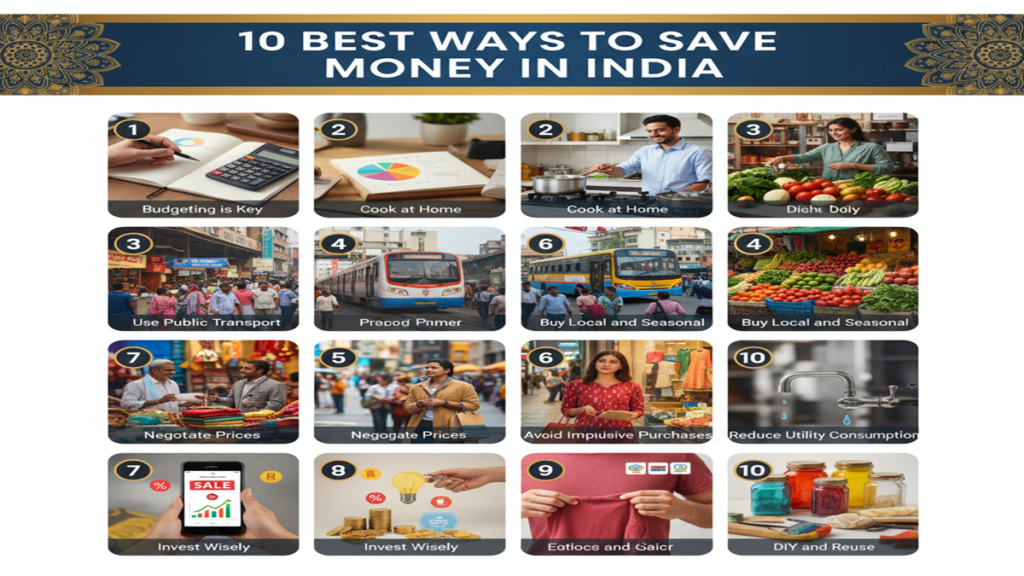
10 Best Ways To Save Money In India In a country as economically dynamic and diverse as India, the art of saving money is both a necessity and a strategic pursuit. With aspirations ranging from buying a home and funding education to securing a comfortable retirement, the journey begins with disciplined saving. However, in the face of inflation, evolving consumption patterns, and a plethora of financial products, knowing how and where to save effectively is crucial.
This guide moves beyond the simple “spend less, save more” adage. It delves into practical, actionable strategies tailored for the Indian context, combining traditional wisdom with modern financial tools. Whether you’re a young professional just starting out, a family planner, or someone nearing retirement, these ten methods will help you optimize your savings and set a strong foundation for wealth creation.
1. Budgeting with a Desi Twist: The 50-30-20 Rule Reimagined
- 50% for Needs (Fixed Costs): This includes rent/EMI, groceries, utilities, school fees, and essential transportation. In India, groceries can be a significant portion. Pro-Tip: Plan monthly ration shopping from wholesale markets or trusted online vendors. Use seasonal vegetable lists to cut costs.
- 30% for Wants (Lifestyle): Dining out, entertainment, gadgets, and vacations. The key here is conscious spending. Use apps to track these expenses; you might be surprised how much small spends on chai, snacks, or online subscriptions add up.
- 20% for Savings & Debt Repayment: This is non-negotiable. The Indian Critical Addition: Before aggressive savings, prioritize repaying high-cost debt (Credit Cards, Personal Loans). Then, automate this 20% to be transferred to savings/investments on the day your salary credits.
Tool Suggestion: Use apps like ETMoney or Walnut to track expenses automatically via SMS from banks.
2. The Power of Automated & Invisible Savings
Out of sight, truly out of mind. Automating your savings eliminates the temptation to spend what you plan to save.
- Recurring Deposits (RDs): The timeless classic. Automate a fixed sum from your savings account to an RD. It’s low-risk, builds discipline, and rates are decent.
- Systematic Investment Plans (SIPs): The modern RD. Automate a monthly transfer into a mutual fund. It harnesses the power of rupee cost averaging and compounding in equity or debt markets. Even a small SIP of ₹2,500/month can grow substantially over 15-20 years.
- Automated Sweep-Ins: Set up your salary account to automatically transfer fixed amounts to a separate high-interest savings account, liquid fund, or a different bank account you don’t touch.
3. Tax-Saving is Not Just a March Madness Activity
Smart saving is intrinsically linked with smart tax planning. Don’t wait for February-March; plan from April.
- Maximize Section 80C (₹1.5 Lakh): Beyond PPF and ELSS (Equity Linked Savings Scheme), consider:
- Life Insurance Premiums (Term Plans only): Pure protection plus tax saving.
- NPS (Tier I Account): Additional ₹50,000 deduction under Section 80CCD(1B).
- Home Loan Principal Repayment: If you have a home loan.
- Utilize Other Sections:
- Health Insurance (Section 80D): ₹25,000 for self/family, ₹50,000 for senior parents. A must for financial security.
- Home Loan Interest (Section 24): Deduction up to ₹2 lakh on interest paid.
- Donations (80G): Keep receipts.
Key Insight: Invest in instruments that align with your goals (e.g., ELSS for long-term wealth, PPF for safety) not just for tax saving. Avoid unsuitable insurance policies sold just for tax benefits.
4. Slash the Big Three: Housing, Transport, and Food
These are the largest expense buckets for most urban Indians.
- Housing: If renting, consider a slightly distant but well-connected suburb. If buying, ensure your EMI is not more than 40% of your take-home pay. Consider a longer tenure if needed to keep cash flow manageable.
- Transport: Use public transport (metros, buses) whenever possible. For car owners, consider carpooling for office commutes. For two-wheelers, regular servicing improves fuel efficiency.
- Food: Cooking at home is the biggest saver. Plan meals, pack lunch (dabbas), and limit restaurant dining to special occasions. When ordering in, use cashback offers judiciously, but beware of the convenience trap.
5. Embrace Frugality, Not Deprivation: The Indian Way
Frugality is about value, not cheapness. It’s deeply ingrained in Indian culture.
- Maintenance over Replacement: Regularly service electronics and appliances.
- Prepaid over Postpaid: Analyze your data/call usage. Prepaid plans often offer better value.
- Skill Bartering: Exchange skills with friends (e.g., tutoring for website design).
6. Debt Management: The Foundation of Saving
You cannot save effectively if you’re paying 24-36% interest on credit card debt.
- Credit Card Strategy: Pay the FULL balance every month without fail. Use cards for rewards and buyer protection, not for credit. If stuck in debt, take a lower-interest personal loan to consolidate and close the card debt.
- Loan Prepayment: Use annual bonuses (Diwali, etc.) or surplus savings to make partial prepayments on high-interest loans (like personal loans). This reduces the principal and total interest outgo dramatically.
7. Invest, Don’t Just Save: Beat Inflation
A savings account (3-4% interest) often loses to inflation (5-6%). Your money needs to grow.
- For Short-Term Goals (1-3 years): Use high-yield savings accounts, liquid mutual funds, or short-term fixed deposits.
- For Long-Term Goals (5+ years): You must enter equity-linked instruments. A diversified equity mutual fund SIP is the most accessible tool for average investors to build inflation-beating wealth. Start small, but start early.
8. Technology as Your Ally: Apps, Cashback, and Price Comparison
Use technology wisely to save, not to spend more.
- Price Comparison: Always check Google Shopping, PriceDekho, or Amazon before buying electronics/appliances.
- But remember: a 10% cashback on an unnecessary ₹10,000 purchase is still a ₹9,000 expense.
- Bill Payment Apps: Use platforms like Cred or Paytm for timely bill payments (to avoid fines) and to earn rewards.
9. The “Latte Factor” Indian Edition: Micro-Savings
Small, daily spends drain your wallet silently.
- The ₹100-Challenge: At the end of each day, move any ₹100 note left in your wallet to a physical jar. Digitize it monthly.
- Round-Up Apps: Some neo-banks and apps round up your transactions to the nearest ₹10 and invest the difference.
- Review Subscriptions: OTT platforms (Netflix, Prime), music apps, news subscriptions. Share family plans where possible.
10. Mindset & Family Involvement: The Ultimate Game Changer
Saving is a team sport in a family-centric society.
- Set Shared Financial Goals: A vacation, a new car, a home renovation. When everyone is aligned, cutting costs becomes a collective effort.
- Financial Literacy for All: Educate your spouse and age-appropriate children about budgeting, needs vs. wants, and the value of money. This reduces conflict and impulsive demands.
- Practice Conscious Consumption: Before any non-essential purchase, implement a 24-48 hour “cooling-off” period. Often, the urge to buy passes.
Conclusion: The Journey to Financial Resilience
Saving money in India is not about austerity; it’s about making intentional choices that align with your deeper financial goals and values. It’s a blend of leveraging timeless habits—like budgeting and avoiding debt—with modern tools like SIPs and fintech apps. By automating your savings, investing wisely for the long term, and involving your family in the journey, you transform saving from a chore into a powerful engine for financial security and freedom. The magic of compounding will ensure that the seeds you plant now grow into a sturdy tree of wealth that can shelter you and your family for years to come.
Frequently Asked Questions (FAQs)
Q1: I earn ₹30,000 per month. After expenses, I have almost nothing left. How can I possibly save?
Start with a reverse budget. Even before expenses, pay yourself first. The moment your salary arrives, automatically transfer a small, non-intimidating amount—even ₹500 or ₹1,000—into a separate account or a Recurring Deposit (RD). Then manage your expenses with the remaining ₹29,000. This builds the habit. Simultaneously, analyze your last 3 months of bank statements to identify and cut at least one non-essential expense (like a rarely used subscription or frequent impulse snacks).
Q2: Is it better to save in a bank FD or invest in mutual funds?
- Bank FD/RD: Ideal for short-term goals (1-3 years) where capital protection is paramount (e.g., saving for a gadget, emergency fund). Returns are fixed but often barely match inflation post-tax.
- Equity Mutual Funds (via SIP): Essential for long-term goals (7+ years) like retirement, child’s higher education. They carry market risk but have the potential to deliver inflation-beating returns (8-12%+) over long periods. For most young earners, a combination is key: FD for safety/liquidity and SIPs for growth.
Q3: I have some savings.
This is a classic dilemma. Follow this simple math:
- Check your home loan interest rate (e.g., 8.5% p.a.).
- Compare it with the post-tax return you can confidently expect from an alternative investment (e.g., a mutual fund earning 10% becomes ~8% after long-term capital gains tax).
If your loan interest rate is higher than or close to your post-tax investment return, prepayment is a smarter, risk-free “return.” It also improves your monthly cash flow and reduces financial stress. Emotionally, being debt-free is a huge relief.
Q4: How much should I ideally have in my emergency fund, and where should I keep it?
- How much? Aim for 3-6 months’ worth of essential living expenses (rent, EMI, groceries, utilities). If you have dependents or unstable income, lean towards 6 months.
- Where? It must be highly liquid and safe. The best options are:
- A separate high-interest savings account.
- A liquid mutual fund (offers slightly higher returns with same-day or next-day redemption).
- A short-term Fixed Deposit with a sweep-in facility. Avoid locking it in long-term instruments or volatile markets.
Q5: My parents never invested in stocks and only trust FDs and gold. How can I convince them (or myself) to consider equity for long-term goals?
Use education and historical perspective.
- Frame it as “Owning Businesses”: Explain that equity (via mutual funds) means owning small parts of India’s best companies (like Reliance, HDFC, Infosys). As the economy grows, these companies grow, and you benefit.
- Show the Inflation Impact: Use an inflation calculator. Show them how ₹10 lakh in an FD at 6% will have much less purchasing power after 15 years due to inflation at 6%. Equity aims to preserve and grow purchasing power.
- Start with “Safer” Equity: Suggest starting with a large-cap mutual fund SIP or a Balanced Advantage Fund (which dynamically manages equity-debt allocation), which are less volatile than pure small-cap funds. Show them the 10-15 year performance charts of such funds versus FD.
- Emphasize SIP Discipline: Stress that SIP is not “stock market gambling” but a disciplined, long-term averaging strategy that reduces risk.
Lead by example with your own investments before advising others.