Demystifying Post Office Money Order Charges: A Comprehensive Guide (2026)
Introduction: The Enduring Relevance of Money Orders
In an era dominated by digital payments, Venmo, and cryptocurrency, the humble money order maintains a quiet but steadfast presence in financial transactions. For millions of Americans—particularly those without bank accounts, engaged in secure mail payments, or conducting official transactions—the post office money order remains an essential financial instrument. Yet, despite their continued relevance, the fee structure and policies surrounding postal money orders often create confusion.
This comprehensive guide explores every facet of Post Office money order charges, providing clarity on costs, purchase limits, replacement procedures, and strategic considerations for both senders and recipients. Whether you’re paying rent, sending funds internationally, or conducting business that requires a paper trail, understanding these fees can save you money and prevent frustrating complications.
Understanding the Basics: What Is a Postal Money Order?
A United States Postal Service (USPS) money order is a secure payment instrument purchased with cash or debit that functions similarly to a check, but with guaranteed funds. Unlike personal checks that might bounce, money orders are prepaid, making them a trusted form of payment for recipients who need assurance that the funds are available.
Key Characteristics:
- Prepaid Nature:You pay the face value plus a fee upfront
- Wide Acceptance:Generally accepted wherever checks are taken
- Tracking Capability:Can be traced or replaced if lost or stolen
- Security Features:Include watermarks, security threads, and more
- Purchase Limits:Maximum of $1,000 per money order (with strategies to send larger amounts)
The Complete Fee Structure: What You’ll Pay
Domestic Money Order Charges
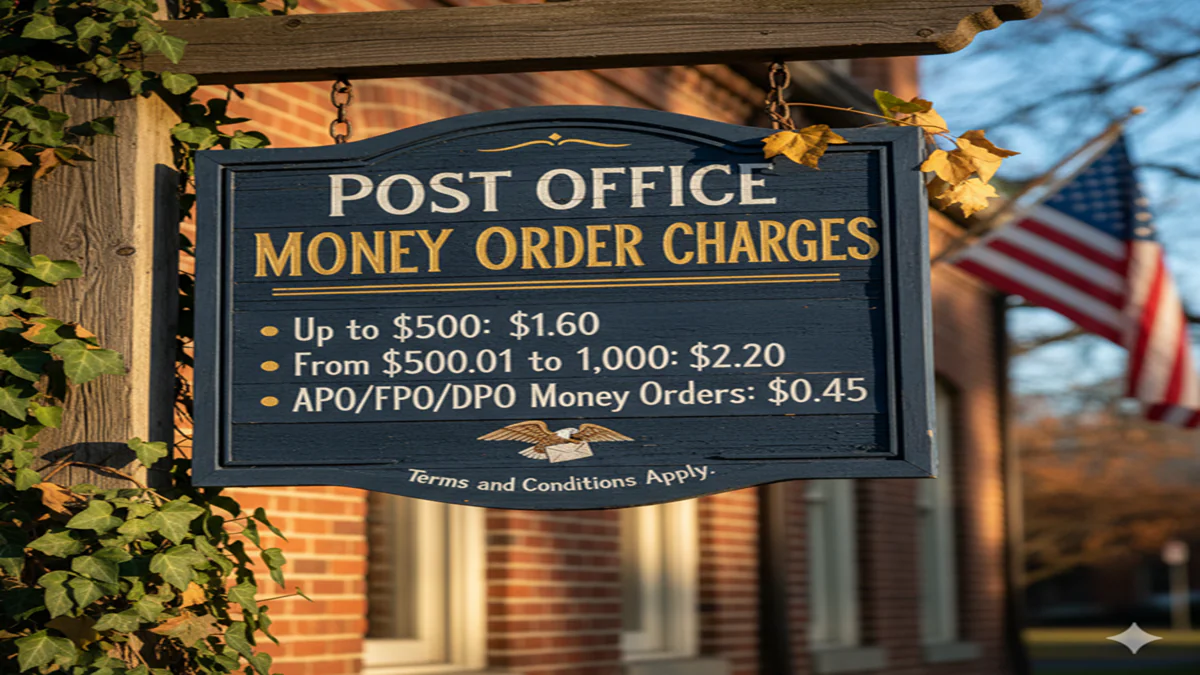
As of 2024, the United States Postal Service maintains the following fee structure for domestic money orders:
- $0.01 to $500:$2.00 fee
- $500.01 to $1,000:$2.90 fee
- Military money orders(available at overseas military post offices): $1.65 fee regardless of amount
Important Note: These fees are subject to periodic adjustment. While they’ve remained stable in recent years, it’s always wise to verify current rates at your local post office or the official USPS website before planning a transaction.
International Money Order Charges
For international transactions, USPS offers two primary options with differing fee structures:
1. International Money Orders
- Available to approximately 30 countries
- Fees range from $9.75 to $12.50 depending on the destination
- Maximum amount: $700 (or foreign currency equivalent)
2. Postal Internal Money Orders (Global Express Guaranteed)
- Available to over 190 countries
- Fees vary significantly by destination and amount
- Can include both the money order fee and express shipping costs
Comparison with Alternatives
| Service | Typical Fee | Maximum Amount | Key Features |
|---|---|---|---|
| USPS Money Order | $2.00-$2.90 | $1,000 per MO | Widely accepted, traceable |
| Western Union | $4-$50+ | Varies | Fast, global network, higher fees |
| MoneyGram | $5-$70+ | Varies | Competitive international rates |
| Bank Cashier’s Check | $10-$15 | No set limit | High credibility, bank-dependent |
| Walmart Money Orders | $0.88-$1.00 | $1,000 | Low cost, limited to Walmart |
Strategic Considerations: When to Use Postal Money Orders
Ideal Use Cases
1. For the Unbanked Population
Approximately 5.4% of U.S. households (approximately 7.1 million) were unbanked in 2021 according to the FDIC. For these individuals, money orders provide essential access to secure payment methods for bills, rent, and other obligations that don’t accept cash.
2. Secure Mail Payments
When sending payments through the mail, money orders offer significantly better security than cash or personal checks. If stolen, they can be replaced (with proper documentation), whereas cash is irrecoverable.
3. Transactions Requiring Paper Trail
Money orders provide both sender and recipient with documentation of payment—essential for rent, legal payments, or situations where proof of payment is critical.
4. International Remittances to Certain Countries
For recipients in countries with limited banking infrastructure or where electronic transfers are prohibitively expensive, international money orders can be an optimal solution.
Cost-Effective Strategies
Bulk Purchases: If you regularly need money orders (for monthly rent payments, for example), consider purchasing multiple at once if your post office allows it. While this doesn’t reduce per-order fees, it saves time and transportation costs.
Amount Optimization: Since the fee jumps at $500.01, if you need to send $525, consider sending a $500 money order ($2 fee) plus a $25 money order ($2 fee) instead of a single $525 money order ($2.90 fee). This would save $0.90 (though consider the inconvenience of two instruments).
Alternative Evaluation: For amounts under $500, compare with Walmart’s $0.88-$1.00 fees. For international transfers under $1,000, services like Wise (formerly TransferWise) often provide better exchange rates and lower fees.
The Complete Process: From Purchase to Redemption
Purchasing a Money Order
- Visit a Post Office:Not all postal counters offer money orders—check online or call ahead.
- Complete Form:Fill out the “Pay to” (recipient) information. Keep your receipt portion!
- Payment:Use cash, debit card, or traveler’s checks.
- Record Details:Note the money order number, issue date, amount, and post office location before leaving.
Receiving and Cashing a Money Order
For Recipients:
- Endorse the back exactly as your name appears on the “Pay to” line
- Present with identification at banks, check-cashing stores, or some retail locations
- Banks may hold funds for 1-2 business days even though money orders are guaranteed
- Unbanked recipients can cash at check-cashing services (for additional fees) or sometimes at the issuing post office
Replacement Procedures
Lost or stolen money orders can be replaced, but the process requires patience and documentation:
- Complete PS Form 6401:“Money Order Inquiry” available at post offices
- Provide Details:Money order number, issue date, amount, names of purchaser and recipient
- Pay Fee:$18.90 search fee (as of 2024), which may be waived if the money order wasn’t cashed
- Wait:The process typically takes 30-60 days
- Receive Replacement:If approved, you’ll receive a replacement money order
Critical Advice: Always keep your receipt portion separate from the money order itself. Without the serial number from the receipt, replacement becomes exponentially more difficult.
Digital Alternatives and the Future of Money Orders
While traditional money orders persist, digital alternatives are transforming the landscape:
USPS Electronic Money Orders: Though proposed multiple times, USPS has not yet implemented electronic money orders on a national scale. However, pilot programs and partnerships with digital payment providers continue to be explored.
Competitive Digital Services:
- Digital Wallets:PayPal, Venmo, Cash App, Zelle
- International Transfer Specialists:Wise, Remitly, WorldRemit
- Bank Transfers:ACH, wire transfers (domestic and international)
Market Trends: Money order volume has declined approximately 7-10% annually over the past decade as digital alternatives proliferate. However, they maintain viability for specific use cases where digital payments aren’t accepted or accessible.
Regional Variations and Special Considerations
Military Postal Service: Military personnel and their families overseas can purchase money orders at reduced rates ($1.65 regardless of amount) at military post offices.
Tribal Lands: Some post offices on tribal lands offer expanded services or modified hours that can affect money order availability.
Disaster Areas: Following natural disasters, the Postal Service sometimes implements emergency procedures for money orders, including fee waivers or expedited replacements for victims.
Security: Protecting Yourself from Money Order Fraud
Common Scams to Recognize
Overpayment Scams: A buyer sends a fake money order for more than the purchase price, asking for the difference to be returned via wire transfer before the fraud is discovered.
Fake Prize Notifications: Scammers send realistic-looking money orders as “advances” on supposed prize winnings, requesting fee payments to release the full amount.
Rental Scams: Fraudsters posing as landlords request deposits via money order for properties they don’t own.
Protective Measures
- Verify Before Shipping Goods:For online sales, wait for the money order to clear before shipping items.
- Inspect Security Features:Check for watermarks, security threads, and color-shifting ink.
- Trust Your Instincts:Be wary of transactions that seem too good to be true.
- Use Tracking:When mailing a money order, use certified mail with return receipt requested.
Environmental and Social Impact
Paper Usage: With approximately 60 million money orders issued annually by USPS, the environmental impact of paper, printing, and transportation is not insignificant. However, compared to some banking practices, the centralized processing of money orders creates some efficiencies.
Financial Inclusion:Postal money orders play a crucial role in financial inclusion, providing payment access to the unbanked at lower costs than most check-cashing services. The Postal Service’s universal service obligation ensures access even in remote areas where banking infrastructure is limited.
Legislative Landscape and Future Fee Changes
The Postal Accountability and Enhancement Act of 2006 requires USPS to price competitive products (like money orders) to cover their costs. As operational expenses increase, fee adjustments may occur. Proposed legislation like the “Postal Banking Act” could potentially expand financial services at post offices, possibly affecting money order fees and alternatives.
Conclusion: Strategic Financial Tool in a Digital Age
Postal money orders, with their predictable fee structure, universal acceptance, and security features, continue to serve important niches in the American financial ecosystem. While digital alternatives will likely continue to capture market share, the unique advantages of money orders—particularly for secure mail payments, transactions requiring paper trails, and services to the unbanked—suggest they will remain available for the foreseeable future.
Understanding the complete fee structure, replacement procedures, and strategic alternatives empowers consumers to make informed decisions about when postal money orders represent the optimal payment method versus when digital or competing services might better serve their needs.
As financial services continue to evolve, the humble money order stands as a reminder that sometimes the simplest, most established solutions continue to provide value that flashier alternatives cannot quite replace.
Frequently Asked Questions (FAQ)
Q1: Can I purchase a USPS money order with a credit card?
No, the United States Postal Service does not accept credit cards for money order purchases. Some post offices may accept business checks for money order purchases, but policies vary by location.
Q2: What is the maximum amount for a single USPS money order?
The maximum amount for a single domestic USPS money order is $1,000. If you need to send more than $1,000, you can purchase multiple money orders, though each will incur its own fee. For amounts over $3,000, you may want to consider alternatives like cashier’s checks or wire transfers.
Q3: How long does it take to replace a lost or stolen money order?
The replacement process typically takes 30-60 days from when you submit PS Form 6401 and pay the $18.90 search fee. If the money order hasn’t been cashed, the search fee is usually refunded. Having your receipt with the money order serial number significantly speeds up the process.
Q4: Do USPS money orders expire?
No, USPS money orders do not expire and retain their value indefinitely. However, some states have “abandoned property” laws that might require the funds to be turned over to the state if the money order remains uncashed for a certain period (typically 3-5 years).
Q5: Can I get a refund for an unused money order?
Yes, you can get a refund for an uncashed money order, but you must have the original money order (not just the receipt) and present it at a post office with valid identification. There may be a 30-day waiting period from the issue date, and a small fee might apply depending on how long ago it was purchased.