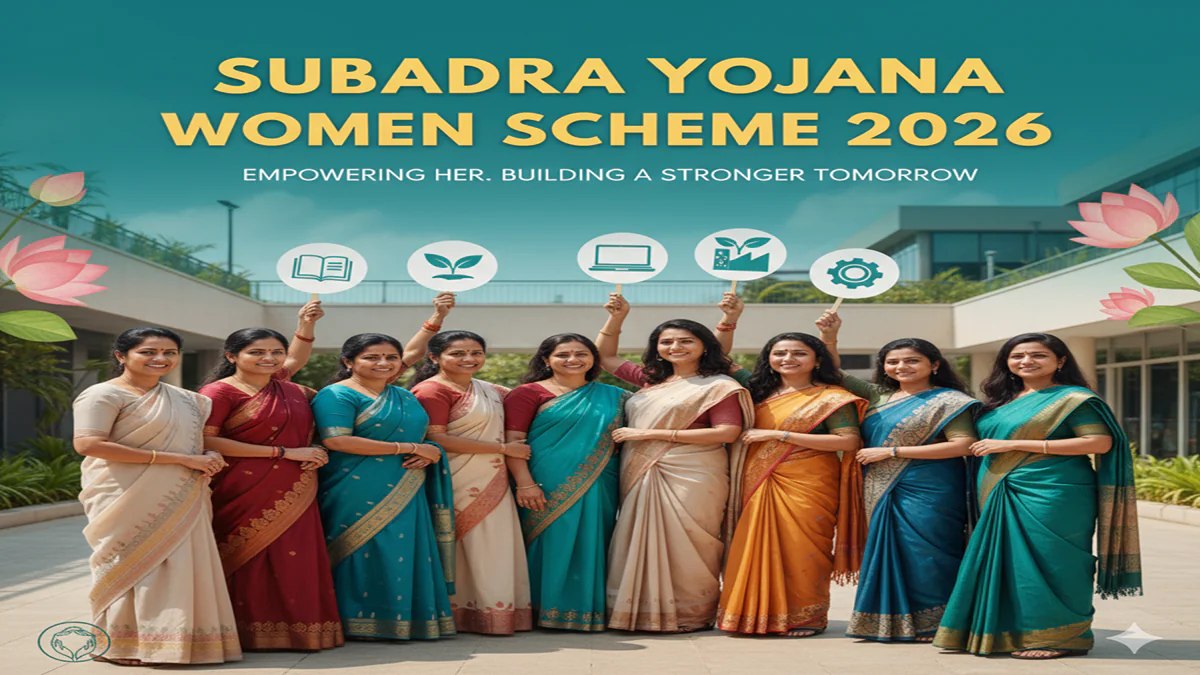
Subhadra Yojana Women Scheme 2026: महिलाओं को हर साल मिलेंगे ₹10,000!
Subhadra Yojana Women Scheme 2026: Introduction: भारत सरकार और राज्य सरकारें महिलाओं को आत्मनिर्भर बनाने के लिए समय-समय पर कई कल्याणकारी योजनाएं लाती रहती हैं। इसी कड़ी में ‘Subhadra Yojana’ (सुभद्रा योजना) साल 2026 की सबसे चर्चित और लाभकारी योजनाओं में से एक बनकर उभरी है। इस योजना का मुख्य उद्देश्य महिलाओं को आर्थिक सहायता प्रदान करना है ताकि वे अपनी छोटी-मोटी जरूरतों और स्वरोजगार के लिए किसी पर निर्भर न रहें।
अक्सर महिलाओं को योजनाओं की जानकारी तो मिल जाती है, लेकिन सही ‘Apply Link’ और ‘Eligibility’ न पता होने के कारण वे लाभ से वंचित रह जाती हैं। आज के इस लेख में हम Subhadra Yojana Women Scheme 2026 के बारे में विस्तार से जानेंगे।
1. सुभद्रा योजना क्या है? (What is Subhadra Yojana?)
Subhadra Yojana Women Scheme 2026: सुभद्रा योजना विशेष रूप से महिलाओं के लिए डिज़ाइन की गई एक वित्तीय सहायता योजना है। इस योजना के तहत पात्र महिलाओं को हर साल ₹10,000 की राशि दी जाती है। यह पैसा साल में दो किस्तों (जैसे ₹5,000 + ₹5,000) में सीधे लाभार्थी के बैंक खाते में भेजा जाता है।
2. सुभद्रा योजना के लाभ (Key Benefits)
- वित्तीय स्वतंत्रता: ₹10,000 की वार्षिक सहायता महिलाओं को छोटे व्यवसाय शुरू करने या घर की जरूरतों में मदद करती है।
- सीधा लाभ (DBT): पैसा बिना किसी बिचौलिए के सीधे ‘Direct Benefit Transfer’ के जरिए बैंक खाते में आता है।
- डिजिटल सशक्तिकरण: योजना के लिए आवेदन पूरी तरह ऑनलाइन है, जिससे पारदर्शिता बनी रहती है।
3. पात्रता मानदंड (Eligibility Criteria 2026)
Subhadra Yojana Women Scheme 2026: आवेदन करने से पहले इन शर्तों को ध्यान से पढ़ें:
- आवेदक महिला संबंधित राज्य (जैसे ओडिशा) की स्थायी निवासी होनी चाहिए।
- महिला की आयु 21 वर्ष से 60 वर्ष के बीच होनी चाहिए।
- परिवार का कोई भी सदस्य सरकारी नौकरी में या आयकर दाता (Income Tax Payer) नहीं होना चाहिए।
- जिन महिलाओं को पहले से ही किसी बड़ी पेंशन योजना का लाभ मिल रहा है, उन्हें इसमें प्राथमिकता नहीं दी जा सकती।
4. आवश्यक दस्तावेज (Required Documents)
Subhadra Yojana Women Scheme 2026: फॉर्म भरते समय आपके पास ये कागज होने जरूरी हैं:
- आधार कार्ड (जो मोबाइल नंबर से लिंक हो)।
- बैंक पासबुक (आधार सीडेड/लिंक होना अनिवार्य)।
- निवास प्रमाण पत्र (Resident Certificate) या राशन कार्ड।
- आय प्रमाण पत्र (Income Certificate)।
- पासपोर्ट साइज फोटो।
5. ऑनलाइन आवेदन कैसे करें? (How to Apply Online)
- सबसे पहले सुभद्रा योजना के आधिकारिक पोर्टल (Official Portal) पर जाएं।
- ‘Apply Online’ बटन पर क्लिक करें।
- अपना आधार नंबर दर्ज करें और OTP के जरिए मोबाइल नंबर वेरिफाई करें।
- आवेदन फॉर्म में अपनी व्यक्तिगत जानकारी और बैंक डिटेल्स भरें।
- जरूरी दस्तावेजों की स्कैन कॉपी अपलोड करें।
- सबमिट करने के बाद मिलने वाली ‘Application Receipt’ को डाउनलोड करके सुरक्षित रखें।
6. साल 2026 के नए अपडेट्स
Subhadra Yojana Women Scheme 2026: 2026 में इस योजना को अधिक पारदर्शी बनाया गया है। अब लाभार्थी महिलाओं को ‘सुभद्रा कार्ड’ भी जारी किए जा रहे हैं। इसके अलावा, यदि आपका बैंक खाता आधार से लिंक नहीं है, तो आवेदन रद्द किया जा सकता है। इसलिए फॉर्म भरने से पहले अपने बैंक जाकर e-KYC जरूर करवा लें।
7. अक्सर पूछे जाने वाले 5 प्रश्न (FAQs)
प्रश्न 1: सुभद्रा योजना का पैसा साल में कब-कब मिलता है?
उत्तर: यह पैसा आमतौर पर दो विशेष अवसरों पर दिया जाता है (जैसे रक्षाबंधन और अंतरराष्ट्रीय महिला दिवस)।
प्रश्न 2: क्या अविवाहित महिलाएं भी आवेदन कर सकती हैं?
उत्तर: हाँ, यदि महिला की आयु 21 वर्ष से अधिक है और वह अन्य सभी शर्तों को पूरा करती है, तो वह आवेदन कर सकती है।
प्रश्न 3: फॉर्म भरने की कोई फीस लगती है?
उत्तर: नहीं, सरकारी पोर्टल पर आवेदन करना पूरी तरह निशुल्क (Free) है।
प्रश्न 4: अगर मेरे पास स्मार्टफोन नहीं है, तो आवेदन कैसे करूँ?
उत्तर: आप अपने नजदीकी ‘Common Service Centre’ (CSC) या ‘जन सेवा केंद्र’ पर जाकर आवेदन करवा सकती हैं।
प्रश्न 5: पैसा आने में कितना समय लगता है?
उत्तर: आवेदन स्वीकृत होने के बाद, अगली किस्त की तारीख पर पैसा आपके खाते में जमा कर दिया जाता है।
Conclusion: महिला सशक्तिकरण की नई मिसाल!
Subhadra Yojana Women Scheme 2026 महिलाओं को आर्थिक रूप से मजबूत बनाने की दिशा में एक बड़ा कदम है। अगर आप पात्र हैं, तो बिना देर किए इसके लिए आवेदन करें। यह छोटी सी राशि आपके बड़े सपनों को पूरा करने में मदद कर सकती है।
The Subhadra Yojana 2026: A Transformative Financial Beacon for India’s Women
Subhadra Yojana Women Scheme 2026 In the ever-evolving landscape of India’s social welfare architecture, 2026 marks the proposed launch of a potentially groundbreaking initiative: the Subhadra Yojana Women Scheme. Named after Subhadra Kumari Chauhan, the revered Hindi poetess who championed the spirit of Indian womanhood and resilience, this scheme is envisioned as a direct, empowering financial instrument aimed at accelerating women-led development. While still in the realm of policy aspiration as of early 2026, it has sparked significant discourse for its bold approach to enhancing women’s economic agency.
Subhadra Yojana Women Scheme 2026: The scheme emerges against the backdrop of India’s continued commitment to achieving the Sustainable Development Goals (SDGs), particularly Goal 5: Gender Equality. Despite progress through programs like Beti Bachao Beti Padhao, PM Matru Vandana Yojana, and the success of women-led Self-Help Groups (SHGs), a persistent gender gap in direct financial asset ownership and disposable capital remains. The Subhadra Yojana seeks to bridge this gap not through subsidies or loans, but through a novel instrument: theSubhadra Certificate.
Core Objective: From Beneficiaries to Economic Drivers
Subhadra Yojana Women Scheme 2026: The overarching vision of the Subhadra Yojana is to transform women from being passive beneficiaries of welfare into active, confident economic drivers. Its primary objectives are multifaceted:
- Direct Financial Empowerment: To provide a substantial, liquid financial asset directly in the hands of adult women, increasing their economic security and decision-making power within households.
- Stimulating Demand & Local Economies: By injecting significant capital into the hands of women, who are more likely to spend on family nutrition, health, education, and consumer durables, the scheme aims to stimulate local economies and create a multiplier effect.
- Promoting Formal Financial Inclusion: To bring more women into the formal banking system, encouraging savings, investment, and familiarity with financial products.
- Recognizing and Rewarding Care Work: Acknowledging the unpaid care work and managerial roles women play in households and communities by providing a tangible economic return.
Hypothetical Structure and Key Features of the Subhadra Certificate
Subhadra Yojana Women Scheme 2026: Based on policy discussions and white papers, the proposed structure of the Subhadra Yojana is as follows:
- Target Beneficiaries: The scheme is proposed to be universal for all adult women above the age of 21, irrespective of marital status, income, or social category. This universality is seen as key to avoiding exclusion errors and bureaucratic hurdles.
- The Instrument – The Subhadra Certificate: Each eligible woman would receive a Subhadra Certificate, a special, tradable financial instrument.
- Face Value: Discussions suggest a face value of ₹1,00,000 (One Lakh Rupees) per certificate.
- Lock-in and Tenure: The certificate would have a 2-year lock-in period from the date of issuance. After this period, it matures and can be redeemed for its full face value.
- The Revolutionary Feature: Tradability: This is the scheme’s most innovative aspect. During the 2-year lock-in, the certificate can be traded on a designated digital platform or through authorized banks. If a woman needs funds for an emergency, education, business investment, or any other purpose before the maturity date, she can sell her certificate in the secondary market. The price would be market-determined (likely at a discount to its future value, depending on prevailing interest rates). This creates immediate liquidity without waiting for maturity.
Potential Application and Implementation Mechanism
- Subhadra Yojana Women Scheme 2026: Registration & Identification:A massive drive would be launched via Aadhaar-linked registration on a dedicated portal, Common Service Centers (CSCs), and bank branches. Biometric authentication would ensure uniqueness.
- Issuance: Upon verification, a digital Subhadra Certificate would be issued and linked to the woman’s Aadhaar and bank account (mandatory for redemption).
- The Trading Platform: A secure, regulated digital platform (like a window within existing stock exchange infrastructures or a new govt. portal) would be created. Authorized intermediaries (banks, NBFCs) would facilitate trading. Sellers would list their certificates, and buyers (institutional investors, corporations, retail investors) could purchase them.
- Subhadra Yojana Women Scheme 2026: Redemption:Upon maturity, the holder of the certificate (the original beneficiary or the investor who bought it) would present it for redemption, and the government would pay the face value of ₹1,00,000 directly to the linked bank account.
Potential Benefits: A Ripple Effect of Empowerment
Subhadra Yojana Women Scheme 2026: The hypothesized benefits of the Subhadra Yojana are profound and wide-ranging:
- For Women & Households:
- Emergency Fund: Provides a large, immediate safety net against health crises, income shocks, or family emergencies.
- Entrepreneurial Capital: Seed funding for starting or expanding a micro-enterprise.
- Educational Advancement: Funding for skill development courses, higher education, or children’s schooling.
- Enhanced Bargaining Power: Financial ownership directly challenges traditional patriarchal control over resources.
- Freedom from Predatory Debt: Reduces reliance on high-interest informal loans from moneylenders.
- For the Economy:
- Demand-Led Growth: A surge in consumption, particularly in rural and semi-urban areas, boosting sectors like FMCG, consumer durables, and housing.
- Job Creation: Increased demand stimulates production, potentially creating jobs across supply chains.
- New Asset Class: The tradable certificates could create a vibrant new market for socially-conscious investors.
- For Society:
- Investment in Human Capital: As women prioritize spending on health and education, long-term societal benefits accrue.
- Reduction in Gender Poverty Gap: A direct attack on asset inequality.
- Psychological Empowerment: The sense of ownership and financial identity can be transformative.
Critical Challenges and Points of Debate
Subhadra Yojana Women Scheme 2026: The Subhadra Yojana, while ambitious, is not without potential pitfalls and points of contention:
- Fiscal Burden: Issuing certificates to an estimated 250-300 million women would imply a massive upfront contingent liability of ₹25-30 lakh crore for the government. While not an immediate cash outflow (payable at maturity/trading), it represents a significant sovereign obligation that could impact bond markets and fiscal planning.
- Subhadra Yojana Women Scheme 2026: Inflationary Pressures:A sudden injection of such high purchasing power could fuel demand-pull inflation, especially if supply chains are not responsive.
- Market Risk for Women: The tradability feature, while beneficial, exposes financially unsophisticated women to the risk of selling their certificate at a steep discount in times of distress, potentially being exploited by intermediaries.
- Implementation Leakages: Ensuring a clean, error-free, and universal registration process in a country of India’s size is a monumental challenge. Duplication and exclusion must be minimized.
- Male Co-option: There is a risk that the cash-like asset could be coerced or taken over by male family members, undermining its core objective.
- Crowding Out Effect: Could such a large-scale transfer discourage women from seeking employment, or distort local labor markets?
Comparative Perspective: How Subhadra Yojana Could Differ
Subhadra Yojana Women Scheme 2026: Unlike previous schemes, Subhadra Yojana is not conditional (like PMMVY’s conditional cash transfer for maternity) nor a loan (like Mudra Yojana). It is anasset transferwith amarket-linked liquidity option. This places it in a unique category, closer to a sovereign-guaranteed bond issued directly to citizens, rather than a traditional welfare scheme.
The Road Ahead for 2026 and Beyond
Subhadra Yojana Women Scheme 2026: As the debate around Subhadra Yojana intensifies in 2026, its potential launch would hinge on several factors: the fiscal space available to the government, the readiness of digital and financial infrastructure, and the creation of robust safeguards for beneficiaries.
If implemented with careful design—including financial literacy drives, strong regulatory oversight of the trading platform, and grievance redressal mechanisms—the Subhadra Yojana could indeed be the paradigm shift it promises to be. It moves beyond protecting women to actively powering them with capital, aligning with the vision of a truly Atmanirbhar Nari (Self-Reliant Woman).
Subhadra Yojana Women Scheme 2026: It would be more than a scheme; it would be a statement of economic trust in the women of India. As Subhadra Kumari Chauhan wrote in her iconic poem on Rani Lakshmibai,“Khoob ladi mardani woh to Jhansi wali Rani thi”(She fought valiantly like a man, that Queen of Jhansi). The Subhadra Yojana 2026 seeks to provide every Indian woman not with a sword, but with the financial key to her own fortress of independence and dignity.
Frequently Asked Questions (FAQs) – Subhadra Yojana 2026
1. Who is eligible for the Subhadra Yojana?
Subhadra Yojana Women Scheme 2026: As proposed, the scheme is intended to be universal for all adult women who are Indian citizens and are above the age of 21 years. There is no income, marital status, or social category criteria. Exact eligibility will be defined in the final official guidelines.
2. Is the ₹1,00,000 given as cash or a loan?
Subhadra Yojana Women Scheme 2026: It is neither direct cash nor a loan. It is afinancial instrument called the Subhadra Certificatewith a face value of ₹1,00,000. You cannot withdraw it as cash immediately. After a 2-year lock-in, you can redeem it for its full value. Crucially, you can also sell it on a designated platformbefore2 years if you need funds, but you may not get the full face value, as the price will be determined by market demand.
3. What if I need the money before the 2-year lock-in period ends?
Subhadra Yojana Women Scheme 2026: This is where the uniquetradability featurecomes in. You can sell your Subhadra Certificate on the authorized digital trading platform to an investor (like a bank, institution, or individual). You will receive the sale price directly in your linked bank account. This provides liquidity but comes with the caveat that you might have to sell it at a discount.
4. What are the main risks for beneficiaries?
Subhadra Yojana Women Scheme 2026: The key risks are:
Market Risk:Selling the certificate in distress may yield less than its face value.
Coercion Risk:Pressure from family to sell the certificate or hand over the proceeds.
Financial Illiteracy:Not understanding how the trading mechanism works, leading to poor financial decisions.
The success of the scheme will depend heavily on parallel financial literacy campaigns and strong regulatory safeguards.
5. How is this different from existing schemes like PM Kisan or maternity benefits?
Subhadra Yojana Women Scheme 2026: PM Kisan is an annual income support to farm families (paid to male heads often). Maternity benefits are conditional cash transfers for a specific purpose. The Subhadra Yojana is different because:
It is aone-time, high-value asset(not small, periodic cash).
It is givensolely and directly to the woman.
It has aninvestment-like characterwith tradability, creating a potential for liquidity before maturity. It is designed for broader economic empowerment, not just income support or a specific welfare goal.