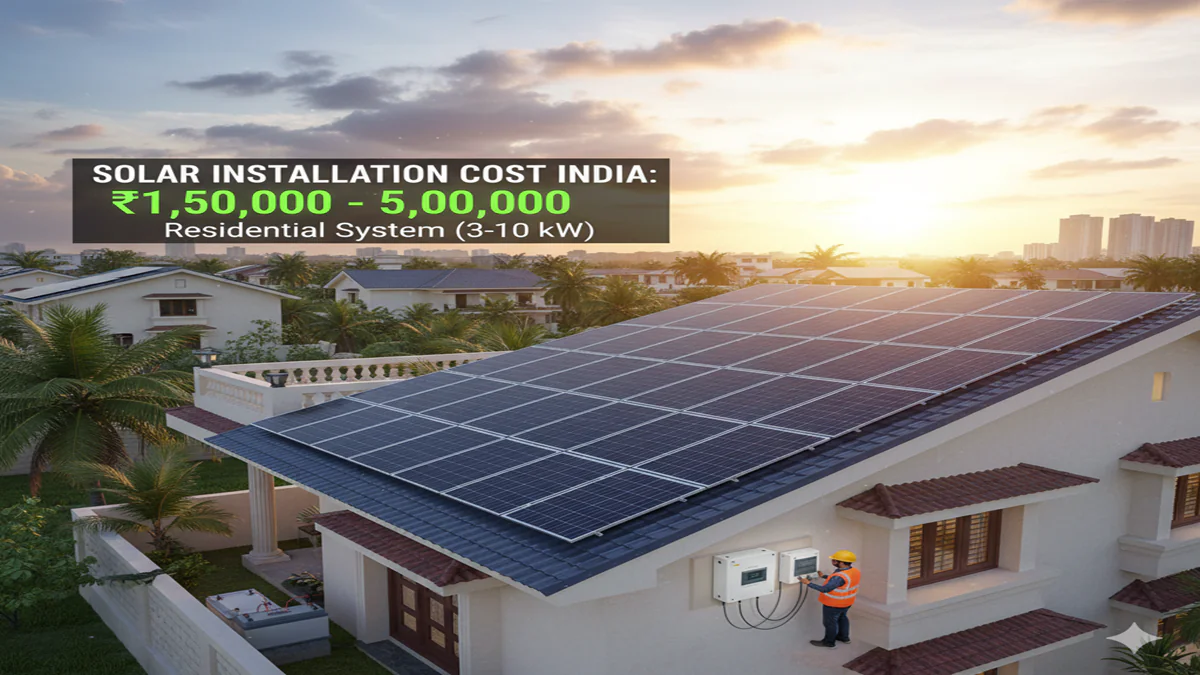
Solar Energy Installation Cost India 2026: खर्च, सबसिडी आणि दरमहा ₹3000 पर्यंतच्या बचतीचा संपूर्ण प्लॅन!
Solar Energy Installation Cost India 2026: Dosto, वाढती वीज बिले (Electricity Bills) आणि पर्यावरणाचा विचार करता, आज प्रत्येक घरमालकाच्या मनात एकच विचार आहे— “आपल्या छतावर सोलर पॅनल कधी लावायचे?सबसिडी कशी मिळते? आणि किती वर्षात तुमचे पैसे वसूल होतील? आजच्या या सविस्तर लेखात आपण Solar Energy Installation Cost in India 2026 बद्दल सर्व काही जाणून घेणार आहोत.
1. सोलर सिस्टिमचे प्रकार (Types of Solar Systems)
Solar Energy Installation Cost India 2026: भारतात मुख्यत्वे तीन प्रकारचे सोलर सिस्टिम वापरले जातात:
- On-Grid System: हे बॅटरीशिवाय असते आणि सरकारी ग्रीडला जोडलेले असते. सबसिडी फक्त याच सिस्टमवर मिळते.
- Off-Grid System: यात बॅटरी असते, जिथे वीज साठवता येते. हे ग्रामीण भागासाठी उत्तम आहे.
- Hybrid System: यात ग्रीड आणि बॅटरी दोन्हीचे फायदे मिळतात, पण याचा खर्च सर्वाधिक असतो.
2. Solar Panel Price List 2026 (Before vs After Subsidy)
Solar Energy Installation Cost India 2026: २०२६ च्या लेटेस्ट अपडेट्सनुसार, सोलर बसवण्याचा अंदाजे खर्च खालीलप्रमाणे आहे:
| Capacity | Total Cost (Approx) | Govt Subsidy | Your Net Cost |
| 1 kW | ₹65,000 – ₹85,000 | ₹30,000 | ~₹35,000 – ₹55,000 |
| 2 kW | ₹1,20,000 – ₹1,50,000 | ₹60,000 | ~₹60,000 – ₹90,000 |
| 3 kW | ₹1,80,000 – ₹2,10,000 | ₹78,000 | ~₹1,02,000 – ₹1,32,000 |
| 5 kW | ₹2,80,000 – ₹3,50,000 | ₹78,000 (Max) | ~₹2,02,000 – ₹2,72,000 |
टीप: सबसिडीचा जास्तीत जास्त लाभ ३ किलोवॅटपर्यंत मिळतो (कमाल ₹78,000). त्यावरील सिस्टमसाठी सबसिडीची रक्कम स्थिर राहते.
3. PM Surya Ghar Yojana सबसिडी गणित
Solar Energy Installation Cost India 2026: भारत सरकार सध्या प्रति किलोवॅट खालीलप्रमाणे सबसिडी देते:
- पहिल्या 2 kW साठी: ₹30,000 प्रति किलोवॅट.
- पुढील 1 kW साठी: ₹18,000.
- एकूण कमाल सबसिडी: ₹78,000.
4. सोलर बसवण्यासाठी लागणारे मुख्य घटक (Components)
Solar Energy Installation Cost India 2026: केवळ पॅनल नाही, तर संपूर्ण खर्चात खालील गोष्टींचा समावेश होतो:
- Solar Panels: Mono PERC किंवा नवीन TOPCon पॅनल (25 वर्षांची वॉरंटी).
- Inverter: सोलर ऊर्जेचे रुपांतर घरगुती विजेमध्ये करण्यासाठी.
- Mounting Structure: पॅनलला गंज न लागणाऱ्या (GI) स्ट्रक्चरवर बसवले जाते.
- Net Meter: तुमची जास्तीची वीज ग्रीडला किती गेली, हे मोजण्यासाठी.
- Installation & Wiring: लेबर खर्च आणि सेफ्टी वायर्स.
5. ROI (रिटर्न ऑन इन्व्हेस्टमेंट): तुमचे पैसे किती दिवसात वसूल होतील?
Solar Energy Installation Cost India 2026: समजा तुम्ही ३ किलोवॅटचे सोलर बसवले:
- गुंतवणूक: ₹1.10 लाख (सबसिडीनंतर).
- वीज निर्मिती: दरमहा ~350 युनिट्स.
- बचत: जर वीज दर ₹9 असेल, तर दरमहा ₹3,150 बचत.
- Payback Period: केवळ ३.५ ते ४ वर्षांत तुमचे गुंतवलेले पैसे वसूल होतात! त्यानंतर पुढील २०-२२ वर्षे वीज पूर्णपणे मोफत मिळते.
6. सोलर इन्स्टॉलेशनची प्रक्रिया (Step-by-Step)
- नोंदणी: [suspicious link removed] वर जाऊन रजिस्टर करा.
- व्हेण्डर निवड: सरकारी मान्यताप्राप्त (Empanelled) कंपनी निवडा.
- साइट सर्व्हे: कंपनीचे लोक तुमच्या छताची पाहणी करतील.
- इन्स्टॉलेशन: ३-४ दिवसांत सोलर बसवले जाईल.
- नेट मीटरिंग: डिस्कॉम (महावितरण इ.) कडून परवानगी घेऊन नेट मीटर लावले जाईल.
- सबसिडी: ३० दिवसांच्या आत सबसिडी थेट तुमच्या बँक खात्यात येईल.
Conclusion: २०२६ मध्ये सोलर लावणे फायद्याचे का आहे?
Solar Energy Installation Cost India 2026: वीज दरात दरवर्षी १०-१२% वाढ होत आहे. अशा वेळी Solar Energy Installation हा केवळ पर्यावरणासाठी नाही तर तुमच्या खिशासाठीही एक स्मार्ट निर्णय आहे. सरकार सध्या भरघोस सबसिडी देत आहे, ज्याचा लाभ तुम्ही नक्कीच घ्यायला हवा.
Quick Comparison Table
| Capacity | Ideal For | Roof Space Needed |
| 1 kW | Small Home (1BHK) | 80-100 Sq. Ft. |
| 3 kW | Mid-size Family (2-3 BHK) | 250-300 Sq. Ft. |
| 5 kW | Large House / AC usage | 450-500 Sq. Ft. |
Introduction: Harnessing the Sun’s Potential in India
Solar Energy Installation Cost India With over 300 sunny days a year, the nation is blessed with a solar potential exceeding 750 GW, a resource more abundant than anywhere else. Driven by ambitious government targets (500 GW of renewable energy by 2030), rising environmental consciousness, and the compelling economics of self-reliance, solar power has transitioned from a niche alternative to a mainstream energy solution for homes, industries, and businesses.
However, the decision to “go solar” is often anchored in one critical question: What will it cost? The answer is not a single figure but a spectrum influenced by a myriad of factors. This comprehensive guide demystifies the cost structure of solar power system installation in India in 2024-25, breaking down the components, exploring the different types of systems, and providing a clear picture of the financial outlay, savings, and government incentives that make solar a truly bright investment.
Part 1: The Core Cost Breakdown – What Are You Paying For?
Solar Energy Installation Cost India 2026: A solar power system is a sophisticated integration of components. Understanding each part’s role and cost contribution is the first step to a transparent investment.
1. Solar Panels (Modules): The Power Generators (40-50% of total cost)
- Emerging technologies like Bifacial panels (capturing light from both sides) command a premium.
- As of 2024, the panel cost ranges between ₹22 to ₹30 per Wp. Tier-1 brands (backed by bankable manufacturers) are more expensive than local or unbranded options but offer better performance warranties (often 25 years).
2. Solar Inverters: The Brain of the System (15-20% of total cost)
- Type of Inverter: This is a major cost driver.
- String Inverters: Most economical for unshaded roofs. Cost: ₹8-12 per Wp.
- Microinverters: Attached to each panel, maximizing output in shaded conditions and offering panel-level monitoring. Significantly costlier at ₹15-25 per Wp.
- Hybrid Inverters: Essential for systems with battery backup. They can integrate with the grid and batteries. Cost: ₹12-20 per Wp.
3. Balance of System (BOS): The Unsung Heroes (20-25% of total cost)
Solar Energy Installation Cost India 2026: This includes all non-panel, non-inverter components:
- Mounting Structures (Rooftop or Ground): Made of galvanized iron or aluminum, designed to withstand wind loads. Quality here ensures longevity.
- Cables & Connectors: DC and AC cables, junction boxes, and MC4 connectors. High-quality, weatherproof components are crucial for safety.
- Protection Devices: Lightning arrestors, surge protection devices (SPD), and earthing kits.
- Monitoring Systems: Hardware and software to track energy generation in real-time.
4. Batteries (For Off-Grid/Hybrid Systems): The Energy Bank (Significant Variable Cost)
- Lead-Acid: Traditional, lower upfront cost (₹8,000-12,000 per kWh) but shorter lifespan (3-5 years) and lower depth of discharge.
- Lithium-Ion (LiFePO4): The modern choice. Higher upfront cost (₹15,000-25,000 per kWh) but longer lifespan (8-10+ years), higher efficiency, and virtually maintenance-free. They significantly increase system cost but are crucial for reliable backup.
5. Installation & “Soft” Costs (15-20% of total cost)
- Labour & Installation: Includes system design, roofing work, electrical wiring, and commissioning.
- Transportation & Logistics.
- Operation & Maintenance (O&M): Typically, an annual contract costs around 1-2% of the total system cost, covering cleaning, inverter servicing, and performance checks.
Part 2: System Types and Their Cost Spectrum (2024-25 Estimates)
Solar Energy Installation Cost India 2026: Here’s a practical look at costs based on system type and capacity for a residential setup.(Prices are indicative and can vary by state, vendor, and component quality.)
A. On-Grid System (No Battery Backup)
Solar Energy Installation Cost India 2026: Ideal for users with reliable grid supply, aiming to reduce electricity bills through net metering.
- 1 kW System: ₹65,000 – ₹80,000
- 3 kW System: ₹1,65,000 – ₹2,10,000
- 5 kW System: ₹2,50,000 – ₹3,20,000
- 10 kW System (Residential/Commercial): ₹4,80,000 – ₹6,00,000
B. Off-Grid System (Complete Energy Independence)
Solar Energy Installation Cost India 2026: For areas with frequent or prolonged power cuts, requiring full battery backup.
- 1 kW System with Battery: ₹1,20,000 – ₹1,80,000
- 3 kW System with Battery: ₹3,00,000 – ₹4,50,000
- 5 kW System with Battery: ₹4,50,000 – ₹7,00,000
C. Hybrid System (Best of Both Worlds)
Solar Energy Installation Cost India 2026: Grid-tied with battery backup. Can use solar to charge batteries and export excess to the grid.
- 3 kW Hybrid System: ₹3,50,000 – ₹5,00,000
- 5 kW Hybrid System: ₹5,50,000 – ₹8,00,000
- 10 kW Hybrid System: ₹10,00,000 – ₹14,00,000
For Commercial & Industrial (C&I) setups: Costs scale differently due to larger volumes, often starting from ₹4.5-5.5 Crore per MW for large-scale installations.
Part 3: Key Factors Influencing Your Final Quote
- Location: Labour costs, state-specific subsidies (over and above central schemes), and DISCOM charges for net metering vary.
- Solar Energy Installation Cost India 2026: Rooftop Type & Complexity:A simple, shadow-free, RCC roof is cheapest. Installation on sloping, metallic, or shaded roofs requires specialized structures and increases cost.
- Government Subsidies: The PM-Surya Ghar: Muft Bijli Yojana is a major catalyst. For residential on-grid systems up to 3 kW, it offers subsidies up to 60% (e.g., ₹30,000/kW for 1-2 kW, ₹78,000 for 3 kW). This dramatically reduces the effective cost.
- Net Metering Policies: A favorable net metering policy, where you get credited for excess power fed to the grid, improves Return on Investment (ROI). The process and tariff rates differ by state.
- Quality vs. Cost: Opting for cheaper, non-branded components can reduce capex but risks lower efficiency, faster degradation, and voided warranties.
- Solar Energy Installation Cost India 2026: Financing Options:Many banks and NBFCs offer “Solar Loans” with attractive interest rates (starting from ~8.5% p.a.) and tenures, easing the upfront burden.
Part 4: The Financial Payback: It’s Not Just a Cost, It’s an Investment
Solar Energy Installation Cost India 2026: The true value of solar is realized over its 25+ year lifespan.
- Solar Energy Installation Cost India 2026: Reduced Electricity Bills:A 3 kW system can eliminate or drastically reduce monthly bills for an average household.
- ROI & Payback Period: For a subsidized 3 kW on-grid system costing ~₹1.2 Lakhs after subsidy, saving ₹2,500/month on bills, the simple payback period is 4-5 years. For a non-subsidized system, it’s typically 6-8 years. After the payback period, you have nearly free electricity for decades.
- Solar Energy Installation Cost India 2026: Increased Property Value:A solar-equipped property is seen as modern and sustainable, commanding a market premium.
- Environmental ROI: Each kW of solar installed offsets approximately 1.5 tons of CO2 annually, contributing directly to climate action.
Part 5: Navigating the Installation Journey
- Assess Your Needs: Analyze past electricity bills to determine your average monthly consumption (in kWh) and peak load.
- Get Multiple Quotes: Seek detailed quotations from 3-4 certified and reputable installers. Ensure they break down costs component-wise.
- Check Credentials: Look for installers empaneled with the National Portal for Rooftop Solar (for subsidy) and with relevant certifications.
- Understand the Subsidy Flow: Under the PM Surya Ghar scheme, the subsidy is typically processed directly to the customer’s bank account after installation and inspection, via the national portal.
Conclusion: An Investment That Pays Dividends in Savings and Sustainability
Solar Energy Installation Cost India 2026: The cost of installing solar energy in India, while a significant upfront investment, has never been more accessible thanks to falling technology prices and robust government support. It transcends a mere purchase; it is a strategic long-term investment in financial stability, energy security, and environmental stewardship. By understanding the cost components, leveraging available subsidies, and choosing a quality installer, you can confidently harness the sun’s power. The question is no longerifyou can afford solar, butcan you afford the rising cost of grid electricity without it?The sun is offering its invoice; it’s time to embrace it.
5 Frequently Asked Questions (FAQs) on Solar Energy Installation Cost in India
FAQ 1: What is the total cost of installing a 3kW solar system for my home in 2024, and how much will the new government subsidy reduce it?
Answer:Solar Energy Installation Cost India 2026: The total installed cost of a good-quality 3kW on-grid solar system (without battery) in 2024 typically ranges between₹1,65,000 to ₹2,10,000. Under the central government’sPM-Surya Ghar: Muft Bijli Yojana, a 3kW system is eligible for a fixed subsidy of₹78,000. This subsidy is disbursed to your bank account after installation and successful inspection. Therefore, youreffective net costafter subsidy would be approximately₹87,000 to ₹1,32,000, making it a highly economical investment with a payback period of just 4-5 years in many cases.
FAQ 2: Is it more cost-effective to choose an on-grid system or invest in a battery-backed hybrid/off-grid system?
Answer:Solar Energy Installation Cost India 2026: The most cost-effective option is almost always anon-grid system (without batteries), provided you have a relatively reliable grid supply with net metering. This is because batteries add 40-70% to the system’s upfront cost and have a shorter lifespan (5-10 years) requiring replacement. On-grid systems use the grid as a “virtual battery,” exporting excess power for credits and importing when needed, maximizing ROI. Choose ahybrid or off-grid system only if: 1) You face frequent and long power cuts, 2) Your area has unreliable grid infrastructure, or 3) You require an uninterrupted power supply for critical applications. The cost is higher for the value of reliability and independence.
FAQ 3: Apart from the central subsidy, are there any other financial benefits or tax breaks for going solar?
Answer:Solar Energy Installation Cost India 2026: Yes, several financial incentives exist:
State Subsidies:Many states (like Gujarat, Maharashtra, Karnataka) offer additional subsidies over and above the central scheme.
Low-Interest Solar Loans:Multiple banks offer dedicated green loans for solar with interest rates often lower than personal loans.
Tax Benefits:While there’s no direct income tax rebate for residential users, the interest component of a solar loan can sometimes be claimed under general provisions. For businesses, the entire investment is treated as a business expense.
FAQ 4: How much does maintenance add to the annual cost of running a solar system?
Answer:Solar Energy Installation Cost India 2026: Solar systems are low-maintenance. For a ₹2 lakh system, this translates to ₹2,000 – ₹4,000 annually. This service usually includes:
2-4 panel cleaning sessions (especially important in dusty areas).
Inverter performance check.
Inspection of connections and mounting structures.
Basic performance monitoring.
Major repairs are rare and are usually covered under the component warranties for many years.
FAQ 5: I received quotes from different installers with a significant price difference for the same system size. What should I look for to ensure I’m not compromising on quality for a lower price?
Answer:Solar Energy Installation Cost India 2026: A very low quote can be a red flag. When comparing, scrutinize these elements in the quotation:
Component Brands:Is the quote using Tier-1 panels (like Waaree, Vikram, Adani) and reputable inverters (like SMA, Delta, Growatt, Luminous)? Cheap, unbranded components degrade faster.
Balance of System (BOS):Does it specify high-quality mounting structures (Galvanized Iron of adequate thickness), proper cables (UV-resistant, copper), and protection devices (SPDs)?
Warranty:A credible installer offers a comprehensive5+ year workmanship warrantycovering all labor and roof work, apart from the manufacturer warranties on panels and inverters.
Scope of Work:Does the price includeeverything: design, net metering application support, transportation, installation, and commissioning?
After-Sales Service:Does the company have a local service network? Cheaper installers may not offer reliable long-term support.
Always prioritize quality and service over the absolute lowest price to ensure your system delivers optimal performance for 25 years.