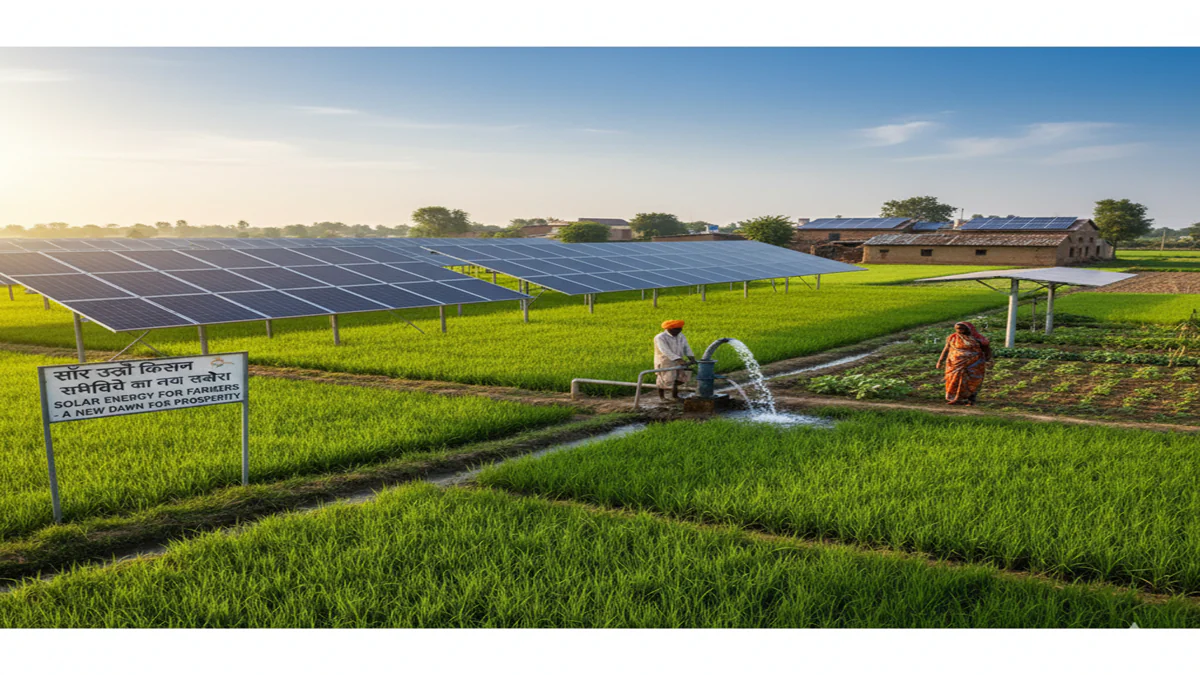
Harnessing the Sun: A Comprehensive Guide to Solar Energy for Farmers in India
Introduction: The Dawn of a New Agricultural Era
Solar Energy For Farmers India Under the vast, sun-drenched skies of India, a quiet revolution is taking root in its farms. For centuries, Indian agriculture has been a story of resilience against the vagaries of monsoon rains, erratic power supply, and rising input costs. Today, a powerful ally emerges from above: the sun. Solar energy is no longer just an alternative power source; it is becoming a fundamental tool for agricultural empowerment, economic resilience, and sustainable growth. For the Indian farmer, transitioning to solar is not merely about adopting new technology—it is about securing water, light, livelihood, and a legacy of self-reliance.
This comprehensive guide delves into the multifaceted world of solar energy for Indian farmers. We will explore the compelling reasons for this shift, the diverse technologies available, the robust government support system, the practicalities of implementation, and the transformative impact it is already having across the nation’s rural landscape.
Part 1: The Why – Compelling Drivers for Solar Adoption in Agriculture
The move towards solar is driven by a powerful confluence of challenges and opportunities.
1. The Energy-Irrigation Nexus and the Diesel Dilemma: India’s agriculture is heavily dependent on irrigation, with over 20 million electric and 10 million diesel pumpsets operational. Farmers, especially in regions with unreliable grid power, depend on expensive, noisy, and polluting diesel generators to pump water. The cost of running a diesel pump can consume a significant portion of a farmer’s profit. Solar presents a one-time investment for decades of near-free energy, breaking the vicious cycle of fuel costs.
2. Erratic Grid Power and Daytime Synergy: Frequent power cuts, especially during critical daytime farming hours, disrupt irrigation cycles and farm operations. Solar power generation peaks during the day, perfectly aligning with agricultural energy demand for irrigation, milling, and processing. This synergy ensures water when crops need it most.
3. The Economic Imperative: From Cost Center to Revenue Stream: Beyond saving on electricity and diesel bills, solar can become an income source. Through net metering or feed-in tariffs, farmers can sell surplus solar power back to the grid, turning their land and rooftops into revenue-generating assets. This concept of “Urja Kisan” or “Energy Farmer” is transformative.
4. Environmental and Sustainability Benefits: Solar energy is clean and green. It reduces the carbon footprint of farming, decreases dependence on fossil fuels, and mitigates air and noise pollution from diesel gensets. It aligns with sustainable and climate-resilient agricultural practices, crucial for India’s environmental commitments.
5. Government Vision and Policy Thrust:The Indian government has placed farmer-centric solar initiatives at the heart of its energy and agriculture policies. Flagship schemes like thePM-KUSUM (Pradhan Mantri Kisan Urja Suraksha evam Utthaan Mahabhiyan)aim to solarize agriculture on an unprecedented scale, providing substantial financial backing and a clear roadmap.
Part 2: The What – Solar Solutions for Every Farm Need
A suite of technologies caters to diverse farm sizes, needs, and budgets.
1. Solar Water Pumps (SWPs): The flagship application. These systems replace or supplement existing diesel or electric pumps.
* Types: Submersible (for deep wells and borewells) and surface pumps (for canals, ponds).
* Capacity: Ranging from 1 HP to 10 HP and above, capable of irrigating small plots to large fields.
* Advantage: Operate autonomously for 6-8 hours daily, requiring minimal maintenance.
2. Solar Photovoltaic (PV) Systems for Farmstead Power:
* Rooftop Systems: Installed on cattle shed, warehouse, or home rooftops to power lights, fans, equipment like milking machines, cold storage units, and small appliances.
* Mini-Grids: Community-based systems that can power a cluster of farms and rural enterprises, enhancing local energy security.
3. Agri-Voltaics (Solar Sharing): An innovative dual-use model where solar panels are installed at an elevated height (above 3 meters), allowing crops to be cultivated underneath. This maximizes land use efficiency—the panels generate electricity while providing partial shade that can benefit certain crops (like turmeric, spinach, or broccoli) and reduce water evaporation. It’s a true synergy of food and energy production.
4. Solar-Powered Cold Storage and Dryers: Critical for reducing post-harvest losses, which account for nearly 30% of India’s produce. Small-scale, solar-powered cold storage units allow farmers to store perishables, hedge against price crashes, and sell when market prices are favourable. Solar dryers help preserve grains, fruits, and vegetables efficiently and hygienically.
Part 3: The How – Navigating Schemes, Financing, and Installation
Understanding the process is key to a successful transition.
1. The PM-KUSUM Scheme – A Game Changer:Launched in 2019, it has three components:
*Component A:Set up 10,000 MW of decentralized ground/stilt-mounted solar power plants (up to 2 MW) on barren/fallow land. Farmers can lease land to developers or cooperatives and earn a steady rental income (~₹40,000/acre/year).
*Component B:Install 20 lakh standalonesolar agricultural pumps(off-grid) where grid connection is not feasible. Central and state subsidies cover up to 60-70% of the cost.
*Component C)Solarise 15 lakh grid-connected agricultural pumps. Farmers can use solar power for irrigation and sell the surplus to the DISCOM (Distribution Company) at a pre-fixed tariff, turning the meter backwards.
2. Financial Models and Subsidies:
*State Subsidies:Many states offer top-up subsidies, making the effective farmer contribution as low as 10-20%.
*Bank Loans:Low-interest loans with long tenors are available from NABARD, cooperative banks, and nationalized banks, often with a moratorium period aligned with crop cycles.
*Developer Model:For larger systems like under Component A of KUSUM, developers bear the capital cost. The farmer’s role is to provide land and earn rent.
3. Steps to Go Solar:
*Assessment:Determine water requirement, borewell depth, daily pumping hours, and available sunlight.
*Channel Exploration:Contact local agriculture department, State Nodal Agency (SNAs) for renewables, or registered vendors.
*Scheme Alignment:Check eligibility and application process for PM-KUSUM or state schemes.
*Vendor Selection:Choose a Bureau of Indian Standards (BIS)-certified and MNRE-approved vendor. Compare quotes and warranties (typically 5 years for panels, 1-2 years for pumps).
Get system performance validated.
Annual professional servicing is recommended.
Part 4: The Impact – Transformative Outcomes on the Ground
The benefits of solar adoption extend far beyond electricity generation.
1. Economic Resilience: The most immediate impact is a dramatic reduction in cultivation costs. A farmer in Maharashtra shared, “My annual diesel bill of ₹50,000 for irrigation is now zero. The solar pump paid for itself in 4 years.” Additional income from surplus power sale or land lease provides a crucial financial buffer.
2. Agricultural Productivity and Diversification: Reliable daytime irrigation enables precision watering, improves crop health, and allows for a second or even third cropping cycle. Access to solar-powered processing (milling, grinding) and cold storage empowers farmers to move up the value chain, capturing more profit from their produce.
3. Social and Quality of Life Improvements: Solar electrification brings light to homes and farm buildings, improving safety and enabling children to study after dark. It reduces the drudgery of manual labour, especially for women, and replaces polluting kerosene lamps.
4. Energy and Water Security: Solar decentralizes energy production, reducing the burden on the stressed grid and providing immunity from power cuts. Efficient solar pumping, often coupled with drip irrigation, promotes judicious water use, a critical need in water-stressed regions.
5. Environmental Gains: Each solar pump avoids 5-8 tonnes of CO2 emissions annually. Reduced diesel use cuts down on local air and noise pollution, creating a healthier farm environment.
Part 5: Challenges and The Road Ahead
Despite the promise, hurdles remain.
- High Initial Cost:Even with subsidies, the upfront investment can be daunting for small and marginal farmers (who constitute over 86% of landholders).
- Land Requirement:For ground-mounted systems, using fertile land remains contentious, making the agri-voltaic model vital.
- Awareness and Trust Gap:Lack of information and fear of technology breakdowns hinder adoption in remote areas.
- Delays in Implementation:Subsidy disbursement delays, bureaucratic processes, and supply chain issues can slow down scheme rollouts.
- Maintenance Ecosystem:Developing a robust local network for repair and maintenance in rural areas is crucial for long-term sustainability.
The Path Forward requires a concerted effort:
- Strengthening the Supply Chain:Training more local youth as solar technicians.
- Innovative Financing:Promoting farmer producer organizations (FPOs) for collective investment, exploring pay-as-you-go models.
- Technology Integration:Developing IoT-based smart solar pump controllers for remote monitoring and optimal water-energy use.
- Aggressive Awareness Campaigns:Using demos, success stories, and local-language outreach to build trust.
- Policy Streamlining:Simplifying application and subsidy release processes through digital portals.
Conclusion: Sowing the Seeds of a Solar-Powered Future
For the Indian farmer, solar energy is more than panels and pumps; it is a catalyst for autonomy and dignity. It represents a shift from being a passive consumer of costly, unreliable inputs to an active producer of clean, cost-effective power. As the sun rises each day over India’s fields, it brings with it not just light, but the promise of prosperity. By harnessing this abundant, free resource, Indian agriculture can irrigate its fields, secure its future, and illuminate its path towards a sustainable and self-reliant future—one where every farmer is truly an Urja Kisan, empowered by the sun.
5-FAQ on Solar Energy for Farmers in India
1. What is the PM-KUSUM scheme, and how can I benefit from it?
PM-KUSUM is the Government of India’s flagship scheme to promote solar in agriculture. Farmers can benefit in three main ways:
- Component C:If you have an existing grid-connected electric pump, you can install a solar system to run it and sell the excess power back to the electricity company, earning extra income.
- Component A:If you have barren land, you can lease it for setting up a solar power plant (up to 2 MW) and earn a steady rental income (approx. ₹40,000 per acre per year).
2. How much does a solar water pump system cost, and what is the subsidy?
The cost depends on the pump capacity (HP) and depth of the water source. A typical 5 HP system can range from ₹ 3-4 lakhs. Under PM-KUSUM, the Central and State governments together provide subsidies of up to 60-70%. Your final contribution could be as low as 10-20%, or you can cover it through a low-interest bank loan. Always check with your State Nodal Agency (SNA) for the exact subsidy rates applicable in your state.
3. Can a solar pump work on cloudy days or during the monsoon?
Yes, but with reduced efficiency. Solar pumps are designed to work with both direct and diffused sunlight. On cloudy days, they will operate at a lower capacity. During the monsoon, even though sunlight is less intense, the need for irrigation is also minimal. The system is typically sized to provide enough water for the critical sunny days to build a buffer. For complete reliability, some opt for a small battery backup or a hybrid system, but this increases cost.
4. What maintenance does a solar pumping system require?
Maintenance is minimal but crucial:
- Panels:Need cleaning with water every 1-2 weeks to remove dust and bird droppings for optimal performance. A simple visual check for cracks is important.
- Mounting Structure:Check for tightness and rust protection annually.
- Pump and Motor:As with any pump, check for unusual noises or vibrations. Ensure seals are intact.
The solar panels themselves have no moving parts and come with a performance warranty of 25 years. Most vendors provide a 5-year comprehensive warranty on the entire system.
5. I am a small farmer with only 2 acres of land. Is solar viable for me?
Absolutely. Solar technology is modular and scalable. For small plots, a 1-3 HP solar pump is often sufficient and is actively promoted under government schemes. You can also explore collaborative models through your Farmer Producer Organization (FPO) where multiple small farmers pool resources to install a shared community solar system for irrigation or processing. Additionally, focusing on high-value crops with the water security provided by solar can significantly increase your income per acre, making the investment highly viable.