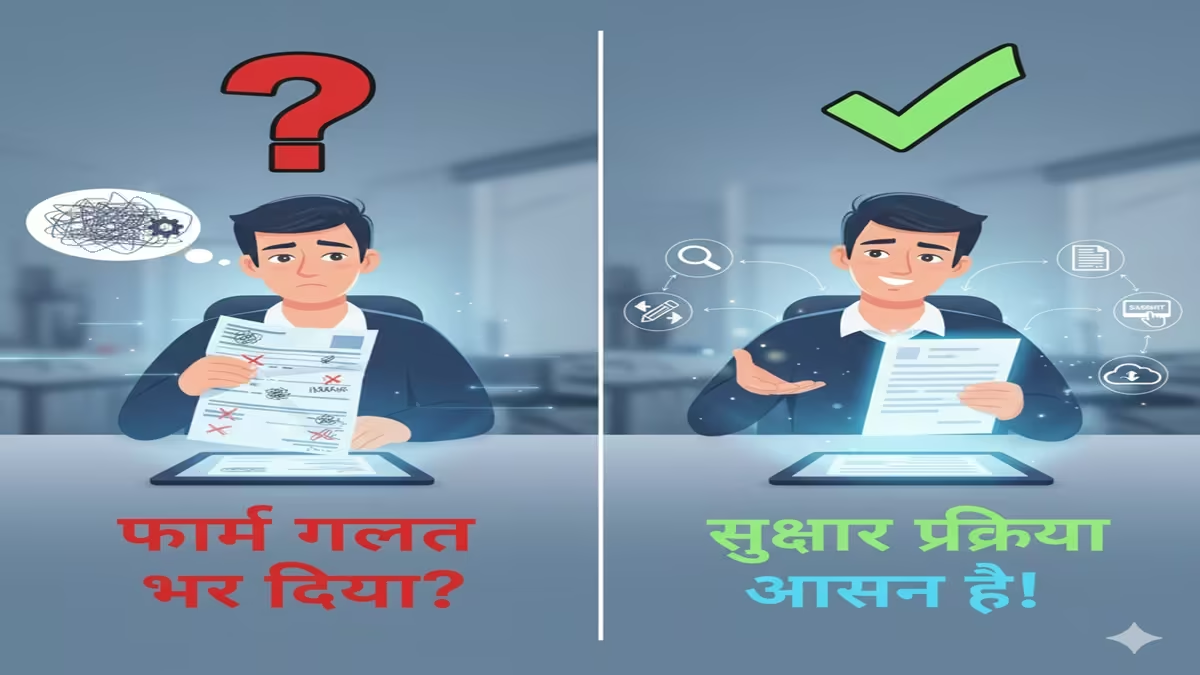
Scheme Form Galat Bhar Diya? जानें सरकारी योजना के फॉर्म में सुधार (Correction) करने की पूरी ऑनलाइन और ऑफलाइन प्रक्रिया!
Scheme Form Galat Bhar Diya Correction Process Introduction: आजकल केंद्र और राज्य सरकारें कई जनकल्याणकारी योजनाएं (जैसे PM-Kisan, सुभद्रा योजना, लाड़ली बहना, या आवास योजना) चला रही हैं। इन योजनाओं का लाभ लेने के लिए हमें ऑनलाइन या ऑफलाइन फॉर्म भरना होता है। लेकिन अक्सर जल्दबाजी में या तकनीकी जानकारी के अभाव में हम फॉर्म में कुछ गलतियां कर बैठते हैं।
चाहे वह नाम की स्पेलिंग हो, बैंक अकाउंट नंबर हो या आधार कार्ड की जानकारी—एक छोटी सी गलती आपके पैसे रोक सकती है। यदि आपने भी “Scheme Form Galat Bhar Diya” है, तो यह लेख आपके लिए है। यहाँ हम आपको सुधार यानी Correction Process की पूरी जानकारी देंगे।
1. सरकारी फॉर्म में होने वाली आम गलतियां (Common Mistakes)
Scheme Form Galat Bhar Diya Correction Process सुधार प्रक्रिया शुरू करने से पहले यह समझना जरूरी है कि गलतियां कहाँ होती हैं:
- नाम में अंतर: आधार कार्ड और फॉर्म के नाम की स्पेलिंग अलग होना।
- बैंक विवरण (Bank Details): IFSC कोड या अकाउंट नंबर गलत डालना।
- आधार सीडिंग (Aadhaar Seeding): बैंक खाते का आधार से लिंक न होना।
- दस्तावेज (Documents): गलत या धुंधले (Blur) दस्तावेज अपलोड करना।
2. ऑनलाइन सुधार कैसे करें? (Online Correction Process)
Scheme Form Galat Bhar Diya Correction Process ज्यादातर आधुनिक योजनाओं में पोर्टल पर ही ‘Edit’ या ‘Correction’ का विकल्प दिया जाता है। इसके लिए नीचे दिए गए स्टेप्स फॉलो करें:
- आधिकारिक पोर्टल पर जाएं: सबसे पहले उस योजना की ऑफिशियल वेबसाइट (जैसे pmkisan.gov.in या संबंधित राज्य का पोर्टल) खोलें।
- लॉगिन (Login): अपने रजिस्ट्रेशन नंबर, आधार नंबर या मोबाइल नंबर और OTP की मदद से लॉगिन करें।
- Edit/Correction Window: डैशबोर्ड पर ‘Update Details’, ‘Edit Application’ या ‘Correction’ का विकल्प खोजें।
- सुधार करें: जो जानकारी गलत है उसे सही करें और आवश्यक दस्तावेज दोबारा अपलोड करें।
- Final Submit: सुधार के बाद फॉर्म को ‘Final Submit’ जरूर करें और नई रसीद (Acknowledgement) डाउनलोड करें।
3. ऑफलाइन सुधार प्रक्रिया (Offline Correction Process)
Scheme Form Galat Bhar Diya Correction Process यदि पोर्टल पर ऑनलाइन सुधार का विकल्प नहीं है, तो आपको ऑफलाइन तरीका अपनाना होगा:
- संबंधित कार्यालय: अपने ब्लॉक (Block), तहसील, आंगनवाड़ी केंद्र या ग्राम पंचायत कार्यालय में जाएं।
- सुधार फॉर्म (Rectification Form): वहां से सुधार के लिए एक प्रार्थना पत्र या निर्धारित फॉर्म लें।
- दस्तावेज जमा करें: सही जानकारी वाले दस्तावेज (जैसे आधार की फोटोकॉपी, बैंक पासबुक) साथ लगाएं।
- अधिकारी से सत्यापन: संबंधित अधिकारी (जैसे सचिव, पटवारी या तहसीलदार) से फॉर्म को सत्यापित करवाकर जमा करें।
4. बैंक खाता और NPCI मैपिंग का सुधार
Scheme Form Galat Bhar Diya Correction Process कई बार फॉर्म सही होता है लेकिन बैंक डिटेल्स की वजह से पैसा नहीं आता।
- सुनिश्चित करें कि आपका बैंक खाता NPCI (National Payments Corporation of India) से लिंक है।
- यदि डीबीटी (DBT) सक्रिय नहीं है, तो बैंक जाकर ‘E-KYC’ करवाएं।
5. अगर फॉर्म रिजेक्ट (Reject) हो गया है तो क्या करें?
Scheme Form Galat Bhar Diya Correction Process अगर आपका फॉर्म ‘Rejected’ दिखा रहा है, तो रिजेक्शन का कारण (Reason for Rejection) चेक करें।
- यदि कारण ‘Documents Not Clear’ है, तो फिर से साफ स्कैन कॉपी अपलोड करें।
- यदि ‘Eligibility Criteria’ की वजह से रिजेक्ट हुआ है, तो आप शिकायत निवारण (Grievance Redressal) सेल में अपील कर सकते हैं।
4. अक्सर पूछे जाने वाले प्रश्न (FAQs)
Q1: क्या फॉर्म सबमिट करने के बाद सुधार संभव है?
Ans: हाँ, ज्यादातर योजनाओं में ‘Correction Window’ खोली जाती है या आप नजदीकी सरकारी कार्यालय में जाकर आवेदन दे सकते हैं।
Q2: आधार में नाम अलग है और फॉर्म में अलग, क्या पैसा आएगा?
Ans: नहीं, सरकारी योजनाओं में डेटा मैचिंग बहुत सख्त होती है। आपको आधार के अनुसार ही नाम ठीक करना होगा।
Q3: सुधार करने के लिए कितनी फीस लगती है?
Ans: सरकारी पोर्टल पर सुधार आमतौर पर मुफ्त होता है, लेकिन CSC केंद्र (Common Service Center) पर मामूली सेवा शुल्क देना पड़ सकता है।
Conclusion: समय रहते करें सुधार!
Scheme Form Galat Bhar Diya Correction Process सरकारी योजना का लाभ रुकने का सबसे बड़ा कारण आवेदन में गलत जानकारी होना है। यदि आपने “Scheme Form Galat Bhar Diya” है, तो घबराएं नहीं, बल्कि ऊपर बताई गई प्रक्रिया का पालन करें। जितनी जल्दी आप सुधार करेंगे, उतनी ही जल्दी आपकी रुकी हुई किश्त या सहायता राशि आपके खाते में आएगी।
“Scheme Form Galat Bhar Diya?”: A Complete Guide to Correcting Errors and Navigating the Process
Scheme Form Galat Bhar Diya? Correction Process In India’s vast ecosystem of government and financial schemes—from scholarship portals and subsidy applications to Aadhaar-linked benefits and pension plans—the application form is the critical gateway. It is the bridge between a citizen’s need and the state’s provision. But what happens when this bridge is built on a foundation of errors? The anxious query, “Scheme ka form galat bhar diya?A simple typo in a name, a digit off in a bank account number, or a mistaken date of birth can trigger a cascade of delays, rejections, and frustrating bureaucratic hurdles.
This article delves deep into the world of form corrections. It moves beyond panic to provide a structured, pragmatic guide on understanding the types of errors, the universal and specific correction processes, and the strategic steps to navigate this situation efficiently. With thousands of schemes administered by central, state, and district authorities, there is no single magic wand, but a clear methodology can significantly ease the resolution.
Understanding the Spectrum of Errors: From Trivial to Critical
Scheme Form Galat Bhar Diya Correction Process Not all errors are created equal. The correction path and its urgency depend heavily on the nature and gravity of the mistake.
- Minor Clerical Errors: These include typos in the applicant’s or father’s name (e.g., “Sharma” vs. “Shrma”), minor address inconsistencies, or a wrong pin code. While they should be corrected, they may not always halt the application immediately but can cause issues during verification or fund transfer.
- Mistakes in:
- Aadhaar Number: Even one wrong digit breaks the biometric and demographic linkage.
- Bank Account Number or IFSC Code: Guarantees failure of any direct benefit transfer (DBT). The funds may bounce back or, worse, be credited to another person’s account.
- Date of Birth/Age: Crucial for age-bound schemes like scholarships or pensions.
- Scheme-Specific Eligibility Codes: Selecting the wrong category (like caste, income bracket, or educational course) can lead to outright rejection or legal complications.
- Document Discrepancies: The information in the form does not match the supporting documents uploaded or submitted. For example, the form says “Graduate” but the uploaded certificate is for “Diploma.” This is a red flag for verification officers.
- Scheme Form Galat Bhar Diya Correction Process Errors Post-Submission:Realizing a mistake after final submission, or even after approval, requires a different, often more formal, correction process.
The Universal Correction Process: A Step-by-Step Framework
Scheme Form Galat Bhar Diya Correction Process While each department has its own protocol, the following framework serves as a reliable roadmap for most scenarios.
Step 1: Don’t Panic, Diagnose Precisely
Scheme Form Galat Bhar Diya Correction Process The moment you discover the error, pause. Identify theexactfield, thecorrectinformation, and have the relevant original document ready. Note your application/registration number.
Step 2: Locate the Official Correction Mechanism
Scheme Form Galat Bhar Diya Correction Process This is the most crucial research phase. For every major scheme, the administering authority provides a defined correction window and channel.
- Online Portals (Most Common): Log back into the application portal (e.g., National Scholarship Portal, PM-KISAN, UDYAM). Look for options like “Edit Application,” “Correct Form,” “View/Edit Submitted Application,” or “Profile Update.” Many portals allow editing within 7-15 days of submission before the form moves to verification.
- The CPGRAMS (Centralized Public Grievance Redress and Monitoring System) is a powerful tool for central government schemes.
- Physical Authority: For offline or locally administered schemes, identify the relevant office—the Block Development Officer (BDO), Tehsil Office, District Welfare Officer, or Bank Branch (for account-related errors).
Step 3: Gather Your Arsenal of Documents
Scheme Form Galat Bhar Diya Correction Process Never approach a correction request empty-handed. Prepare a physical and digital folder containing:
- Printed copy of the incorrectly submitted form.
- Corrected form (if required).
- Self-attested copies of proof of correct information: Aadhaar, Bank Passbook, Birth Certificate, Caste/Income Certificate, etc.
- Affidavit (if required): For major changes like name or date of birth, a notarized affidavit stating the error and the correction is often mandatory.
- Covering Letter: A simple, formal letter addressed to the concerned officer, stating your application ID, the error, the correction requested, and a humble request for the update.
Step 4: Initiate the Formal Correction Request
- Online: Use the edit function or submit a grievance ticket with all details and scanned documents.
- Offline: Visit the concerned office with your document dossier. Submit it to the correct window or officer, and always get a stamped acknowledgment receipt with a tracking number.
Step 5: Persistent Follow-Up and Verification
Scheme Form Galat Bhar Diya Correction Process Bureaucratic machinery can be slow. Use your acknowledgment number to track status online or via phone. Be polite but persistent. If there is no movement within a reasonable time (2-4 weeks), escalate politely to a higher officer or through CPGRAMS.
Scheme-Specific Insights and Channels
- Scheme Form Galat Bhar Diya Correction Process Aadhaar-Linked Schemes:The root often lies in the Aadhaar database itself. First, correct your details at the nearestAadhaar Enrollment/Update Center. Once Aadhaar is correct, scheme data often syncs or becomes easier to correct.
- Bank Account Errors: This is urgent. Immediately contact the bank branch to verify the account details on record. Simultaneously, update the correct details on the scheme portal and submit a written request to the scheme’s nodal officer with a bank-verified passbook copy.
- Scheme Form Galat Bhar Diya Correction Process Scholarship Portals (NSP, etc.):They typically have an “Edit” function before verification. After verification, a “Correction Module” may open during specified periods. Student dashboards must be monitored closely for such notifications.
- PM-KISAN: Corrections for name, Aadhaar, bank details can be made by the beneficiary or a designated landholding official (Patwari/Lekhpal) through the PM-KISAN portal after due verification.
- Udyam Registration (MSME): The Udyam portal allows for continuous updates and corrections to key business information, ensuring the database remains dynamic and accurate.
Proactive Measures: How to Avoid Errors in the First Place
- Scheme Form Galat Bhar Diya Correction Process The Draft First Rule:Never fill the final form in one go. Use a draft on paper or a digital document to compile all information.
- Document-Based Entry: Keep all original documents—Aadhaar, PAN, Bank Passbook, Certificates—in front of you and type exactly what is written.
- Double-Check Critical Fields: Have a family member independently verify your Aadhaar number, account number, and IFSC code. Read numbers as individual digits (e.g., “one-two-three-four” not “twelve thirty-four”).
- Understand Before You Click: Don’t rush through dropdown menus. Understand what each category (category, income slab, course code) means for your eligibility.
- Scheme Form Galat Bhar Diya Correction Process Preview is Paramount:Every reputable portal has a preview page. Scrutinize it as if you are a verifying officer. Check every field.
Conclusion: From Error to Resolution
The fear encapsulated in “form galat bhar diya” is real, but it is not insurmountable. In the digital governance eScheme Form Galat Bhar Diya Correction Process ra, correction mechanisms, though sometimes labyrinthine, do exist. The key lies in a calm, systematic, and document-driven approach. View the correction process not as an exceptional punishment, but as a standard administrative procedure—one that requires patience, precise paperwork, and polite perseverance.
Scheme Form Galat Bhar Diya Correction Process By understanding the hierarchy of errors, mastering the universal correction framework, and utilizing scheme-specific channels, applicants can transform a moment of panic into a manageable, solvable task. Ultimately, this process underscores a broader principle: engaged citizenship involves not just applying for rights and benefits, but also proactively ensuring the accuracy of one’s own data in the eyes of the state.
Frequently Asked Questions (FAQs)
Q1: I just submitted the form and instantly saw a mistake. Can I correct it immediately?
Scheme Form Galat Bhar Diya Correction Process A:Yes, this is the best-case scenario. Immediately log back into the application portal. Many schemes have an “Edit” or “Correct” button available on the dashboard for a limited period (usually until the application is forwarded for verification). Act quickly before the status changes from “Submitted” to “Under Verification.”
Q2: My bank account number is wrong, and the scheme payment is “processed” but not received. What should I do?
Scheme Form Galat Bhar Diya Correction Process A:This is time-sensitive. First, contact your bank branch to confirm if any credit was attempted and returned. Simultaneously, update your correct bank details on the scheme portal immediately. Then, file a formal grievance on the scheme’s portal andCPGRAMS, attaching a copy of your bank passbook and a letter explaining the error. Inform the nodal officer of the scheme via email or post. The payment will likely be re-processed in the next cycle after correction.
Q3: The portal’s correction window is closed. What are my options now?
Scheme Form Galat Bhar Diya Correction Process A:When the online window is closed, the offline channel remains. You must visit the implementing office (e.g., District Welfare Office for scholarships, Block Office for PM-KISAN). Submit a formal written application for correction along with all supporting documents and proof of the error. Get a stamped acknowledgment. Follow up persistently. For central schemes, raising a ticket onCPGRAMSis highly effective as it creates a tracked, escalatable record.
Q4: Do I need to make an affidavit for every type of correction?
Scheme Form Galat Bhar Diya Correction Process A:No. Affidavits are typically required for significant legal-identity changes, such as correcting your name, father’s/husband’s name, or date of birth—where the possibility of fraud or identity change is higher. For clerical errors like a typo in an address or a single wrong digit in a long number (unless it’s Aadhaar or account), a written application with documentary proof is usually sufficient. Always check the specific scheme’s guidelines.
Q5: The mistake is in my Aadhaar details, which is linked to the scheme. Should I correct the form or Aadhaar first?
Scheme Form Galat Bhar Diya Correction Process A: Correct your Aadhaar data first.Visit a permanent Aadhaar Enrollment Center with original documents (like a birth certificate, PAN card) to update your details in the Central Identities Data Repository (CIDR). Once you have the updated Aadhaar acknowledgment and receipt, you can then use this as proof to correct the details in the scheme application. Since many schemes pull data directly from Aadhaar, correcting the source often simplifies or even automatically resolves the scheme data error.