


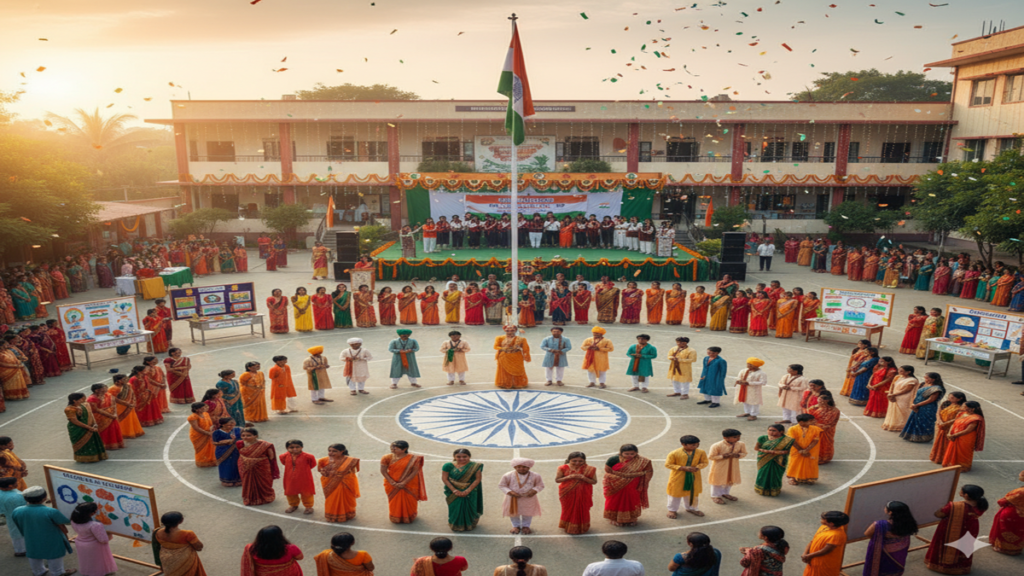
Republic Day Celebration Ideas at School 2026: स्कूल में गणतंत्र दिवस को बनाएं खास! छात्रों के लिए 15+ मजेदार और देशभक्ति से भरे आइडियाज।
Republic Day Celebration Ideas at School 2026: Introduction: Dosto, 26 जनवरी यानी हमारा गणतंत्र दिवस (Republic Day) सिर्फ एक राष्ट्रीय छुट्टी नहीं है, बल्कि यह हमारे संविधान और लोकतन्त्र का जश्न मनाने का दिन है। स्कूलों में इस दिन का विशेष महत्व होता है क्योंकि यहीं से बच्चों के मन में देशभक्ति के बीज बोए जाते हैं।
अगर आप एक टीचर हैं, प्रिंसिपल हैं या स्टूडेंट हैं और इस बार Republic Day 2026 के लिए कुछ हटकर और ‘Unique’ आइडियाज तलाश रहे हैं, तो यह आर्टिकल आपके बहुत काम आएगा। आज हम देखेंगे Republic Day Celebration Ideas at School की एक पूरी लिस्ट, जो आपके स्कूल के प्रोग्राम में चार चाँद लगा देगी।
1. तिरंगा ध्वजारोहण (Flag Hoisting Ceremony)
Republic Day Celebration Ideas at School 2026: किसी भी गणतंत्र दिवस समारोह की शुरुआत तिरंगा फहराने के साथ होती है।
- Idea: इस बार किसी पूर्व सैनिक (Ex-Serviceman) या स्कूल के सबसे मेहनती कर्मचारी (जैसे चपरासी या गार्ड) को मुख्य अतिथि के रूप में बुलाएं। इससे बच्चों को सम्मान का महत्व समझ आएगा।
2. सांस्कृतिक कार्यक्रम (Cultural Programs)
सांस्कृतिक कार्यक्रम बच्चों के टैलेंट को दिखाने का सबसे अच्छा जरिया हैं:
- Patriotic Dance: ‘तेरी मिट्टी’, ‘मां तुझे सलाम’ या ‘जय हो’ जैसे गानों पर ग्रुप डांस।
- Skit/Drama: भारत के स्वतंत्रता सेनानियों (जैसे भगत सिंह, सुभाष चंद्र बोस) के जीवन पर एक छोटा नाटक प्रस्तुत करें।
- Unity in Diversity Parade: अलग-अलग राज्यों (महाराष्ट्र, पंजाब, केरल आदि) की वेशभूषा में बच्चों का रैंप वॉक।
Republic Day Celebration Ideas at School 2026: छोटे बच्चों के लिए ये गतिविधियां बहुत मजेदार होती हैं:
- Tiranga Badge Making: पेपर और रंगों की मदद से तिरंगा बैच बनाना।
- Tri-color Food Fest: बच्चों को घर से तिरंगे के रंगों वाला खाना (जैसे सैंडविच, पास्ता या पुलाव) लाने के लिए कहें।
- Kite Flying: केसरिया, सफेद और हरे रंग की पतंगें उड़ाना।
4. ज्ञानवर्धक प्रतियोगिताएं (Educational Competitions)
Republic Day Celebration Ideas at School 2026: मनोरंजन के साथ-साथ ज्ञान बढ़ाना भी जरूरी है:
- Constitution Quiz: भारतीय संविधान और गणतंत्र दिवस के इतिहास पर एक क्विज कॉम्पिटिशन रखें।
- Elocution/Speech: “2047 का भारत” या “मेरे सपनों का भारत” विषय पर भाषण प्रतियोगिता।
- Poster Making: ‘विकसित भारत 2026’ थीम पर पोस्टर बनवाएं।
5. डिजिटल और मॉडर्न आइडियाज (Digital Celebration Ideas)
Republic Day Celebration Ideas at School 2026: 2026 के दौर में तकनीक का इस्तेमाल करें:
- Virtual Tour: बच्चों को स्मार्ट क्लास में दिल्ली की परेड का लाइव टेलीकास्ट या ‘अमृत उद्यान’ का वर्चुअल टूर दिखाएं।
- Selfie Point: स्कूल में एक ‘Patriotic Selfie Point’ बनाएं जहाँ बच्चे अपनी फैमिली के साथ फोटो खिंचवा सकें।
- Documentary Screening: भारत की आजादी और संविधान बनने की कहानी पर एक छोटी फिल्म दिखाएं।
6. सामाजिक सेवा (Social Service Initiatives)
Republic Day Celebration Ideas at School 2026: देशभक्ति सिर्फ नारों में नहीं, काम में भी होनी चाहिए:
- Plantation Drive: स्कूल परिसर में 26 पौधे लगाएं।
- Donate for a Cause: बच्चों को अपनी पुरानी किताबें या खिलौने गरीब बच्चों को दान करने के लिए प्रोत्साहित करें।
7. स्कूल डेकोरेशन टिप्स (Decoration Tips)
- पूरे स्कूल को केसरिया, सफेद और हरे गुब्बारों और रिबन से सजाएं।
- गेट पर फूलों की खूबसूरत रंगोली बनाएं।
- हर क्लास के बाहर भारत के महान नायकों के कोट्स (Quotes) लगाएं।
Conclusion: गणतंत्र का गौरव मनाएं!
Republic Day celebration at school का असली मकसद बच्चों को हमारे गौरवशाली इतिहास से जोड़ना है। ऊपर दिए गए आइडियाज न केवल बच्चों को व्यस्त रखेंगे, बल्कि उनमें देश के प्रति जिम्मेदारी की भावना भी पैदा करेंगे। याद रखें, एक छोटा सा बदलाव आपके प्रोग्राम को साधारण से असाधारण बना सकता है।
Beyond the Parade: Inspiring and Inclusive Republic Day Celebrations for Schools
Republic Day celebration ideas at school Republic Day, celebrated every January 26th, is more than a national holiday; it is a profound reminder of the day India’s Constitution came into life, transforming the nation into a sovereign, democratic republic. For schools, this day presents a pivotal opportunity to move beyond ceremonial routines and instill in students a deep, lasting understanding of their constitutional values, rights, and responsibilities. It’s a day to celebrate not just the nation’s military might, but the diversity, spirit, and intellectual foundation that holds it together.
Republic Day Celebration Ideas at School 2026: This guide offers a spectrum of ideas—from traditional to innovative—to help educators design a Republic Day celebration that is engaging, educational, and unforgettable for every member of the school community.
The Core Philosophy: From Spectators to Participants
Republic Day Celebration Ideas at School 2026: The most impactful celebrations are those where students are active creators, not passive viewers. The goal is to shift the focus from a mere “show” to an “experience” that fosters critical thinking, empathy, and constitutional morality.
Section 1: The Grand Assembly – A Foundation of Solemnity and Pride
Republic Day Celebration Ideas at School 2026: Begin the day with a ceremony that sets the right tone of respect and reflection.
- The Traditional Anchor with a Twist: Begin with the unfurling of the Tricolour and the National Anthem. Follow this with a solemn pledge, not just to the nation, but to uphold the values of the Constitution—justice, liberty, equality, and fraternity.
- The Principal’s Address: This speech should connect history to the present. Instead of a generic talk, focus on a specific Fundamental Duty or a contemporary issue viewed through the lens of constitutional principles.
- Student-Centric Keynote: Have a senior student deliver a short, powerful speech on “What the Constitution Means to My Generation.” This personal touch resonates deeply with the student body.
- Patriotic Symphony: A mass choir performance of songs like
Ae Mere Watan Ke Logo,Vande Mataram, orMaati Tujhe Pranamcan be stirring. For a modern twist, incorporate a medley that includes contemporary patriotic songs or an instrumental fusion piece.
Section 2: The Classroom Crucible: Deep Dive Activities
Republic Day Celebration Ideas at School 2026: Let the celebrations permeate the classroom through age-appropriate, engaging activities.
- For Primary School (Grades 1-5):
- Constitution in Cartoons: Use simplified, illustrated booklets to explain Fundamental Rights and Duties. Teachers can narrate stories about the right to education or the duty to protect the environment.
- Tricolour Creativity: Organize craft sessions—making badges, fans, or kites with the national flag. Teach the correct flag code and significance of the colors (Saffron for courage, White for peace, Green for prosperity, and the Ashoka Chakra for truth and justice).
- Puppet Show Parliaments: Use puppets to enact a simple story about making fair rules for a classroom, introducing the concept of democracy and debate in a playful manner.
- For Middle School (Grades 6-8):
- Mock Constituent Assembly: Students research and represent different historical figures or regions of the 1940s. They can debate and “draft” an article of a mock constitution for their school, understanding the complexities of consensus-building.
- ‘My Right, My Responsibility’ Poster Making: Link each Fundamental Right with a corresponding duty. For example, the Right to Freedom of Speech is linked to the Duty to uphold harmony.
- Digital Timeline Project: Use digital tools to create an interactive timeline of India’s journey to becoming a republic, from the Lahore Session to the signing of the Constitution.
- For High School (Grades 9-12):
- Moot Court Competition: Present a fictional case based on a real constitutional issue (like privacy vs. security, freedom of expression vs. hate speech). Students argue as lawyers and judges, applying constitutional articles.
- Republic Day Celebration Ideas at School 2026: Research Paper/Seminar: Topics could include “Comparative Study of the Indian and South African Constitutions,” “Environmental Protection as a Constitutional Duty,” or “Analyzing the Kesavananda Bharati Case.”
- Republic Day Celebration Ideas at School 2026: Documentary Screening & Discussion: Screen short documentaries on themes of social justice, the making of the constitution, or unsung freedom fighters, followed by a guided discussion.
Section 3: The Cultural Canvas: Celebrating the Republic’s Soul
Republic Day Celebration Ideas at School 2026: The cultural program is the heart of the celebration, showcasing India’s unity in diversity.
- Thematic Tableaus: Move beyond state-based dances. Create moving tableaus on themes like “The Pillars of the Constitution” (with segments on Justice, Liberty, Equality, Fraternity), “Women in the Freedom Struggle”, or “Bharat: Past, Present, and Future.”
- Constitutional Reader’s Theatre: A dramatic reading of the Preamble in multiple languages, interspersed with narrations from the Constituent Assembly Debates. This can be a powerful and solemn performance.
- Folk Fusion Festival: Celebrate India’s diversity by having students perform folk dances or songs from different states, but with a narrative that ties them together as threads of the national fabric.
- Republic Day Celebration Ideas at School 2026: Spoken Word Poetry & Monologues: Encourage students to write and perform poetry or monologues from the perspective of Dr. B.R. Ambedkar, the tribal communities, or a young voter casting their first ballot.
Section 4: Beyond the Stage: Engaging the Entire School Community
- Republic Day Celebration Ideas at School 2026: Constitutional Corner & Exhibition: Set up interactive booths in the school courtyard or hall.
- Preamble Pledge Wall: A large board where every student and teacher signs around a calligraphic Preamble.
- Art Gallery: Display the best posters, charts, and research projects from classroom activities.
- Virtual Reality (VR) Experience: If resources allow, a VR walkthrough of the Parliament or a historical moment can be mesmerizing.
-
- Republic Day Celebration Ideas at School 2026: Organize a cleanliness drive around the school (Swachh Bharat).
- Visit a local elderly home or orphanage to perform cultural programs.
- Start a “Right to Education” drive by collecting books or funds for an underprivileged school.
- Special Assemblies & Guest Lectures: Invite a local lawyer, judge, social activist, or historian to speak about the Constitution’s relevance. A veteran from the armed forces can also connect the value of discipline to civic duty.
Section 5: The Digital Republic: Leveraging Technology
- Virtual Patriotic Run: Use fitness apps to organize a 2.6 km or 7.5 km (representing 1950) virtual run where students, parents, and alumni can participate from anywhere, sharing selfies with the certificate.
- Online Debate/Webinar: Host a webinar on a constitutional theme, involving students from multiple schools for a pan-India perspective.
- Social Media Campaign: Create a school hashtag (e.g.,
#[SchoolName]Constitutionalists) and encourage students to post short videos explaining a Fundamental Right, sharing their artwork, or reciting the Preamble.
A Sample Schedule for the Day
- 8:00 AM – 8:30 AM: Flag Hoisting, National Anthem, and Pledge.
- 8:30 AM – 9:00 AM: Address by Principal & Student Speaker.
- 9:00 AM – 10:30 AM: Classroom-Specific Activities (Mock Assemblies, discussions, film screenings).
- 12:30 PM – 2:00 PM: Interactive Exhibition & Constitutional Corner (with lunch break staggered).
Conclusion: Planting the Seeds of Constitutional Citizenship
Republic Day Celebration Ideas at School 2026: A truly successful Republic Day celebration is one where the student leaves not just with a sense of pride, but with a spark of curiosity about the Constitution. It’s about making terms like “secular,” “socialist,” and “democratic” living ideas, not just words in a textbook. By moving creatively beyond the parade, schools can play a crucial role in nurturing a generation of informed, empathetic, and active citizens—the true guardians of the Indian Republic. Let January 26th be the day we don’t just celebrate our Constitution, but recommit to fulfilling its promise, one student at a time.
Frequently Asked Questions (FAQ)
1. How can we make Republic Day celebrations inclusive for differently-abled students?
Republic Day Celebration Ideas at School 2026: Focus on universal participation. Use sign language interpreters during the assembly, provide Braille copies of the Preamble for visually impaired students, and ensure wheelchair accessibility for all events. Cultural programs can include inclusive dances or musical performances where all students can contribute according to their abilities. The key is to consult with students and special educators beforehand to plan effectively.
2. Our school has limited budget and resources. What are some low-cost, high-impact ideas?
Republic Day Celebration Ideas at School 2026: The most powerful ideas often cost very little. Focus on student-led initiatives:
Organize a Preamble recitation competition in various languages.
Host a “Constitutional Debate” on a current topic.
Create a “Wall of Inspiration” with student-written quotes on patriotism and duty.
Ask art teachers to guide students in creating a large collaborative mural on chart paper depicting India’s diversity.
Use the school’s existing audio system for a patriotic song singing competition. Creativity and student ownership matter more than expensive props.
3. How do we ensure the celebrations are educational and not just entertainment?
Republic Day Celebration Ideas at School 2026: Tie every performance and activity back to a core constitutional value or historical fact. Provide context before a dance—explain the region’s culture and its contribution to India. Follow a play with a short discussion. Use the exhibition to explain the “why” behind every display. The principal’s and teachers’ speeches are crucial in making these connections explicit, transforming entertainment into engaged learning.
4. Is it appropriate to involve parents and the local community? How?
Absolutely. Republic Day is a national celebration. Invite parents to attend the main ceremony and exhibition. You can involve them by:
Organizing a parent-child patriotic duet (song/poem) competition.
Inviting parents with unique expertise (e.g., a lawyer, army personnel, artist) to be guest speakers or workshop facilitators.
Encouraging community service projects that involve families, like a joint cleanliness drive or a book donation camp.
5. We want to move away from the standard flag-hoisting and cultural show. What is one innovative idea we can implement this year?
Consider a “Living Museum” project. Assign each class a decade of Indian history post-1950. Students research the major social, political, and cultural milestones of that decade. On Republic Day, they create a “museum station” with posters, artifacts (replicas), and even dress up as key figures. They become “museum guides” explaining their decade to visitors (other students, parents). This activity fosters deep research, presentation skills, and provides a tangible sense of India’s journey as a republic.