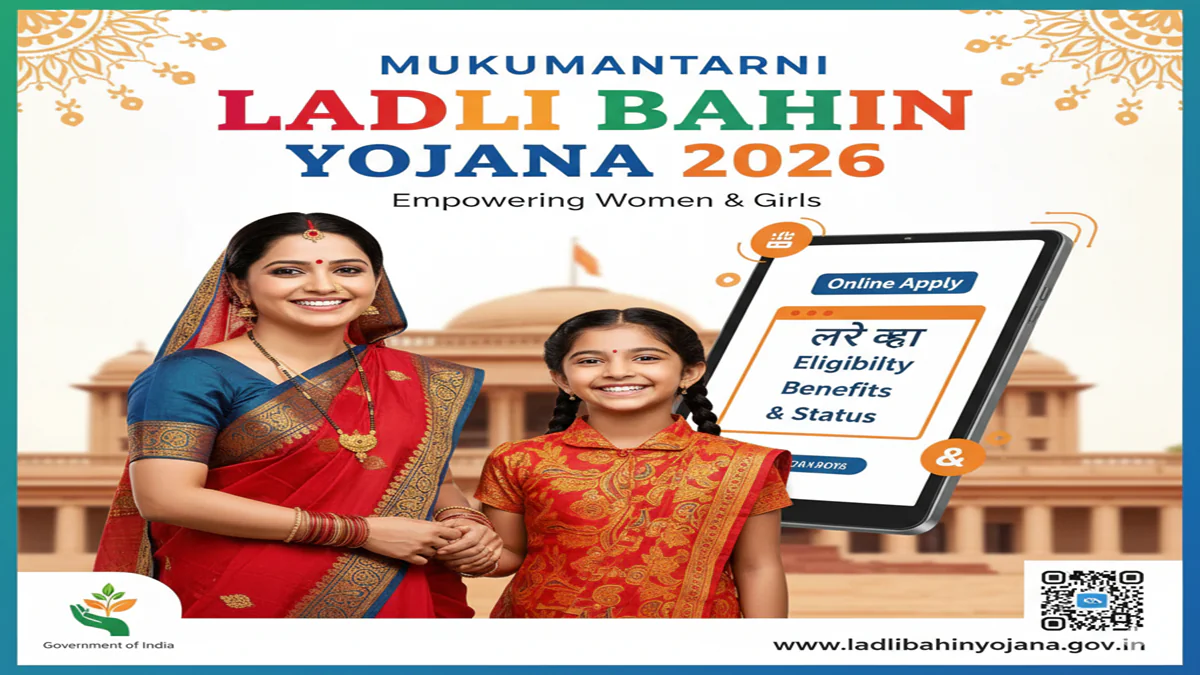
Mukhyamantri Ladki Bahin Yojana Update 2026: क्या बढ़ेगी किस्त? जानिए अगले हप्ते की तारीख और पेंडिंग फॉर्म का समाधान!
Mukhyamantri Ladki Bahin Yojana Update 2026: Dosto, महाराष्ट्र सरकार की सबसे लोकप्रिय योजना ‘मुख्यमंत्री माझी लाडकी बहीण योजना’ ने करोड़ों महिलाओं के जीवन में एक नई उम्मीद जगाई है। हर महीने ₹1500 की आर्थिक मदद सीधे बैंक खाते में ट्रांसफर की जा रही है। लेकिन जैसे-जैसे समय बीत रहा है, महिलाओं के मन में कई सवाल आ रहे हैं— “अगला हफ्ता कब आएगा?”, “क्या पैसे बढ़कर मिलेंगे?” और “रिजेक्टेड फॉर्म को ठीक कैसे करें?”
1. योजना का उद्देश्य और ताजा स्थिति (Current Status)
Mukhyamantri Ladki Bahin Yojana Update 2026: इस योजना का मुख्य उद्देश्य राज्य की महिलाओं को आर्थिक रूप से स्वतंत्र बनाना है। अब तक कई किस्तों का भुगतान सफलतापूर्वक किया जा चुका है। सरकार का लक्ष्य है कि कोई भी पात्र (Eligible) महिला इस लाभ से वंचित न रहे।
2. अगला हफ्ता कब आएगा? (Next Installment Date)
Mukhyamantri Ladki Bahin Yojana Update 2026: आमतौर पर सरकार हर महीने की 10 से 15 तारीख के बीच पैसे ट्रांसफर करती है। 2026 के अपडेट्स के अनुसार, यदि आपके आधार कार्ड और बैंक खाते में कोई समस्या नहीं है, तो आपकी किस्त समय पर जमा कर दी जाएगी। आप ‘Nari Shakti Doot App’ के जरिए अपना स्टेटस चेक कर सकते हैं।
3. क्या ₹1500 से बढ़कर ₹2100 मिलेंगे?
Mukhyamantri Ladki Bahin Yojana Update 2026: सोशल मीडिया पर कई खबरें वायरल हो रही हैं कि सरकार इस राशि को बढ़ाकर ₹2100 करने वाली है। हालांकि, अभी तक इस पर कोई आधिकारिक (Official) मुहर नहीं लगी है। बजट सत्र में इस पर चर्चा होने की संभावना है। जैसे ही कोई अपडेट आएगा, हम यहाँ तुरंत अपडेट करेंगे।
4. Eligibility Criteria (पात्रता की शर्तें)
Mukhyamantri Ladki Bahin Yojana Update 2026: अगर आप नया आवेदन करना चाहती हैं, तो ये शर्तें याद रखें:
- महिला महाराष्ट्र की स्थायी निवासी होनी चाहिए।
- आयु सीमा: 21 से 65 वर्ष के बीच।
- परिवार की वार्षिक आय ₹2.5 लाख से कम होनी चाहिए।
- बैंक खाता Aadhaar Seeded (Link) होना अनिवार्य है।
5. फॉर्म रिजेक्ट होने के मुख्य कारण और समाधान (Form Rejection Solutions)
Mukhyamantri Ladki Bahin Yojana Update 2026: बहुत सी महिलाओं के फॉर्म ‘Disapproved’ या ‘Pending’ दिखा रहे हैं। इसके मुख्य कारण ये हो सकते हैं:
- Incomplete Documents: राशन कार्ड या आधार कार्ड की फोटो साफ न होना।
- Bank Mapping Issue: आधार कार्ड बैंक खाते से लिंक न होना (NPCI Mapping)।
- Name Mismatch: आधार कार्ड और बैंक पासबुक में नाम अलग होना।
समाधान: अगर आपका फॉर्म रिजेक्ट हुआ है, तो आप अपने नजदीकी ‘Setu Kendra’ या ‘Anganwadi Sevika’ से मिलकर फॉर्म को ‘Edit’ करवा सकती हैं।
6. जरूरी दस्तावेज (Important Documents List)
- आधार कार्ड (Aadhaar Card)
- राशन कार्ड (Ration Card)
- निवास प्रमाण पत्र (Domicile Certificate)
- आय का प्रमाण पत्र (Income Certificate)
- बैंक पासबुक की फोटोकॉपी (Bank Passbook)
- हमीपत्र (Self Declaration Form)
Conclusion: लाभ उठाएं और सतर्क रहें!
Mukhyamantri Ladki Bahin Yojana महाराष्ट्र की महिलाओं के सशक्तिकरण के लिए एक मील का पत्थर है। अगर आपका पैसा नियमित रूप से आ रहा है, तो अपना बैंक अकाउंट चालू रखें। और अगर कोई समस्या है, तो ऊपर दिए गए स्टेप्स को फॉलो करें। किसी भी फर्जी वेबसाइट पर अपनी जानकारी साझा न करें, केवल आधिकारिक ‘Nari Shakti Doot App’ या गवर्नमेंट पोर्टल का ही उपयोग करें।
Quick Links & FAQs
| सवाल | जवाब |
| हेल्पलाइन नंबर क्या है? | 181 (Women Helpline) |
| स्टेटस कैसे चेक करें? | Official Portal |
| नया रजिस्ट्रेशन | समय-समय पर पोर्टल खोला जाता है, पोर्टल चेक करते रहें। |
Mukhyamantri Ladki Bahin Yojana 2026: Complete Guide to Online Application, Eligibility, Benefits & Status Check
Introduction: A Landmark Initiative for Women’s Empowerment
Mukhyamantri Ladki Bahin Yojana Update 2026: First launched in Maharashtra and now expanded with enhanced features for 2026, this program represents a significant commitment to addressing gender inequality through direct financial assistance and empowerment measures.
The 2026 iteration of the scheme builds upon previous successes while incorporating technological advancements and expanded eligibility criteria to reach more beneficiaries than ever before. As digital India progresses, the scheme’s online application process and status tracking mechanisms exemplify how welfare initiatives can leverage technology for greater transparency and accessibility.
This comprehensive guide explores every facet of the Mukhyamantri Ladki Bahin Yojana 2026, providing detailed information on eligibility requirements, the online application process, benefits structure, and how to check your application status.
Historical Context and Evolution of the Scheme
Mukhyamantri Ladki Bahin Yojana Update 2026: The Mukhyamantri Ladki Bahin Yojana finds its roots in various state-level women’s empowerment initiatives that gained momentum in the early 2020s. Initially conceptualized as a response to the disproportionate economic impact of the pandemic on women, the scheme has evolved into a comprehensive support system.
Phase 1 (2023-2024): The pilot phase focused on urban areas with limited coverage, providing monthly financial assistance to women from economically weaker sections.
Phase 2 (2024-2025): Expansion to rural areas, integration with existing welfare schemes, and introduction of basic digital application processes.
Phase 3 (2026): The current version features a fully digital end-to-end process, expanded eligibility criteria, increased financial benefits, and integration with skill development programs.
The 2026 revision represents the most ambitious version yet, with the Maharashtra government allocating approximately ₹12,000 crores in the state budget specifically for this scheme, aiming to reach over 2 million beneficiaries in the first year alone.
Objectives and Vision of the 2026 Scheme
Mukhyamantri Ladki Bahin Yojana Update 2026: The Mukhyamantri Ladki Bahin Yojana 2026 operates with multiple interconnected objectives:
- Financial Inclusion: Providing direct financial assistance to reduce economic dependency and increase women’s decision-making power within households.
- Social Security: Creating a safety net for vulnerable women, particularly widows, divorcees, and those from marginalized communities.
- Educational Encouragement: Incentivizing families to continue girls’ education through conditional transfers linked to school attendance.
- Healthcare Access: Improving women’s health outcomes by reducing financial barriers to medical care.
- Digital Empowerment: Increasing women’s familiarity with and access to digital financial systems and government portals.
- Economic Participation: Creating pathways for women to enter or re-enter the workforce through linked skill development programs.
Mukhyamantri Ladki Bahin Yojana Update 2026: The scheme’s vision aligns with Sustainable Development Goal 5 (Gender Equality) and the National Policy for Empowerment of Women, creating a model that other states may potentially adopt.
Detailed Eligibility Criteria for 2026
Primary Eligibility Requirements
To qualify for the Mukhyamantri Ladki Bahin Yojana 2026, applicants must satisfy the following conditions:
- Residency: Must be a permanent resident of Maharashtra with valid proof of residence (Aadhaar card with Maharashtra address, ration card, or domicile certificate).
- Age: Applicants must be between 21 and 60 years of age as of January 1, 2026. Special provisions exist for disabled applicants (18-65 years).
- Gender: The scheme is exclusively for women, including transgender women who identify as female.
- Economic Criteria: The combined family income must not exceed ₹2.5 lakh per annum for general category applicants and ₹3 lakh for applicants from Scheduled Castes, Scheduled Tribes, and Other Backward Classes. Income certificates must be obtained from competent authorities.
- Bank Account: Applicants must possess an individual bank account linked with their Aadhaar number. Joint accounts are not acceptable.
- Identification: Valid Aadhaar card is mandatory for application. In exceptional cases where Aadhaar is unavailable, alternative identification may be accepted with additional verification.
Special Categories and Additional Provisions
Mukhyamantri Ladki Bahin Yojana Update 2026: The 2026 scheme includes specific provisions for vulnerable groups:
- Widows and divorcees: No income certificate required if they possess relevant legal documents (death certificate of spouse or divorce decree).
- Women with disabilities: Additional monthly assistance of ₹1,000 over and above the standard benefit.
- Single women (unmarried above 40 years): Eligible regardless of family income if they live independently.
- Women from Particularly Vulnerable Tribal Groups (PVTGs): Relaxed documentation requirements and higher benefit amounts.
- Female survivors of domestic violence: Fast-track approval process with support from Women and Child Development Department officials.
- Women-led households: Defined as households where no adult male member is present or earning.
Exclusion Criteria
Mukhyamantri Ladki Bahin Yojana Update 2026: Applicants will be ineligible if they:
- Are government employees (central, state, or public sector undertakings)
- Pay income tax or file GST returns
- Are beneficiaries of similar financial assistance schemes from other departments
- Own a four-wheeler vehicle (two-wheelers are permissible)
- Have family members in constitutional posts or elected representatives
Enhanced Benefits Structure for 2026
Financial Assistance Components
Mukhyamantri Ladki Bahin Yojana Update 2026: The Mukhyamantri Ladki Bahin Yojana 2026 offers a multi-tiered benefit structure:
- Base Monthly Assistance: ₹1,500 per month deposited directly into the beneficiary’s bank account. This represents a 25% increase from the 2025 amount of ₹1,200.
- Educational Incentive: For families with school-going girls:
- ₹1,500 annual incentive for girls in classes 9-10 with 75% attendance
- ₹2,000 annual incentive for girls in classes 11-12 with 75% attendance
- Higher Education Support: One-time scholarship of ₹25,000 for girls pursuing undergraduate degrees in STEM fields.
- Skill Development Allowance: ₹5,000 for completing certified skill development courses from recognized institutes.
- Maternity Support: One-time payment of ₹6,000 for institutional deliveries, supplementing existing PMMVY benefits.
- Health Insurance Top-up: Coverage up to ₹50,000 for critical illnesses, supplementing Ayushman Bharat for eligible families.
Non-Financial Benefits
Mukhyamantri Ladki Bahin Yojana Update 2026: Beyond direct financial transfers, the scheme provides:
- Priority access to government housing schemes
- Subsidized loans through partnership with nationalized banks for entrepreneurial ventures
- Free legal aid through district legal services authorities
- Digital literacy training in partnership with Common Service Centers
- Career counseling and job placement assistance through designated centers
Special District-Specific Benefits
Mukhyamantri Ladki Bahin Yojana Update 2026: Recognizing regional disparities, the 2026 scheme includes district-specific additional benefits:
- Aspirational Districts: Additional ₹500 monthly assistance
- Naxal-affected areas: Enhanced security allowance of ₹750 monthly
- Coastal regions: Fishing equipment subsidies for women in fishing communities
- Drought-prone areas: Water conservation training and equipment support
Step-by-Step Online Application Process
Prerequisites for Application
Mukhyamantri Ladki Bahin Yojana Update 2026: Before beginning the application process, ensure you have the following documents in digital format (scanned copies or clear photos):
- Aadhaar card (PDF/Image)
- Proof of residence (ration card, electricity bill, or domicile certificate)
- Income certificate issued by Tehsildar or competent authority
- Bank account passbook first page or cancelled cheque
- Passport-sized photograph (recent, white background)
- Category certificate (if applicable)
- Special category documents (widow, disability, etc., if applicable)
Registration on the Portal
- Access the Official Portal: Visit the official website
mahaladkibahin2026.maharashtra.gov.in. Beware of duplicate or fraudulent websites. - Create User Account: Click on “New Registration” and provide basic details including name, mobile number, and email address. You will receive an OTP for verification.
- Profile Setup: Complete your profile by entering personal details exactly as they appear on your Aadhaar card.
Filling the Application Form
Mukhyamantri Ladki Bahin Yojana Update 2026: The application form consists of five sections:
Section A: Personal Information
- Full name (as per Aadhaar)
- Date of birth
- Gender
- Aadhaar number
- Mobile number (linked with Aadhaar)
- Email address
Section B: Residence Details
- Permanent address
- Current address (if different)
- District, Taluka, Village/Ward
- Pin code
Section C: Family and Income Details
- Family composition
- Occupation details of family members
- Annual family income
- Income certificate details
Section D: Bank Account Information
- Bank name
- Branch name and IFSC code
- Account number
- Account type
Section E: Category and Special Status
- Social category (SC/ST/OBC/General)
- Special status (Widow/Divorced/Disabled/etc.)
- Supporting document upload
Document Upload Guidelines
- All documents must be in PDF or JPEG format
- Maximum file size: 2 MB per document
- Ensure documents are clear, legible, and complete
- Name files appropriately (e.g., “Aadhaar_YourName.pdf”)
- Documents should be recent (not older than 6 months, unless permanent)
Submission and Acknowledgement
Mukhyamantri Ladki Bahin Yojana Update 2026: After completing all sections and uploading documents:
- Review all information carefully using the “Preview” option
- Submit the application
- Note your application reference number (ARN)
- Download and print the acknowledgement receipt
- You will receive an SMS and email confirmation with your ARN
Application Deadlines and Processing Time
- Application window: April 1, 2026 – September 30, 2026
- Late applications (with valid reasons): Until December 31, 2026
- Expected processing time: 45-60 days from submission
- Verification may include field visits by designated officers
Tracking Application Status
Status Check Methods
Online Portal Method:
- Visit the official portal
- Click on “Track Application Status”
- Enter your ARN or Aadhaar number
- View current status and expected timeline
Mobile App Method:
- Register with your mobile number
- Navigate to “Ladki Bahin Yojana” section
- Check status with ARN or Aadhaar
Helpline Method:
- Call the toll-free number 155344
- Provide your ARN to the customer service executive
- Receive status update via SMS
CSC Method:
- Visit your nearest Common Service Center
- Provide your ARN and identification
- Center operator will check and print your status
Understanding Status Messages
- Application Received: Successfully submitted and in queue for verification
- Under Document Verification: Documents are being checked for authenticity
- Field Verification Pending: Local authorities will visit for physical verification
- Approved by Tehsil Officer: First-level approval completed
- Approved by District Officer: Final approval, benefits to be disbursed soon
- Rejected: Application did not meet criteria (with reason specified)
- Pending for Correction: Some information needs clarification/correction
- Benefits Disbursed: Amount credited to bank account
Addressing Common Status Issues
- Status Not Updating: Allow 7-10 working days between status stages. If longer, contact helpline.
- Document Correction Requests: Make corrections within 15 days of notification to avoid rejection.
- Verification Delays: Contact your local Women and Child Development Officer if verification is pending beyond 30 days.
- Bank Account Issues: Ensure your account is active, KYC-compliant, and Aadhaar-linked.
Disbursement Mechanism and Grievance Redressal
Payment Process
Mukhyamantri Ladki Bahin Yojana Update 2026: Benefits are disbursed through the Direct Benefit Transfer (DBT) system:
- Consolidation: District authorities compile list of approved beneficiaries
- Validation: Aadhaar-based validation of bank accounts through NPCI mapper
- Authorization: Funds transferred from state treasury to beneficiary accounts
- Crediting: Amounts credited on the 5th of each month (or next working day)
- Confirmation: SMS alert sent upon successful transaction
Grievance Redressal System
Mukhyamantri Ladki Bahin Yojana Update 2026: A multi-level grievance redressal mechanism is established:
Level 1: Online portal complaint registration with 7-day resolution timeline
Level 2: District Grievance Officer (14-day resolution timeline)
Level 3: State-level Appellate Authority (30-day resolution timeline)
Level 4: Ombudsman (Independent authority for unresolved cases)
Common grievance categories and resolution timelines:
- Non-receipt of benefits: 7 days
- Incorrect benefit amount: 15 days
- Status not updating: 3 days
- Document issues: 10 days
Transparency and Social Audits
Mukhyamantri Ladki Bahin Yojana Update 2026: The 2026 scheme incorporates enhanced transparency measures:
- Monthly beneficiary lists published at gram panchayat and ward levels
- Third-party social audits by accredited agencies
- Real-time dashboard showing scheme performance metrics
- Whistleblower protection for reporting irregularities
Impact Assessment and Success Stories
Quantitative Impact (Based on 2025 Data)
- Coverage: 1.8 million women beneficiaries across Maharashtra
- Educational Impact: 22% increase in secondary school enrollment of girls in beneficiary families
- Health Indicators: 18% increase in institutional deliveries among beneficiaries
- Economic Mobility: 12% of beneficiaries started micro-enterprises with scheme support
Qualitative Transformations
Case studies from earlier phases demonstrate:
- Meera from Nagpur: Used monthly assistance to complete tailoring course, now runs small boutique employing three other women.
- Sunita from Nandurbar: Educational incentives enabled her daughters to continue schooling; both now in college.
- Laxmi from Beed: Combined scheme benefits with housing subsidy to construct a permanent home for her family.
- Anjali from Mumbai slums: Accessed legal aid through scheme referral to secure maintenance from estranged husband.
Challenges and Future Roadmap
Implementation Challenges
Despite its successes, the scheme faces several challenges:
- Digital Divide: Limited internet access in remote areas hinders online applications
- Documentation Barriers: Many eligible women lack formal documents
- Awareness Gaps: Scheme details not reaching most marginalized communities
- Implementation Delays: Verification and approval bottlenecks in some districts
- Duplication Issues: Preventing multiple enrollments across similar schemes
Mitigation Strategies for 2026
Mukhyamantri Ladki Bahin Yojana Update 2026: The 2026 version addresses these challenges through:
- Mobile Registration Vans: Reaching remote areas for assisted applications
- Documentation Camps: Special camps to help women obtain required certificates
- Awareness Campaigns: Community radio, local language outreach, and ASHA worker involvement
- Streamlined Processes: Reduced verification steps through integrated databases
- De-duplication Software: Aadhaar-based cross-verification across all welfare schemes
Future Enhancements Planned
Based on stakeholder feedback, future versions may include:
- Integration with National Career Service portal for employment linkages
- Partnership with e-commerce platforms for marketing products from women entrepreneurs
- Mobile-based micro-learning modules on financial literacy
- Green skills training for sustainable livelihood options
- Expansion to cover single women below 21 in exceptional circumstances
Comparative Analysis with Similar Schemes
The Mukhyamantri Ladki Bahin Yojana 2026 differs from other women-centric schemes in several ways:
Vs. PMMVY (Pradhan Mantri Matru Vandana Yojana): While PMMVY focuses specifically on maternity benefits, Ladki Bahin provides continuous monthly support.
Vs. Widow Pension Schemes: Ladki Bahin includes but is not limited to widows, covering broader categories of disadvantaged women.
Vs. State-specific schemes: More comprehensive than schemes like Delhi’s Ladli Yojana (focused on education) or West Bengal’s Lakshmir Bhandar (limited to married women).
The integrated approach combining monthly assistance with conditional incentives for education and health makes this scheme uniquely comprehensive.
Conclusion: Towards Gender-Inclusive Development
The Mukhyamantri Ladki Bahin Yojana 2026 represents a significant evolution in social welfare design, moving from fragmented assistance to integrated empowerment. By combining direct financial support with incentives for education, health, and skill development, the scheme acknowledges the multidimensional nature of women’s empowerment.
The fully digital application and tracking system for 2026 not only increases efficiency but also promotes digital inclusion among women from all socioeconomic backgrounds. While challenges remain in reaching the most marginalized, the enhanced features and expanded eligibility of the 2026 version demonstrate a responsive governance model that learns from implementation experience.
As Maharashtra moves toward its vision of becoming a trillion-dollar economy, initiatives like the Ladki Bahin Yojana recognize that sustainable development cannot be achieved without addressing gender disparities. By investing in women’s economic autonomy today, the scheme lays the foundation for more equitable prosperity for future generations.
Women eligible for the scheme are encouraged to begin gathering required documents and apply as early as possible during the application window. Those needing assistance can approach their local Anganwadi centers, Common Service Centers, or Women and Child Development offices for guidance through the application process.
Frequently Asked Questions (FAQs)
Q1: Can I apply for Mukhyamantri Ladki Bahin Yojana if I am already receiving benefits from another welfare scheme?
A: It depends on the scheme. You cannot receive benefits from multiplefinancial assistanceschemes simultaneously. However, you can combine Ladki Bahin with skill development, educational scholarship, or health insurance schemes. The portal automatically checks for duplication across major financial assistance programs during application processing.
Q2: What should I do if my application is rejected?
A: If your application is rejected, you will receive a notification stating the reason for rejection. You have 30 days to file an appeal online through the grievance portal or at your district Women and Child Development office. Common rejection reasons include document discrepancies, income above threshold, or duplication with other schemes—all of which can often be addressed through appeal with proper documentation.
Q3: How is the monthly assistance amount expected to change in future years?
A: The assistance amount is reviewed annually and typically increases based on inflation and state budget considerations. Any changes are announced during the state budget session each February.
Q4: What happens if I move to a different district within Maharashtra after approval?
A: Beneficiaries must update their address within one month of moving through the portal or at their new district office. Benefits continue uninterrupted, but failure to update address may lead to suspension until verification is completed at the new location. Inter-district transfers are managed through a streamlined process between district offices.
Q5: Are there any conditions for continuing to receive benefits once approved?
A: Yes, beneficiaries must comply with annual renewal processes, inform about significant income changes, and participate in periodic verification. Specifically: (1) Annual e-KYC through the portal or biometric authentication at CSCs; (2) Notification within 3 months if family income crosses the eligibility threshold; (3) Participation in social audit processes when selected; (4) Compliance with educational conditions if receiving those specific incentives.