


PM Kusum Yojana 2026: खेतों में सौर ऊर्जा की क्रांति! जानें कैसे पाएं 90% तक सब्सिडी और मुफ्त बिजली; पूरी आवेदन प्रक्रिया हिंदी में।
PM Kusum Solar Yojana 2026: Introduction: भारत एक कृषि प्रधान देश है, जहाँ सिंचाई के लिए आज भी लाखों किसान बिजली या महंगे डीजल पंपों पर निर्भर हैं। इस निर्भरता को कम करने और किसानों की आय बढ़ाने के लिए भारत सरकार ने “प्रधानमंत्री कुसुम सोलर योजना” (PM Kusum Yojana) की शुरुआत की है। 2026 में, इस योजना का लाभ लेकर लाखों किसान अपने खेतों को ‘ऊर्जा हब’ (Energy Hub) बना रहे हैं।
यदि आप भी अपने खेत में सोलर पंप लगवाना चाहते हैं, तो यह लेख आपके लिए एक कंप्लीट गाइड है। इस योजना के तहत सरकार आपको न केवल सौर पंप पर भारी सब्सिडी देती है, बल्कि यदि आपके पास अतिरिक्त बिजली बनती है, तो आप उसे सरकार को बेचकर एक्स्ट्रा कमाई भी कर सकते हैं।
1. पीएम कुसुम योजना क्या है? (What is PM Kusum Yojana?)
PM Kusum Solar Yojana 2026: यह योजना तीन प्रमुख घटकों (Components) पर काम करती है:
- घटक A: बंजर या खाली जमीन पर सौर ऊर्जा प्लांट लगाना।
- घटक B: खेतों में डीजल/बिजली पंपों की जगह सोलर पंप लगाना।
- घटक C: मौजूदा ग्रिड से जुड़े पंपों का सोलराइजेशन करना।
2. इस योजना के प्रमुख लाभ (Key Advantages)
- भारी सब्सिडी: केंद्र और राज्य सरकार मिलकर इस पर 60% से 90% तक सब्सिडी देती हैं। यानी आपको बहुत कम खर्च में पंप मिल जाता है।
- मुफ्त बिजली: एक बार सोलर पंप लगने के बाद सिंचाई के लिए आपको कभी भी बिजली का बिल नहीं भरना पड़ेगा।
- अतिरिक्त आमदनी: यदि आप घटक A के तहत जमीन पर सोलर प्लांट लगाते हैं, तो आप बिजली ग्रिड को बेचकर सालभर मोटी कमाई कर सकते हैं।
- प्रदूषण मुक्त: सौर ऊर्जा से चलने के कारण यह पर्यावरण को नुकसान नहीं पहुँचाता।
3. आवेदन की पात्रता (Eligibility Criteria)
- आवेदक का भारत का नागरिक होना अनिवार्य है।
- आवेदन करने वाले किसान के पास आधार कार्ड, बैंक खाता और जमीन के कागजात होने चाहिए।
4. आवेदन कैसे करें? (Step-by-Step Process)
- आधिकारिक वेबसाइट: सबसे पहले कुसुम योजना की आधिकारिक वेबसाइट
pmkusum.mnre.gov.inपर जाएं। - रजिस्ट्रेशन: ‘Apply Online’ पर क्लिक करें और अपनी व्यक्तिगत जानकारी व जमीन का विवरण भरें।
- दस्तावेज: अपने आधार कार्ड, बैंक पासबुक, खसरा-खतौनी की नकल और पासपोर्ट साइज फोटो अपलोड करें।
- सत्यापन (Verification): फॉर्म सबमिट करने के बाद, स्थानीय कृषि विभाग या डिस्कॉम (DISCOM) के अधिकारी आपके दस्तावेजों और जमीन का भौतिक सत्यापन करेंगे।
- अनुमोदन (Approval): सत्यापन के बाद आपको सब्सिडी की राशि और पंप लगाने की अनुमति मिल जाएगी।
5. जरूरी दस्तावेज (Required Documents)
- आधार कार्ड (Aadhar Card)
- बैंक खाता विवरण (Bank Passbook)
- भूमि के स्वामित्व के दस्तावेज (Land Documents)
- मोबाइल नंबर (जो आधार से लिंक हो)
- पासपोर्ट साइज फोटो
6. किसान अक्सर होने वाली गलतियां (Common Mistakes to Avoid)
- फर्जी वेबसाइट: हमेशा सरकारी वेबसाइट का ही उपयोग करें। इंटरनेट पर कई फर्जी वेबसाइटें आपसे रजिस्ट्रेशन के नाम पर पैसे ऐंठ सकती हैं।
- गलत जानकारी: जमीन के कागजात और आधार का नाम एक जैसा होना चाहिए। किसी भी स्पेलिंग मिस्टेक से आवेदन रिजेक्ट हो सकता है।
4. अक्सर पूछे जाने वाले प्रश्न (FAQs)
Q1: क्या योजना के लिए कोई पैसा जमा करना होता है?
Ans: सरकार सब्सिडी देती है, लेकिन आपको अपने हिस्से (बचा हुआ 10-30%) का भुगतान पंप लगवाने वाली अधिकृत कंपनी को करना होता है।
Q2: सोलर पंप कितने एचपी (HP) का मिलता है?
Ans: आपकी सिंचाई की जरूरत के अनुसार आप 3 HP से लेकर 10 HP तक का सोलर पंप चुन सकते हैं।
Q3: क्या मैं सोलर प्लांट से कमाई कर सकता हूँ?
Ans: हाँ, यदि आप घटक ‘A’ के तहत खाली जमीन पर सोलर प्लांट लगाते हैं, तो आप उत्पादित बिजली को पास के सब-स्टेशन को बेच सकते हैं।
Conclusion: स्मार्ट खेती की ओर कदम!
PM Kusum Yojana 2026 किसानों को आत्मनिर्भर बनाने की दिशा में एक बहुत बड़ा कदम है। यह योजना न केवल आपके डीजल का खर्च बचाती है, बल्कि खेती को मुनाफे का सौदा बनाती है। यदि आप अभी तक इस योजना का लाभ नहीं ले पाए हैं, तो अभी अपने निकटतम कृषि कार्यालय में जाकर या वेबसाइट के माध्यम से आवेदन करें।
Kusum Solar Yojana 2026: Online Apply, Subsidy & Eligibility की पूरी जानकारी
Kusum Solar Yojana अगर आप एक किसान हैं और भारी बिजली बिल या बिजली की कटौती से परेशान हैं, तो PM Kusum Solar Yojana 2026 आपके लिए एक वरदान साबित हो सकती है। सरकार अब किसानों को सोलर पंप लगाने के लिए भारी Subsidy दे रही है।
PM Kusum Solar Yojana 2026: इस आर्टिकल में हम जानेंगे कि आप Kusum Solar Yojana 2026 Online Apply कैसे कर सकते हैं और इसके लिए कौन से डॉक्यूमेंट्स जरूरी हैं।
What is Kusum Solar Yojana 2026?
PM Kusum (Pradhan Mantri Kisan Urja Suraksha evam Utthaan Mahabhiyan) योजना का मुख्य उद्देश्य किसानों को सौर ऊर्जा (Solar Energy) से जोड़ना है। इस योजना के तहत किसान अपने खेतों में Solar Pump लगवा सकते हैं, जिससे सिंचाई का खर्च लगभग जीरो हो जाता है।
सरकार ने इस योजना की अवधि को March 2026 तक बढ़ा दिया है, ताकि ज्यादा से ज्यादा किसान इसका लाभ उठा सकें।

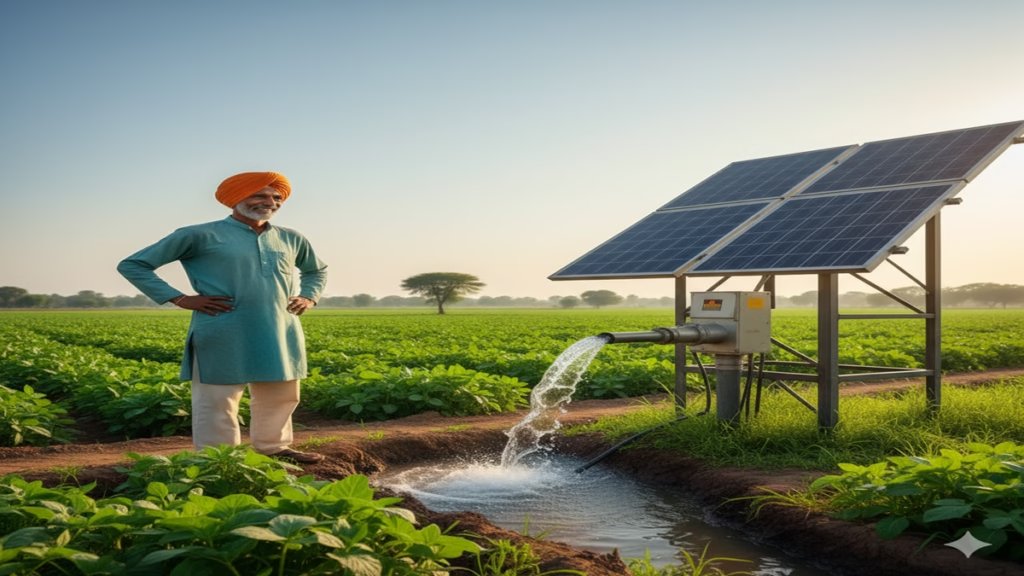
Kusum Solar Yojana Subsidy Details
Kusum Solar Yojana इस योजना की सबसे बड़ी खासियत इसकी Subsidy है:
- Central Government Share: 30%
- State Government Share: 30% (कुछ राज्यों में यह ज्यादा भी हो सकता है)
- Bank Loan Facility: 30%
- Farmer’s Contribution: सिर्फ 10%
PM Kusum Solar Yojana 2026: यानी आपको कुल खर्च का केवल 10% हिस्सा देना होता है, बाकी सरकार और बैंक संभालते हैं।
Eligibility Criteria (पात्रता)
Kusum Solar Yojana आवेदन करने से पहले अपनी Eligibility चेक कर लें:
- आवेदक एक भारतीय किसान होना चाहिए।
- किसान के पास खेती योग्य जमीन (Land) होनी चाहिए।
- जमीन पर पहले से कोई बिजली का कनेक्शन या पंप नहीं होना चाहिए (कुछ राज्यों के नियमों के अनुसार)।
- आधार कार्ड और बैंक खाता अनिवार्य है।
Required Documents (जरूरी कागजात)
- आधार कार्ड (Aadhar Card)
- जमीन के कागजात (7/12 उतारा / Land Records)
- मोबाइल नंबर (बैंक और आधार से लिंक)
- पासपोर्ट साइज फोटो
- बैंक पासबुक की कॉपी
Kusum Solar Yojana 2026 Online Apply कैसे करें?
PM Kusum Solar Yojana 2026: Step-by-step प्रोसेस नीचे दी गई है:
- Official Website पर जाएं: सबसे पहले अपने राज्य की अधिकृत वेबसाइट (जैसे महाराष्ट्र के लिए Kusum Mahaurja) या PM Kusum पोर्टल पर जाएं।
- Registration: होमपेज पर ‘Apply for Solar Pump’ लिंक पर क्लिक करें और अपनी बेसिक डिटेल्स भरें।
- Form Filling: अपना नाम, पता, आधार नंबर और जमीन की जानकारी दर्ज करें।
- Upload Documents: मांगे गए सभी जरूरी डॉक्यूमेंट्स को स्कैन करके अपलोड करें।
- Payment: आवेदन शुल्क (Application Fee) जमा करें।
- Submit: फॉर्म को अच्छी तरह चेक करें और ‘Submit’ बटन पर क्लिक करें।
निष्कर्ष (Conclusion)
Kusum Solar Yojana 2026 किसानों के लिए खेती को स्मार्ट और सस्ता बनाने का सबसे अच्छा तरीका है। अगर आप फ्री बिजली और कम लागत में खेती करना चाहते हैं, तो आज ही Online Registration करें।
Illuminating Futures: A Complete Guide to Kusum Solar Yojana 2026 – Online Application, Subsidy & Eligibility
Introduction
Kusum Solar Yojana In a nation where agriculture is the backbone of the economy and energy security is a paramount concern, the Kusum (Kisan Urja Suraksha evam Utthaan Mahabhiyan) Solar Yojana stands as a transformative government initiative. Launched by the Ministry of New and Renewable Energy (MNRE), its core mission is to empower farmers, enhance energy independence, and promote sustainable development. As we step into 2026, the scheme has evolved with more streamlined processes and digital integration. This comprehensive guide delves into the intricacies of the Kusum Solar Yojana 2026, providing a detailed walkthrough of its objectives, revised eligibility, enhanced subsidy structure, and the crucial online application process.
Understanding the Kusum Solar Yojana: Vision and Components
Kusum Solar Yojana The Kusum Scheme was conceived with a multi-pronged approach to address several interconnected challenges: the financial burden of diesel-powered irrigation on farmers, the stress on the electricity grid from agricultural feeders, and the national goal of increasing renewable energy capacity. The scheme is architecturally divided into three pivotal components:
- PM Kusum Solar Yojana 2026: Component A: Setting up 10,000 MW of Decentralized Grid-Connected Solar Power Plants on barren or cultivable land. Individual farmers, cooperatives, or panchayats can set up solar power plants (0.5 MW to 2 MW) and sell the electricity to the DISCOM (Distribution Company). This provides farmers with a steady, long-term income.
- This component aims to replace existing diesel pumps with individual, off-grid solar pumps (up to 7.5 HP capacity). It liberates farmers from volatile diesel costs and provides reliable irrigation power.
- Component C: Solarisation of 15 Lakh Grid-Connected Agriculture Pumps. This is perhaps the most innovative component. It allows farmers with existing grid-connected electric pumps to solarise them. They can use the solar power to run the pump and sell the surplus electricity back to the DISCOM, effectively turning their irrigation connection into a revenue-generating asset.
For 2026, the focus is expected to intensify on Components B and C, with accelerated targets and improved subsidy delivery mechanisms.
Kusum Yojana 2026: Revised Eligibility Criteria
Kusum Solar Yojana Eligibility is the first gate for beneficiaries. While states may have minor variations, the central guidelines for Kusum Yojana 2026 eligibility are as follows:
General Eligibility:
- PM Kusum Solar Yojana 2026: Primary Beneficiary: The scheme is primarily for individual farmers. However, farmer producer organizations (FPOs), cooperatives, and panchayats are also eligible under specific components (like Component A).
- Land Ownership: For Components A and B, the applicant must be the owner of the land where the solar plant or pump is to be installed. For Component C, the applicant must own the grid-connected agriculture pump.
- Farm Electricity Connection: For Component C, a valid grid connection for agricultural pumping is mandatory.
- State-Specific Domicile: The applicant must be a resident of the state where the application is being filed. The scheme is implemented by state nodal agencies (SNAs).
Component-Wise Specifics:
- Component A: Requires availability of contiguous barren, cultivable, or fallow land. The applicant must have the necessary clearances and a Power Purchase Agreement (PPA) with the DISCOM.
- Component B & C: The applicant should not have already received a solar pump under a state or central government scheme. Priority is often given to small and marginal farmers (as per state-defined limits).
Documentation Required:
- Aadhaar Card of the applicant/farmer
- Proof of land ownership (Khatauni, Jamabandi, Land Deed)
- Farmer classification certificate (for Small/Marginal Farmer priority)
- Bank account details (linked with Aadhaar)
- Recent electricity bill (for Component C)
- Domicile certificate
- Passport-sized photographs
The Subsidy Structure: Financial Mechanics for 2026
Kusum Solar Yojana The subsidy under Kusum Yojana is its most attractive feature, making the technology affordable. The central financial assistance (CFA) is shared between the central and state governments. The model for 2026 continues with a revised cost benchmark.
The government promotes a reduced farmer contribution to encourage adoption. A typical structure is:
- Central Government Subsidy: 30% of the benchmark cost or system cost, whichever is lower.
- State Government Subsidy: 30% of the benchmark cost or system cost, whichever is lower.
- Farmer’s Contribution: 30%. This is the portion the farmer needs to invest.
- Loan Component: The remaining 10% can be availed as a low-interest loan from financial institutions. In many cases, states aim to subsidize this portion too, aiming for a 60% subsidy (30%+30%) and 40% farmer contribution model. Some progressive states offer even higher subsidies, targeting up to 90% subsidy for small and marginal farmers.
Important Note for Component C (Pump Solarisation): The subsidy is calculated on the cost of the solar PV system (like solar panels, inverter) and not on the existing pump.
Example: If the benchmark cost for a 5 HP solar pump system is ₹ 3,00,000.
- Central Subsidy: ₹ 90,000
- State Subsidy: ₹ 90,000
- Farmer’s Share: ₹ 90,000
- Bank Loan (Optional): ₹ 30,000
Kusum Solar Yojana 2026 Farmers can also choose the Developer Model (especially for Component A), where a developer installs the system, and the farmer pays only for the energy consumed or leases the land.
Step-by-Step Guide: Kusum Solar Yojana 2026 Online Apply Process
The application process has been significantly digitized. Here is a generic step-by-step guide applicable across most states:
- Visit the Official Portal: Go to your State Nodal Agency’s (SNA) official website or the dedicated national Kusum portal (e.g.,
kusum.online). Do not rely on third-party sites. - Farmer Registration: Look for the “Farmer Registration” or “Apply Online” link. You will need to create an account using your mobile number (linked to Aadhaar) and email ID.
- Fill the Application Form: Log in and select the Kusum Scheme component (A, B, or C) you wish to apply for. Fill in the detailed application form with:
- Personal details (Name, Aadhaar, Mobile)
- Land details (Khasra/Khata number, area, location)
- Bank account details (for subsidy transfer via DBT)
- Details of existing pump/grid connection (for Component C)
- Upload Documents: Carefully scan and upload all the required documents mentioned in the eligibility section. Ensure the files are clear and within the specified size limit (usually PDF/JPG/PNG).
- Review and Submit: Thoroughly review all entered information. Once submitted, you will receive a unique Application Reference Number. Note it down for all future tracking.
- Application Tracking: Use the application number on the portal’s “Track Application” section to monitor its status—Submission, Verification, Technical Sanction, Tender/Allotment, Installation, Commissioning, and Subsidy Disbursal.
- Post-Application Process: After scrutiny, if selected, your application will be part of a batch that is tendered out to empaneled vendors. The selected vendor will contact you for survey and installation. Do not make any advance payment to unauthorized agents.
Benefits and Impact: Beyond Subsidy
The Kusum Yojana’s impact is profound and multi-dimensional:
- For Farmers: Additional Income (from selling power), Reduced Input Costs (zero fuel cost), Reliable Irrigation, and Dignity of Energy Security.
- For the Nation: Reduced Grid Burden, Lower DISCOM Subsidies, Increased Renewable Energy Capacity, and Reduced Carbon Emissions.
- For the Rural Economy: Job Creation in installation and maintenance, and promotion of local entrepreneurship.
Challenges and The Road Ahead in 2026
Despite its success, challenges persist: awareness gaps in remote areas, bureaucratic delays in subsidy release, quality control of installed systems, and maintenance support. For 2026, the government is focusing on:
- Aggressive Digital Push: Making portals more user-friendly with regional language support.
- Strengthening DBT: Ensuring direct, timely, and transparent subsidy transfer to farmer accounts.
- Quality Assurance: Strict empanelment of vendors and robust monitoring protocols.
- Convergence with Other Schemes: Linking with PM-KUSUM for holistic farm development.
Conclusion
The Kusum Solar Yojana 2026 is more than just a subsidy scheme; it is a movement towards Atmanirbhar Krishi (self-reliant agriculture). By harnessing the power of the sun, it empowers the annadata (food-giver) of the nation, ensuring water security, energy security, and financial stability. The enhanced online application process has made it more accessible than ever. Eligible farmers are encouraged to seize this opportunity, not just as beneficiaries, but as active participants in India’s green energy revolution. The future is bright, and it is powered by the sun.
FAQs: Kusum Solar Yojana 2026
1. I am a tenant farmer. Can I apply for the Kusum Yojana 2026?
While the scheme primarily targets land-owning farmers, some states have provisions for tenant farmers or sharecroppers. They may need to provide additional documents like a lease agreement and a no-objection certificate (NOC) from the landowner. It is crucial to check the specific guidelines of your state nodal agency.
2. What happens on a cloudy day or at night with a solar pump?
Stand-alone solar pumps (Component B) are designed with integrated storage or can be paired with minimal battery backup to operate for a few hours post-sunset. For solarised grid-connected pumps (Component C), you can seamlessly switch to grid power when solar generation is insufficient, ensuring uninterrupted irrigation.
3. How long does it take from online application to installation?
The timeline varies by state and component, typically ranging from 4 to 8 months. It involves stages like application scrutiny, technical feasibility study, bundling of applications for tendering, vendor allocation, and installation. You can track the real-time status on the portal.
4. Is the subsidy amount fixed, or does it depend on the vendor’s quote?
The subsidy is calculated on the MNRE or state-defined benchmark cost, not the vendor’s quote. This prevents over-invoicing and ensures standardization. The farmer’s contribution is a percentage (e.g., 30%) of this benchmark cost. The tender process ensures vendors compete to provide systems at or below the benchmark cost.
5. Can I choose my own vendor or installer for the solar pump?
No, you cannot choose an arbitrary vendor. The process is transparent and centralized. After your application is approved, it is grouped with others from your region and awarded to an empaneled vendor through a competitive bidding process. This ensures quality, adherence to technical standards, and fair pricing. The assigned empaneled vendor will contact you for the survey and installation.