


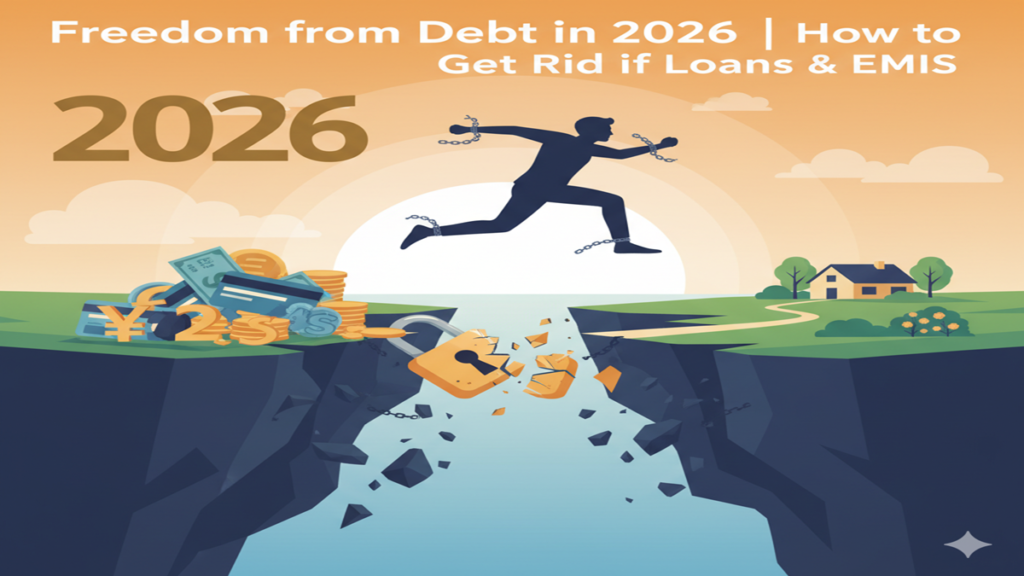
Karj Se Mukti Pane Ke Upay: कर्ज के दलदल से बाहर निकलने के सबसे प्रभावी तरीके; वित्तीय और ज्योतिषीय समाधानों की पूरी गाइड!
Karj Se Mukti Pane Ke Upay: Introduction: आज की भागदौड़ भरी जिंदगी और बढ़ती महंगाई के कारण व्यक्ति न चाहते हुए भी कर्ज (Loan) के जाल में फंस जाता है। कभी घर के लिए, कभी कार के लिए तो कभी बच्चों की शिक्षा के लिए लिया गया कर्ज जब हमारी आय (Income) से ज्यादा हो जाता है, तो यह तनाव और मानसिक परेशानी का कारण बन जाता है।
यदि आप भी “Karj Se Mukti Pane Ke Upay” की तलाश में हैं, तो यह लेख आपके जीवन को बदलने में मदद कर सकता है। कर्ज से मुक्ति पाने के लिए केवल कड़ी मेहनत ही काफी नहीं है, बल्कि एक सही रणनीति और कुछ विशेष उपायों की भी आवश्यकता होती है।
1. कर्ज मुक्ति के वित्तीय उपाय (Financial Strategies)
Karj Se Mukti Pane Ke Upay: कर्ज उतारने के लिए सबसे पहले आपको अपनी वित्तीय आदतों को सुधारना होगा:
- स्नोबॉल मेथड (Debt Snowball): सबसे पहले अपने सबसे छोटे कर्ज को पूरी ताकत लगाकर चुकाएं। जब वह खत्म हो जाए, तो उसकी राशि को अगले बड़े कर्ज में जोड़ दें। इससे आपका आत्मविश्वास बढ़ता है।
- बजटिंग और खर्चों पर नियंत्रण: एक ‘Spending Tracker’ ऐप का इस्तेमाल करें। अनावश्यक सब्सक्रिप्शन, बाहर का खाना और फिजूलखर्ची बंद करें।
- बैलेंस ट्रांसफर (Balance Transfer): यदि आपके क्रेडिट कार्ड का ब्याज बहुत अधिक है, तो उसे कम ब्याज वाले पर्सनल लोन में ट्रांसफर कर लें।
- अतिरिक्त आय का स्रोत: फ्रीलांसिंग या पार्ट-टाइम काम करके अपनी आय बढ़ाएं और उस पूरी राशि का उपयोग केवल कर्ज चुकाने में करें।
2. ज्योतिष शास्त्र के अनुसार कर्ज मुक्ति के उपाय (Astrological Remedies)
Karj Se Mukti Pane Ke Upay: भारतीय परंपरा में कुछ ऐसे उपाय बताए गए हैं जो आर्थिक बाधाओं को दूर करने में सहायक माने जाते हैं:
- मंगलवार का महत्व: शास्त्रों के अनुसार, कर्ज की किश्त हमेशा मंगलवार को चुकानी चाहिए। ऐसा करने से कर्ज जल्दी खत्म होता है। याद रखें, मंगलवार को कभी नया कर्ज न लें।
- ऋणमोचक मंगल स्तोत्र: प्रतिदिन या हर मंगलवार को ‘ऋणमोचक मंगल स्तोत्र’ का पाठ करने से भूमि और धन संबंधी बाधाएं दूर होती हैं।
- भगवान गणेश की पूजा: बुधवार के दिन सवा पाव मूंग उबालकर उसमें घी और शक्कर मिलाकर गाय को खिलाएं। इससे कर्ज उतरने के मार्ग खुलते हैं।
- पीपल के पेड़ का उपाय: शनिवार की शाम को पीपल के पेड़ के नीचे सरसों के तेल का दीपक जलाएं। इससे शनि देव की कृपा प्राप्त होती है और आर्थिक तंगी दूर होती है।
3. वास्तु शास्त्र और कर्ज मुक्ति (Vastu Tips)
Karj Se Mukti Pane Ke Upay: आपके घर का वास्तु भी आपके आर्थिक हालातों को प्रभावित करता है:
- उत्तर दिशा: अपने घर की उत्तर दिशा (North) को हमेशा साफ और खाली रखें। यहाँ कुबेर का वास होता है।
- ईशान कोण: उत्तर-पूर्वी कोने में पानी का कलश या छोटा फव्वारा रखने से धन का आगमन बढ़ता है।
- आईना (Mirror): घर की उत्तर या पूर्व दिशा की दीवार पर बड़ा आईना लगाएं, यह समृद्धि को आकर्षित करता है।
4. मानसिक मजबूती और धैर्य
Karj Se Mukti Pane Ke Upay: कर्ज एक रात में खत्म नहीं होता। इसके लिए धैर्य और निरंतरता (Consistency) की जरूरत है। अपने आप को सकारात्मक रखें और हर महीने एक छोटा लक्ष्य तय करें।
4. अक्सर पूछे जाने वाले प्रश्न (FAQs)
Q1: सबसे पहले कौन सा कर्ज चुकाना चाहिए?
Ans: हमेशा उस कर्ज को पहले चुकाएं जिस पर ब्याज दर सबसे अधिक हो (जैसे क्रेडिट कार्ड का कर्ज)। इसे ‘Debt Avalanche’ मेथड कहते हैं।
Q2: क्या बैंक से कर्ज माफी की बात की जा सकती है?
Ans: यदि आपकी स्थिति बहुत खराब है, तो आप बैंक से ‘Loan Restructuring’ या ‘One Time Settlement’ (OTS) की बात कर सकते हैं। हालांकि, सेटलमेंट से आपका सिबिल स्कोर गिर सकता है।
Q3: कर्ज मुक्ति के लिए सबसे शक्तिशाली मंत्र कौन सा है?
Ans: “ॐ ऋणमुक्तेश्वर महादेवाय नमः” मंत्र का जाप करना बहुत लाभकारी माना जाता है।
Conclusion: कर्ज मुक्त जीवन, सुखी जीवन!
Karj Se Mukti Pane Ke Upay के इस लेख में हमने देखा कि अनुशासन और सही उपायों के संगम से किसी भी बड़े कर्ज को उतारा जा सकता है। अपनी आय बढ़ाएं, खर्च घटाएं और ईश्वर पर विश्वास रखते हुए अपने प्रयास जारी रखें। याद रखें, कर्ज लेना बुरा नहीं है, लेकिन उसे न चुका पाना आपकी मानसिक और आर्थिक स्थिति को नुकसान पहुँचाता है।
Karj Se Mukti Pane Ke Upay 2026 | Loan & EMI Se Chutkara Kaise Paye
Karj Se Mukti Pane Ke Upay 2026 | Loan & EMI Se Chutkara Kaise Paye The weight of debt is a universal burden, a constant companion that shadows financial freedom and mental peace. In India, the concept of “Karj Se Mukti” (Freedom from Debt) is not just a financial goal but a profound aspiration for holistic well-being. As we step into 2026, the landscape of personal debt is evolving—with easier credit access, evolving financial products, and economic shifts making debt management both a challenge and an opportunity. This comprehensive guide delves into practical, actionable strategies to break free from the chains of loans and EMIs, paving a path toward a debt-free life in 2026 and beyond.
Understanding the Debt Trap: Why It Feels Inescapable
Karj Se Mukti Pane Ke Upay: Before seeking liberation, one must understand the confines. A debt trap isn’t just about owing money; it’s a cycle where new debt is taken just to service existing obligations, leading to a spiraling pit where the principal never diminishes. Common culprits include:
- Over-Leveraged Assets: Multiple loans against property or gold, where asset value may depreciate.
- Lifestyle Inflation: Financing aspirational lifestyles through EMIs (multiple gadgets, vehicles, vacations).
- Emergency Borrowing: Lack of an emergency fund forcing reliance on loans during crises.
- The “Minimum Due” Mirage: Paying only the minimum due on credit cards, prolonging debt indefinitely.
Karj Se Mukti Pane Ke Upay: A 2026 Roadmap to Freedom
Karj Se Mukti Pane Ke Upay: The journey to debt freedom requires discipline, planning, and a shift in mindset. Here is a structured, step-by-step approach tailored for the contemporary financial environment.
Step 1: The Granular Audit – Facing the Numbers
You cannot manage what you do not measure.
- List Every Debt: Create a master list of all debts—home loan, car loan, personal loans, credit cards, loans from friends/family. For each, note:
- Total Outstanding Principal
- Interest Rate (Annual Percentage Rate)
- Remaining Tenure
- Monthly EMI
- Collateral (if any)
- Calculate Total Debt-to-Income Ratio (DTI): Add all monthly EMI payments and divide by your monthly take-home income. A DTI above 40-50% is a red flag.
- Prioritize Debts: Use either the Avalanche Method (prioritize debts with the HIGHEST interest rate first) or the Snowball Method (prioritize the SMALLEST balance first for psychological wins). For 2026, with likely higher interest rates, the Avalanche method is more financially prudent.
Step 2: The Strategic Pause – Stop Digging
- Freeze New Debt: Lock away credit cards, avoid “pre-approved” loan offers, and commit to a no-new-debt period.
- Budget with Rigor: Adopt a zero-based or 50/30/20 budget. Use budgeting apps (like YNAB, GoodBudget) that sync with Indian banks. Every rupee must be assigned a job, with debt repayment being a top priority.
- The “Needs vs. Wants” Filter: Before any non-essential purchase, implement a 24-48 hour cooling-off period.
Step 3: The Acceleration Plan – Repayment Strategies for 2026
- Debt Consolidation: Consider a Balance Transfer for credit card debt to a card offering a 0% or lower interest promotional period. Alternatively, a Debt Consolidation Loan (a single, lower-interest loan to pay off multiple high-interest debts) can simplify payments. Caution: This only works if you close the old accounts and don’t rack up new debt.
- Negotiate with Lenders: In 2026, with increased competition among NBFCs and banks, borrowers have leverage. Call your lender. You can often:
- Request a lower interest rate based on a good repayment history.
- Ask for tenure extension to reduce monthly burden (though total interest increases).
- Explore settlement options if you have a lump sum, though this can impact your credit score.
- Aggressive Prepayment: Use every windfall—bonus, tax refund, gift, side-income—to make lump-sum prepayments on the principal of your highest-interest loan. Even small extra payments can shave off years from your loan tenure.
- The Side-Hustle Advantage: The gig economy in 2026 is more robust than ever. Dedicate income from freelance work, part-time consulting, or online ventures solely to debt repayment.
Step 4: The Structural Change – Building Resilience
- Create an Emergency Fund: Even while repaying debt, aim to build a small buffer (e.g., ₹50,000-₹1 Lakh) to avoid new debt for emergencies. Once debt-free, expand this to 6-8 months of expenses.
- Increase Financial Literacy: Utilize resources like SEBI’s Investor Awareness programs, RBI’s podcasts, and credible financial influencers who focus on debt management.
- Invest Mindfully Post-Debt: Once free, redirect your EMI money towards building wealth through systematic investment plans (SIPs) in mutual funds, PPF, or NPS, ensuring your money now works for you.
Loan & EMI Se Chutkara Pane Ke Advanced Tactics for 2026
- Leverage Digital Debt Management Tools: Explore new-age apps that use Open Banking (Account Aggregator Framework) to give a unified view of your cash flow and debts, and suggest optimized payment strategies using AI.
- Peer-to-Peer (P2P) Lending as an Option: For consolidation, P2P platforms might offer competitive rates compared to traditional personal loans, but assess risk carefully.
- Review and Renegotiate Secured Loans: If you have a home loan from 2020-2022 at a low rate, you’re likely safe. But if yours is older with a high rate, explore refinancing with another bank offering a lower rate in 2026, factoring in processing fees.
- The Role of Financial Counseling: For overwhelming debt, seek non-profit credit counseling from organizations like the Credit Counselling Society of India (CCSI). They can provide structured Debt Management Plans (DMPs).
The Psychological Journey: Maintaining Momentum
- Celebrate Milestones: Paid off a credit card? Celebrate frugally. These reinforce positive behavior.
- Visualize Freedom: Create a “debt-free countdown” chart. The visual progress is immensely motivating.
- Find Accountability: Share your goal with a trusted friend or join online communities focused on debt-free journeys.
Conclusion: Mukti Kaise Paye? Ek Naya Aarambh
Karj Se Mukti Pane Ke Upay: Karj se mukti is not an overnight event but a transformative journey. In 2026, with smarter tools, greater awareness, and a disciplined approach, achieving chutkara from loans and EMIs is entirely within reach. It begins with a single, resolute step: the decision to confront your debt, followed by a consistent, planned march towards the finish line. Remember, the money freed from EMIs is not just money saved; it is freedom earned—the freedom to choose, to invest in your dreams, and to live with financial dignity and peace. Start your swatantrata yatra today.
FAQs: Karj Se Mukti Pane Ke Upay 2026
1. Kya ek baar credit score kharab ho jaane par, kabhi karj se mukti mil sakti hai?
Karj Se Mukti Pane Ke Upay: Ans: Haan, bilkul mil sakti hai. A poor credit score makes getting new credit harder and costlier, but it doesn’t prevent repayment. Focus on paying down existing debts systematically. Every on-time payment is reported and slowly rebuilds your score. Consider secured credit cards or small loans with timely repayment to demonstrate improved behavior. The journey might be longer, but financial recovery is always possible.
2. Loan settlement (one-time settlement) karna kya achcha vikalp hai? Credit score par iska kya prabhav padta hai?
Karj Se Mukti Pane Ke Upay: Ans: Loan settlement involves negotiating with the lender to pay a lump sum (less than the total owed) to close the account. While it provides relief from a specific debt, it has a significant negative impact on your credit score. Your credit report will reflect “Settled” instead of “Paid in Full,” which future lenders view as a risk. It should be considered only as a last resort when repayment is impossible, and always get the settlement terms in writing from the lender.
3. Kya saari savings nikaal kar karj chuka dena chahiye? Emergency fund ka kya karein?
Ans: Nahi, saari savings khali karna samajhdari nahi hai. Completely draining your savings to pay off debt can leave you vulnerable to new emergencies, forcing you back into debt. A balanced approach is key. Use a portion of excess savings for prepayment, but maintain a basic emergency fund (even a small one like ₹50,000). Once high-interest debt is cleared, you can rapidly rebuild your savings.
4. 2026 mein, kya home loan prepayment karna ab bhi faydemand hai?
Ans: Ye aapke loan ki bayaaj dar aur nivesh ke pratilabh par nirbhar karta hai. Agar aapka home loan interest rate (e.g., 9%+) aapke safe investment returns (e.g., FD at 7%) se zyada hai, to prepayment ek achcha “return on investment” hai. However, if you have an older loan at a very low rate (say 7-8%), and you can confidently earn a higher post-tax return by investing, then investing the surplus might be more beneficial. Tax benefits on home loan interest also factor into this calculation.
5. Agar main multiple loans ka EMI bhar pa raha hoon, lekin kisi bhi karj ko khatam nahi kar pa raha, kya karun?
Ans: Aap “minimum due trap” mein fasse hain. Is situation se bahar nikalne ke liye:
- Audit karein: Apne sabse chhote ya sabse zyada bayaaj wale karj ko target karein.
- Niji kharch ghatayein: Kisi bhi gair-zaroori kharch ko katein (streaming subscriptions, dine-out).
- Additional aay utpann karein: Temporary side income shuru karein, jise aap seedhe karj chukane ke liye lagayein.
- Professional salah lein: Agar lagta hai ki aap khud nahi sambhaal pa rahe, to kisi bharosey wale “Credit Counsellor” se sampark karein. Ve aapke liye ek vyavasthit “Debt Management Plan” (DMP) bana sakte hain.