


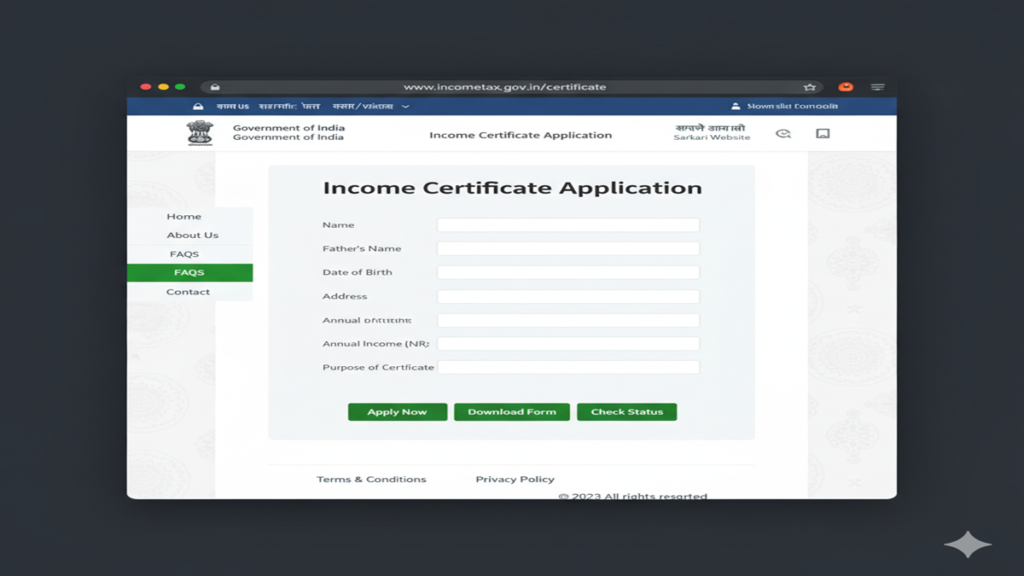
Income Certificate Sarkari Website 2026: आय प्रमाण पत्र बनाने की आधिकारिक वेबसाइट और ऑनलाइन आवेदन की पूरी प्रक्रिया; जानें स्टेप-बाय-स्टेप!
Income Certificate Sarkari Website 2026: Introduction: आज के डिजिटल युग में, आपको छोटे-छोटे दस्तावेजों के लिए सरकारी दफ्तरों या तहसील के चक्कर काटने की जरूरत नहीं है। चाहे बच्चों के स्कूल-कॉलेज में स्कॉलरशिप का आवेदन करना हो या राशन कार्ड से जुड़ी कोई सेवा लेनी हो, ‘आय प्रमाण पत्र’ (Income Certificate) सबसे अनिवार्य दस्तावेज है। 2026 में भारत सरकार और विभिन्न राज्य सरकारों ने अपनी “Income Certificate Sarkari Website” को इतना अपडेट कर दिया है कि अब आप मात्र 10-15 मिनट में घर बैठे आवेदन कर सकते हैं।
इस लेख में हम आपको भारत के प्रमुख राज्यों की आधिकारिक वेबसाइट्स की जानकारी देंगे और बताएंगे कि आप बिना किसी एजेंट की मदद के अपना सर्टिफिकेट कैसे बना सकते हैं।
1. राज्य-वार आय प्रमाण पत्र की सरकारी वेबसाइटें (State-wise List)
Income Certificate Sarkari Website 2026: हर राज्य का अपना एक अलग ‘ई-डिस्ट्रिक्ट’ (e-District) पोर्टल होता है। नीचे कुछ प्रमुख राज्यों की वेबसाइट्स दी गई हैं:
- महाराष्ट्र: aaplesarkar.mahaonline.gov.in (Aaple Sarkar)
- उत्तर प्रदेश: edistrict.up.gov.in
- बिहार: serviceonline.bihar.gov.in (RTPS Bihar)
- मध्य प्रदेश: mpedistrict.gov.in
- दिल्ली: edistrict.delhigovt.nic.in
- राजस्थान: sso.rajasthan.gov.in (E-Mitra)
2. आवश्यक दस्तावेज (Documents Required)
Income Certificate Sarkari Website 2026: आवेदन करने से पहले इन दस्तावेजों को स्कैन करके रख लें:
- पहचान का प्रमाण: आधार कार्ड, वोटर आईडी या पैन कार्ड।
- आय का प्रमाण: सैलरी स्लिप (यदि नौकरीपेशा हैं) या पटवारी/ग्राम सेवक की रिपोर्ट।
- स्व-घोषणा पत्र (Self Declaration): आधिकारिक वेबसाइट से डाउनलोड किया गया हस्ताक्षरित फॉर्म।
3. ऑनलाइन आवेदन करने की स्टेप-बाय-स्टेप प्रक्रिया
Income Certificate Sarkari Website 2026: स्टेप 1: आधिकारिक पोर्टल पर रजिस्ट्रेशन सबसे पहले अपने राज्य की Income Certificate Sarkari Website पर जाएं। यदि आप पहली बार आए हैं, तो ‘New User Registration’ पर क्लिक करें और अपना यूजर आईडी और पासवर्ड बनाएं।
स्टेप 2: ‘Services’ का चुनाव करें लॉगिन करने के बाद, ‘Revenue Department’ या ‘Certificates’ सेक्शन में जाएं। यहाँ आपको ‘Income Certificate’ का विकल्प मिलेगा, उस पर क्लिक करें।
Income Certificate Sarkari Website 2026: स्टेप 3: आवेदन फॉर्म भरें फॉर्म में अपनी व्यक्तिगत जानकारी, परिवार की कुल वार्षिक आय और आय का स्रोत ध्यानपूर्वक भरें। याद रखें, गलत जानकारी देने पर आवेदन निरस्त हो सकता है।
स्टेप 4: दस्तावेज अपलोड करें ऊपर बताए गए सभी दस्तावेजों को निर्धारित साइज (अक्सर 75KB से 500KB) में अपलोड करें।
स्टेप 5: मामूली शुल्क का भुगतान सरकारी वेबसाइट पर आवेदन के लिए एक बहुत छोटा शुल्क (लगभग ₹15 से ₹40 तक) ऑनलाइन जमा करना होता है। भुगतान के बाद आपको एक ‘एप्लिकेशन नंबर’ मिलेगा।
स्टेप 6: सत्यापन और डाउनलोड आपका आवेदन संबंधित तहसील कार्यालय में जांच के लिए जाएगा। सत्यापन पूरा होने के बाद (आमतौर पर 7 से 15 दिन), आप उसी पोर्टल पर लॉगिन करके अपना डिजिटल हस्ताक्षरित आय प्रमाण पत्र डाउनलोड कर सकते हैं।
4. आय प्रमाण पत्र की वैधता (Validity)
Income Certificate Sarkari Website 2026: ज्यादातर राज्यों में आय प्रमाण पत्र की वैधता 1 साल (वित्तीय वर्ष) की होती है। उदाहरण के लिए, यदि आपने मार्च 2026 में सर्टिफिकेट बनाया है, तो वह 31 मार्च 2027 तक मान्य हो सकता है। आवेदन करने से पहले अपनी जरूरत के अनुसार वैधता की जांच जरूर करें।
4. अक्सर पूछे जाने वाले प्रश्न (FAQs)
Q1: क्या आय प्रमाण पत्र मोबाइल से बनाया जा सकता है?
Ans: जी हाँ, आप अपने स्मार्टफोन के ब्राउज़र का उपयोग करके या राज्य सरकार के आधिकारिक ऐप (जैसे- UMANG App) के जरिए आवेदन कर सकते हैं।
Q2: स्टेटस कैसे चेक करें?
Ans: सरकारी वेबसाइट के होमपेज पर ‘Track Application’ या ‘Check Status’ का विकल्प होता है। वहां अपना एप्लिकेशन नंबर डालकर आप स्थिति जान सकते हैं।
Q3: अगर वेबसाइट काम नहीं कर रही तो क्या करें?
Ans: सरकारी पोर्टल पर कभी-कभी ट्रैफिक ज्यादा होता है। ऐसे में आप ‘CSC Digital Seva Kendra’ पर जाकर भी आवेदन करवा सकते हैं।
Conclusion: डिजिटल इंडिया का लाभ उठाएं!
Income Certificate Sarkari Website 2026: अब आपको इन्कम सर्टिफिकेट के लिए बिचौलियों को पैसे देने की जरूरत नहीं है। अपनी Income Certificate Sarkari Website का उपयोग करना सीखें, इससे न केवल आपके पैसे बचेंगे बल्कि आप घर बैठे सुरक्षित तरीके से सरकारी सेवाओं का लाभ उठा सकेंगे। याद रखें, हमेशा आधिकारिक .gov.in या .nic.in वाली वेबसाइट का ही उपयोग करें।
Complete Guide to Income Certificate: Process, Documents, and Online Application
Introduction
Income Certificate Sarkari Website In India, an Income Certificate is a crucial government document that serves as official proof of an individual’s or family’s annual income. Issued by state revenue departments, this certificate is essential for accessing various government welfare schemes, educational scholarships, fee concessions, and other benefits aimed at economically weaker sections of society. With the digital transformation of government services, applying for an Income Certificate has become more accessible through state-specific Sarkari (government) websites. This comprehensive guide will walk you through everything you need to know about obtaining an Income Certificate through online portals.
What is an Income Certificate?
Income Certificate Sarkari Website 2026: An Income Certificate is an official document issued by the Tehsildar or Revenue Department officer that certifies the annual income of an individual or family from all sources. This includes income from salaries, business, agriculture, rent, and any other regular sources. The certificate typically categorizes applicants based on income brackets (like below poverty line, economically weaker sections, etc.) which determines eligibility for various state and central government benefits.
Key purposes of an Income Certificate:
- Availing scholarships for students
- Applying for fee concessions in educational institutions
- Accessing subsidized housing schemes
- Obtaining loans under government schemes
- Qualifying for healthcare benefits and insurance schemes
- Applying for ration cards and other welfare benefits
- Reservation benefits in jobs and educational institutions
Eligibility Criteria for Income Certificate
Income Certificate Sarkari Website 2026: Eligibility requirements vary slightly between states but generally include:
- Residency Proof: Applicant must be a resident of the state where applying
- Income Threshold: Different states have different income limits for various categories
- Age Requirement: Typically, the applicant should be above 18 years
- Family Definition: Usually includes self, spouse, and dependent children/parents
Income Certificate Sarkari Website 2026: Most states issue income certificates for families earning up to ₹8-10 lakhs annually, with different categories like:
- Below Poverty Line (BPL)
- Economically Weaker Sections (EWS)
- Lower Income Groups (LIG)
- Middle Income Groups (MIG)
Step-by-Step Online Application Process
1. Preparation Phase
Income Certificate Sarkari Website 2026: Before starting your online application, gather these necessary documents:
- Aadhaar Card (for all family members)
- PAN Card (if available)
- Ration Card
- Bank passbook or statement (last 6 months)
- Salary slips (last 3-6 months)
- Property documents (if any)
- Self-declaration/affidavit of income
- Passport-sized photographs
- Previous tax returns (ITR) if applicable
- Caste certificate (if applying under reserved category)
2. Registration on State Portal
- Visit your state’s official revenue department portal (like https://ap.gov.in for Andhra Pradesh or https://maharashtra.gov.in for Maharashtra)
- Look for “Citizen Services,” “Revenue Services,” or “E-District” section
- Create an account using your mobile number and email ID
- Verify your account through OTP sent to your registered mobile
3. Filling the Application Form
- Income Certificate Sarkari Website 2026:
- Fill in personal details: name, father’s/husband’s name, date of birth, gender
- Enter address details: permanent and current address
- Provide family details: names, ages, relationship of all family members
- Declare all sources of income with supporting details
- Upload scanned copies of required documents (ensure they meet size and format specifications)
- Review all information carefully before submission
4. Payment and Submission
- Pay the requisite fee (if applicable – many states offer this service free)
- Submit the form
5. Verification Process
After submission:
- Your application is forwarded to the concerned Tehsil office
- A revenue officer may conduct field verification
- You might receive a call or visit for document verification
- Status can be tracked online using your application number
6. Certificate Download
Once approved:
- You’ll receive an SMS/email notification
- Login to the portal and navigate to “Download Certificate”
- Verify the digital signature on the certificate for authenticity
State-Specific Variations
Income Certificate Sarkari Website 2026: While the basic process remains similar, each state has its own portal and slight variations:
Uttar Pradesh: https://edistrict.up.gov.in
- Offers income certificate under “Revenue Services”
- Requires verification by Lekhpal and Tehsildar
Maharashtra: https://aaplesarkar.mahaonline.gov.in
- Application through “Aaple Sarkar” portal
- Typically processed within 15-30 days
Karnataka: https://www.sevasindhu.karnataka.gov.in
- Integrated portal for all citizen services
- Income certificate available under “Revenue Department Services”
Delhi: https://edistrict.delhigovt.nic.in
- Requires visit to CSC (Common Service Center) for biometric verification
- Processing time: 7-15 days
Common Challenges and Solutions
1. Document Verification Issues
Income Certificate Sarkari Website 2026: Problem: Documents rejected due to poor quality or incorrect format
Solution: Use scanning apps with good resolution (300 DPI minimum), ensure all edges are visible, save in prescribed format (usually PDF or JPEG)
2. Portal Technical Difficulties
Income Certificate Sarkari Website 2026: Problem: Website crashes or forms don’t submit
Solution: Try during non-peak hours, use updated browsers (Chrome, Firefox), clear cache before application
3. Delayed Processing
Income Certificate Sarkari Website 2026: Problem: Application stuck at verification stage
Solution: Follow up with concerned Tehsil office, use grievance redressal portal if delay exceeds stipulated time
4. Incorrect Details on Certificate
Income Certificate Sarkari Website 2026: Problem: Errors in name spelling or income amount
Solution: Apply for correction immediately through the same portal, provide supporting documents
Tips for Smooth Application Process
- Income Certificate Sarkari Website 2026: Start Early: Begin the process well before you need the certificate as it may take 15-30 days
- Document Organization: Keep both digital and physical copies of all documents ready
- Accuracy is Key: Double-check all entries before submission to avoid rejection
- Follow Up: Regularly track your application status online
- Alternative Channels: If facing persistent online issues, visit Common Service Centers (CSCs) or Tehsil offices for assistance
- Income Certificate Sarkari Website 2026: Seasonal Consideration: Avoid applying during peak scholarship seasons when portals experience heavy traffic
Validity and Renewal
Income Certificates typically have a validity period of one year from the date of issue, as financial situations can change. However, some states issue certificates valid for longer periods (up to 3 years) for specific purposes. For renewal:
- Check the expiry date on your certificate
- Begin the renewal process 1-2 months before expiry
- Follow the same application process with updated income documents
- Some states offer simplified renewal procedures for existing holders
Digital Initiatives and Future Developments
The Government of India is continuously working to streamline the process through:
- National Generic Document Registration System: Integration of various certificate services
- DigiLocker: Storage and sharing of digital certificates
- API Integration: Direct verification by institutions to reduce fraud
- Mobile Applications: State-specific apps for easier access
- Aadhaar Integration: Faster verification and reduced document requirements
Legal Aspects and Importance of Authenticity
It’s crucial to note that providing false information for obtaining an Income Certificate is a punishable offense under Section 177 (furnishing false information) and Section 182 (false declaration) of the Indian Penal Code. Penalties may include:
- Cancellation of certificate
- Disqualification from benefits
- Monetary fines
- Imprisonment in severe cases
Always obtain certificates through official channels and avoid intermediaries promising “quick” certificates through unethical means.
Conclusion
The digitalization of Income Certificate applications through Sarkari websites has significantly simplified what was once a cumbersome, offline process. While challenges remain, particularly in rural areas with limited digital literacy, the overall trend is positive toward greater accessibility and transparency. By understanding the process, preparing documents carefully, and utilizing the online portals effectively, citizens can obtain this important document with relative ease, opening doors to essential government welfare schemes and benefits.
Remember that each state’s portal may have unique features, so always refer to the specific instructions on your state’s official website. With proper preparation and attention to detail, you can successfully navigate the online application process for your Income Certificate.
Frequently Asked Questions (FAQs)
Q1: How long does it take to get an Income Certificate after online application?
A: Typically, it takes 15 to 30 days for processing, depending on the state and verification requirements. Some states with streamlined processes may issue certificates within 7-10 working days. You can track the status using your application reference number on the portal.
Q2: Is an Income Certificate valid throughout India?
A: Income Certificates are generally issued by state governments and are primarily valid within the issuing state. However, for central government schemes, certificates from any state are usually accepted. Some states have reciprocity agreements. Always check the specific requirements of the scheme or institution where you’re submitting the certificate.
Q3: What should I do if my online application is rejected?
A: If rejected, the portal usually specifies the reason (document issues, incorrect information, etc.). Correct the mentioned issues and reapply. If the reason isn’t clear, contact the concerned Tehsil office or use the portal’s grievance redressal mechanism. Keep your application number ready for reference.
Q4: Can I apply for an Income Certificate if I have no regular income?
A: Yes, you can still apply. In such cases, you would declare nil income or income from occasional work. You may need to provide a self-declaration affidavit stating your income situation. The certificate will then reflect your actual income status, which might qualify you for certain welfare schemes.
Q5: Is there a fee for applying for an Income Certificate online?
A: Most states provide Income Certificates free of charge as it’s considered an essential service for accessing welfare schemes. However, some states may charge a nominal processing fee (typically ₹20-₹100). The portal will clearly indicate any fees during the application process. Payment is usually made online through net banking, credit/debit cards, or UPI.