


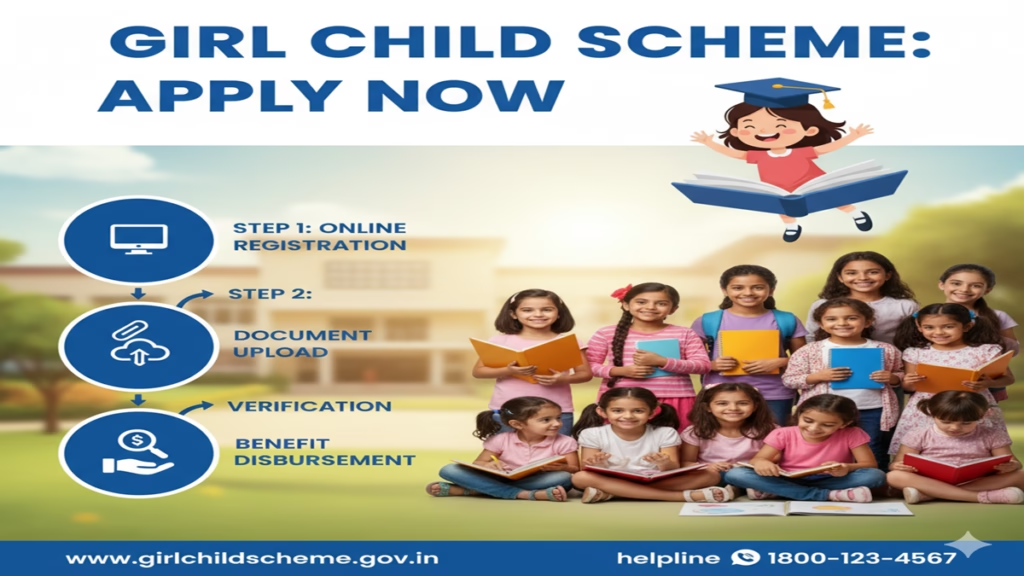
Girl Child Scheme Apply Process: अपनी बेटी को बनाएं लखपति! टॉप सरकारी योजनाओं में आवेदन करने की पूरी प्रक्रिया और जरूरी दस्तावेज।
Introduction:
Girl Child Scheme Apply Process: भारत सरकार और विभिन्न राज्य सरकारें ‘बेटी बचाओ बेटी पढ़ाओ’ के संकल्प को पूरा करने के लिए कई महत्वाकांक्षी योजनाएं चला रही हैं। इन योजनाओं का मुख्य उद्देश्य बेटियों की शिक्षा, स्वास्थ्य और उनके विवाह के लिए आर्थिक सहायता प्रदान करना है।
यदि आपके घर में भी नन्ही परी ने जन्म लिया है, तो “Girl Child Scheme Apply Process” को समझना आपके लिए बहुत जरूरी है। सही समय पर किया गया आवेदन आपकी बेटी के भविष्य को आर्थिक रूप से सुरक्षित कर सकता है। इस लेख में हम सुकन्या समृद्धि योजना (SSY) से लेकर राज्य स्तरीय योजनाओं (जैसे लाड़ली लक्ष्मी, माझी कन्या भाग्यश्री) में आवेदन की पूरी प्रक्रिया जानेंगे।
1. सबसे लोकप्रिय योजना: सुकन्या समृद्धि योजना (SSY)
Girl Child Scheme Apply Process: यह केंद्र सरकार की सबसे सफल योजना है। इसमें निवेश करने पर आपको न केवल उच्च ब्याज दर मिलती है, बल्कि इनकम टैक्स में भी छूट मिलती है।
- पात्रता: बेटी की आयु 10 वर्ष से कम होनी चाहिए।
- निवेश: न्यूनतम ₹250 और अधिकतम ₹1.5 लाख प्रति वर्ष।
- आवेदन प्रक्रिया (Apply Process):
- अपने नजदीकी बैंक या पोस्ट ऑफिस जाएं।
- सुकन्या समृद्धि योजना का आवेदन फॉर्म लें।
- बेटी का जन्म प्रमाण पत्र (Birth Certificate) और माता-पिता के केवाईसी दस्तावेज जोड़ें।
- न्यूनतम ₹250 जमा करके खाता खुलवाएं।
2. प्रमुख राज्य स्तरीय कन्या योजनाएं (State-Specific Schemes)
| योजना का नाम | राज्य | मुख्य लाभ |
| लाड़ली लक्ष्मी योजना | मध्य प्रदेश | बेटी की शिक्षा और शादी के लिए ₹1.43 लाख तक। |
| माझी कन्या भाग्यश्री | महाराष्ट्र | ₹50,000 की फिक्स्ड डिपॉजिट और शिक्षा लाभ। |
| कन्या सुमंगला योजना | उत्तर प्रदेश | बेटी के जन्म से स्नातक तक ₹15,000 की किश्तें। |
| सुभद्रा योजना | ओडिशा | महिलाओं और बालिकाओं के लिए वित्तीय सहायता। |
3. आवेदन के लिए आवश्यक दस्तावेज (Documents Required)
Girl Child Scheme Apply Process: योजना चाहे केंद्र की हो या राज्य की, “Girl Child Scheme Apply Process” के लिए आपको ये दस्तावेज तैयार रखने चाहिए:
- बेटी का जन्म प्रमाण पत्र: अस्पताल या नगर निगम द्वारा जारी।
- माता-पिता का आधार कार्ड: पहचान और पते के प्रमाण के लिए।
- निवास प्रमाण पत्र: (डोमिसाइल सर्टिफिकेट) यह साबित करने के लिए कि आप उसी राज्य के निवासी हैं।
- बैंक पासबुक: जिसमें लाभार्थी का पैसा आएगा (DBT के लिए)।
- आय प्रमाण पत्र: कुछ योजनाओं में गरीबी रेखा (BPL) के नीचे होना अनिवार्य है।
- पासपोर्ट साइज फोटो: माता, पिता और बेटी की।
4. ऑनलाइन आवेदन कैसे करें? (Online Apply Process Step-by-Step)
Girl Child Scheme Apply Process: आजकल अधिकांश योजनाओं के लिए आवेदन ‘CSC’ या आधिकारिक पोर्टल के माध्यम से ऑनलाइन किया जा सकता है:
- आधिकारिक पोर्टल पर जाएं: जैसे ‘National Portal of India’ या राज्य सरकार की आधिकारिक वेबसाइट।
- रजिस्ट्रेशन: अपना मोबाइल नंबर और ईमेल डालकर अकाउंट बनाएं।
- फॉर्म भरें: योजना का चुनाव करें और बेटी की सभी जानकारी सही-सही भरें।
- दस्तावेज अपलोड करें: मांगे गए सभी दस्तावेजों की स्कैन कॉपी (PDF/JPEG) अपलोड करें।
- सबमिट और प्रिंट: फॉर्म सबमिट करने के बाद रसीद (Reference Number) जरूर डाउनलोड करें।
5. आवेदन करते समय न करें ये गलतियां (Common Mistakes to Avoid)
- नाम की स्पेलिंग: जन्म प्रमाण पत्र और आधार कार्ड में नाम की स्पेलिंग एक जैसी होनी चाहिए।
- आधार लिंकिंग: माता या पिता का बैंक खाता आधार से लिंक (NPCI Mapping) होना चाहिए ताकि पैसा सीधे खाते में आए।
- आयु सीमा: कई योजनाओं में जन्म के 1 साल के भीतर आवेदन करना जरूरी होता है, देरी न करें।
4. अक्सर पूछे जाने वाले प्रश्न (FAQs)
Q1: क्या एक बेटी के लिए दो योजनाओं में आवेदन कर सकते हैं?
Ans: हाँ, आप सुकन्या समृद्धि (केंद्र) के साथ-साथ अपने राज्य की कन्या योजना (जैसे लाड़ली लक्ष्मी) में भी आवेदन कर सकते हैं।
Q2: सुकन्या समृद्धि योजना में पैसा कब मिलता है?
Ans: बेटी के 18 वर्ष की होने पर शिक्षा के लिए 50% राशि निकाली जा सकती है, और 21 वर्ष की होने पर पूर्ण भुगतान मिलता है।
Q3: क्या योजना का लाभ केवल दो बेटियों तक ही सीमित है?
Ans: अधिकांश सरकारी योजनाओं का लाभ परिवार की पहली दो बेटियों को ही मिलता है। जुड़वां बेटियों के मामले में नियमों में ढील दी जाती है।
Conclusion: सुरक्षित भविष्य की ओर पहला कदम!
Girl Child Scheme Apply Process सरल है, बशर्ते आपके पास सही दस्तावेज और जानकारी हो। अपनी बेटी के जन्म के तुरंत बाद इन योजनाओं के लिए आवेदन करें ताकि समय बीतने के साथ उसे चक्रवृद्धि ब्याज (Compounding) का पूरा लाभ मिल सके। आज की एक छोटी सी बचत कल आपकी बेटी के बड़े सपनों को सच करेगी।
A Complete Guide to Navigating Girl Child Welfare Schemes: Understanding and Mastering the Application Process
Girl Child Scheme Apply Process In the ongoing mission for gender equality and social equity, India’s Girl Child Welfare Schemes stand as pivotal instruments of change. Programs like the Sukanya Samriddhi Yojana (SSY), Beti Bachao Beti Padhao (BBBP), and various state-specific initiatives are designed to combat societal biases and secure the future of girls through financial security and educational empowerment. However, the potential of these schemes can only be fully realized when families successfully navigate the application process.
This comprehensive guide demystifies the journey from eligibility to account activation, providing a step-by-step roadmap for parents and guardians to unlock these crucial benefits for their daughters.
The Landscape of Girl Child Schemes: A Brief Overview
Girl Child Scheme Apply Process: Before diving into the process, it’s essential to understand the primary schemes available:
- Sukanya Samriddhi Yojana (SSY): A flagship savings scheme under the Government of India’s ‘Beti Bachao Beti Padhao’ campaign. It offers a high interest rate, tax benefits under Section 80C, and is specifically designed for meeting the education and marriage expenses of a girl child.
- Beti Bachao Beti Padhao (BBBP): Primarily a nationwide awareness and advocacy campaign, it is often integrated with conditional cash transfer schemes at the state level to incentivize the birth, education, and retention of girls in school.
- State-Specific Schemes: Almost every state has complementary programs. Examples include:
- Ladli Scheme (Delhi, Haryana, Himachal Pradesh): Provides financial bonds deposited in the girl’s name, maturing when she reaches 18 or passes Class X/XII.
- Kanyashree Prakalpa (West Bengal): Offers annual scholarships and one-time grants to discourage child marriage and encourage schooling.
- Balika Samriddhi Yojana (BSY): Provides a scholarship at various educational stages and a small savings scheme.
Girl Child Scheme Apply Process: While the specifics vary, the application philosophy for these financial and welfare schemes follows a similar pattern.
Part 1: The Universal Application Blueprint – A 7-Step Process
Girl Child Scheme Apply Process: The following steps outline a general framework, which will be adapted for specific schemes like SSY.
Step 1: Research and Scheme Selection
Girl Child Scheme Apply Process: Identify the schemes for which your daughter is eligible. Criteria can be based on:
- Domicile: State schemes require you to be a resident of that state.
- Income: Many schemes have an annual family income ceiling (e.g., below ₹1.5 or ₹3 Lakh).
- Child’s Age: SSY is for girls below 10, scholarship schemes often apply from Class I to XII or up to graduation.
- Number of Children: Some benefits are limited to one or two girl children per family.
Consult official government portals (state women & child development departments, India Post, or bank websites) for precise eligibility matrices.
Step 2: Document Procurement – The Key to Success
Girl Child Scheme Apply Process: This is the most critical preparatory stage. Commonly required documents include:
- Proof of Birth: Birth Certificate of the girl child (mandatory for all schemes).
- Proof of Identity: Aadhaar Card of the girl (if issued), parents/guardians. Voter ID, PAN Card, or Passport are alternatives.
- Proof of Address: Aadhaar, Ration Card, Utility Bill (electricity/water), or Passport.
- Proof of Income: For income-capped schemes, BPL Ration Card, Income Certificate from Tehsildar, or latest ITR.
- Photographs: Passport-sized photos of the girl, parents, and guardian.
- Guardianship Proof: In case of a guardian, relevant court orders or affidavit.
- Bank Details: A cancelled cheque or bank passbook copy of the account to be linked (often in the girl’s or mother’s name).
Girl Child Scheme Apply Process: Pro Tip: Always collect multiple attested photocopies and keep digital scans ready for online portals.
Step 3: Application Form Acquisition and Filling
- Girl Child Scheme Apply Process: For SSY: Forms are available at all authorized banks (public/private) and India Post Offices. You can also download the form from the India Post or respective bank’s website.
Fill the form in BLOCK LETTERS, preferably in black ink, with extreme care to avoid mismatches with document details. Common fields include applicant (girl’s) details, parent/guardian details, address, declaration of eligibility, and nomination information.
Step 4: Submission at the Designated Point
- Girl Child Scheme Apply Process: SSY: Submit the filled form along with all KYC documents and the initial deposit (minimum ₹250) at your chosen authorized bank or post office.
- State Schemes: Submission is typically made to the Anganwadi worker, school principal (if school-based), or the designated district office. For online schemes (like many BBBP-linked transfers), the submission is through the portal with uploaded documents.
Step 5: Verification and Acknowledgment
Girl Child Scheme Apply Process: The receiving authority will verify the form and documents in situ. Always collect a dated, stamped acknowledgement receipt. For online applications, note the application reference number or download the submission receipt. This is your proof of application.
Step 6: Follow-up and Tracking
Girl Child Scheme Apply Process: Use your acknowledgement number to track the application status. For SSY, the account is usually opened immediately or within a few days. For scholarship or grant schemes, verification happens at multiple levels (school, block, district), which can take 30-90 days. Don’t hesitate to politely inquire about the status after a reasonable period.
Step 7: Account/ Certificate Activation and Compliance
- Girl Child Scheme Apply Process: For SSY, you will receive a passbook. Ensure all details are correct.
- For scholarship schemes, you will receive an approval communication. The amount may be directly transferred to the linked bank account (DBT).
- Remember: Many schemes have annual renewal or continuation requirements, like submitting a school attendance certificate. Mark these compliance dates on your calendar.
Part 2: Spotlight on Sukanya Samriddhi Yojana – A Process Deep Dive
Girl Child Scheme Apply Process: Given its popularity, let’s detail the SSY process:
1. Where to Apply?
Girl Child Scheme Apply Process: Authorized Public/Private Sector Banks and India Post (Department of Posts) Offices.
2. The In-Person Process:
- Visit the branch/post office with the girl child and at least one parent.
- Collect and fill Form No. 1.
- Submit with: Girl’s Birth Certificate, Parents’ ID & Address Proof, and initial deposit.
- The officer verifies, opens the account, and issues a passbook instantly or within a short time.
3. The (Limited) Online Route:
- Girl Child Scheme Apply Process: Account Opening: Most banks do not allow full online opening due to KYC. However, you can download the form online, fill it, and submit it physically.
- Deposit Management: Once the account is opened, subsequent deposits can often be made via online banking, standing instruction, or UPI linked to the account number.
Part 3: Navigating the Digital Frontier – Online Portals
Girl Child Scheme Apply Process: For BBBP and state schemes, the shift is towards digital:
- Visit the official state scheme portal (e.g.,
ssy.gov.infor West Bengal’s Kanyashree). - Register as a beneficiary using a parent’s or girl’s mobile number.
- Fill the online application form meticulously.
- Upload scanned copies of all required documents (ensure they are clear and within size limits).
- Submit digitally. The status can be tracked online through the same portal.
Part 4: Common Pitfalls and How to Avoid Them
- Mismatched Names: Ensure the spelling of the girl’s name is consistent across the Birth Certificate, Aadhaar, and application form.
- Age Overstepping: Applying for SSY after the girl turns 10 is a straight rejection. Apply as early as possible.
- Incomplete Documentation: Submitting without an Income Certificate or attested birth certificate is the most common cause of delay.
- Ignoring Compliance: Failing to submit annual continuation forms or minimum annual deposits (for SSY) can lead to the account becoming dormant or the scholarship being stopped.
- Missing Deadlines: Be acutely aware of scheme deadlines, which are often tied to the academic or financial year.
Conclusion: An Investment in the Future
The application process for Girl Child Schemes, while detailed, is a structured and manageable task. It is a small investment of time and effort that yields monumental returns in the form of financial independence, educational encouragement, and a powerful message of equality to your daughter. By approaching the process with preparation, patience, and persistence, you can successfully secure the benefits that will help her build a future of dignity, opportunity, and strength. Let these schemes be the foundation upon which her dreams are realized.
Frequently Asked Questions (FAQ)
1. Can I open a Sukanya Samriddhi Account for two girl children?
In the case of twins or triplets, this limit is relaxed, and you can open accounts for all. However, opening more than one account for the same girl child is not permitted.
2. What happens if I miss depositing the minimum amount in an SSY account in a year?
The account will become inactive. To reactivate it, you must pay a penalty of ₹50 per missed year along with the minimum deposit of ₹250 for each inactive year. It’s crucial to set up a standing instruction for annual deposits.
4. Are these scheme benefits available to NRI or OCI cardholders?
If the account holder (girl child) becomes an NRI after opening, the account can continue until maturity but no further deposits can be made from the date of NRI status. Most state welfare schemes are for resident Indian citizens only.
5. If I move to a different state, will my daughter’s state-specific scheme benefits continue?
Typically, state schemes are for residents of that particular state. A permanent move may disqualify you from future installments. However, benefits already received or locked-in (like bonds) usually remain. You must check the portability clause of the specific scheme and inform the authorities. It is advisable to explore the schemes available in your new state of residence.