


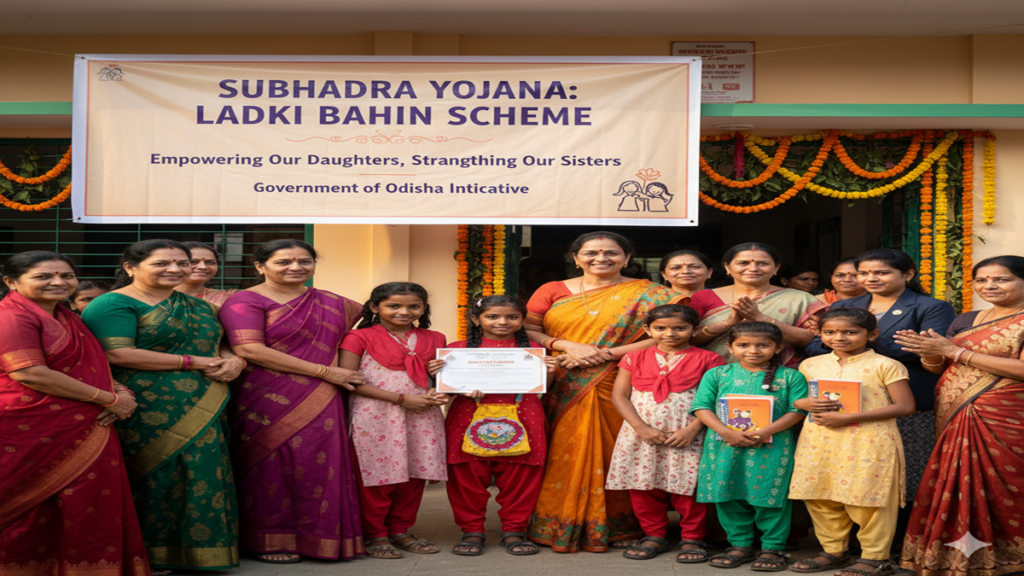
Subhadra Yojana vs Ladki Bahin Yojana 2026: महिलाओं के लिए दो सबसे बड़ी योजनाएं; किस्त, पात्रता और आवेदन की पूरी जानकारी।
Subhadra Yojana Ladki Bahin Scheme 2026: सुभद्रा योजना में ₹10,000 और लाडकी बहीण में ₹18,000; जानें आपके लिए कौन सी योजना है बेस्ट? साल 2026 में महिला सशक्तिकरण के क्षेत्र में दो राज्य सरकारें—ओडिशा और महाराष्ट्र—इतिहास रच रही हैं। ओडिशा की ‘सुभद्रा योजना’ और महाराष्ट्र की ‘माझी लाडकी बहीण योजना’ ने करोड़ों महिलाओं के जीवन में आर्थिक स्थिरता लाई है। यदि आप भी इन योजनाओं का लाभ उठाना चाहती हैं या अपनी अगली किस्त का इंतज़ार कर रही हैं, तो यह लेख आपके लिए बेहद महत्वपूर्ण है।
1. सुभद्रा योजना (Subhadra Yojana Odisha 2026)
Subhadra Yojana Ladki Bahin Scheme 2026: ओडिशा सरकार की इस योजना का नाम भगवान जगन्नाथ की बहन सुभद्रा के नाम पर रखा गया है।
- कुल लाभ: 5 वर्षों में कुल ₹50,000।
- सालाना मदद: हर साल ₹10,000 को दो समान किस्तों (₹5,000 प्रत्येक) में दिया जाता है।
- 2026 अपडेट: 2026 में योजना की अगली किस्त (संभावित चौथी किस्त) अंतर्राष्ट्रीय महिला दिवस (8 मार्च) और रक्षाबंधन के अवसर पर जारी की जाएगी।
- पात्रता: 21 से 60 वर्ष की ओडिशा निवासी महिलाएं। परिवार की वार्षिक आय ₹2.5 लाख से कम होनी चाहिए।
2. लाडकी बहीण योजना (Ladki Bahin Yojana Maharashtra 2026)
Subhadra Yojana Ladki Bahin Scheme 2026: महाराष्ट्र सरकार की यह योजना जून 2024 में शुरू हुई थी और 2026 में इसके नियमों में कुछ बड़े बदलाव किए गए हैं।
- मासिक मदद: पात्र महिलाओं को हर महीने ₹1,500 दिए जाते हैं (सालाना ₹18,000)।
- e-KYC अपडेट: जिन महिलाओं की किस्तें रुक गई हैं, उनके लिए राहत की खबर है। महाराष्ट्र सरकार ने e-KYC सुधारने की समय सीमा 31 मार्च 2026 तक बढ़ा दी है।
- पात्रता: 21 से 65 वर्ष की महाराष्ट्र निवासी विवाहित, विधवा, तलाकशुदा या निराधार महिलाएं।
3. सुभद्रा बनाम लाडकी बहीण: कौन सी योजना है बेहतर?
| तुलना का आधार | सुभद्रा योजना (ओडिशा) | लाडकी बहीण योजना (महाराष्ट्र) |
| वार्षिक राशि | ₹10,000 | ₹18,000 |
| वितरण का तरीका | साल में दो बार (₹5,000 x 2) | हर महीने (₹1,500 x 12) |
| आयु सीमा | 21 से 60 वर्ष | 21 से 65 वर्ष |
| e-KYC | अनिवार्य | अनिवार्य (31 मार्च 2026 तक मौका) |
4. आवेदन और स्टेटस कैसे चेक करें? (How to Check Status)
Subhadra Yojana Ladki Bahin Scheme 2026: दोनों योजनाओं के लिए प्रक्रिया अब पूरी तरह डिजिटल है:
- सुभद्रा योजना: आधिकारिक पोर्टल subhadra.odisha.gov.in पर जाकर ‘Beneficiary List’ में अपना नाम देख सकते हैं।
- लाडकी बहीण योजना: ladakibahin.maharashtra.gov.in या ‘नारी शक्ति दूत’ ऐप के माध्यम से अपना स्टेटस चेक करें और e-KYC अपडेट करें।
5. निष्कर्ष (Conclusion)
Subhadra Yojana Ladki Bahin Scheme 2026: 2026 में ये दोनों योजनाएं महिलाओं को आत्मनिर्भर बनाने के लिए मिल का पत्थर साबित हो रही हैं। जहाँ सुभद्रा योजना त्योहारों पर बड़ी राशि प्रदान करती है, वहीं लाडकी बहीण योजना मासिक आधार पर घरेलू खर्चों में मदद करती है। यदि आपका आवेदन अभी तक लंबित है, तो जल्द से जल्द सुधार करें।
Empowering Daughters, Transforming Futures: A Comprehensive Guide to the Subhadra Yojana Ladki Bahin Scheme
Introduction: A Landmark Initiative for Gender Empowerment
Subhadra Yojana Ladki Bahin Scheme 2026: In a significant move towards fostering gender equity and financial security for women and girls, the Government of Maharashtra announced the Subhadra Yojana Ladki Bahin Scheme in its 2024-25 budget. Named after the iconic and empowered character of Subhadra from the Indian epic Mahabharata, the scheme represents a visionary commitment to investing in the state’s daughters. It is designed as a conditional cash transfer program that aims to address deep-rooted socio-economic challenges such as female foeticide, school dropout rates, and financial dependency, while promoting the health, education, and long-term prosperity of the girl child.
Subhadra Yojana Ladki Bahin Scheme 2026: This article delves into the intricacies of the Subhadra Yojana, exploring its objectives, eligibility criteria, benefits, application process, and the transformative potential it holds for millions of families across Maharashtra. As a proactive model for state-led gender-inclusive development, the scheme is poised to set a benchmark for other regions to follow.
Chapter 1: The Genesis and Core Objectives of Subhadra Yojana
Subhadra Yojana Ladki Bahin Scheme 2026: The Subhadra Yojana is not an isolated policy but part of a continuum of progressive schemes like the Majhi Kanya Bhagyashree and the Savitribai Phule Ladki Bahin Yojana. However, it expands the scope and ambition significantly. Its announcement came against the backdrop of acknowledging the persistent gender gap in nutrition, education, and economic participation.
Primary Objectives:
- Improve Sex Ratio: By providing financial incentives for the birth and upbringing of a girl child, the scheme directly combats the societal preference for sons and the malpractice of sex-selective abortions.
- Ensure Educational Continuity: By linking financial benefits to school enrollment and attendance, it aims to reduce dropout rates among girls, especially at the secondary and higher secondary levels.
- Promote Health and Nutrition: Encouraging institutional births, timely vaccinations, and regular health check-ups for both the mother and the child.
- Foster Financial Independence and Security: Creating a substantial financial corpus for the girl, accessible upon adulthood, which can be used for higher education, vocational training, or entrepreneurship.
- Shift Societal Mindset: By placing tangible economic value on the birth and development of a girl child, the scheme seeks to catalyze a long-term change in attitudes, positioning daughters as assets rather than liabilities.
Chapter 2: Unpacking the Scheme’s Structure and Benefits
Subhadra Yojana Ladki Bahin Scheme 2026: The Subhadra Yojana is structured as a long-term, savings-cum-incentive scheme with staggered financial payouts tied to specific milestones.
Key Financial Provisions:
- Initial Deposit: Upon the birth of a girl child (in a hospital/health institution) and her registration under the scheme, the government deposits a significant seed amount (reported to be ₹25,000 to ₹50,000 as per initial announcements) into a dedicated account in the girl’s name.
- Conditional Annual Incentives: The scheme provides annual financial incentives to the parents/guardian, subject to the girl child fulfilling certain conditions like:
- Continuous enrollment and attendance in school.
- Completion of mandatory vaccinations.
- Annual health check-ups.
- Accumulated Corpus & Maturity Payout: Subhadra Yojana Ladki Bahin Scheme 2026: The initial deposit, along with accrued interest and potential additional government contributions, matures when the girl turns 21 years of age. This substantial lump sum amount (which could range between ₹2 to ₹5 lakhs or more based on the tenure and interest) is then directly transferred to her bank account. This corpus is intended to empower her life choices at a critical juncture.
Conditions for Availing Benefits (Key Milestones):
- Birth & Registration: Institutional birth and timely registration of the birth certificate.
- Health Checkpoints: Completion of the full vaccination schedule as per the national immunization program.
- Educational Benchmarks: Admission to Anganwadi/pre-school at age 3-4, enrollment in Class 1 at age 6, and continuous education at least until passing Class 12.
- Age Cap: The girl must not be married before the age of 18.
Chapter 3: Eligibility Criteria: Who Can Apply?
Subhadra Yojana Ladki Bahin Scheme 2026: To ensure targeted and effective implementation, the scheme has defined specific eligibility parameters. Note: These criteria are based on the initial budget announcement and may be refined in the final detailed guidelines.
- Residency: The beneficiary family must be a permanent resident of Maharashtra. Domicile certificate is mandatory.
- Income Ceiling: The scheme is expected to be targeted towards families with annual income below a specified threshold (e.g., ₹2.5 Lakh or below), aiming to support economically weaker sections. This may include families from both APL and BPL categories, with priority to BPL.
- Birth Date of Girl Child: The scheme is typically for girl children born on or after a specified date (expected to be after the scheme’s official notification in 2024). It is likely a prospective, not retrospective, scheme.
- Number of Children: There might be a cap on the number of girl children per family eligible for benefits (e.g., first two living girl children), to align with responsible family planning norms.
- Mandatory Documentation: Aadhaar cards of parents and child, birth certificate, domicile certificate, income certificate, bank account details linked with Aadhaar, and recent photographs.
Chapter 4: The Application Process: A Step-by-Step Guide
Subhadra Yojana Ladki Bahin Scheme 2026: While the official digital infrastructure (portal/mobile app) is being developed, the process is envisioned to be a mix of online and offline facilitation.
Expected Steps:
- Registration at Birth: The first trigger happens at the hospital or health institution where the girl is born. The authorities will facilitate the initial registration by capturing details and issuing a unique ID for the scheme.
- Document Collection: Parents must gather all necessary documents (as listed above).
- Online Application: Visit the official Maharashtra Women and Child Development (WCD) Department website or the dedicated Subhadra Yojana portal (once live).
- Form Filling: Complete the application form with accurate details of the child and parents/guardian.
- Document Upload: Scan and upload clear copies of all required documents.
- Submission & Acknowledgement: Submit the form online and note the application reference number.
- Verification by Authorities: The application will be verified at the block/taluka and district levels by WCD and Tehsil officials.
- Approval and Account Activation: Upon successful verification, the dedicated account for the girl child will be activated, and the initial deposit will be credited.
- Annual Compliance: Parents must periodically (likely annually) submit compliance certificates regarding education and health through the portal or at designated Seva Kendras to continue receiving benefits.
Helpline & Grievance Redressal: A dedicated toll-free number and helpdesk email will be established for queries and support.
Chapter 5: The Transformative Impact: Beyond Financial Aid
Subhadra Yojana Ladki Bahin Scheme 2026: The true value of Subhadra Yojana extends far beyond the rupees deposited.
- Social Empowerment: It sends a powerful message that the state values its girls, directly challenging patriarchal norms. The scheme can lead to increased age at marriage and greater autonomy for young women.
- Educational Attainment: By making continued financial support contingent on schooling, it provides a strong economic rationale for families to educate their daughters, potentially breaking intergenerational cycles of illiteracy.
- Economic Ripple Effect: The maturity corpus acts as “seed capital” for a generation of young women. This can lead to a surge in female enrollment in higher education, skilled vocational training, and micro-enterprise creation, boosting the state’s human capital and economy.
- Health Outcomes: The linkage with vaccinations and check-ups will improve key health indicators, reducing infant and child mortality and improving maternal health.
- Psychological Security: For the girl child, knowing she has a secured financial future fosters a sense of self-worth and confidence.
Chapter 6: Challenges and the Road Ahead
Subhadra Yojana Ladki Bahin Scheme 2026: For the scheme to realize its full potential, several challenges must be navigated:
- Awareness and Last-Mile Connectivity: Ensuring every eligible family in remote rural and tribal areas is aware and can access the application process.
- Robust Monitoring: Creating a seamless, tech-driven monitoring system to track the health and educational milestones of lakhs of beneficiaries over two decades is a massive administrative task.
- Financial Sustainability: The scheme requires a long-term budgetary commitment from successive governments. Creating a dedicated, ring-fenced fund could ensure its sustainability.
- Preventing Misuse: Strong verification mechanisms are needed to prevent fraudulent claims and ensure the money is used for the intended beneficiary’s welfare.
- Convergence with Other Schemes: Effective integration with existing schemes (like Beti Bachao Beti Padhao, scholarships, health missions) will be crucial to create a comprehensive ecosystem of support.
Conclusion: A Promise for a More Equitable Tomorrow
Subhadra Yojana Ladki Bahin Scheme 2026: The Subhadra Yojana Ladki Bahin Scheme is more than a welfare program; it is a social contract between the state and its daughters. By investing in the health, education, and economic potential of every girl child in Maharashtra, the scheme sows the seeds for a more just, prosperous, and progressive society.
Subhadra Yojana Ladki Bahin Scheme 2026: Its success will depend on meticulous implementation, continuous monitoring, and active community participation. If executed with vision and perseverance, Subhadra Yojana has the power to transform not just individual destinies but the very fabric of Maharashtra, making it a true leader in gender-inclusive development. It stands as a testament to the belief that empowering a girl is, indeed, empowering a nation.
Frequently Asked Questions (FAQs)
Q1: My daughter was born in 2022. Is she eligible for the Subhadra Yojana?
A: Subhadra Yojana Ladki Bahin Scheme 2026: Most likely, no. The Subhadra Yojana is expected to be a prospective scheme for girl children born on or after a specific date, which will be after the official notification and guidelines are released (likely post-2024 budget). Please check the final guidelines for the exact cut-off date. Existing schemes may cover children born earlier.
Q2: What happens if we fail to submit the annual school attendance certificate?
A: Subhadra Yojana Ladki Bahin Scheme 2026: The annual financial incentives are conditional. If you fail to provide proof of continuous education, vaccinations, or health check-ups as required, you may temporarily stop receiving the annual payouts. However, the scheme likely has provisions for reinstatement upon submitting the pending compliance documents. The core maturity corpus may remain secure but could be affected by prolonged non-compliance.
Q3: Can the money from the maturity corpus be used for anything?
A: Subhadra Yojana Ladki Bahin Scheme 2026: The primary intent of the lump sum amount released at age 21 is to support the young woman’s advancement—such as funding higher education, vocational training, starting a business, or even contributing to marriage expenses if she chooses. While it will be directly transferred to her account, giving her autonomy, awareness campaigns will encourage its use for empowering purposes.
Q4: Is the scheme only for families below the poverty line (BPL)?
A: Subhadra Yojana Ladki Bahin Scheme 2026: While the focus is on economically weaker sections, initial indications suggest the scheme may have an income ceiling that includes both BPL and certain families above the poverty line (APL). The final eligibility based on income will be clearly specified in the official guidelines.
Q5: Where can we apply offline if we don’t have internet access?
A: Subhadra Yojana Ladki Bahin Scheme 2026: The government is expected to set up facilitation centers at various levels. You will likely be able to apply with assistance at:
Gram Panchayat or Municipal Ward Office.
Anganwadi Seva Kendras.
Women and Child Development Department offices at the Taluka or District level.
Common Service Centers (CSCs).
Designated helpdesks in major government hospitals.