


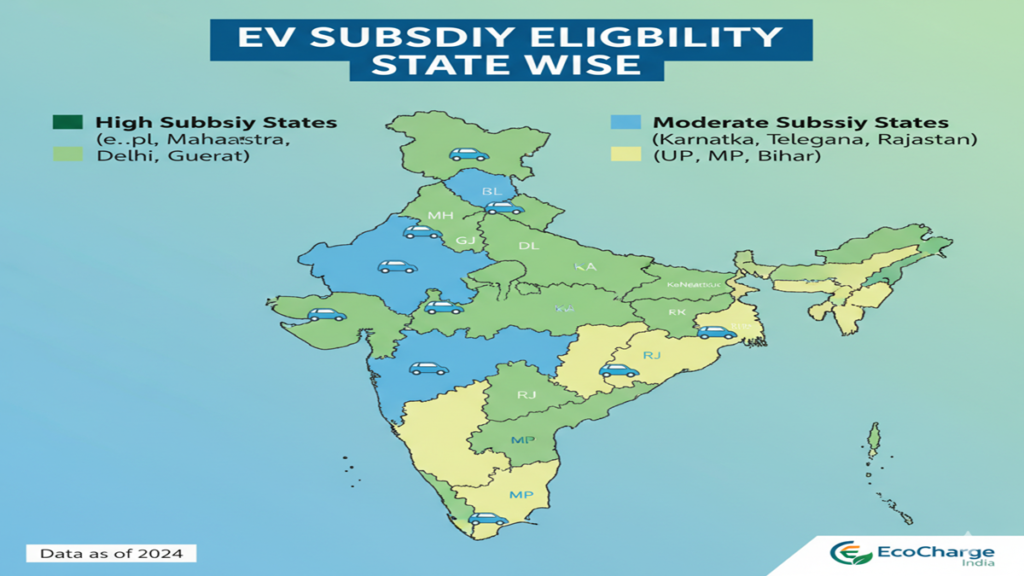
EV Subsidy Eligibility State Wise 2026: ३१ मार्च से पहले उठाएं फायदा! जानें भारत के प्रमुख राज्यों में कितनी मिल रही है सब्सिडी और क्या हैं नियम?
Ev Subsidy Eligibility State Wise: Introduction: भारत में इलेक्ट्रिक वाहनों (EV) की क्रांति अब अपने सबसे निर्णायक मोड़ पर पहुँच गई है। केंद्र सरकार की नई PM E-DRIVE योजना और विभिन्न राज्य सरकारों की अपनी विशिष्ट पॉलिसियां २०२६ में इलेक्ट्रिक स्कूटर, ऑटो और कारों को सस्ता बनाने में बड़ी भूमिका निभा रही हैं। लेकिन एक महत्वपूर्ण बात—अधिकांश सरकारी सब्सिडी और रोड टैक्स में छूट की समय सीमा ३१ मार्च २०२६ को समाप्त हो रही है। यदि आप भी अपने लिए एक नया ईव्ही शोरूम से घर लाना चाहते हैं, तो यह सही समय है “EV Subsidy Eligibility State Wise” को विस्तार से समझने का।
आज के इस लेख में हम भारत के प्रमुख राज्यों की ईव्ही पॉलिसी, सब्सिडी की राशि और पात्रता के बारे में चर्चा करेंगे।
1. केंद्र सरकार की योजना: PM E-DRIVE (Replacement of FAME-II)
Ev Subsidy Eligibility State Wise: केंद्र सरकार ने ‘PM E-DRIVE’ योजना के तहत २-व्हीलर और ३-व्हीलर के लिए भारी प्रोत्साहन दिया है।
- 2-Wheeler (ई-स्कूटर): बैटरी क्षमता के आधार पर ₹५,००० से ₹१०,००० तक की सब्सिडी।
- 3-Wheeler (ई-रिक्शा): व्यावसायिक उपयोग के लिए ₹२५,००० से ₹५०,००० तक की सहायता।
- पात्रता: वाहन का ‘आधार-आधारित ई-केवाईसी’ होना और अधिकृत डीलर से खरीद अनिवार्य है।
2. राज्य-वार ईव्ही सब्सिडी और पात्रता (State-Wise Guide)
A. महाराष्ट्र (Maharashtra EV Policy 2025-2030): महाराष्ट्र सरकार ने अपनी पॉलिसी को २०३० तक बढ़ाया है, लेकिन कुछ Ev Subsidy Eligibility State Wise: प्रमुख लाभ २०२६ तक सीमित हो सकते हैं।
- सबसिडी: ई-स्कूटर के लिए ₹१०,००० और ई-ऑटो के लिए ₹३०,००० तक।
- खास लाभ: १००% रोड टैक्स और रजिस्ट्रेशन फीस माफ़। मुंबई-पुणे एक्सप्रेसवे और समृद्धि महामार्ग जैसे बड़े रास्तों पर ‘टोल माफी’ का लाभ भी मिलता है।
- पात्रता: आवेदक महाराष्ट्र का निवासी होना चाहिए।
B. दिल्ली (Delhi EV Policy Extension): दिल्ली सरकार ने अपनी क्रांतिकारी पॉलिसी को ३१ मार्च २०२६ तक बढ़ा दिया है।
- सबसिडी: २-व्हीलर पर ₹५,००० प्रति kWh (अधिकतम ₹३०,०००)। ई-ऑटो पर ₹३०,००० की फ्लैट सब्सिडी।
- पात्रता: दिल्ली आरटीओ में पंजीकरण अनिवार्य है। पुराने पेट्रोल वाहन को स्क्रैप करने पर अतिरिक्त ‘स्क्रैपेज बोनस’ मिलता है।
C. गुजरात (Gujarat EV Policy 2026 Update): गुजरात सरकार ने हाल ही में रोड टैक्स में भारी कटौती की है।
- Ev Subsidy Eligibility State Wise: सबसिडी: रोड टैक्स को ६% से घटाकर मात्र १% कर दिया गया है (३१ मार्च २०२६ तक)। इससे लग्जरी ई-कार खरीदने वालों को ₹१ लाख तक की सीधी बचत हो रही है।
- पात्रता: वाहन का पंजीकरण गुजरात के ‘वाहन ४.०’ पोर्टल पर होना चाहिए।
D. उत्तर प्रदेश और अन्य राज्य: उत्तर प्रदेश में हाइब्रिड और इलेक्ट्रिक वाहनों पर रोड टैक्स में १००% छूट दी जा रही है। राजस्थान और ओडिशा जैसे राज्यों में भी रजिस्ट्रेशन फीस पूरी तरह माफ है।
3. सब्सिडी के लिए पात्रता के मुख्य बिंदु (Common Eligibility Checklist)
Ev Subsidy Eligibility State Wise: यदि आप सब्सिडी का लाभ लेना चाहते हैं, तो ये ३ चीजें सुनिश्चित करें:
- अधिकृत डीलर: वाहन केवल उन्हीं शोरूम से खरीदें जो सरकार के सब्सिडी पोर्टल (जैसे PM E-DRIVE) पर पंजीकृत हों।
- आधार ई-केवाईसी: आपका मोबाइल नंबर आधार से लिंक होना चाहिए, क्योंकि सब्सिडी क्लेम के लिए ओटीपी वेरिफिकेशन जरूरी है।
- बैटरी मानक: सब्सिडी केवल उन्हीं वाहनों पर मिलती है जिनकी बैटरी ‘Advanced Chemistry Cell’ (ACC) मानकों को पूरा करती है और जिनकी टॉप स्पीड २५ किमी/घंटा से अधिक है।
4. मार्च २०२६: अंतिम मौका क्यों?
Ev Subsidy Eligibility State Wise: कई विशेषज्ञों का मानना है कि २०२६ के बाद सरकार सीधी सब्सिडी (Direct Cash Incentive) को धीरे-धीरे कम करेगी और इंफ्रास्ट्रक्चर (चार्जिंग स्टेशन) पर अधिक ध्यान देगी। इसलिए, ३१ मार्च २०२६ से पहले वाहन खरीदना आर्थिक रूप से सबसे समझदारी भरा निर्णय होगा।
4. अक्सर पूछे जाने वाले प्रश्न (FAQs)
Q1: क्या हाइब्रिड कारों पर भी सब्सिडी मिलती है?
Ans: उत्तर प्रदेश और चंडीगढ़ जैसे कुछ राज्यों को छोड़कर, अधिकांश राज्यों में पूर्ण इलेक्ट्रिक (BEV) वाहनों पर ही अधिक सब्सिडी मिलती है।
Q2: सब्सिडी का पैसा सीधे बैंक खाते में आता है या शोरूम पर कम होता है?
Ans: अधिकांश मामलों में, केंद्र की सब्सिडी शोरूम पर ही बिलिंग के समय कम कर दी जाती है, जबकि राज्य सरकार की सब्सिडी बैंक खाते में (DBT) आती है।
Q3: पुरानी गाड़ी बदलकर नई ईव्ही लेने पर क्या फायदा है?
Ans: इसके लिए ‘स्क्रैपेज पॉलिसी’ के तहत आपको ₹५,००० से ₹२५,००० तक का अतिरिक्त लाभ मिल सकता है।
Conclusion: स्मार्ट बनें, इलेक्ट्रिक चुनें!
EV Subsidy Eligibility State Wise की जानकारी आपको हजारों रुपये बचाने में मदद कर सकती है। २०२६ ईव्ही क्रांति का साल है, और नाशिक जैसे शहरों में चार्जिंग स्टेशन का बढ़ता जाल इसे और भी आसान बना रहा है। सब्सिडी खत्म होने से पहले अपने नजदीकी शोरूम पर जाएँ और टेस्ट राइड लें!
Navigating India’s EV Incentive Maze: A State-by-State Guide to Subsidy Eligibility (2024-25)
Ev Subsidy Eligibility State Wise: India’s electric vehicle (EV) revolution is no longer a distant dream but a tangible, accelerating reality. Spearheaded by the central government’s FAME-II (Faster Adoption and Manufacturing of Electric Vehicles) scheme, the push towards electrification is being powerfully amplified at the state level. However, this creates a complex, fragmented landscape of policies where the subsidy you receive depends heavily on your pin code.
This guide demystifies the intricate web of EV subsidies across major Indian states, providing clarity on eligibility, application processes, and the critical interplay between central and state policies. Understanding this matrix is essential for any prospective EV buyer, fleet operator, or industry stakeholder.
The Two-Layered Incentive Structure: FAME-II & State Policies
Ev Subsidy Eligibility State Wise: Before diving state-wise, it’s crucial to grasp the two primary layers of subsidies:
- Central Incentive (FAME-II): Administered by the Ministry of Heavy Industries, FAME-II provides a direct demand incentive that reduces the upfront cost of EVs. It is applicable nationwide, but only on vehicles manufactured by OEMs (Original Equipment Manufacturers) that are officially approved under the scheme. The key benchmarks are:
- Electric 2-Wheelers: Up to ₹10,000 per kWh, with a maximum incentive of ₹15,000 (capped at 15% of ex-factory price).
- Electric 3-Wheelers: Up to ₹10,000 per kWh, with a cap of ₹50,000.
- Electric 4-Wheelers: Up to ₹10,000 per kWh, with a cap of ₹1.5 Lakh (capped at 20% of ex-factory price).
- Additional Benefit: A significant 5% GST rate (down from 28% for ICE vehicles) applies to all EVs.
- State EV Policies: These are formulated by individual states with goals tailored to their urban, industrial, and environmental needs. They typically offer:
- Top-Up Subsidies: Additional incentives over and above FAME-II.
- Scrapping Incentives: Bonuses for deregistering old ICE vehicles.
- Charging Infrastructure Grants: For individuals, housing societies, and commercial operators.
Golden Rule: In most cases, to avail the state subsidy, the vehicle must first be eligible for FAME-II incentives. Always confirm FAME-II eligibility with your dealer first.
State-Wise EV Subsidy Breakdown: Eligibility & Benefits
Ev Subsidy Eligibility State Wise: Here is a detailed analysis of the active policies in key states, presented for easy comparison and understanding.
Policy: Delhi Electric Vehicle Policy (2020-2024)
Objective: Make Delhi the EV capital of India.
- Subsidy for 2-Wheelers: ₹5,000 per kWh (max ₹10,000) + FAME-II. Effective subsidy reaches up to ₹25,000.
- Subsidy for 4-Wheelers: ₹10,000 per kWh (max ₹1.5 Lakh) + FAME-II. Effective subsidy can reach up to ₹3 Lakh for eligible cars.
- Road Tax & Registration: 100% exemption for all battery electric vehicles (BEVs).
- Scrapping Incentive: Additional ₹5,000 – ₹25,000 for scrapping and deregistering an old ICE vehicle in Delhi when buying an EV.
- Eligibility: Must be purchased and registered in Delhi. FAME-II eligibility is a prerequisite for the purchase subsidy. The buyer must not have availed the subsidy under this policy before.
- Key Differentiator: The only major policy offering direct subsidies for electric rickshaws (L5) and goods carriers. Also offers interest subvention on loans.
2. Maharashtra – High Subsidies with Fleet Focus
Ev Subsidy Eligibility State Wise: Policy: Maharashtra EV Policy (2021-2025)
- Subsidy for 2-Wheelers: ₹5,000 per kWh (max ₹10,000) + FAME-II. Early bird incentive (now lapsed) made it very attractive.
- Subsidy for 4-Wheelers: ₹5,000 per kWh (max ₹1.5 Lakh) + FAME-II.
- Scrapping Incentive: Up to ₹25,000 for scrapping an old vehicle (≥15 years) registered in Maharashtra.
- Eligibility: Vehicle must be registered in Maharashtra. Special focus on fleet operators and aggregators (like taxi services), who receive additional incentives, making it a hub for EV fleet adoption.
3. Gujarat – Pioneering & Predictable
Ev Subsidy Eligibility State Wise: Policy: Gujarat EV Policy (2021-2025)
- Subsidy for 2-Wheelers: ₹10,000 per kWh (max ₹20,000) + FAME-II. This was the highest in India until recently.
- Subsidy for 4-Wheelers: ₹10,000 per kWh (max ₹1.5 Lakh) + FAME-II.
- Road Tax & Registration: 100% exemption for all BEVs.
- Eligibility: Must be the first registration in Gujarat. The policy has a fixed cap on the number of vehicles eligible for subsidy (e.g., first 2 lakh 2-wheelers). Check if the quota is still available.
- Key Point: A straightforward, high-value policy that significantly reduces upfront cost. Its success has led to early exhaustion of quotas in some segments in the past.
4. Karnataka – Manufacturing & Tech Hub
Ev Subsidy Eligibility State Wise: Policy: Karnataka EV Policy (2023-2028) – Newly Revised
Objective: Boost adoption and strengthen the state’s position as a manufacturing hub.
- Subsidy for 2-Wheelers: Up to ₹15,000 (for vehicles priced below ₹1.5 Lakh) + FAME-II.
- Subsidy for 4-Wheelers: ₹50,000 to ₹1 Lakh (based on battery size and vehicle price) + FAME-II.
- Eligibility: Must be registered in Karnataka. The new policy offers linked incentives – the subsidy is higher if the vehicle uses locally manufactured cells or batteries, promoting the local ecosystem.
5. Tamil Nadu – Balancing Adoption with Industry Growth
Ev Subsidy Eligibility State Wise: Policy: Tamil Nadu EV Policy (2023-2028) – Newly Launched
Objective: Attract manufacturing investments while promoting adoption.
- Subsidy for 2-Wheelers: ₹10,000 (max) + FAME-II.
- Subsidy for 4-Wheelers: ₹50,000 to ₹1 Lakh (based on battery size) + FAME-II.
- Eligibility: Registration in Tamil Nadu. Similar to Karnataka, offers additional incentives for vehicles incorporating locally manufactured components, aiming to build a integrated supply chain.
6. Rajasthan – Simple & Attractive
Ev Subsidy Eligibility State Wise: Policy: Rajasthan EV Policy (2022-2027)
- Subsidy for 2-Wheelers: ₹5,000 per kWh (max ₹10,000) + FAME-II.
- Subsidy for 4-Wheelers: ₹10,000 per kWh (max ₹1.5 Lakh) + FAME-II.
- Road Tax & Registration: 100% exemption for all BEVs.
- Eligibility: Must be registered in Rajasthan. A clear, no-frills policy that provides substantial cost benefits.
7. Telangana – Holistic Ecosystem Approach
Ev Subsidy Eligibility State Wise: Policy: Telangana EV Policy (2020-2030)
- Subsidy for 2-Wheelers: ₹10,000 per kWh (max ₹20,000) + FAME-II.
- Subsidy for 4-Wheelers: ₹10,000 per kWh (max ₹1.5 Lakh) + FAME-II.
- Road Tax & Registration: 100% exemption for all BEVs.
- Eligibility: Registration in Telangana. The policy strongly incentivizes charging infrastructure, offering capital subsidies for private and public chargers, which indirectly boosts EV adoption.
8. Bihar & Uttar Pradesh – Focus on 2/3-Wheelers
- Bihar offers a flat ₹10,000 subsidy for e-2Ws and e-3Ws, along with road tax exemption. The focus is squarely on the mass-market segments that dominate its roads.
- Uttar Pradesh has a policy with subsidies for all segments but is particularly notable for its strong push in the e-rickshaw and e-cart segment, crucial for its urban and semi-urban last-mile connectivity.
9. Other States with Notable Policies:
- Ev Subsidy Eligibility State Wise: Kerala: Offers purchase subsidies and 100% road tax exemption. Heavily promotes tourism-related EV adoption (e-boats, e-autos for tourist centers).
- Madhya Pradesh: Provides subsidy and full road tax exemption. Has a unique incentive for converting existing ICE vehicles to electric.
- West Bengal: Announced a policy with subsidies and road tax exemptions, though implementation specifics are evolving.
- Punjab & Haryana: Have recently notified policies with standard subsidy structures and road tax benefits.
Comparative Snapshot: Maximum Effective Subsidy (FAME-II + State)
| State | Electric 2-Wheeler (Approx.) | Electric 4-Wheeler (Approx.) | Key Highlight |
|---|---|---|---|
| Delhi | ₹25,000 | Up to ₹3,00,000 | Scrapping bonus, includes cargo vehicles |
| Gujarat | ₹30,000 | Up to ₹3,00,000 | High per-kWh subsidy; quota-based |
| Maharashtra | ₹25,000 | Up to ₹3,00,000 | Strong fleet operator incentives |
| Karnataka | ₹25,000 | Up to ₹2,50,000 | Linked to local manufacturing |
| Telangana | ₹30,000 | Up to ₹3,00,000 | Strong charging infra focus |
| Rajasthan | ₹25,000 | Up to ₹3,00,000 | Simple, high-value structure |
| Tamil Nadu | ₹25,000 | Up to ₹2,50,000 | Incentivizes local supply chain |
Note: Figures are indicative maxima. Actual subsidy depends on exact battery capacity, ex-factory price, and ongoing scheme quotas.
The Application Process: How to Claim Your Subsidy
Ev Subsidy Eligibility State Wise: Gone are the days of complex paperwork. Most states have integrated the subsidy claim process with the dealership experience.
- Ev Subsidy Eligibility State Wise: Dealer-Led Process: For most purchase subsidies, the OEM/dealer applies for the incentive on your behalf. The discounted amount (ex-factory price – FAME-II – State subsidy) is directly reflected in your on-road price invoice. You pay the subsidized price.
- Documentation: You will need to provide standard KYC documents (Aadhaar, PAN, etc.), proof of address in the state, and sometimes details of an old vehicle for scrapping incentives.
- Road Tax Exemption: This is typically processed automatically by the RTO at the time of registration based on the vehicle’s fuel type. You pay zero road tax for a BEV in states with 100% exemption.
- Charging Infrastructure Subsidy: For home/office charger installation grants, a separate application is usually required through the state’s DISCOM (electricity distribution company) or nodal agency (like DTTDC in Delhi).
Pro-Tip: Always ask the dealer for a detailed, itemized price breakdown showing the FAME-II and state subsidy deductions separately. If they cannot provide this, be cautious.
Critical Considerations & Challenges
- Ev Subsidy Eligibility State Wise: Policy Expiry & Quotas: Most state policies are active for 4-5 years and have financial quotas. Always check the latest official notification or government portal for remaining funds.
- Domicile Requirements: Almost all subsidies require the vehicle to be registered in the state. Some states require additional proof like a voter ID or utility bill.
- Vehicle Price Caps: Many state subsidies have an ex-factory price ceiling (e.g., for e-2Ws, it’s often ₹1.5-2 Lakh). Premium models may not qualify.
- The Future of FAME-II: The central FAME-II scheme is set to end in March 2025. Its successor (often called FAME-III) will determine the future baseline subsidy. States may recalibrate their policies accordingly.
- Ev Subsidy Eligibility State Wise: Disparity Leads to Confusion: The varying rates and structures can create a fragmented market and consumer confusion. A manufacturer may prioritize launching a model in a state with higher subsidies first.
Conclusion: Making an Informed EV Decision
Ev Subsidy Eligibility State Wise: India’s EV subsidy landscape is a dynamic, powerful tool designed to accelerate adoption. While complex, it offers unprecedented value for the conscious consumer.
Your Action Plan:
- Identify Your State Policy: Search for “[Your State] EV Policy 2024 PDF” to find the latest government document.
- Check FAME-II Eligibility: Confirm with the dealer that your chosen model is on the official FAME-II list on the Ministry of Heavy Industries website.
- Ev Subsidy Eligibility State Wise: Calculate Final Cost: Use the state’s per-kWh or flat-rate subsidy to calculate the final effective price (Ex-showroom – FAME-II – State Subsidy + Insurance).
- Inquire About Scrapping: If you have an old vehicle, check if you can avail an extra scrapping incentive.
- Ask About Charger Subsidy: Explore grants for installing a home charger to complete your EV ecosystem.
Ev Subsidy Eligibility State Wise: The journey to electrified mobility in India is being paved with financial incentives. By understanding this state-wise matrix, you can confidently navigate the path, secure the maximum benefit, and contribute to a cleaner, greener future while making a sound economic choice for your personal mobility. The time to go electric is now, and the map to your subsidy is clearer than ever.