


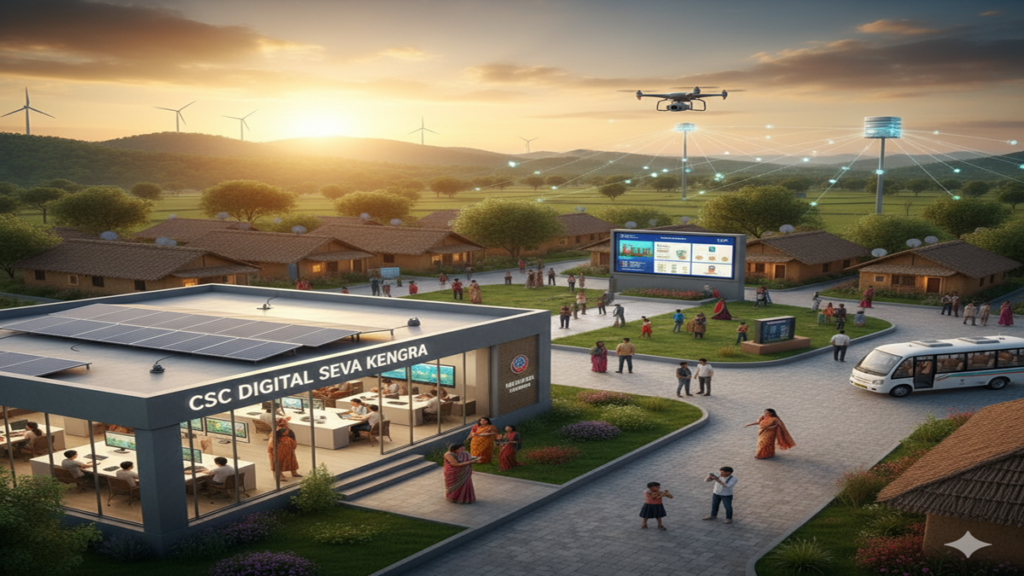
CSC Digital Village Concept 2026: क्या है डिजिटल विलेज (DigiGaon)? जानिए इसके फायदे, सेवाएं और VLE के लिए कमाई के मौके!
CSC Digital Village Concept 2026: Introduction: Dosto, आज के दौर में ‘Digital India’ का सपना सिर्फ शहरों तक सीमित नहीं रहा, बल्कि अब यह देश के दूर-दराज के गांवों तक पहुँच रहा है। केंद्र सरकार की CSC Digital Village (DigiGaon) पहल इस दिशा में एक क्रांतिकारी कदम है।
इस प्रोजेक्ट का मुख्य उद्देश्य गांवों को आत्मनिर्भर बनाना और वहां के नागरिकों को उनके घर के पास ही सभी डिजिटल सुविधाएं प्रदान करना है। अगर आप एक CSC VLE हैं या अपने गांव के विकास में रुचि रखते हैं, तो CSC Digital Village Concept को समझना आपके लिए बहुत जरूरी है। आइए जानते हैं यह कैसे काम करता है।
1. CSC Digital Village (DigiGaon) क्या है?
CSC Digital Village Concept 2026: डिजिटल विलेज एक ऐसा गांव है जहाँ तकनीक (Technology) के माध्यम से शिक्षा, स्वास्थ्य और बैंकिंग जैसी सुविधाएं प्रदान की जाती हैं। CSC SPV (Special Purpose Vehicle) ने इसे पायलट प्रोजेक्ट के तौर पर शुरू किया था, जो अब देश के हजारों गांवों में फैल चुका है।
यहाँ मुख्य रूप से Solar Power, Internet Connectivity, और Digital Literacy पर ध्यान दिया जाता है ताकि गांव का हर नागरिक डिजिटल दुनिया से जुड़ सके।
2. डिजिटल विलेज की मुख्य सेवाएं (Key Services)
CSC Digital Village Concept 2026: एक डिजिटल विलेज में निम्नलिखित सुविधाएं अनिवार्य रूप से दी जाती हैं:
- Digital Literacy (डिजिटल साक्षरता): गांव के हर घर से कम से कम एक व्यक्ति को कंप्यूटर और मोबाइल चलाना सिखाया जाता है (PMGDISHA के तहत)।
- Solar Power Grid: जिन गांवों में बिजली की समस्या है, वहां सोलर पावर प्लांट लगाकर स्ट्रीट लाइट्स और डिजिटल सेंटर्स को बिजली दी जाती है।
- Health Services (Tele-Medicine): गांव के लोग वीडियो कॉल के जरिए शहर के बड़े डॉक्टरों से सलाह ले सकते हैं।
- Banking Services (DigiPay): गांव के केंद्र पर ही पैसे निकालना, जमा करना और इंश्योरेंस जैसी सुविधाएं उपलब्ध होती हैं।
- Education: स्कूली बच्चों के लिए डिजिटल क्लासरूम और प्रतियोगी परीक्षाओं की तैयारी के लिए ‘CSC Academy’ की सुविधा।
- Skill Development: सिलाई, ब्यूटी पार्लर, और कंप्यूटर रिपेयरिंग जैसे छोटे उद्योगों की ट्रेनिंग।
3. CSC VLE के लिए कमाई का सुनहरा मौका
CSC Digital Village Concept 2026: अगर आपके गांव को ‘Digital Village’ के रूप में चुना जाता है, तो एक VLE (Village Level Entrepreneur) के तौर पर आपकी इनकम कई गुना बढ़ सकती है:
- सरकारी प्रोजेक्ट्स: डिजिटल विलेज बनने पर आपको सरकार की तरफ से इंफ्रास्ट्रक्चर (जैसे कंप्यूटर, प्रिंटर, सोलर पैनल) के लिए ग्रांट या मदद मिल सकती है।
- सर्विस कमीशन: ज्यादा सेवाएं मतलब ज्यादा कमीशन। बैंकिंग, इंश्योरेंस और एजुकेशन कोर्सेज से आप अच्छी कमाई कर सकते हैं।
- गांव का विकास: एक डिजिटल विलेज का VLE गांव का ‘नोडल पर्सन’ बन जाता है, जिससे समाज में प्रतिष्ठा और बिजनेस दोनों बढ़ते हैं।
4. अपने गांव को Digital Village कैसे बनाएं? (Registration Process)
CSC Digital Village Concept 2026: डिजिटल विलेज के लिए चयन (Selection) सीधे सरकार और CSC के जिला प्रबंधकों (District Managers) द्वारा किया जाता है। इसके लिए कुछ शर्तें होती हैं:
- गांव में सक्रिय CSC Center होना चाहिए।
- VLE का ट्रैक रिकॉर्ड अच्छा होना चाहिए और उसने PMGDISHA जैसे प्रोजेक्ट्स में अच्छा काम किया हो।
- गांव की ग्राम पंचायत का सहयोग अनिवार्य है।
- इच्छुक VLE अपने CSC District Manager (DM) से संपर्क करके अपने गांव का नाम प्रस्तावित कर सकते हैं।
5. 2026 में डिजिटल विलेज का भविष्य
CSC Digital Village Concept 2026: 2026 तक भारत सरकार का लक्ष्य लाखों गांवों को डिजिटल विलेज में बदलना है। अब ‘Viksit Bharat’ के विजन के साथ, इन गांवों में 5G कनेक्टिविटी और E-Commerce (Grameen e-Store) जैसी सुविधाएं भी जोड़ी जा रही हैं, जिससे ग्रामीण किसान अपने उत्पाद सीधे ऑनलाइन बेच सकेंगे।
Conclusion: डिजिटल गांव, समृद्ध भारत!
CSC Digital Village Concept सिर्फ तकनीक के बारे में नहीं है, बल्कि यह ग्रामीण भारत के सशक्तिकरण के बारे में है। इससे न केवल पलायन (Migration) रुकेगा, बल्कि गांव के युवाओं को गांव में ही रोजगार मिलेगा। अगर आप एक सक्रिय VLE हैं, तो आपको इस प्रोजेक्ट का हिस्सा बनने की कोशिश जरूर करनी चाहिए।
The CSC Digital Village Concept: Bridging India’s Digital Divide and Empowering Rural India
Introduction: The Vision of a Connected Bharat
CSC Digital Village Concept 2026: In the vast and diverse landscape of India, a silent revolution is unfolding. It’s not in the gleaming tech parks of Bengaluru or Hyderabad, but in the heart of rural India—in its villages, where a significant portion of the population resides. The Common Service Centre (CSC) Digital Village concept stands as a cornerstone of this revolution, a visionary initiative aimed at transforming rural India into digitally empowered knowledge and economic societies.
Launched under the ambit of the Digital India programme, the CSC scheme is more than just a government project; it is a socio-economic movement. At its core, the Digital Village concept seeks to leverage information and communication technology (ICT) to deliver a wide array of government-to-citizen (G2C) and business-to-citizen (B2C) services to the remotest corners of the country. It is a bold attempt to bridge the daunting digital divide, ensuring that the benefits of technology reach the last mile, thereby fostering inclusive growth and participatory governance.
CSC Digital Village Concept 2026: This article delves deep into the CSC Digital Village ecosystem, exploring its architecture, key services, transformative impact, challenges, and the road ahead for a truly digital Bharat.
1. The Architecture: Building Blocks of a Digital Village
CSC Digital Village Concept 2026: The strength of the CSC model lies in its innovative public-private partnership (PPP) framework and its decentralized, entrepreneurial structure.
- The Village Level Entrepreneur (VLE): The heart and soul of every Digital Village is the VLE. Typically a local resident, the VLE is an entrepreneur who operates the CSC kiosk or centre. This individual is trained and certified to deliver digital services, making them a crucial change agent within the community. The VLE model ensures local employment, builds trust through familiarity, and creates a self-sustaining micro-enterprise.
- The CSC Infrastructure: A typical CSC is a physical facility, often equipped with a computer, internet connectivity (broadband or often now reliant on mobile data), printer, scanner, and webcam. In its advanced “Digital Village” avatar, this may expand to include facilities for telemedicine, digital classrooms, and skill development.
- The Service Delivery Network (SDAP): CSCs operate on a robust Service Delivery Access Point (SDAP) platform that integrates various service providers—government departments, banks, insurance companies, educational institutions, and telecom operators—onto a single network. This allows for seamless transaction processing and real-time service delivery.
- The Governance Structure: While the Ministry of Electronics and Information Technology (MeitY) provides the overarching policy framework, the implementation is driven by CSC e-Governance Services India Limited, a Special Purpose Vehicle (SPV). It acts as the nodal agency for managing the network, onboarding service partners, and ensuring standardisation.
2. The Service Portfolio: A One-Stop Digital Shop
CSC Digital Village Concept 2026: The transformative power of the Digital Village stems from the vast bouquet of services it brings to the villagers’ doorstep. These services can be broadly categorized into:
A. Digital Financial Inclusion (The JAM Trinity in Action):
- Banking Services: CSCs act as Banking Correspondents (BCs) for leading public and private sector banks. Villagers can open Jan Dhan accounts, deposit and withdraw cash, transfer funds, and avail of micro-credit facilities.
- Direct Benefit Transfer (DBT): A critical service where VLEs assist citizens in linking Aadhaar with bank accounts, checking DBT status, and resolving related grievances, ensuring subsidies reach beneficiaries directly and without leakages.
B. Government to Citizen (G2C) Services:
- Certificate Services: Applying for and printing key documents like Aadhaar enrolment/update, caste certificates, income certificates, and birth/death certificates.
- Utility Bill Payments: Electricity, water, telephone, and LPG gas bills.
- Application Processing: Facilitating online applications for PAN cards, voter ID cards, passports, and various state-specific welfare schemes.
- Agricultural Services: Providing farmers with information on weather, market prices (e-NAM), soil health, and enabling online booking of agricultural equipment.
C. Education & Skill Development (Digital Gurukul):
- Digital Literacy: The Pradhan Mantri Gramin Digital Saksharta Abhiyan (PMGDISHA) aims to make one person in every rural household digitally literate. CSCs are the primary training grounds for this mission.
- Online Courses & Certifications: CSC’s Grameen eStore and academy offer access to online certification courses from top institutions, bridging the skill gap and enhancing employability.
- Exam Preparation: Offering online test series and study material for competitive exams, bringing coaching-class quality education to remote areas.
D. Healthcare (Telemedicine & More):
- CSC Digital Village Concept 2026: e-Health & Teleconsultation: One of the most impactful services. Villagers can consult with doctors in urban specialty hospitals via video conferencing at the CSC, receive e-prescriptions, and even order medicines.
- Diagnostic Tests: Some CSCs are equipped for basic diagnostic tests like blood sugar, ECG, and body composition analysis, with reports shared digitally with doctors.
- Awareness Camps: Organizing health camps and spreading awareness about government health schemes like Ayushman Bharat.
E. Agriculture & Livelihood Services:
- CSC Digital Village Concept 2026: Mandi Prices & e-NAM: Real-time access to Agricultural Produce Market Committee (APMC) prices empowers farmers to make better selling decisions.
3. The Transformative Impact: Stories from the Ground
CSC Digital Village Concept 2026: The true measure of the Digital Village concept is not in its infrastructure, but in its human impact.
- Economic Empowerment: VLEs, often women or youth, become respected entrepreneurs and community leaders. The network has created over 12 lakh direct livelihoods. For users, access to banking, credit, and market linkages unlocks new economic opportunities.
- Social Inclusion: By bringing services to the doorstep, it empowers marginalized groups—women, the elderly, and those with limited mobility—who previously faced barriers in accessing government offices in distant towns.
- Transparency & Reduced Corruption: Digital delivery of certificates and DBT minimizes human interface, drastically cutting down delays, bureaucratic red tape, and opportunities for corruption. The citizen is now aware of entitlement and status in real-time.
- Quality of Life Improvement: Telemedicine saves lives and reduces the cost and hardship of travel for medical care. Digital education opens new horizons for rural youth. Online bill payments save time and effort.
CSC Digital Village Concept 2026: A Case in Point: A farmer in a village in Odisha can now check the weather forecast on his phone (a skill learned at the CSC), get his soil tested, apply for a crop loan at the CSC BC point, buy insurance, check real-time prices at different mandis, and even sell his produce on the e-NAM platform—all without making multiple trips to different offices. His daughter can prepare for banking exams using online material at the same CSC, while his wife consults a gynecologist in Bhubaneswar via telemedicine for a prenatal check-up.
4. Challenges & Roadblocks
CSC Digital Village Concept 2026: Despite its phenomenal success, the journey is not without hurdles:
- Infrastructure Gaps: Erratic power supply and poor, expensive internet connectivity (especially in hilly and forested regions) remain the biggest technical challenges, affecting service reliability.
- Service downtime due to technical glitches or delayed commission payouts can demotivate entrepreneurs. Continuous training to handle new services is also essential.
- Digital Literacy Gap: While PMGDISHA is a step forward, the deep-rooted digital illiteracy, especially among older populations and women in conservative settings, is a barrier to full adoption.
- Awareness: In some areas, a lack of awareness about the full range of available services limits utilization.
5. The Future: Evolving from Service Delivery to Digital Ecosystems
CSC Digital Village Concept 2026: The future of the CSC Digital Village is dynamic and expanding:
- CSC 2.0 & Wi-Fi Choupal: Initiatives to transform CSCs into digital hotspots with public Wi-Fi, fostering a more connected community.
- Promotion of Local Products: Platforms like CSC Grameen eStore are being leveraged to market local handicrafts, textiles, and agricultural products directly to national and international buyers, promoting Vocal for Local.
- Fintech Expansion: Deepening financial inclusion through micro-investment products, forex services, and more sophisticated insurance products.
- Smart Village Integration: CSCs are poised to become the nerve centre for future Smart Village projects, managing data for smart agriculture, water management, and waste management.
- Focus on Sustainability: Exploring solar-powered CSCs and promoting digital services that contribute to environmental sustainability.
Conclusion: The Bridge to a New Bharat
CSC Digital Village Concept 2026: The CSC Digital Village concept is a testament to the power of technology when it is deployed with a human-centric, inclusive design. It has successfully moved beyond being a mere service delivery channel to become a platform for empowerment, entrepreneurship, and social change. It has demystified technology for millions, making it a tool for daily problem-solving.
CSC Digital Village Concept 2026: While challenges persist, the trajectory is clear. By continuously innovating, strengthening infrastructure, and empowering the VLEs, the Digital Village network is not just bridging the digital divide; it is actively constructing a digital bridge—a bridge that connects rural India to the mainstream economy, to quality healthcare and education, and to the promises of the 21st century. It is, in every sense, building the foundation for an Atmanirbhar Bharat (Self-Reliant India) from the ground up, one village at a time.
Frequently Asked Questions (FAQs)
1. What exactly is a CSC, and who is a VLE?
CSC Digital Village Concept 2026: A Common Service Centre (CSC) is a physical, internet-enabled access point located in rural and remote areas, delivering digital services to citizens. The Village Level Entrepreneur (VLE) is the local individual who owns and operates the CSC kiosk. The VLE is trained to use digital platforms to provide services and is the crucial human interface of the Digital Village concept.
2. Are CSC services free, or do I have to pay?
CSC Digital Village Concept 2026: Most CSC services are not free. The VLE operates as a micro-entrepreneur and charges a nominal fee for each service transaction. These fees are usually standardized and very affordable (e.g., ₹20-₹60 for a form fill-up or certificate application). The fee is the VLE’s source of income, making the model sustainable. Some awareness or information services may be free.
3. I live in a city. Can I access CSC services?
The primary focus of CSCs is rural and remote areas. However, CSCs also operate in some urban and semi-urban locations, often targeting underserved populations. You can use the CSC Locator on the official CSC website or portal to find the nearest centre and check the services it offers.
4. How can I become a Village Level Entrepreneur (VLE)?
Eligible individuals (local residents, women, SHG members, unemployed youth are often encouraged) can apply through the official CSC website. The process typically involves:
Checking eligibility criteria (educational qualification, infrastructure availability).
Registering and submitting an online application.
Undergoing mandatory training and certification.
Setting up the kiosk with the required infrastructure (space, computer, internet).
Onboarding and starting service delivery.
5. What happens if there is a problem with a transaction (e.g., money deducted but service not completed)?
The CSC system has a defined grievance redressal mechanism. You should first contact the concerned VLE, who can track the transaction status on the portal. If unresolved, you can escalate the issue through:
The helpdesk number provided at the CSC.
The grievance section on the CSC portal or Digital Seva Portal.
Contacting the district or state CSC authorities. It’s always advisable to get a transaction receipt from the VLE for any payment made.