


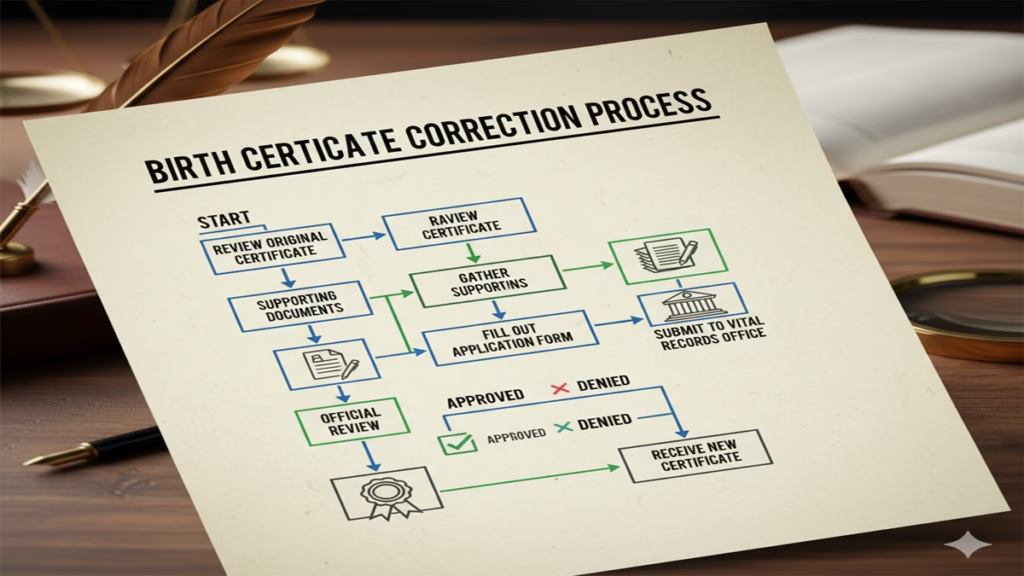
Birth Certificate Correction Process: जन्म प्रमाणपत्रातील नाव, तारीख किंवा पत्ता दुरुस्त करण्याची संपूर्ण प्रक्रिया!
Birth Certificate Correction Process: Introduction: जन्म प्रमाणपत्र (Birth Certificate) हे केवळ जन्माचा पुरावा नाही, तर ते तुमच्या नागरिकत्वाचे आणि ओळखीचे पहिले प्रमाणपत्र आहे. अक्सर देखा गया है कि हॉस्पिटल की गलती या स्पेलिंग मिस्टेक की वजह से जन्म प्रमाण पत्र में नाम या माता-पिता के नाम में गलती हो जाती है। जर तुमच्याही जन्म दाखल्यात अशी काही चूक असेल, तर काळजी करू नका.
In this article, we will discuss the Birth Certificate Correction Process in detail. आपण पाहणार आहोत की ऑनलाईन आणि ऑफलाईन पद्धतीने तुम्ही या चुका कशा दुरुस्त करू शकता.
१. दुरुस्तीसाठी आवश्यक कागदपत्रे (Documents Required)
Birth Certificate Correction Process: दुरुस्ती प्रक्रियेला सुरुवात करण्यापूर्वी खालील कागदपत्रे जवळ ठेवा:
- मूळ जन्म प्रमाणपत्र (Original Birth Certificate): ज्यामध्ये चूक आहे.
- ओळख पुरावा (Identity Proof): आधार कार्ड, पॅन कार्ड किंवा पालकांचे ओळखपत्र.
- प्रतिज्ञापत्र (Affidavit): नोटरीकडून करून घेतलेले एक शपथपत्र, ज्यामध्ये जुनी (चुकीची) माहिती आणि नवीन (बरोबर) माहिती नमूद केलेली असावी.
- शाळेचा दाखला (School LC/Bonafide): जर जन्मतारीख किंवा नावात बदल करायचा असेल तर.
- पत्ता पुरावा (Address Proof): रेशन कार्ड किंवा वीज बिल.
२. जन्म प्रमाणपत्र दुरुस्ती प्रक्रिया (Step-by-Step Process)
Birth Certificate Correction Process: A. ऑफलाईन प्रक्रिया (Offline Method – Recommended): बहुतेक शहरांमध्ये आणि गावांमध्ये आजही ऑफलाईन प्रक्रिया अधिक प्रभावी आहे.
- Visit Local Office: तुमच्या महानगरपालिका (Municipal Corporation), नगर परिषद किंवा ग्रामपंचायत कार्यालयातील ‘जन्म-मृत्यू नोंदणी’ विभागात जा.
- Collect Form: दुरुस्तीसाठी असलेला ‘Correction Form’ मिळवा.
- Draft an Affidavit: एका वकिलाकडून किंवा नोटरीकडून प्रतिज्ञापत्र (Affidavit) तयार करून घ्या. इसमें यह स्पष्ट होना चाहिए कि गलती क्या है और सही जानकारी क्या होनी चाहिए।
- Submit Documents: फॉर्म भरून सोबत सर्व आवश्यक कागदपत्रे जोडा आणि संबंधित अधिकाऱ्याकडे जमा करा.
- Verification: सरकारी अधिकारी तुमच्या कागदपत्रांची पडताळणी करतील.
- New Certificate: पडताळणी पूर्ण झाल्यावर १५ ते ३० दिवसांत तुम्हाला नवीन आणि दुरुस्त केलेले प्रमाणपत्र मिळेल.
B. ऑनलाईन प्रक्रिया (Online Method): काही राज्यांमध्ये (उदा. महाराष्ट्र – ‘Aaple Sarkar’, यूपी – ‘e-District’) ही सुविधा ऑनलाईन उपलब्ध आहे.
- Register on Portal: राज्याच्या अधिकृत सेवा पोर्टलवर जाऊन नोंदणी करा.
- Search Service: ‘Birth Certificate Correction’ ही सेवा निवडा.
- Upload Documents: सर्व कागदपत्रे स्कॅन करून अपलोड करा.
- Pay Fees: सरकारी शुल्क (Fees) ऑनलाईन भरा.
- Track Status: तुम्हाला मिळालेल्या ॲप्लिकेशन नंबरवरून स्टेटस ट्रॅक करा.
३. नाव बदलणे आणि स्पेलिंग दुरुस्ती (Name Change vs. Correction)
- अगर केवल एक अक्षर की गलती है (Spelling Mistake), तो यह प्रक्रिया आसान होती है।
- पण जर तुम्हाला पूर्ण नावच बदलायचे असेल, तर तुम्हाला ‘Gazette’ (राजपत्र) प्रसिद्ध करावे लागते. राजपत्रामध्ये नाव बदलल्याची जाहिरात आल्यानंतरच तुम्ही अधिकृतरीत्या सर्व कागदपत्रांवर नाव बदलू शकता.
४. महत्त्वाच्या टिप्स (Important Tips for Fast Approval)
- Check Twice: नवीन फॉर्म भरताना पुन्हा चूक होणार नाही याची काळजी घ्या.
- Affidavit Format: प्रतिज्ञापत्राचा मसुदा (Draft) अचूक असावा.
- Follow Up: अर्ज जमा केल्यानंतर अधूनमधून कार्यालयात जाऊन चौकशी करा किंवा ऑनलाईन स्टेटस चेक करत राहा.
५. सतत विचारले जाणारे ५ प्रश्न (FAQs)
Q1: जन्म दाखल्यात दुरुस्तीसाठी किती फी लागते?
Ans: सरकारी फी राज्यानुसार बदलू शकते, साधारणपणे ₹५० ते ₹२०० पर्यंत खर्च येतो (Affidavit चा खर्च वेगळा).
Q2: क्या ऑनलाइन प्रोसेस हर जगह उपलब्ध है?
Ans: नाही, काही ग्रामीण भागांत अजूनही ग्रामपंचायतीत जाऊनच ही दुरुस्ती करावी लागते.
Q3: जन्म दाखल्यात जन्मतारीख बदलता येते का?
Ans: हो, पण त्यासाठी हॉस्पिटलचा मूळ रेकॉर्ड किंवा शाळेचा दाखला यांसारखे भक्कम पुरावे लागतात.
Q4: किती दिवसात नवीन प्रमाणपत्र मिळते?
Ans: सर्व कागदपत्रे बरोबर असल्यास १५ ते ३० दिवसांच्या आत नवीन प्रमाणपत्र मिळते.
Q5: १०-१५ वर्षांनंतर नावात बदल करता येतो का?
Ans: हो, पण अशा वेळी गॅझेट (Gazette Notification) असणे अनिवार्य आहे.
Conclusion: विनाविलंब दुरुस्ती करा!
Birth Certificate Correction Process ही थोडी वेळखाऊ वाटू शकते, पण भविष्यातील अडचणी टाळण्यासाठी ती करणे अत्यंत आवश्यक आहे. गलत जानकारी वाले दस्तावेज हमेशा मुसीबत बनते हैं। वर दिलेल्या स्टेप्स फॉलो करून तुम्ही तुमचा जन्म दाखला वेळेत दुरुस्त करून घ्या.
The Birth Certificate Correction Process: A Comprehensive Guide to Rectifying Vital Errors
Introduction: The Unshakeable Importance of a Birth Certificate
Birth Certificate Correction Process In the tapestry of official documents that define our legal and social identity, few threads are as fundamental as the birth certificate. It is the foundational record, the first acknowledgment of our existence by the state, and a keystone document that unlocks access to virtually every aspect of modern life. From enrolling in school and obtaining a driver’s license to securing a passport, claiming social benefits, and proving eligibility for employment, the birth certificate is the non-negotiable proof of who we are, where we were born, and to whom.
Birth Certificate Correction Process: Yet, for thousands of individuals every year, this critical document contains errors—misspelled names, incorrect dates, misstated parental details, or wrong places of birth. These are not mere clerical oversights; they are potential sources of profound bureaucratic paralysis and personal distress. The process to correct such errors, while systematic, is often shrouded in mystery and perceived as daunting. This article demystifies the birth certificate correction process, providing a step-by-step guide, elucidating the legal frameworks, exploring common challenges, and offering practical advice to navigate this essential administrative journey.
Chapter 1: Understanding the Error and the Authority
1.1 Types of Correctable Errors
Birth Certificate Correction Process: Errors on a birth certificate generally fall into two categories:
- Minor Errors or Clerical Mistakes: These include typographical errors, misspellings, transposed letters or numbers, and obvious mistakes entered during the original registration process. Examples: “Jon” instead of “John,” “01/02/2000” instead of “02/01/2000.”
- Substantive Changes: These involve alterations to significant facts, often requiring substantial supporting evidence. Examples: Changing a child’s surname following paternity establishment or a legal name change for the parent, adding an omitted parent’s information, or correcting the sex/gender marker.
1.2 The Jurisdictional Maze: Where to File
The absolute first and most crucial step is identifying the correct jurisdiction. In the United States, birth records are maintained at the state level, not federal. The authority is typically the Office of Vital Records or Vital Statistics in the state where the birth occurred. Some states further delegate this authority to county or city health departments. Filing a correction request with the wrong office will result in immediate rejection and lost time.
Chapter 2: The Universal Correction Process: A Step-by-Step Breakdown
Birth Certificate Correction Process: While specifics vary by state, the correction process follows a common, multi-stage pathway.
Step 1: Obtain the Required Forms
Contact the appropriate Vital Records office (usually via their website) to download the specific form for a “birth certificate correction,” “amendment,” or “supplement.” Do not use a generic form. Instructions and requirements are often listed alongside the form.
Step 2: Gather Documentary Evidence
Birth Certificate Correction Process: This is the heart of the process. The state requires primary evidence to justify the change. The evidence must:
- Be from an independent, authoritative source created at or near the time of birth.
- Clearly show the correct information as it should appear.
- The required evidence escalates with the significance of the change.
- For Name Spelling/Date Correction: Early baptismal records, hospital birth records (not the souvenir certificate), early school records, census records, or physician’s records.
- For Parental Information Correction/Addition: The child’s original hospital record, prenatal records, the marriage certificate of the parents, paternity acknowledgment documents, or a court order establishing paternity.
- For a Legal Name Change: A certified copy of a court order for a name change is almost universally mandatory. You cannot simply start using a new name and amend the birth certificate.
Step 3: Secure Notarized Affidavits
Birth Certificate Correction Process: In most cases, you must submit notarized affidavits (sworn statements) from individuals with direct knowledge of the correct facts. Typically, affidavits are required from:
- The registrant (if over 18).
- Both parents listed (or eligible to be listed) on the certificate.
- Sometimes, a disinterested third party (e.g., a relative present at birth, an attending physician) who can attest to the error.
The affidavit form is usually provided by the Vital Records office and must specify the exact error and the correct information.
Step 4: Submit the Complete Package and Fees
Birth Certificate Correction Process: Assemble the packet:
- Completed, signed official application form.
- A certified (long-form) copy of the erroneous birth certificate.
- All required primary documentary evidence (photocopies may be accepted, but some states require certified copies).
- All required notarized affidavits.
- The required processing fee (non-refundable, even if the request is denied).
- A valid government-issued photo ID for the applicant.
Birth Certificate Correction Process: Submit via certified mail or in person as instructed. Retain copies of everything.
Step 5: Review, Approval, and Issuance
The Vital Records office reviews the submission. This can take weeks to several months. If documentation is insufficient, they will issue a deficiency letter. If approved, they will:
- Create a Supplemental Report of Birth Correction: Most states do not alter the original record. They create a supplemental document that is permanently attached to the original file.
- Issue a New Certified Copy: Any new certified copies issued after the amendment will reflect the corrected information, often with a marginal note or indicator that an amendment has been filed.
Chapter 3: Special Circumstances and Complex Corrections
Birth Certificate Correction Process: 3.1 Correcting a Birth Certificate for a Minor
The process is typically initiated by the legal parent(s) or guardian(s). If one parent is unavailable or uncooperative, the submitting parent may need to provide a court order demonstrating sole legal authority, or the state may require additional documentation to proceed.
3.2 Changing the Sex/Gender Marker
Birth Certificate Correction Process: This is a rapidly evolving area of law and policy. Requirements vary dramatically by state:
- Some states require a signed affidavit from a licensed physician or mental health provider attesting that the change is consistent with the individual’s gender identity.
- Other states may require a court order or proof of gender-affirming surgery (though this requirement is being eliminated in many jurisdictions).
- A growing number of states and the District of Columbia allow for a non-binary or “X” marker, with specific affidavit forms.
3.3 Adult Adoptee and Paternity Cases
- Adoption: A birth certificate is typically superseded by a new “Certificate of Foreign Birth” or amended birth certificate post-adoption, issued by the court. The original is sealed.
- Paternity Establishment: If paternity is established after registration, a court order of paternity or a Voluntary Acknowledgement of Paternity (if filed within a certain period) must be submitted to Vital Records to add the father’s name.
3.4 Delayed Registration and Foundlings
Birth Certificate Correction Process: If a birth was never registered, a “Delayed Certificate of Birth” must be filed first, requiring a different set of evidence (e.g., multiple early-life documents). This process is more complex than a simple correction.
- Procrastination: Errors become harder to correct as time passes. Witnesses become unavailable, and early documents are lost. Act promptly.
- Insufficient Evidence: Submitting a driver’s license or social security card (which were issued based on the birth certificate) is circular and unacceptable. You must provide antecedent evidence.
- Incorrect Jurisdiction: Mailing documents to the federal government or the state where you currently live (if different from birth state) is futile.
- Non-Compliant Affidavits: Using the wrong affidavit form, failing to get it notarized, or having an ineligible person sign it.
- Assuming All States Are Alike: Thoroughly research your specific birth state’s requirements. Do not rely on advice from someone who corrected a certificate in a different state.
Chapter 5: When the Government Says “No”: The Appeals Process
Birth Certificate Correction Process: If a correction request is denied, the Vital Records office will state a reason (e.g., “insufficient evidence”). You have options:
- Re-apply with Strengthened Evidence: Address the deficiency directly. Obtain more or better primary documents.
- Administrative Appeal: Some states have a formal internal appeals process reviewed by a higher authority within the health department.
- Judicial Relief: The final recourse is to file a petition in the state court (usually in the county of birth or residence). A judge can issue a court order mandating the correction, which the Vital Records office must then follow. This is the most time-consuming and expensive path and often requires an attorney.
Conclusion: Persistence and Precision
Birth Certificate Correction Process: Correcting a birth certificate is an exercise in bureaucratic precision and patient persistence. It is a process that values historical documentation and sworn testimony. While the path may seem labyrinthine, it is navigable with careful attention to detail, rigorous collection of evidence, and strict adherence to the specific mandates of the jurisdiction of birth. The reward—a document that accurately reflects your legal identity—is worth the effort, removing a lifelong source of friction from your interactions with the world and ensuring that your fundamental record of existence is, finally, correct.
Frequently Asked Questions (FAQs)
1. How long does the entire birth certificate correction process take?
Birth Certificate Correction Process: The timeline varies significantly by state and case complexity. From initial document gathering to receiving a corrected certificate, it can take anywhere from 3 to 12 months. Simple corrections with perfect documentation may be processed in 8-12 weeks, while complex cases requiring additional evidence or court orders can take a year or more. Processing times at the Vital Records office after submission are often 4-8 weeks.
2. What is the most common reason for a correction request to be denied?
Birth Certificate Correction Process: The single most common reason for denial is insufficient or unacceptable evidence. Submitting documents that were created after the birth (like a driver’s license or passport) or that are not from an independent, institutional source will result in rejection. The office requires primary, contemporaneous evidence that definitively proves the error existed from the beginning.
3. Can I correct my birth certificate online?
Birth Certificate Correction Process: While you can often initiate the process, download forms, and check requirements online, the actual amendment process almost always requires physical submission of original or certified documents and notarized paperwork. Some states may offer a portal to start an application, but you will still need to mail in your evidentiary package. Be wary of third-party websites that charge fees for “expedited” services; they are just intermediaries.
4. I was born in a different state than where I live now. Do I have to travel there to fix it?
No, in-person appearance is rarely required. Almost all states allow you to handle the entire process via certified mail. You must communicate with the Vital Records office in your state of birth, obtain their forms, and mail your completed packet to them. The only exception might be for extremely complex cases that end up in court.
5. My parent is deceased and cannot sign an affidavit. How do I proceed?
This is a common hurdle. You will need to provide alternative, stronger documentary evidence to compensate for the missing affidavit. This often includes:
Providing the parent’s death certificate.
Submitting additional early-life documents that mention the parent with the correct information (e.g., their signature on an old school record, a contemporaneous letter).
Obtaining affidavits from other knowledgeable individuals (e.g., older relatives, family friends).
In some cases, you may need to petition the court for an order to make the change without the parent’s signature. The Vital Records office can advise on their specific policy for deceased parents.