


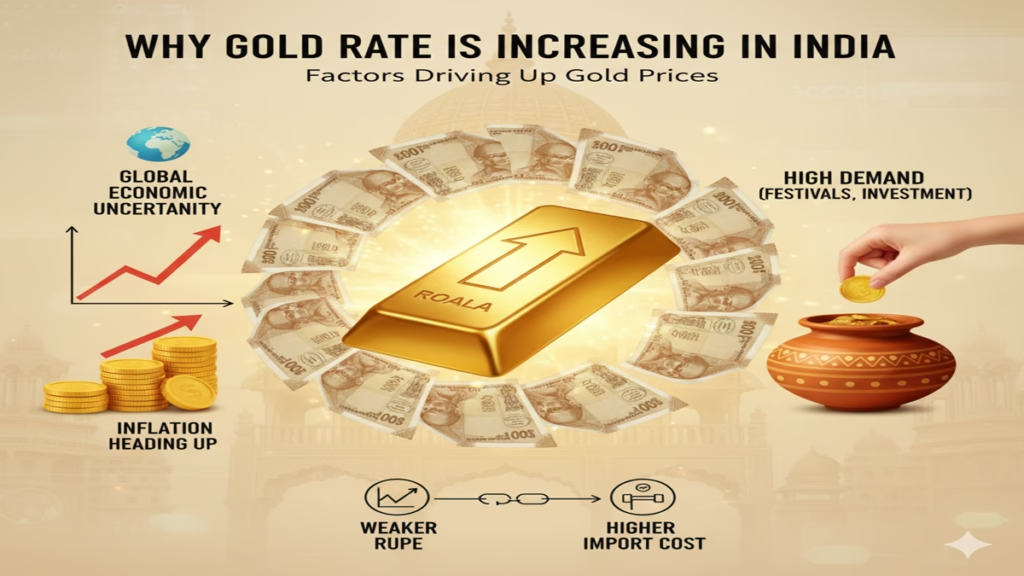
The Glittering Ascent: Unpacking the Multifaceted Reasons Behind India’s Rising Gold Prices
Why Gold Rate Is Increasing In India For millennia, gold has been woven into the cultural, spiritual, and economic fabric of India. It is more than a metal; it is a symbol of purity, prosperity, and security. However, in recent years, Indians have watched with a mix of pride and anxiety as the price of this beloved asset has climbed to unprecedented heights, frequently breaching the ₹70,000 per 10-gram mark and settling at historically high levels.
This surge is not a simple phenomenon but a complex interplay of global macroeconomic forces, domestic market dynamics, and deep-seated cultural imperatives. Understanding why gold rates are increasing in India requires a journey from international trading floors to local jewellery shops, examining the powerful currents that dictate this precious metal’s value.
I. The Global Catalysts: Where the Price is Truly Set
India is the world’s second-largest consumer of gold, but it is a price-taker, not a price-maker. The foundational price of gold is set in the global markets, primarily in US Dollars, through exchanges like COMEX and the London Bullion Market. Therefore, the first layer of explanation lies in international developments.
1. The Safe-Haven Haven in Turbulent Times:
Gold’s primordial role is as a safe-haven asset. In times of geopolitical uncertainty or economic instability, investors globally flee from volatile assets like stocks to the perceived safety of gold. The period from 2020 onwards has been a textbook case:
- The COVID-19 Pandemic: The global economic shutdown triggered massive panic, leading central banks to inject liquidity. This fear-driven demand pushed gold to then-record highs.
- The Russia-Ukraine War: The conflict shattered post-Cold War stability, triggering sanctions, disrupting supply chains, and sparking fears of a broader conflict. Gold, as always, became a shelter from geopolitical storms.
- Middle East Tensions: Ongoing conflicts and tensions in West Asia further perpetuate an environment of risk, sustaining demand for gold.
2. The Duality of the US Dollar and Interest Rates:
The price of gold has an inverse relationship with the US Dollar and US interest rates.
- The Dollar Dynamic: Gold is dollar-denominated. A strong dollar makes gold more expensive for holders of other currencies, dampening demand. Conversely, a weaker dollar makes gold cheaper internationally, spurring buying and pushing prices up. Periods of dollar weakness have consistently correlated with gold bull runs.
- The Interest Rate Conundrum: Traditionally, higher interest rates offered by central banks (like the US Federal Reserve) make non-yielding assets like gold less attractive, as investors can earn risk-free returns in bonds. However, the post-2020 scenario has been atypical. The Fed raised rates aggressively to combat inflation, which should have suppressed gold. Yet, gold remained resilient and continued to rise. This is because the “real interest rate” (nominal rate minus inflation) remained negative or low for an extended period. When inflation outpaces the return on savings, gold’s value as an inflation hedge outweighs its lack of yield.
3. Central Bank Gold Buying Spree:
A monumental, structural shift has been the aggressive gold accumulation by central banks worldwide, led by China, Russia, India, Turkey, and Poland. Their motivations are strategic:
- Diversification Away from the US Dollar: Reducing reliance on the US dollar in foreign reserves is a key geopolitical goal for many nations.
- Hedging against Sanctions: Countries facing or fearing Western sanctions (like Russia) see gold as a neutral, physical asset that cannot be frozen or digitized.
- Confidence in a Tangible Asset: In an era of digital currencies and high sovereign debt, gold represents ultimate monetary integrity.
This institutional demand creates a massive, consistent floor for gold prices, absorbing supply and signaling long-term confidence in the metal.
4. Soaring Global Inflation:
Gold has been a historic hedge against inflation. When the purchasing power of paper currencies erodes, the intrinsic value of gold tends to hold. The post-pandemic global inflation surge, reaching multi-decade highs in the US and Europe, reignited this fundamental use case. Investors and individuals alike turned to gold to preserve their wealth, creating sustained demand pressure.
II. The Indian Lens: Domestic Factors Amplifying the Global Trend
While global prices set the base, local factors significantly amplify the final price paid by the Indian consumer, often making the rise here steeper.
1. The Depreciating Indian Rupee (INR):
This is arguably the most critical domestic factor. Since gold is imported and priced in USD, a weaker rupee directly increases the rupee cost of gold.
- The Math: If international gold is $1,800/oz and the USD/INR rate is 75, the import cost is ₹135,000. If the rupee depreciates to 83 against the dollar (as it has), the same ounce costs ₹149,400—a significant hike without any change in gold’s dollar price.
- Causes of Depreciation: India’s trade deficit (imports > exports), global oil price increases (India is a major importer), and capital outflows during global risk-off periods all put pressure on the rupee. The RBI intervenes to manage volatility, but the long-term trend has been gradual depreciation, acting as a persistent booster for rupee-denominated gold prices.
2. Government Policies and Import Duties:
To manage the Current Account Deficit (CAD) and discourage non-essential imports, the Indian government imposes a substantial customs duty on gold.
- The Duty Structure: The basic customs duty is 10%, and when combined with the Agriculture Infrastructure and Development Cess (AIDC) of 2.5%, the total import levy stands at 12.5%. This is a direct, non-negotiable addition to the landed cost.
- Impact: Any rise in the international price is compounded by this fixed percentage duty. For example, a 10% global increase becomes a 12.5%+ increase for the Indian buyer before other costs. This creates a permanent premium over international prices.
3. Domestic Demand-Supply Mismatch:
India produces negligible gold domestically, satisfying over 90% of its demand through imports. This demand is famously inelastic—it does not fall proportionally with price hikes due to cultural and religious significance.
- Festive & Wedding Demand: Demand surges predictably during festivals like Diwali, Dussehra, and the wedding season (October to May). Even at high prices, families fulfill social and religious obligations, creating seasonal price spikes.
- Investment Demand: With the advent of Sovereign Gold Bonds (SGBs) and digital gold, the investor base has widened. During stock market corrections or real estate slumps, gold is the default alternative investment for millions. The rise of organized gold loan companies has also enhanced gold’s utility as collateral, reinforcing its financial identity.
4. Local Taxes and Making Charges:
Beyond the metal price, the consumer pays Goods and Services Tax (GST) on gold jewellery (currently 3% on the gold value plus making charges) and high making charges for intricate designs. While these don’t affect the bullion rate, they significantly increase the final outflow for a buyer, making the overall experience of acquiring gold more expensive.
III. The Psychological and Cultural Underpinning
Beyond economics, a powerful psychological loop fuels the demand.
- The “Price Begets Price” Mentality: In many Indian households, rising prices are seen not as a deterrent, but as a validation of gold’s enduring value and a signal to buy before it climbs further. This fear-of-missing-out (FOMO) can lead to increased buying during rallies.
- The Ultimate Financial Security: For rural India and the informal sector, gold remains the most trusted, liquid, and private savings instrument. It is insurance against calamity, a readily accepted loan collateral, and a financial resource completely within the family’s control.
IV. The Future Trajectory: Is the Ascent Sustainable?
Predicting gold prices is perilous, but the structural supports appear strong:
- Continued Central Bank Buying: This is likely to persist, providing a price floor.
- Geopolitical Uncertainty: A fragmented world order suggests safe-haven demand will remain.
- Domestic Policy: Any reduction in import duties would provide temporary relief, but it is unlikely given the government’s focus on the CAD.
Conclusion: A Convergence of Eras
The increasing gold rate in India is a story of our times. It is where global fear meets domestic faith, where the monetary policies of the Federal Reserve resonate in the wedding budgets of Indian households, and where a depreciating rupee silently transfers global economic adjustments to the common citizen. Gold’s ascent is fueled by a perfect storm: a world seeking safety, a nation with an unwavering cultural affinity, and market mechanics that bridge the two. As long as this convergence persists, gold will continue to hold, and likely enhance, its glittering stature in the Indian psyche and portfolio, reminding us that in an increasingly digital and uncertain world, the allure of tangible, timeless value remains potent.
5 Frequently Asked Questions (FAQs) on Rising Gold Prices in India
1. If global gold prices fall, will Indian gold prices also drop immediately?
Not necessarily, and not proportionally. While a sustained fall in international prices will pull Indian prices down, the exchange rate acts as a buffer. If the rupee weakens simultaneously, it can offset or even negate the global decline. Additionally, domestic factors like import duty (12.5%) and local demand (e.g., during weddings) can keep premiums high. The correlation is strong, but not 1:1 due to the rupee-dollar dynamic.
2. Are Sovereign Gold Bonds (SGBs) a better option than physical gold when prices are high?
SGBs can be a superior financial alternative, especially in a high-price environment, due to key advantages:
No Making Charges or Storage Risk: You own paper/digital gold without physical hassles.
Fixed Interest: You earn an additional 2.5% per annum on your initial investment.
Capital Gains Tax Exemption: If held until maturity (8 years), the capital gains are completely tax-free.
However, SGBs lack the utility of physical gold—they cannot be used for jewellery, weddings, or as immediate collateral for informal loans. For emotional and social needs, physical gold remains irreplaceable.
3. Why does the government not reduce the high import duty to make gold cheaper?
The government faces a policy dilemma. Reducing the 12.5% import duty would:
Increase Imports: Potentially widening the Current Account Deficit (CAD), as more dollars flow out to pay for gold.
Impact the Rupee: Higher dollar demand for imports could put further downward pressure on the INR.
Revenue Loss: It would mean sacrificing a significant source of tax revenue.
The duty is a tool to manage macro-economic stability, even if it makes gold expensive for consumers.
4. With prices so high, is gold still a good investment for the long term?
From a pure portfolio diversification perspective, yes, in moderation. Historically, gold has preserved wealth over decades, acting as a hedge against inflation and currency weakness. Its low correlation with equities means it can reduce portfolio volatility. Financial advisors typically recommend allocating 5-15% of an investment portfolio to gold, regardless of short-term price levels, for this stabilizing effect. The key is to invest systematically (e.g., monthly via Gold ETFs or SGBs), not lump-sum at peaks.
5. What impact do high gold prices have on the Indian economy?
The impact is a double-edged sword:
Negative: It increases the import bill, pressuring the Current Account Deficit (CAD) and the rupee. It can also lead to increased unofficial smuggling to evade duties. For households, it locks up substantial savings in a non-productive asset.
Positive: It strengthens the balance sheets of millions of households and the gold loan industry, providing them with higher collateral value for credit. It also boosts the revenue of the jewellery retail sector and government tax collections.
Overall, while it poses macroeconomic challenges, it underscores the vast stored wealth within the Indian population.