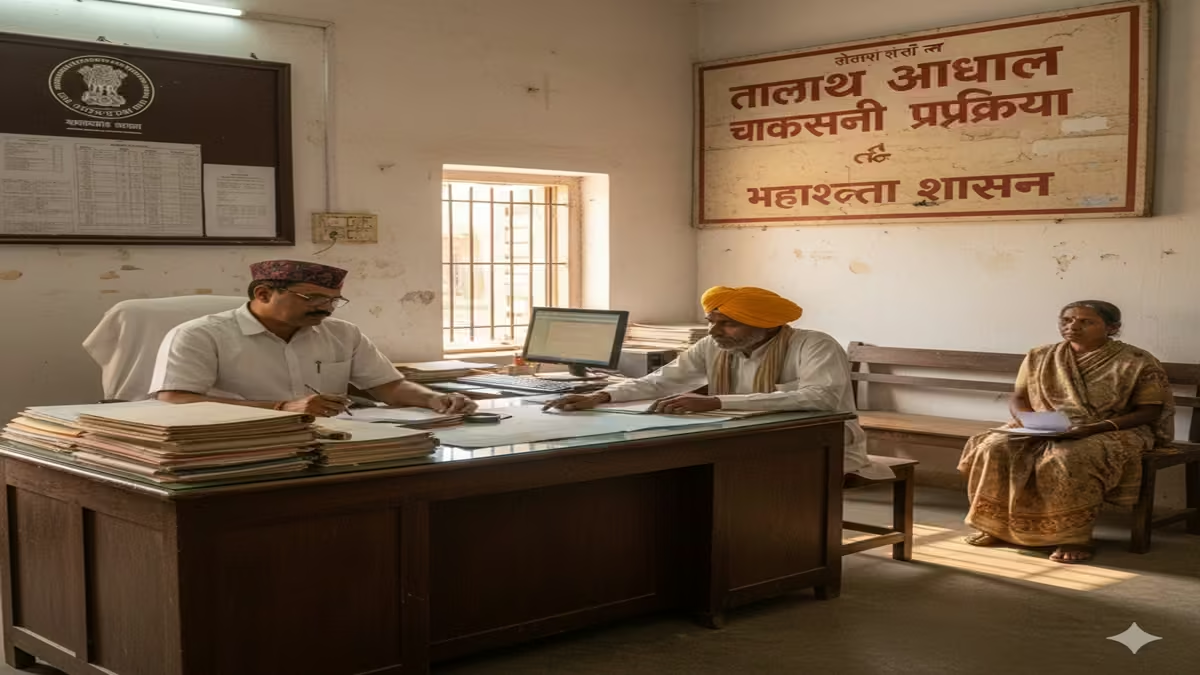
The Keystone of Rural Land Records: A Deep Dive into the Talathi Ahaval Verification Process in Maharashtra
Talathi Ahwal Verification Process Maharashtra In the vast and varied landscape of Maharashtra, from the fertile plains of the west to the rugged terrain of Vidarbha, land is more than an asset—it is identity, livelihood, and legacy. The accuracy and integrity of land records form the bedrock of rural governance, economic transactions, and social stability. At the very heart of this system sits a critical, yet often understated, document: theTalathi Ahaval (or Ahwal). The process of verifying this Ahaval is a fundamental administrative ritual that ensures the mirror of official records reflects the reality on the ground. This article demystifies the Talathi Ahaval Verification Process, exploring its significance, step-by-step procedures, challenges, and the transformative impact of digitization.
Understanding the Key Players and Documents
Before delving into verification, one must understand the institutional framework.
- Talathi (Village Accountant): The foundation of the land revenue system at the village level. The Talathi is responsible for maintaining and updating all land records, including the Ahaval, for the villages under their jurisdiction.
- Tehsildar/Tehsil Office: The Talathi’s immediate superior and the nodal officer at the sub-district level. The Tehsil office is the primary interface for the public on most land record matters.
- Ahaval (Ahwal / आहवाल):This is the7/12 Extractand the8-A Extract. The 7/12 (Satbara Utara) is the most crucial document, detailing:
- Survey Number, Area, and Location of the land.
- Names of Recorded Owners (Khatedars) and their share.
- Type of Cultivation (Jirayat/Bagayat).
- Encumbrances like loans, leases, or attachments.
- 8-A Extract: Lists occupants in possession of the land, which may differ from the recorded owners.
- Mutation (Fairad / फेरबदल): The process of updating the Ahaval to reflect changes in ownership, inheritance, or transaction.
What is Ahaval Verification and Why is it Paramount?
Ahaval Verification is the official process of physically inspecting a piece of land and cross-checking its on-ground status with the details recorded in the 7/12 and 8-A extracts. It is not a routine annual exercise but a trigger-based procedure, initiated for specific, critical reasons:
- Pre-Transaction Due Diligence: Before purchasing agricultural land, any prudent buyer (and their financier) must verify that the seller is the legitimate owner, the area matches, and there are no hidden encumbrances or disputes. Verification mitigates the risk of fraud.
- Mutation Application: When applying for a mutation after a sale, gift, or inheritance, the Tehsil office often mandates a verification report from the Talathi to confirm the applicant’s physical possession and the absence of objections from neighbors or other claimants.
- Resolution of Disputes: In cases of boundary conflicts, ownership disputes, or illegal encroachment, the Talathi’s verification report serves as a primary official document for resolution at the Tehsil level or in courts.
- Loan Sanctions from Banks/Financial Institutions: Banks require a verified Ahaval to ensure the land offered as collateral is free from legal ambiguities before disbursing agricultural or housing loans.
- Government Acquisition or Compensation: For projects like road widening, canal construction, or SEZs, accurate verification is essential to determine correct ownership for compensation.
- Suspicion of Fraud or Error: If discrepancies are suspected in the record, an authority can order verification.
The Step-by-Step Ahaval Verification Process: From Application to Report
The process is methodical, involving the landholder, the Talathi, and sometimes the Circle Officer or Tehsildar.
Stage 1: Initiation & Application
- Request by Citizen: The landholder or interested party (buyer, bank officer) applies for verification. This is often done by submitting a written application to the Talathi or the Tehsil office, along with the relevant Ahaval extract and proof of identity.
- Direction by Authority: The Tehsildar or Circle Officer can directly order the Talathi to conduct a verification in case of a dispute or administrative need.
Stage 2: The Physical Verification (The Core Activity)
Upon receiving the request or order, the Talathi undertakes the field visit. This involves:
- Notice (Often Implied): While not always a formal written notice, the Talathi typically informs the landholder and adjacent owners (neighbors) about the visit date to ensure all concerned parties are present.
- Key activities include:
- Identity Confirmation: Verifying the identity of the person in possession against the Ahaval.
- Boundary Demarcation Check: Walking the perimeter of the land. The Talathi checks the boundary marks (stones, trenches, ridges) and compares them with the measurements and descriptions in the record. Disputes often arise here.
- Cross-verification with Neighbors (Parcel Holders): The Talathi records statements from owners of adjacent survey numbers. They confirm the boundaries and may voice any objections or claims they have regarding the land in question. Their concurrence is vital.
- Encumbrance Check: Looking for any visible signs of leases, mortgages, or other agreements not reflected in the record.
Stage 3: Preparation of the Verification Report (Ahaval Verification Shreshtha)
Post inspection, the Talathi compiles a detailed report. This report, often called the “Shreshtha” or “Verification Panchnama,” includes:
- Details of the land (Survey No., Area, Village).
- Names of present occupants and recorded owners.
- Statements recorded from the applicant and adjacent owners.
- Observations on boundary marks, cultivation, and any structures.
- A clear finding: whether the records match the ground reality or not.
- If there is a mismatch, the report details the discrepancy (e.g., “Eastern boundary encroached by 10 feet,” “Actual occupant is X, while record shows Y”).
- A sketch map of the land, if necessary.
- The Talathi’s signature, date, and official seal.
Stage 4: Submission and Further Action
- The report is submitted to the Circle Officer or directly to the Tehsil office.
- If Verified Cleanly: The process concludes, and the Ahaval is considered validated. This report can then be used by the applicant for their transaction, loan, or mutation.
- If Discrepancies are Found: The matter escalates. The Tehsil office may:
- Initiate a formal dispute resolution process.
- Order a joint measurement by the Land Records Department (if boundaries are contested).
- Issue notices to concerned parties for a hearing.
- Halt any pending mutation or transaction until the discrepancy is legally resolved.
Challenges and Pain Points in the Traditional Process
Despite its importance, the manual verification process has been fraught with challenges:
- Subjectivity and Corruption: The Talathi’s observations are powerful. This discretion has, historically, been a source of corruption—demands for bribes to submit a favorable report or ignore an encroachment.
- Delay and Bureaucratic Inertia: The process can be slow, dependent on the Talathi’s availability and workload. Getting a verification report can take weeks, delaying crucial transactions.
- Lack of Technical Precision: Relying on physical boundary marks and visual inspection is less accurate than modern GPS-based surveys. Disputes over a few feet of land are common.
- Pressure and Coercion: Talathis often face pressure from local elites or politically connected individuals to skew reports in their favor.
- Inadequate Training and Workload: A Talathi manages multiple villages, making timely verifications difficult. Constant updates in laws and procedures require ongoing training.
The Digital Revolution: How Technology is Transforming Verification
The Government of Maharashtra’s push towards Digital India Land Records Modernisation Programme (DILRMP) and the Maharashtra Bhulekh portal is radically altering the landscape.
- Maharashtra Bhulekh Portal: Citizens can now view and download their 7/12 and 8-A extracts online for free. This transparency is the first step, reducing dependency on the Talathi for mere document access.
- Integration with E-District & Mutation: Online mutation applications (F Lines) are linked to the digital land record database. While physical verification may still be required, the workflow is tracked online, reducing delays and opaqueness.
- SVAMITVA Scheme (Survey of Villages Abadi and Mapping with Improvised Technology in Village Areas): This is a game-changer. Using drone-based survey technology, it aims to create clear, indisputable property maps of inhabited rural areas (abadi) and provide Property Cards/Title deeds to homeowners. Once fully implemented, the need for boundary verification through physical inspection will be drastically reduced, as geo-referenced, precise maps will be available.
- Digital Signatures and Workflow: Initiatives to digitize the entire verification workflow, where Talathis can upload reports with digital signatures, are underway, ensuring an audit trail.
The Future: A Hybrid Model of Trust and Technology
The future of Ahaval verification lies in a hybrid model:
- Technology as the Arbiter of Facts: SVAMITVA-like precise surveys will become the authoritative source for boundaries and area, minimizing factual disputes.
- Human Intelligence for Context: The Talathi’s role will evolve from a measurer to a resolver. Their deep local knowledge will be crucial for verifying possession, understanding complex inheritance patterns, and mediating disputes that technology alone cannot solve.
- Blockchain for Immutability: Pilot projects exploring blockchain for land records promise a future where once registered, transactions are tamper-proof, building an immutable chain of ownership.
- Citizen-Centric Services: The goal is to make verification faster, more transparent, and less prone to manipulation. Online appointment systems, SMS tracking for verification requests, and standardized digital report formats are the way forward.
Conclusion: From Rugged Scrolls to Digital Sovereignty
The Talathi Ahaval Verification Process is a microcosm of India’s rural administration—steeped in tradition, burdened by challenges, yet steadily evolving. It represents the enduring struggle to align the written record with the lived reality of the land. While the pen, ledger, and physical inspection of the Talathi have served for generations, the pen is now digital, the ledger is a secure database, and the inspection is aided by drones.
For the farmer in Satara, the homebuyer in Nagpur, or the bank officer in Amravati, a robust and transparent verification process is not just administrative red tape. It is the assurance of rights, the foundation of credit, and the guarantee of peace. As Maharashtra continues to weave technology into the fabric of its land governance, the ancient office of the Talathi and the critical process of Ahaval verification are being reinvented for the 21st century, striving to ensure that every inch of the state’s land is accounted for, justly owned, and a source of prosperity, not conflict.