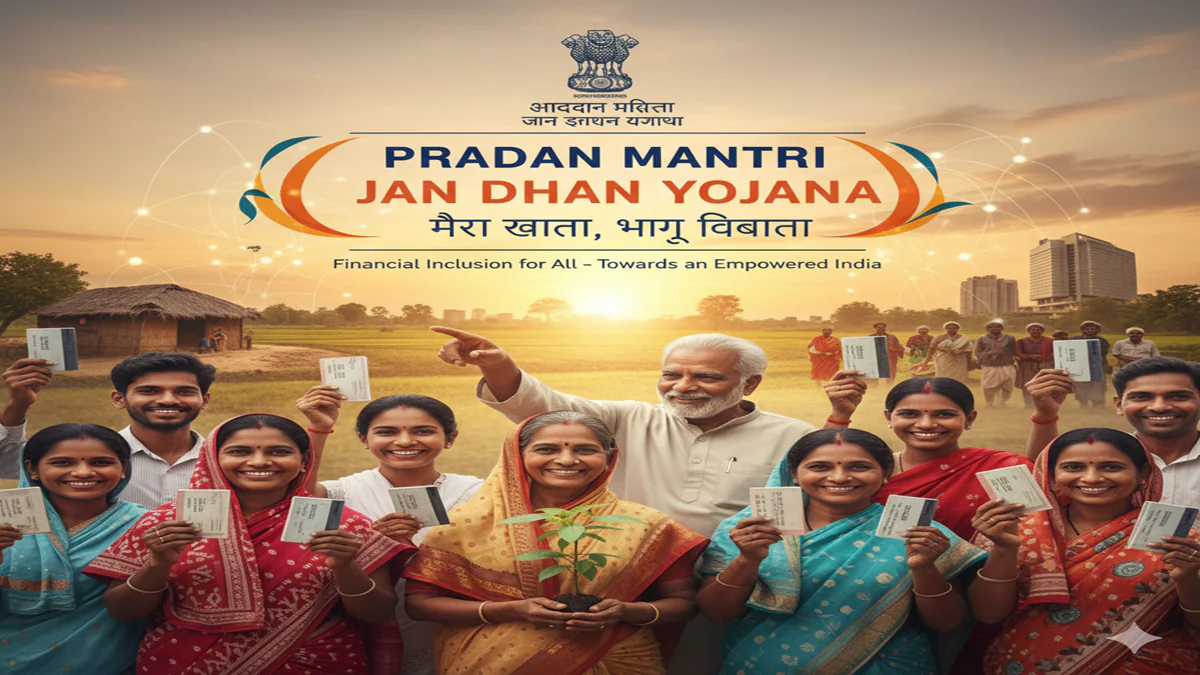
Pradhanmantri Jan Dhan Yojana 2026: झिरो बॅलन्स खात्यावर मिळवा ₹१०,००० पर्यंत ओव्हरड्राफ्ट आणि २ लाखांचा विमा!
Pradhanmantri Jan Dhan Yojana 2026: भारतातील सामान्य नागरिकांना बँकिंग प्रणालीशी जोडण्यासाठी केंद्र सरकारने Pradhanmantri Jan Dhan Yojana (PMJDY) ही अत्यंत महत्त्वाची योजना सुरू केली आहे. ही जगातील सर्वात मोठी आर्थिक समावेशन (Financial Inclusion) योजना मानली जाते. जर तुमचे अजूनही बँकेत खाते नसेल, तर जन धन योजना तुमच्यासाठी एक सुवर्णसंधी आहे.
या लेखात आपण PMJDY Benefits, खाते उघडण्याची प्रक्रिया आणि या योजनेअंतर्गत मिळणाऱ्या विशेष सुविधांची सविस्तर माहिती घेणार आहोत.
Pradhanmantri Jan Dhan Yojana म्हणजे काय?
Pradhanmantri Jan Dhan Yojana 2026: “मेरा खाता, भाग्य विधाता” या ब्रीदवाक्यासह सुरू झालेली ही योजना गरिबांना बँकिंग, बचत, जमा खाती, विमा आणि पेन्शन यांसारख्या सेवा परवडणाऱ्या दरात उपलब्ध करून देते. या योजनेचे सर्वात मोठे वैशिष्ट्य म्हणजे हे झिरो बॅलन्स (Zero Balance) खाते आहे, म्हणजेच तुम्हाला खात्यात किमान रक्कम ठेवण्याची अट नसते.
PMJDY चे प्रमुख फायदे (Key Benefits)
१. ₹१०,००० ओव्हरड्राफ्ट सुविधा (Overdraft Facility)
Pradhanmantri Jan Dhan Yojana 2026: जन धन खात्याचा सर्वात मोठा फायदा म्हणजे ओव्हरड्राफ्ट सुविधा. जर तुमचे खाते ६ महिने व्यवस्थित कार्यरत असेल, तर खात्यात पैसे नसतानाही तुम्ही ₹१०,००० पर्यंतची रक्कम काढू शकता. ही एक प्रकारची छोटी लोण (Loan) सुविधा आहे.
२. ₹२ लाखांचा मोफत अपघात विमा
Pradhanmantri Jan Dhan Yojana 2026: या योजनेअंतर्गत खाते उघडणाऱ्या व्यक्तीला RuPay Debit Card दिले जाते. या कार्डसोबत ₹२,००,००० पर्यंतचा अपघाती विमा मोफत मिळतो. (२८ ऑगस्ट २०१८ नंतर उघडलेल्या खात्यांसाठी ही मर्यादा २ लाख आहे).
३. झिरो बॅलन्स खाते
Pradhanmantri Jan Dhan Yojana 2026: सामान्यतः खाजगी किंवा सरकारी बँकांमध्ये खाते राखण्यासाठी किमान ५०० ते ३००० रुपये ठेवावे लागतात. मात्र, जन धन खात्यात किमान शिल्लक (Minimum Balance) ठेवण्याची गरज नाही.
४. थेट लाभ हस्तांतरण (DBT)
Pradhanmantri Jan Dhan Yojana 2026: सर्व सरकारी योजनांचे पैसे (उदा. गॅस सबसिडी, पीएम किसान हप्ता, लाडकी बहीण योजना) थेट या जन धन खात्यात जमा होतात, ज्यामुळे भ्रष्टाचाराला आळा बसतो.
५. आयुष्य विमा संरक्षण
पात्र खातेधारकांना ₹३०,००० पर्यंतचे आयुष्य विमा संरक्षण (Life Insurance Cover) देखील दिले जाते.
पात्रता आणि आवश्यक कागदपत्रे (Eligibility & Documents)
- पात्रता: भारताचा कोणताही नागरिक ज्याचे दुसरे कोणतेही खाते नाही, तो हे खाते उघडू शकतो. वयाची अट १० वर्षे किंवा त्यापेक्षा जास्त आहे.
- कागदपत्रे:
- आधार कार्ड (सर्वात महत्त्वाचे)
- पॅन कार्ड (असल्यास)
- पासपोर्ट साईज फोटो
- मोबाईल नंबर
जन धन खाते कसे उघडावे? (How to Open PMJDY Account)
१. बँकेची निवड: तुम्ही कोणत्याही सरकारी किंवा अधिकृत खाजगी बँकेत जाऊन जन धन खाते उघडू शकता.
२. फॉर्म भरा: बँकेतून ‘जन धन खाते उघडण्याचा फॉर्म’ घ्या किंवा अधिकृत वेबसाईटवरून डाउनलोड करा.
३. केवायसी (KYC): आधार कार्ड आणि फोटो जोडून फॉर्म सबमिट करा.
४. बँक मित्र: ग्रामीण भागात तुम्ही ‘बँक मित्र’ (Bank Mitra) द्वारेही हे खाते सहज उघडू शकता.
५. नोंदणी: तुमची माहिती पडताळल्यानंतर तुमचे खाते उघडले जाईल आणि तुम्हाला पासबुक व रुपे कार्ड दिले जाईल.
निष्कर्ष (Conclusion)
Pradhanmantri Jan Dhan Yojana ही केवळ खाते उघडण्याची योजना नसून ती आर्थिक स्वातंत्र्याची गुरुकिल्ली आहे. ओव्हरड्राफ्ट, विमा आणि सरकारी योजनांचे पैसे थेट मिळवण्यासाठी प्रत्येकाकडे हे खाते असणे गरजेचे आहे. जर तुमचे खाते नसेल, तर आजच जवळच्या बँकेत जाऊन अर्ज करा.
Quick Summary Table
| वैशिष्ट्ये (Features) | तपशील (Details) |
| खात्याचा प्रकार | झिरो बॅलन्स (Savings) |
| ओव्हरड्राफ्ट मर्यादा | ₹१०,००० पर्यंत |
| अपघात विमा | ₹२,००,००० (RuPay Card सोबत) |
| वयोमर्यादा | १० वर्षांवरील सर्व नागरिक |
| अधिकृत वेबसाईट | pmjdy.gov.in |
Pradhan Mantri Jan Dhan Yojana: A Decade of Financial Revolution in India
Pradhanmantri Jan dhan Yojana In the annals of India’s socio-economic policy, few initiatives have been as ambitious, sweeping, and transformative as thePradhan Mantri Jan Dhan Yojana (PMJDY). Launched with symbolic resonance onAugust 28, 2014, by Prime Minister Narendra Modi, the mission’s name itself reveals its core objective:
“Jan Dhan” or “People’s Wealth.” It set out to tackle one of the most persistent challenges facing the Indian economy—financial exclusion. A decade later, PMJDY is widely recognized as the foundational pillar of India’s digital financial infrastructure, having brought millions from the margins into the formal banking system.
The Genesis: Confronting the Challenge of Financial Exclusion
Pradhanmantri Jan Dhan Yojana 2026: Prior to 2014, a significant portion of India’s population remained unbanked. Opening a bank account was often seen as a daunting process, laden with paperwork, minimum balance requirements, and the sheer inaccessibility of brick-and-mortar branches in remote rural areas. This exclusion had a cascading effect:
- Savings were kept in cash, vulnerable to theft, loss, and inflation.
- Credit was available only from informal moneylenders at exorbitant interest rates, perpetuating cycles of debt.
- Government benefits (subsidies, pensions, scholarships) were prone to leakages and delays, failing to reach the intended beneficiaries fully.
- Economic participation was limited, as the unbanked could not easily save, invest, or insure themselves.
PMJDY was conceived as a mega national mission to break these barriers. It was not merely an account-opening drive; it was a comprehensive framework for financial empowerment.
The Four Pillars of PMJDY: A Robust Architecture
Pradhanmantri Jan Dhan Yojana 2026: The scheme’s success lies in its simple, yet powerful, four-pillar architecture:
- Universal Access to Banking Services: The goal was to ensure a bank account for every adult, with an emphasis on households rather than individuals. This was achieved through a massive expansion of banking touchpoints—bank branches, Business Correspondents (BCs), and ATMs, especially in rural and semi-urban areas. The slogan “Mera Khata, Bhagya Vidhata” (My Account, the Creator of Destiny) captured this promise of empowerment.
- Provision of Basic Banking Accounts with Zero Balance:This was the game-changer. PMJDY accounts came with no requirement for a minimum balance, removing a major psychological and financial hurdle. They offered a RuPay debit card, free of cost, which also functioned as an identity card for the newly banked.
- Financial Literacy Program: Recognizing that an account is useless without knowledge, the scheme mandated financial literacy initiatives to educate account holders on banking fundamentals, the use of debit cards, the benefits of saving, and the pitfalls of over-indebtedness.
- Access to Credit, Insurance, and Pension:The account was designed as a gateway to other financial products.
- Credit: After satisfactory operation of the account for six months, holders become eligible for an overdraft facility of up to ₹10,000, providing a crucial safety net.
- Insurance: Initially, a ₹1 lakh accidental insurance cover was provided with the RuPay card. This was later supplemented by life insurance covers under Pradhan Mantri Jeevan Jyoti Bima Yojana (PMJJBY) and Pradhan Mantri Suraksha Bima Yojana (PMSBY), which could be conveniently linked to the Jan Dhan account.
- Pension: The Atal Pension Yojana (APY) offered a subscription-based pension scheme, accessible via the Jan Dhan platform.
The Staggering Numbers: A Testament to Scale and Reach
Pradhanmantri Jan Dhan Yojana 2026: The statistics of PMJDY tell a story of unprecedented scale:
- Over 51 crore (510 million) bank accounts have been opened as of early 2024.
- Total deposits in these accounts have crossed ₹2.2 lakh crore (over $26 billion), shattering the myth that the poor do not save.
- Over 34 crore RuPay debit cards have been issued.
- A staggering 67% of accounts are in rural and semi-urban areas, indicating deep penetration.
- Approximately 55% of account holders are women, promoting gender equity in finance.
These numbers are not just metrics; they represent 51 million stories of financial identity, security, and dignity.
The Ripple Effects: How PMJDY Transformed India’s Economic Landscape
Pradhanmantri Jan Dhan Yojana 2026: The true impact of PMJDY extends far beyond bank ledgers. It has acted as a catalyst for broader systemic changes:
- The Bedrock of Direct Benefit Transfer (DBT): PMJDY provided the essential plumbing for the government’s DBT revolution. Subsidies for LPG (PAHAL), fertilizers, food, and pensions are now directly credited to beneficiaries’ accounts. This has curbed leakages, eliminated middlemen, and saved the exchequer an estimated ₹2.7 lakh crore as of 2023. The money now reaches the poor faster and in full.
- Enabler of the JAM Trinity: PMJDY was the “Bank Account” in the powerful JAM (Jan Dhan-Aadhaar-Mobile) trinity. The integration of Aadhaar for biometric authentication and mobile phones for communication created a robust, transparent, and efficient delivery system for public welfare.
- Catalyst for Digital Payments: The widespread availability of bank accounts and RuPay cards laid the groundwork for the digital payments boom post-demonetization (2016) and during the COVID-19 pandemic. It facilitated the adoption of UPI, AEPS (Aadhaar Enabled Payment System), and other digital modes, making India a global leader in fintech.
- Women’s Economic Empowerment: By prioritizing accounts for women, PMJDY has given millions of women direct control over their finances. The “Mahila Samman Bachat Patra“ and other female-centric schemes are often channeled through these accounts, enhancing their economic agency and decision-making power within households.
- Formalization of the Economy: Bringing savings into the formal banking system increases the national pool of financial resources, aiding in better monetary policy transmission and productive lending by banks.
Challenges and the Road Ahead
Pradhanmantri Jan Dhan Yojana 2026: Despite its monumental success, PMJDY faces ongoing challenges:
- Dormant Accounts: A portion of accounts remain inactive or have zero balance.
- Deepening Financial Literacy: Ensuring account holders, especially in rural areas, can confidently use digital interfaces, understand insurance premiums, and guard against fraud is critical.
- Sustainable Business Correspondent (BC) Network: Ensuring the viability and reliability of the BC agents, who are the frontline of last-mile banking, is essential for the scheme’s health.
- Over-indebtedness Risks: Easy access to credit and multiple financial products requires responsible lending and borrowing practices to be instilled.
The government has continuously evolved the scheme. In 2022, PMJDY was extended with enhanced features: an increased overdraft limit of ₹10,000, accidental insurance cover raised to ₹2 lakh for RuPay cardholders issued after August 28, 2018, and a focus on promoting digital payments.
Conclusion: More Than an Account, A Gateway to Dignity
Pradhanmantri Jan Dhan Yojana 2026: The Pradhan Mantri Jan Dhan Yojana has achieved what many thought impossible. It has democratized finance in the world’s largest democracy. It is a classic example of how technology, policy vision, and execution can converge to create profound social change. A Jan Dhan account is no longer just a banking instrument; it is agateway to dignity, security, and participation in the modern economy.
It is the first step for a daily wage worker, a small farmer, or a homemaker to access the promises of a growing India. As the scheme enters its next phase, the focus on deepening engagement and enhancing financial literacy will ensure that the “People’s Wealth” truly becomes the creator of destiny for every Indian citizen.
Frequently Asked Questions (FAQs) about Pradhan Mantri Jan Dhan Yojana
1. Who is eligible to open a PMJDY account? Is it completely free?
Pradhanmantri Jan Dhan Yojana 2026: Any Indian citizen above the age of 10 is eligible to open a PMJDY account. There is no age bar for opening a basic account, but certain features like the overdraft facility are available only to adults (18-65 years). Yes, the account iscompletely freeto open. There is no requirement for a minimum balance, and the RuPay debit card is issued free of charge.
2. What are the main benefits and features of a Jan Dhan account?
Pradhanmantri Jan Dhan Yojana 2026: Zero Balance Account:No need to maintain a minimum balance.
RuPay Debit Card:Provides access to ATMs and point-of-sale machines. It also includes anaccidental insurance cover of ₹2 lakh(for cards issued after August 2018).
Overdraft Facility:Eligible account holders (after 6 months of satisfactory operation) can avail an overdraft of up to₹10,000.
Access to Insurance & Pension:Easy enrollment to affordable life/accident insurance (PMJJBY, PMSBY) and pension schemes (APY).
Direct Benefit Transfer (DBT):All government subsidies, scholarships, and pensions are directly credited into this account.
Mobile Banking & UPI:Access to basic mobile banking and the ability to link with UPI for seamless digital payments.
3. My Jan Dhan account is inactive/dormant. How can I reactivate it?
Pradhanmantri Jan Dhan Yojana 2026: An account becomes dormant if there are no customer-induced transactions for over two years. To reactivate it, you simply need to visit your bank branch or a Business Correspondent (Bank Mitr) and perform a transaction. This can be a small deposit or withdrawal. You may need to submit a fresh KYC (Know Your Customer) document if your details are not updated.
4. Can I have more than one Jan Dhan account per family?
Pradhanmantri Jan Dhan Yojana 2026: The scheme aims forat least one account per household. However, the official guideline isone account per individual. If multiple adult family members want accounts, they can open them, but they must declare that they do not already have a basic savings bank account (BSBD) at any other bank. The overdraft facility of ₹10,000 is, however, limited toone account per household, preferably held by the female head.
5. How is PMJDY different from a regular savings bank account?
Pradhanmantri Jan Dhan Yojana 2026: While both are savings accounts, PMJDY is aspecific, government-backed schemewith unique benefits not typically bundled with regular accounts:
Mandatory Zero Balance:Regular accounts often have minimum balance charges.
In-built Insurance:The free accidental insurance cover linked to the RuPay card is a distinctive feature.
Overdraft Facility:The OD facility is a specific provision under PMJDY to provide emergency credit.
Purpose:PMJDY is explicitly designed for financial inclusion, making it simpler to open with relaxed KYC norms initially, and is the primary channel for receiving government welfare benefits.