How to Open a Cafe With A Low Budget In India: A Step-by-Step Guide for Aspiring Entrepreneurs
Opening a cafe is a cherished dream for many in India—a place where the aroma of freshly brewed coffee mingles with the warmth of conversation. However, the perception that launching a cafe requires substantial capital often deters passionate individuals. The truth is, with strategic planning, creativity, and frugal execution, you can open a charming, profitable cafe on a surprisingly low budget. This comprehensive 2000+ word guide will walk you through the entire process, from ideation to launch, tailored for the Indian market.
Chapter 1: The Foundation – Planning & Conceptualization (Budget: Minimal to None)
Before spending a single rupee, invest your time in meticulous planning. This phase is crucial for low-budget success.
Instead of a generic cafe, consider:
- Theme-Based:A board game cafe, a used-book cafe, a pet-friendly courtyard cafe, or a cafe showcasing local art.
- Cuisine-Focused:Dedicated to single-origin Indian coffee, traditionalkadak chaiandbun-maska, homemade desserts, or healthy, organic snacks.
- Community-Oriented:A co-working cafe for freelancers, a poetry-reading hub, or a cultural space for local musicians.
A focused concept helps in targeted marketing and reduces initial inventory costs.
2. Craft a Lean Business Plan: You don’t need a 50-page document. Create a lean plan covering:
- The Idea:Your concept, mission, and vision.
- Target Audience:College students, office professionals, young families?
- Menu & Pricing:A sample menu with key items and competitive pricing.
- Budget & Financials:A detailed estimate of one-time startup costs and monthly operational expenses (more on this below).
- Marketing Strategy:How you’ll attract customers with minimal spend.
3. The Low-Budget Budget: Estimating Costs Realistically
A low-budget cafe in India can be launched for ₹5-10 lakhs, depending on city and scale. Here’s a rough breakup:
| Category | Estimated Cost (₹) | Low-Budget Tips |
|---|---|---|
| Licenses & Legal | 50,000 – 1,00,000 | Start with FSSAI, GST, and local municipal trade license. |
| Space (Security Deposit) | 1,00,000 – 3,00,000 | Biggest variable. Opt for shared spaces, suburbs, or first-floor locations. |
| Interior & Furniture | 1,00,000 – 2,00,000 | Use refurbished, rented, or DIY furniture. Thrift stores are your friend. |
| Kitchen Equipment | 1,50,000 – 3,00,000 | Prioritize second-hand equipment. Buy core items only (brewer, grinder, fridge). |
| Initial Inventory | 50,000 – 1,00,000 | Start with a limited menu; buy in bulk from wholesale markets. |
| Pre-Launch Marketing | 20,000 – 50,000 | Rely heavily on free digital marketing. |
| Contingency | 50,000 | Absolutely essential. |
| TOTAL | 6,00,000 – 12,00,000 | Can be optimized to the lower end with smart choices. |
Chapter 2: The Hunt – Location & Licenses (Budget: High Impact, High Negotiation)
1. The Art of Securing a Low-Cost, High-Potential Location:
- Look Beyond High Streets:Prime footfall areas come with prime rents. Explore:
- Residential Neighborhoods:Near parks, fitness centers, or residential complexes.
- Educational Hubs:Streets adjacent to colleges/universities.
- Office Catchments:In business districts but on side lanes or first floors.
- Shared Spaces & Kiosks:Rent a corner in a bookstore, library, or co-working space.
- Consider a Home Cafe:If you have a ground-floor space with separate entry in a good locality, this is the ultimate budget saver.
- Negotiate Hard:Offer to pay a higher security deposit for lower monthly rent. Seek a lock-in period and rent-free months for fit-out.
2. Navigating the Legal Maze (Licenses & Registrations):
- Entity Registration:Start as a Sole Proprietorship (easiest and cheapest). Upgrade to LLP or Pvt Ltd later.
- FSSAI License:Mandatory.The basic license costs approx. ₹3,000/year for a small eatery.
- GST Registration:Required if you expect annual turnover above ₹20 lakhs (₹10 lakhs for special category states). Voluntary registration is beneficial for input tax credit.
- Local Municipal Health/Trade License:Obtain from your local municipal corporation.
- Check with your landlord/local authorities.
- Music License:From PPL & Novex if you play recorded music.
Chapter 3: Frugal Fit-Out & Equipment (Budget: Creativity Over Cash)
This is where your personality and smart shopping can shine.
1. Interior Design on a Dime:
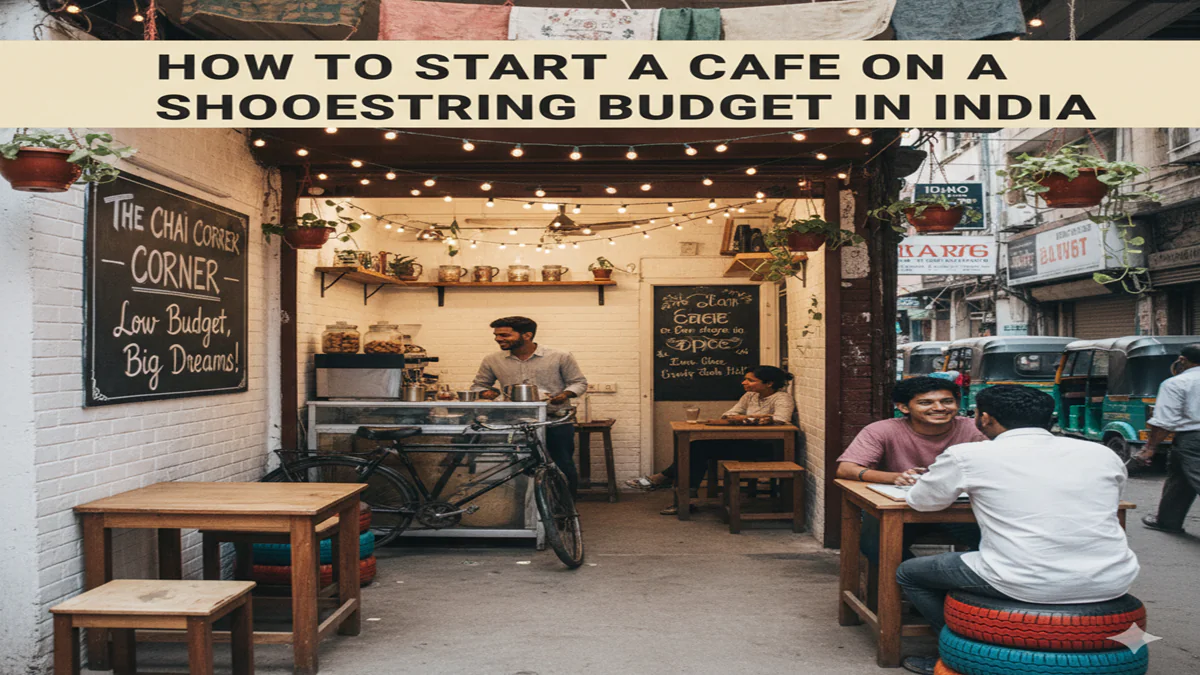
- Embrace the “Shabby Chic” or Industrial Look:Exposed bricks, polished cement floors, and pipes are stylish and save on plaster and paint.
- DIY & Upcycle:Paint old furniture, use wooden crates as shelves, turn tyres into side tables. Involve artist friends for murals.
- Lighting is Key:Inexpensive fairy lights, second-hand lamps, and good use of natural light can create magic.
- Plants, Plants, Plants:The most affordable decor. Use indoor plants, terracotta pots, and hanging planters.
- Source Second-Hand:Scout OLX, Facebook Marketplace, and local chor bazaars for tables, chairs, and display units.
2. Kitchen & Equipment: The Heart of Your Cafe
- The Non-Negotiables (Buy Smart):
- Coffee Machine:Consider a good-quality second-hand machine or a robust South Indian filter coffee brewer for a fraction of the cost.
- Refrigerator:A second-hand commercial fridge or a large, new domestic one to start.
- Grinder:A reliable coffee bean grinder.
- Cooking Station:A simple LPG burner setup or a second-hand induction cooktop.
- Storage:Basic shelving and containers.
- Rent or Lease:Explore equipment leasing options for high-ticket items.
- Borrow & Barter:For the initial launch, can you borrow a microwave or a juicer from family?
Chapter 4: The Menu & Operations – Where Quality Meets Thrift
1. Crafting a Killer, Cost-Effective Menu:
- Start Small, Start Signature:Have 5-7 drink options and 7-10 food items. Perfect them. A famous “Maggi Point” or “Special Chai” can become your identity.
- Leverage Local & Seasonal:Source fruits, vegetables, and dairy locally. Seasonal produce is cheaper and fresher.
- In-House is the Way:Avoid ready-made mixes and frozen foods. Make your syrups, batter, and dough. It’s cheaper and a great selling point.
- Cost Control:Use a simple spreadsheet to calculate the cost of each ingredient per serving. Aim for a food cost of 30-40%.
2. Building Your Supply Chain:
- Coffee/Tea:Approach local roasters or distributors for competitive prices. Buy in bulk.
- Groceries:Establish accounts with wholesale dealers (like METRO, Booker) or localkiranawholesalers.
- Daily Produce:Tie up with a localsubziwalafor daily deliveries at market rates.
3. The Human Element – Staffing:
- Start Solo/With Family:Be your own first barista, server, and cashier.
- Hire Multi-Taskers:For your first 1-2 employees, look for enthusiastic individuals willing to handle counter, serving, and basic cleaning.
- Train Thoroughly:Invest time in training them on your recipes, customer service, and cost-saving mindset.
Chapter 5: The Grand (Frugal) Launch & Marketing
1. The Soft Launch:
Before a grand opening, have a 1-2 week soft launch. Invite friends, family, and local influencers for free tastings in exchange for honest feedback and social media posts. This helps iron out operational kinks without the pressure.
2. Low-Cost, High-Impact Marketing Strategies:
- Instagram & Facebook are Your Best Friends:Create an appealing page. Post daily—behind-the-scenes stories, menu highlights, customer photos. Use local hashtags.
- Collaborate with Micro-Influencers:Offer them a free meal for a post. They have highly engaged local followers.
- Loyalty Programs:A simple “Buy 9 coffees, get the 10th free” punch card works wonders.
- Engage with the Local Community:Sponsor a local sports team, host a book club meeting, or display artwork from a nearby college.
- Google My Business:ESSENTIAL.
Chapter 6: The Road Ahead – Sustainability & Growth
Opening is just the beginning. Monitor your cash flow daily. Track best-selling items and discontinue slow movers. Listen to customer feedback religiously. Reinvest your initial profits back into the business—maybe in that espresso machine you originally dreamed of.
Your cafe’s success hinges not on how much you spend, but on the experience you create. In India, where warmth and connection are valued as much as the beverage, a personal touch, consistent quality, and a welcoming atmosphere will always beat sterile extravagance.
FAQs: Opening a Cafe on a Low Budget in India
Q1. What is the absolute minimum budget required to open a small cafe in India?
A: With extreme frugality, a home cafe or a very small kiosk-style setup can be started with as little as₹3-5 lakhs. This would involve a minimal menu (e.g., chai, coffee, 3-4 snacks), used equipment, basic home-style interiors, and handling most operations yourself. However, a more sustainable standalone model typically requires₹6-10 lakhs.
Q2. Which is the most profitable item on a cafe menu in India?
A: Traditionally,beverages—especially tea, coffee, and packaged drinks—have the highest profit margins (often 60-80%). Food items have lower margins (30-50%) due to ingredient costs. A focus on perfecting your signature drinks and pairing them with a few high-margin snacks (like cookies, cakes, or sandwiches) is a solid low-budget strategy.
Q3. Can I run a cafe from home legally in India?
A:Yes, but with conditions.You must comply with all regulations:
Secure anFSSAI License(Home Catering/Business).
Check your local municipalzoning lawsand obtain aTrade License.
Ensure you have aseparate, hygienic kitchen spaceused only for commercial purposes.
Inform yourResident Welfare Association (RWA), as some societies have rules against commercial activities.
Q4. How can I save money on the biggest expense—rent?
A:Negotiate, negotiate, negotiate.Offer to pay 6 months to a year’s rent as a security deposit for a lower monthly rate. Look for spaces that have been vacant for a while. Considerrevenue-sharing modelswith complementary businesses (like a bookshop or gallery). Opt for asub-leaseor look for locations slightly away from the main road but with good visibility.
Q5. What are the most common mistakes first-time cafe owners make on a budget?
A: The key pitfalls to avoid are:
Undercapitalization:Not having a 20-25% contingency fund for unexpected expenses.
Over-investing in Interiors:Splurging on theme-based decor before ensuring operational funds.
An Overly Large Menu:Increasing inventory costs and complexity without guaranteed sales.
Ignoring Digital Marketing:In today’s world, a strong, organic social media presence is non-negotiable and free.
Poor Location Choice:Choosing a cheap rent in an area with zero footfall or accessibility.
By navigating these steps carefully and focusing on passion over perfection, you can turn your dream of owning a charming Indian cafe into a thriving, budget-conscious reality.
