


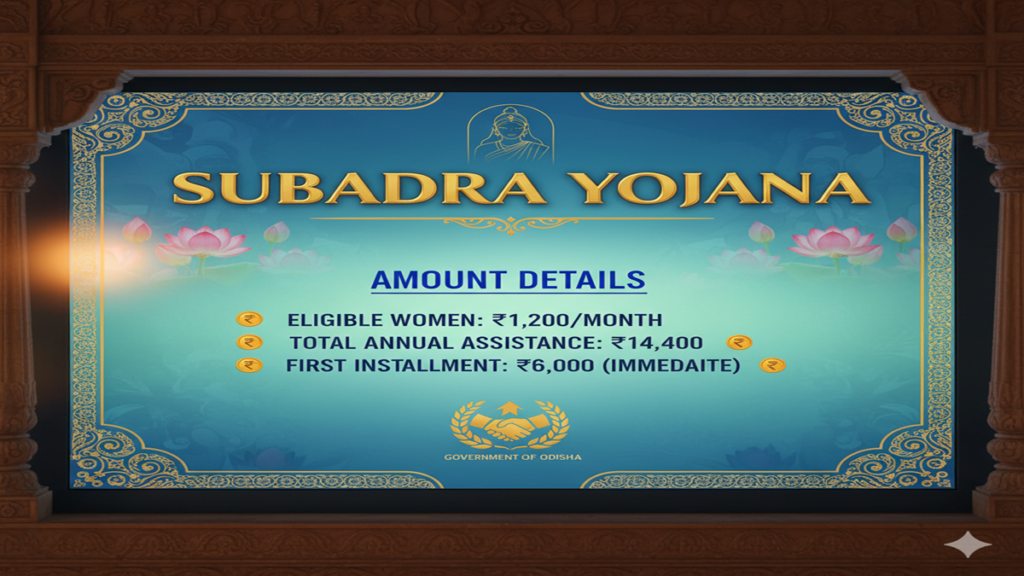
Subhadra Yojana Amount Details 2026: सुभद्रा योजना के तहत महिलाओं को कितनी राशि मिलेगी? जानें किस्त की तारीख और स्टेटस चेक करने का तरीका!
Introduction:
Subhadra Yojana Amount Details 2026: महिलाओं के खाते में आएंगे ₹10,000; यहाँ देखें पूरी किस्त सूची (Installment List)! महिला सशक्तिकरण की दिशा में सरकार द्वारा शुरू की गई ‘सुभद्रा योजना’ (Subhadra Yojana) आज लाखों महिलाओं के लिए आर्थिक संबल बन चुकी है। इस योजना का मुख्य उद्देश्य महिलाओं को आत्मनिर्भर बनाना और उनकी छोटी-मोटी आर्थिक जरूरतों को पूरा करना है।
साल 2026 में, सुभद्रा योजना के लाभार्थियों के मन में सबसे बड़ा सवाल यही है कि—“Subhadra Yojana Amount Details क्या हैं?” और “अगली किस्त कब खाते में आएगी?” इस लेख में हम आपको सुभद्रा योजना की कुल राशि, किस्तों का विवरण (Installment Details) और आपके बैंक खाते में पैसे आए हैं या नहीं, यह चेक करने की पूरी प्रक्रिया विस्तार से बताएंगे।
1. सुभद्रा योजना के तहत कितनी राशि मिलती है? (Total Amount)
Subhadra Yojana Amount Details 2026: सुभद्रा योजना के तहत पात्र महिलाओं को कुल ₹50,000 की वित्तीय सहायता प्रदान करने का लक्ष्य रखा गया है। यह राशि एक साथ न देकर 5 वर्षों की अवधि में किस्तों के रूप में दी जाती है।
- वार्षिक सहायता: प्रत्येक वर्ष लाभार्थी महिला को ₹10,000 की सहायता मिलती है।
- किस्त का विभाजन: यह ₹10,000 की वार्षिक राशि दो किस्तों में (प्रत्येक ₹5,000) दी जाती है।
- पहली किस्त: अंतर्राष्ट्रीय महिला दिवस (8 मार्च) के अवसर पर।
- दूसरी किस्त: रक्षा बंधन (राखी पूर्णिमा) के अवसर पर।
2. सुभद्रा योजना अमाउंट डिटेल्स 2026 (Installment Schedule)
Subhadra Yojana Amount Details 2026: साल 2026 के लिए संभावित भुगतान चक्र (Payment Cycle) इस प्रकार है:
| किस्त (Installment) | राशि (Amount) | संभावित तारीख (Expected Date) |
| पहली किस्त (2026) | ₹5,000 | 8 मार्च 2026 |
| दूसरी किस्त (2026) | ₹5,000 | अगस्त 2026 (रक्षा बंधन) |
यह पैसा सीधे लाभार्थी के बैंक खाते में DBT (Direct Benefit Transfer) के माध्यम से जमा किया जाता है।
3. अपना अमाउंट स्टेटस कैसे चेक करें? (How to Check Status Online)
Subhadra Yojana Amount Details 2026: यदि आप यह जानना चाहती हैं कि आपके खाते में सुभद्रा योजना का पैसा आया है या नहीं, तो आप इन 3 तरीकों का उपयोग कर सकती हैं:
A. आधिकारिक पोर्टल के माध्यम से:
- सुभद्रा योजना की आधिकारिक वेबसाइट (
subhadra.odisha.gov.inया संबंधित राज्य पोर्टल) पर जाएं। - ‘Beneficiary Status’ या ‘Track Status’ विकल्प पर क्लिक करें।
- अपना Aadhaar Number या Application ID दर्ज करें।
- कैप्चा कोड भरकर ‘Submit’ करें। स्क्रीन पर आपकी पेमेंट हिस्ट्री दिखाई देगी।
B. PFMS पोर्टल के जरिए:
Subhadra Yojana Amount Details 2026: चूंकि यह सरकारी पैसा है, आप PFMS.nic.in पर जाकर ‘Know Your Payment’ विकल्प के माध्यम से अपना बैंक खाता नंबर डालकर स्टेटस देख सकती हैं।
C. बैंक एसएमएस और पासबुक:
Subhadra Yojana Amount Details 2026: सुनिश्चित करें कि आपका मोबाइल नंबर बैंक खाते से जुड़ा है। राशि जमा होते ही आपको ‘Sarkari Payment’ का मैसेज प्राप्त होगा।
4. पैसा न मिलने के मुख्य कारण (Why payment may fail?)
Subhadra Yojana Amount Details 2026: कई बार आवेदन मंजूर होने के बाद भी पैसा नहीं आता, इसके मुख्य कारण हो सकते हैं:
- e-KYC पेंडिंग होना: यदि आपने अपनी ई-केवाईसी (e-KYC) पूरी नहीं की है।
- NPCI लिंक न होना: आपका बैंक खाता आधार से ‘NPCI Mapper’ पर लिंक होना अनिवार्य है।
- गलत बैंक विवरण: आवेदन के समय बैंक खाता नंबर या IFSC कोड में गलती।
4. अक्सर पूछे जाने वाले प्रश्न (FAQs)
Q1: सुभद्रा योजना का पैसा किसे मिलता है?
Ans: यह योजना मुख्य रूप से 21 से 60 वर्ष की आयु की उन महिलाओं के लिए है जो आर्थिक रूप से कमजोर वर्ग (EWS) से आती हैं और सरकारी नौकरी में नहीं हैं।
Q2: क्या एक परिवार की दो महिलाएं आवेदन कर सकती हैं?
Ans: योजना के दिशा-निर्देशों के अनुसार, आमतौर पर परिवार की एक ही महिला (मुखिया) को इसका लाभ मिलता है।
Q3: क्या पैसा निकालने के लिए कोई डेबिट कार्ड मिलता है?
Ans: सरकार द्वारा लाभार्थियों को विशेष ‘Subhadra Debit Card’ भी दिए जा रहे हैं, जिनका उपयोग डिजिटल भुगतान के लिए किया जा सकता है।
Conclusion: आर्थिक आजादी की ओर एक कदम!
Subhadra Yojana Amount Details को समझना हर उस महिला के लिए जरूरी है जो इस योजना का हिस्सा है। 2026 में ₹10,000 की वार्षिक सहायता महिलाओं को छोटे व्यवसाय शुरू करने या घर की जरूरतों में मदद करने के लिए पर्याप्त है। यदि आपका स्टेटस ‘Approved’ है, तो बस अपनी अगली किस्त का इंतज़ार करें और अपना बैंक केवाईसी अपडेट रखें।
Subhadra Yojana: A Deep Dive into the Proposed Cash Voucher Scheme and Its Financial Implications
Subhadra Yojana Amount Details In the landscape of India’s welfare schemes, the proposed Subhadra Yojana by the Odisha government has generated significant interest and discussion. Announced in the run-up to the 2024 state elections, it is envisioned as a ambitious women-centric financial empowerment initiative. While the scheme is still in the proposal stage and awaiting official notification and budgetary allocation, its core promise—
providing substantial financial assistance directly to women—has captured public imagination. This article delves into the known details of the scheme, with a particular focus on the much-discussed amount details, its potential structure, objectives, and the challenges ahead.
Understanding the Genesis and Objective of Subhadra Yojana
Subhadra Yojana Amount Details 2026: The Subhadra Yojana is named after Subhadra, the sister of Lord Jagannath, a revered figure in Odisha’s culture, symbolizing welfare and sisterly affection. The scheme’s primary objective is to bolster the economic independence and decision-making power of women in Odisha. It aims to provide a direct financial stimulus that can be used for essential needs, education, healthcare, or entrepreneurial ventures, thereby acting as a catalyst for broader socio-economic development at the household level.
Subhadra Yojana Amount Details 2026: The scheme is proposed to be a cash voucher-based system, not a direct cash transfer. This nuance is crucial. A voucher, likely with an expiration period, is intended to ensure the money is spent within the local economy within a specified timeframe, potentially giving a boost to consumption and local businesses.
The Core Detail: Subhadra Yojana Amount
Subhadra Yojana Amount Details 2026: This is the most anticipated aspect of the scheme. Based on announcements and manifestos, the proposed financial outlay is as follows:
- Total Value per Beneficiary: ₹50,000 (Fifty Thousand Rupees)
- Disbursement Method: This amount is not intended to be given as a lump sum. The proposed structure is to disburse it in four installments over a specific period.
- Installment Breakdown: While the exact split hasn’t been formally gazetted, the most widely cited and logical breakdown is ₹10,000 per installment for the first three installments, and ₹20,000 for the fourth and final installment, summing up to ₹50,000.
- Installment 1: ₹10,000
- Installment 2: ₹10,000
- Installment 3: ₹10,000
- Installment 4: ₹20,000
- Form: “Subhadra Voucher” – A time-bound financial instrument (likely digital or a paper voucher) that can be encashed/used at authorized banks, business correspondents, or perhaps even at empaneled merchants for specific uses.
Subhadra Yojana Amount Details 2026: Important Note: The ₹50,000 figure is a proposal. The final amount, number of installments, and eligibility criteria will be legally binding only once the scheme is officially notified by the state government after passing through the cabinet and securing budgetary approval.
Proposed Eligibility Criteria (As Discussed)
Subhadra Yojana Amount Details 2026: While the final eligibility list will be defined in the official notification, the following are the anticipated criteria based on public statements:
- Gender and Residency: The beneficiary must be an adult woman residing in Odisha.
- Age Bracket: Expected to be for women aged between 23 to 59 years. (This may exclude those covered under other pension schemes like Madhu Babu Pension Yojana for seniors).
- Exclusion: Families of existing and former public representatives (like MPs, MLAs), serving and former government employees, and income tax payers are likely to be excluded to target the most economically vulnerable sections.
- One Woman per Household: The benefit is expected to be limited to one woman per eligible household.
Potential Impact and Benefits
Subhadra Yojana Amount Details 2026: If implemented effectively, the Subhadra Yojana could have multi-faceted impacts:
- Direct Financial Empowerment: Putting significant capital directly into the hands of women, who are statistically more likely to spend on family nutrition, health, and education.
- Boost to Local Economy: The voucher-based, time-bound nature is designed to inject liquidity into local markets, benefiting small traders and service providers.
- Social Empowerment: By recognizing women as direct beneficiaries of state support, it can enhance their status and agency within families and communities.
- Consumption Stimulus: In economic terms, it can act as a stimulus, increasing aggregate demand within the state.
Critical Challenges and Considerations
Subhadra Yojana Amount Details 2026: The scale of the scheme brings with it substantial challenges:
- Massive Fiscal Outlay: With crores of potential beneficiaries, the scheme could cost the state exchequer tens of thousands of crores of rupees. Sustaining this annually or even as a one-time measure requires robust financial planning and may necessitate re-prioritization of other budgetary expenses.
- Identification and Verification: Creating an error-free, duplication-free beneficiary list is a monumental administrative task. It must seamlessly integrate with existing databases (like PARIVAAR) to avoid inclusion/exclusion errors.
- Inflationary Pressures: A sudden surge in disposable income for a large population could lead to demand-pull inflation for essential goods if the supply side does not keep pace.
- Implementation Mechanism: Designing a secure, leak-proof, and user-friendly voucher encashment system, especially in rural and remote areas, is critical to the scheme’s success.
- Long-term vs. Short-term: Critics argue that while providing immediate relief, such cash outlays may not create lasting productive assets. Proponents counter that relieving immediate debt and consumption burdens is itself a form of development.
The Road Ahead: From Proposal to Reality
Subhadra Yojana Amount Details 2026: As of now, the Subhadra Yojana remains a promised scheme. The path to its realization involves:
- Official Notification: The state government must issue a detailed Government Order (GO) outlining all parameters.
- Budgetary Allocation: Funds must be allocated in the state budget, which requires legislative approval.
- Development of Infrastructure: IT platforms, banking correspondents, and grievance redressal systems need to be established.
- Beneficiary Rollout: The actual registration and verification process will commence only after the above steps are complete.
Conclusion
Subhadra Yojana Amount Details 2026: The Subhadra Yojana is a bold and ambitious proposal that underscores a political and policy commitment to women’s financial inclusion in Odisha. Its centerpiece—the ₹50,000 voucher provided in structured installments—has the potential to provide significant economic respite to millions of households.
However, its transition from a visionary announcement to a tangible, transformative reality hinges entirely on meticulous planning, transparent execution, and sustainable fiscal management. The women of Odisha, and indeed the entire state, await its careful implementation, hoping it will live up to its name and empower the sisters of the state in the true spirit of Subhadra.
Frequently Asked Questions (FAQ) about Subhadra Yojana
Q1: What is the exact amount a beneficiary will receive under Subhadra Yojana?
Subhadra Yojana Amount Details 2026: A: As per the proposal, each eligible woman beneficiary is set to receive a total of ₹50,000 (Fifty Thousand Rupees). However, this will not be given as a single payment. It is planned to be distributed in four installments, most likely in a pattern of ₹10,000 + ₹10,000 + ₹10,000 + ₹20,000.
Q2: Is the Subhadra Yojana currently active? Can I apply for it now?
Subhadra Yojana Amount Details 2026: A: No, the scheme is not yet active. As of now, it is a proposed scheme announced before the elections. The official notification detailing eligibility, application process, and rollout dates is pending. The public should wait for an official announcement from the Odisha government and beware of misinformation or early registration scams.
Q3: How will the money be given? Is it direct cash transfer to bank account?
A: According to the proposal, the benefit will be provided as a “Subhadra Voucher,” not as a direct cash transfer. This time-bound voucher will need to be encashed or used within a specified period, possibly at authorized banking outlets or designated centers, to ensure the money enters the active economy.
Q4: Who is eligible for the Subhadra Yojana?
A: The final eligibility will be set by official notification. Based on announcements, the likely criteria are: Adult women (probable age 23-59) residing in Odisha, with one woman per household. Families of government employees, income tax payers, and former/public representatives are likely to be excluded.
Q5: What is the main purpose of using a voucher instead of direct cash?
A: The voucher system is designed with two key purposes:
1. Time-Bound Economic Stimulus: It ensures the money is spent within a certain period, giving an immediate and measurable boost to local consumption and businesses.
2. Preventing Misuse: The voucher mechanism may offer more control to ensure the funds are used for intended economic purposes rather than, for instance, being saved or diverted for other non-consumptive uses. However, its practical effectiveness depends on the final design.