


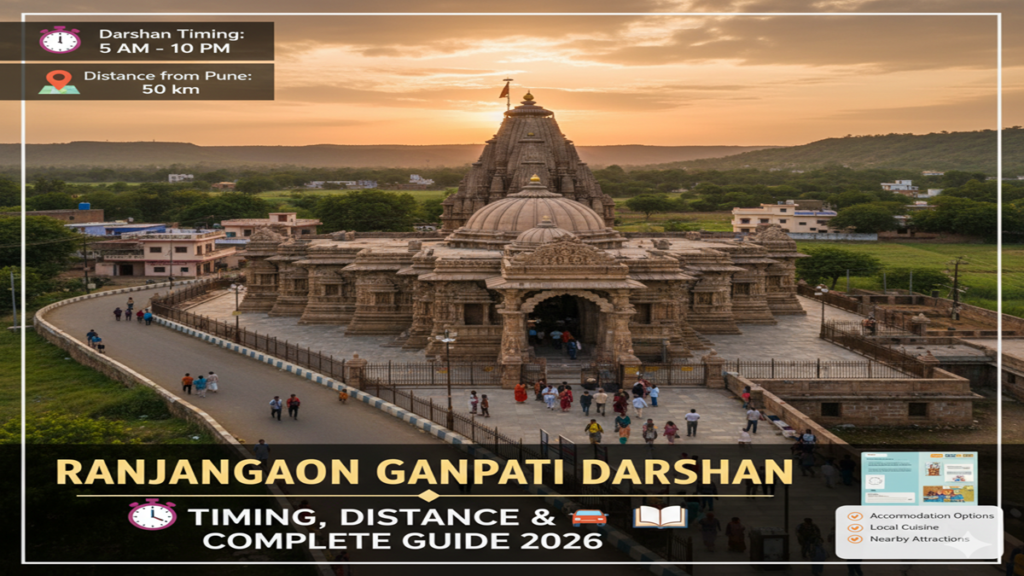
Ranjangaon Ganpati Darshan: A Complete Guide for 2026 – Timings, Distance, and Spiritual Journey
Introduction: The Eighth Jyotirlinga of Lord Ganesha
Nestled in the serene landscape of Maharashtra’s Pune district, Ranjangaon is not just another pilgrimage site—it is one of the most revered Ashtavinayak temples, representing the eighth and final manifestation of Lord Ganesha. According to Hindu mythology, this is where Lord Ganesh resides as “Mahotkat,” the one who defeated the demon Sindhu after a fierce battle. Every year, thousands of devotees embark on the sacred Ashtavinayak Yatra, with Ranjangaon serving as both a spiritual culmination and a profound beginning.
This comprehensive guide for 2026 will provide you with everything you need to know about visiting the Ranjangaon Ganpati Temple—from precise darshan timings and travel distances to accommodation, rituals, and the rich legends that make this temple extraordinary.
The Legend and Significance of Ranjangaon Temple
Mythological Background
The Ranjangaon Ganpati temple is steeped in ancient lore from the Mudgala Purana. The story recounts how the demon Sindhu, son of the sage Sanidhya, performed severe penance to please Lord Shiva. Granted immense power, Sindhu began tormenting both deities and humans. The gods, led by Indra, sought Lord Ganesha’s help. A colossal battle ensued, and Ganesha, in his Mahotkat form, ultimately vanquished Sindhu here at Ranjangaon. The temple is believed to be the place where Ganesha returned after the battle to rest and bless his devotees.
Architectural Marvel
Built during the Peshwa era in the 9th-10th century, the temple showcases classic Hemadpanthi architecture. The main sanctum faces east, and the central idol is unique—its trunk points to the left (Vamavakra), unlike most Ganesha idols with right-curving trunks. This special form symbolizes the temple’s tantric significance. Remarkably, the actual idol remains hidden beneath its ornamental cover (shringar), which is a silver mask depicting a left-trunked Ganesha. Only during specific rituals is the original idol revealed.
Ranjangaon Ganpati Darshan Timings for 2026
Planning your visit according to the temple timings is crucial for a fulfilling experience. The temple follows a daily schedule with extended hours during festivals.
Regular Daily Timings (Throughout 2026)
- Morning Session: 5:30 AM to 12:30 PM
- Afternoon Break: 12:30 PM to 3:30 PM (Temple closed for cleaning and rituals)
- Evening Session: 3:30 PM to 9:30 PM
Note: The temple may occasionally close earlier (around 9:00 PM) on regular days, but 9:30 PM is the standard closing.
Special Ritual Timings
- Kakad Aarti (Morning Aarti): 5:30 AM
- Madhyan Aarti (Noon Aarti): 12:30 PM
- Dhup Aarti (Evening Aarti): 7:30 PM
- Shej Aarti (Night Aarti): 9:15 PM
Festival and Special Day Timings (2026)
During major festivals, the temple opens earlier and closes later to accommodate the surge of devotees. Key festival dates for 2026:
- Ganesh Chaturthi: September 7, 2026 (Expected)
Timings: 4:00 AM to 11:00 PM (Continuous darshan with extended queues) - Ganesh Jayanti (Magha Shukla Chaturthi): February 1, 2026
Timings: 4:30 AM to 10:30 PM - Angarki Chaturthi (Sankashti Chaturthi): Monthly occurrence. In 2026, key dates include:
- January 8, February 6, March 7, April 5, May 5, June 3, July 2, July 31, August 29, September 28, October 27, November 25, December 24
Timings on these days: 5:00 AM to 10:00 PM
- January 8, February 6, March 7, April 5, May 5, June 3, July 2, July 31, August 29, September 28, October 27, November 25, December 24
- Vijayadashami (Dussehra): October 15, 2026
Timings: 5:00 AM to 10:00 PM
Pro Tip: For a relatively crowd-free experience, visit on weekdays (Tuesday to Friday) during the morning session right at opening time.
Distance and How to Reach Ranjangaon in 2026
Ranjangaon is well-connected by road and is approximately 50 kilometers from Pune, making it accessible as a day trip or part of the Ashtavinayak circuit.
From Major Cities (Road Distance)
- From Pune: 50 km via NH60 (Pune-Ahmednagar Highway) – Travel Time: 1 to 1.5 hours
- From Mumbai: 200 km via Mumbai-Pune Expressway and NH60 – Travel Time: 4 to 5 hours
- From Ahmednagar: 85 km via NH60 – Travel Time: 2 hours
- From Shirdi: 130 km via Shrirampur and NH60 – Travel Time: 3 hours
Transportation Options
By Road:
- Self-Drive: The route is well-marked. From Pune, take the Pune-Ahmednagar Highway (NH60) via Manjri, Shirur, and Shikrapur.
- Taxi/Cab: Pre-paid taxis from Pune range between ₹1,500 to ₹2,500 for a round trip (2026 estimated rates).
- Bus: Maharashtra State Road Transport Corporation (MSRTC) runs regular buses from Pune’s Shivajinagar ST Stand to Ranjangaon. Frequency: Every 30-45 minutes. Fare: Approximately ₹80-120.
By Train:
From there, hire a taxi or take a bus to Ranjangaon.
By Air:
The nearest airport is Pune International Airport (Lohegaon Airport), 55 km away. Mumbai’s Chhatrapati Shivaji Maharaj International Airport (200 km) is the nearest international gateway.
The Ashtavinayak Circuit Route
For those undertaking the complete Ashtavinayak pilgrimage, the traditional route starts with Morgaon and ends at Ranjangaon, or vice versa. The circuit covers approximately 300-350 km and can be completed in 2-3 days with proper planning. From Ranjangaon, the nearest Ashtavinayak temple is Shri Girijatmaj Vinayak at Lenyadri (50 km away).
Accommodation and Facilities
Temple-Provided Facilities
- Free Prasad Distribution: The temple offers simple prasad (usually besan laddu or modak) after darshan.
- Annadanam (Community Meals): Free meals are served to devotees at specific times (typically 12:00 PM to 2:00 PM). Donations for Annadanam are accepted.
- Cloakroom: Available for luggage at a nominal charge.
- Parking: Spacious parking area capable of accommodating 500+ vehicles. Charges: ₹50 for cars, ₹20 for two-wheelers (2026 estimated).
- Wheelchair Access: The temple is wheelchair-accessible with ramps.
Accommodation Options
- Temple Trust Dharamshala: Basic, clean rooms with shared facilities. Suggested donation: ₹300-500 per night.
- Private Lodges: Several lodges near the temple offer rooms ranging from ₹800 to ₹2,500 per night.
- Mid-Range Hotels: In nearby Shirur (15 km) or Shikrapur (10 km), hotels charge ₹1,500-₹3,500 per night.
- Pune Stay: Many devotees prefer staying in Pune (wide range of hotels) and making a day trip to Ranjangaon.
Nearby Eateries
Pure vegetarian restaurants and snack stalls surround the temple. Local Maharashtrian thali meals cost ₹150-₹250. Don’t miss the refreshing buttermilk (chaas) sold by street vendors.
Rituals, Poojas, and Donation Information
Regular Poojas
Devotees can book various poojas at the temple counter. Estimated rates for 2026:
- Regular Pooja: ₹500 (Includes coconut, flowers, and prasad)
- Mahapooja: ₹1,500 (Extended rituals with special offerings)
- Abhishek: ₹2,000 (Holy bath of the deity with milk, honey, and water)
- Satyanarayan Pooja: ₹2,500 (Performed on full moon days and special occasions)
Note: These rates are estimates based on current trends; verify at the temple.
Special Rituals and Their Significance
- Sankashti Chaturthi: The most auspicious day at Ranjangaon. Devotees fast until moonrise and then break it after darshan. The temple sees the highest crowds on Angarki Chaturthi (when Chaturthi falls on a Tuesday).
- Ganesh Chaturthi: A 10-day festival with grand processions, cultural programs, and continuous chanting of Ganesh mantras.
- Maghi Ganesh Jayanti: Celebrated as the birth anniversary of Lord Ganesha with night-long prayers.
Online Booking and Donations
The temple is expected to implement an advanced online system by 2026 for:
- Pooja bookings
- Special darshan tickets (to avoid long queues)
- Donations for temple development and Annadanam
Check the official website (expected: www.ranjangaonganpati.org) for updates as 2026 approaches.
Nearby Attractions and Extended Pilgrimage
Local Sites
- Neelkantheshwar Temple: A Shiva temple within walking distance from the Ganpati temple.
- Peshwa-era Structures: Explore historical buildings and step-wells (baolis) around the village.
Extended Pilgrimage Circuits
- Ashtavinayak Completion: From Ranjangaon, you can either begin or conclude your Ashtavinayak yatra. The other seven temples are within a 300-km radius.
- Shirdi Combined Yatra: Many devotees combine Ranjangaon with a visit to Shirdi’s Sai Baba Temple (130 km, 3 hours drive).
- Pune Heritage Tour: Combine with visits to Pune’s Dagdusheth Halwai Ganpati, Shaniwar Wada, and Aga Khan Palace.
Practical Tips for Visiting in 2026
- Avoid peak summer (April-June) when temperatures can soar above 38°C.
- What to Wear: Modest clothing is recommended. The temple requires removing footwear before entering the main complex (free shoe stands available).
- Photography: Mobile phones and cameras are allowed in the outer courtyard but prohibited inside the sanctum.
- Crowd Management: Festivals and weekends attract huge crowds. Consider the “VIP Darshan” ticket (if available) to save time.
- Health Precautions: Carry water, especially in summer. Basic medical aid is available at the temple premises.
- Local Markets: Shops around the temple sell religious items, souvenirs, and local snacks like chivda and sweets.
The Spiritual Experience: What Makes Ranjangaon Unique
Unlike the more commercialized pilgrimage sites, Ranjangaon retains a tranquil, village atmosphere. The experience here is deeply meditative. As the eighth Ashtavinayak, it symbolizes completion and new beginnings. Devotees believe that praying here with a pure heart helps remove lifelong obstacles (Sankat) and brings spiritual enlightenment.
The temple’s energy is palpable during the early morning aarti when the first rays of sun illuminate the ancient stone carvings, or during the serene evening aarti when oil lamps cast a golden glow on the deity’s serene face.
Conclusion: Embarking on Your 2026 Pilgrimage
A journey to Ranjangaon in 2026 is more than just a temple visit; it’s a step into living mythology, architectural splendor, and personal spiritual discovery. With this comprehensive guide covering timings, distance, rituals, and practical tips, you’re well-equipped to plan a meaningful pilgrimage. Whether you’re completing the Ashtavinayak circuit or seeking Lord Ganesha’s blessings for a new beginning, Ranjangaon offers an experience that resonates long after you’ve returned home.
As the Marathi saying goes, “Ganpati Bappa Morya!
Frequently Asked Questions (FAQs)
1. What are the must-attend aartis at Ranjangaon Ganpati Temple?
The Kakad Aarti (5:30 AM) and Shej Aarti (9:15 PM) are particularly spiritually charged. The evening Dhup Aarti (7:30 PM) is also beautiful with its lamp ceremony. If visiting during a festival, all aartis are magnified in scale and devotion.
2. Can I visit all Ashtavinayak temples in one day from Ranjangaon?
No, it’s not feasible. The Ashtavinayak circuit spans over 300 km across Pune, Raigad, and Ahmednagar districts. Typically, devotees take 2-3 days to complete the circuit. From Ranjangaon, the nearest Ashtavinayak (Lenyadri) is about 50 km away.
3. Is online booking available for darshan and poojas in 2026?
Yes, the temple is expected to have a fully functional online system by 2026 for pooja bookings and possibly special darshan slots. Check the official temple website (to be launched) for confirmed services and booking windows.
4. What is the significance of the left-trunked Ganesha at Ranjangaon?
The left-trunked (Vamavakra) Ganesha is associated with tantric worship and is considered especially powerful for granting spiritual enlightenment and overcoming deep-seated obstacles. The idol’s hidden nature (covered by a silver mask) adds to its mystical significance.
5. Are there any accommodation facilities for senior citizens or differently-abled devotees?
Yes, the temple trust dharamshala has ground-floor rooms suitable for senior citizens. The temple complex is wheelchair-accessible with ramps. For more comfortable stays, consider hotels in Pune (50 km away) which offer modern amenities and medical facilities nearby.