


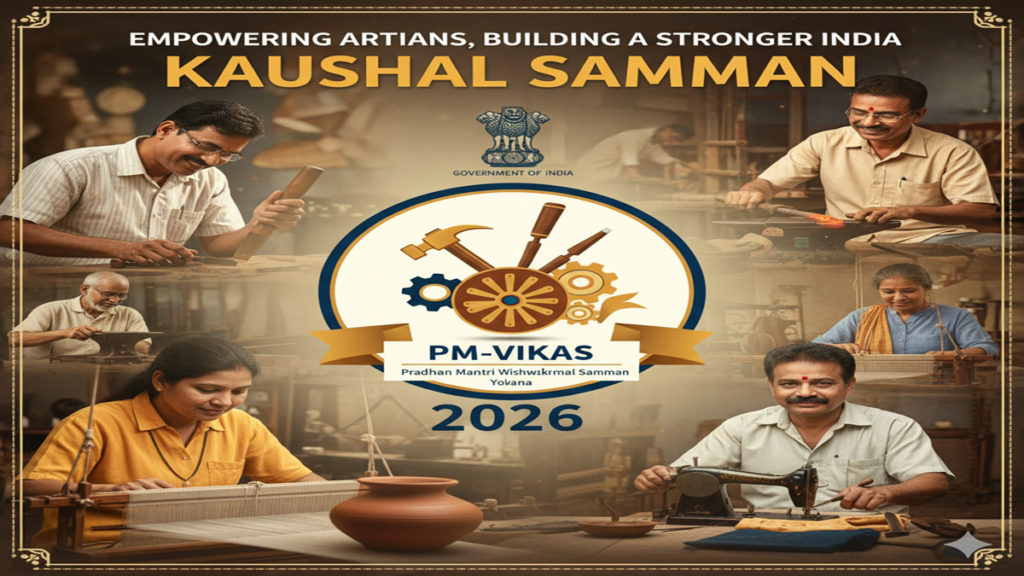
Pradhan Mantri Vishwakarma Kaushal Samman Yojana 2026: Reimagining India’s Traditional Craftsmanship for the Global Market
Introduction: Honoring the Hands that Build India
In the heart of India’s socio-economic fabric lies the Vishwakarma—the traditional artisan, the skilled craftsman, the backbone of the informal manufacturing and services sector. These carpenters, blacksmiths, goldsmiths, potters, tailors, masons, and countless others have preserved India’s cultural heritage for generations. However, they have often faced challenges like limited access to modern technology, formal credit, market linkages, and brand recognition. Recognizing this, the Government of India launched the Pradhan Mantri Vishwakarma Kaushal Samman (PM-VIKAS) Yojana. As we project into 2026, this scheme is envisioned not just as a welfare program, but as a transformative movement to integrate India’s traditional skills with Industry 4.0, ensuring dignity, prosperity, and global competitiveness for its craftspeople.
The Genesis and Evolution: From Concept to 2026
The original PM-VIKAS scheme, launched earlier, focused on providing skill verification, basic training, toolkit incentives, and credit support. By 2026, the scheme is anticipated to have evolved significantly, learning from ground-level implementation challenges. The PM-VIKAS 2026 vision is expected to be more holistic, digital, and market-driven, positioned as a key pillar of India’s goal to become a ‘Viksit Bharat’ (Developed India) by 2047. It will likely align closely with the National Education Policy’s emphasis on vocational training and the booming demand for sustainable, handcrafted products in the global marketplace.
Key Pillars of PM-VIKAS 2026: A Multi-Pronged Strategy
The imagined framework for 2026 rests on five interconnected pillars:
1. Advanced Skill Upgradation & Digitization:
Gone are the days of generic training. PM-VIKAS 2026 is projected to leverage:
- AI-Driven Skill Gap Analysis: Identifying specific areas where artisans need upgrade—be it in CAD for carpenters, new metallurgy techniques for blacksmiths, or digital marketing for weavers.
- Blended Learning Platforms: Access to Vernacular VR/AR modules for virtual practice, coupled with hands-on workshops at established “Vishwakarma Seva Kendras.”
- Integration with National Skill Qualification Framework (NSQF): Ensuring certified skills are recognized nationally, enabling easier migration to formal employment if desired.
2. Financial Empowerment & Sustainable Entrepreneurship:
The scheme will likely deepen its financial inclusion efforts:
- Enhanced Collateral-Free Credit: Increased loan limits under the PM-SVANidhi expanded model, with longer moratorium periods for new ventures.
- Green Technology Subsidies: Special incentives for artisans to adopt solar-powered tools, eco-friendly dyes, and sustainable raw materials, tapping into the global green economy.
- Micro-Investment Facilitation: Linking artisans with angel investors and impact investment funds focused on handicrafts and heritage tech.
3. Digital Integration & E-Commerce Mandate:
PM-VIKAS 2026 will likely mandate a strong digital footprint:
- Compulsory Artisan Digital Profile: A verified profile on a national geo-tagged platform (like an expanded UMANG app), showcasing their work, credentials, and customer ratings.
- One-Click Marketplace Integration: Simplified APIs to list products on platforms like GeM, Amazon Karigar, Flipkart Samarth, and dedicated handicraft portals.
- Blockchain for Provenance: Using blockchain technology to create an immutable record of a product’s origin, artisan details, and authenticity, boosting buyer trust and value.
4. Branding, Marketing & Global Linkages:
Moving beyond local haats, the 2026 vision emphasizes global branding:
- “Handmade in India” Global Campaign: A unified, government-certified trademark for PM-VIKAS graduates, assuring quality and authenticity.
- Virtual International Exhibitions: Using VR platforms to host global buyer-seller meets, reducing costs for artisans.
- Partnerships with Global Retail Giants: Structured tie-ups with stores like IKEA, Muji, and West Elm to supply artisan-made products, co-designed for international aesthetics.
5. Social Security & Dignity:
The scheme’s core is to ensure a life of dignity:
- Mandatory Group Insurance Coverage: Life, health, and tool insurance bundled with registration.
- Pension Scheme Integration: Automatic enrollment in the National Pension Scheme for the unorganized sector with partial government contribution.
- “Master Vishwakarma” Recognition: National awards with substantial monetary grants, not just trophies, for innovators preserving and revolutionizing traditional crafts.
Expected Impact & Benefits by 2026
- Economic: Significant increase in the contribution of the informal manufacturing sector to India’s GDP. Rise in artisan incomes by an estimated 50-100% through better value capture.
- Social: Formal recognition of skills, leading to improved social status. Reduction in distress migration from rural craft clusters.
- Cultural: Revitalization of dying crafts, preservation of intangible cultural heritage, and storytelling-driven tourism.
- Technological: Creation of a massive database of skilled human resources, driving innovation in traditional sectors.
Challenges on the Path to 2026
The roadmap is not without hurdles:
- Digital Divide: Ensuring last-mile connectivity and digital literacy in remote clusters.
- Standardization vs. Uniqueness: Balancing quality control with the inherent uniqueness of handmade products.
- Sustained Market Access: Moving beyond one-off orders to creating sustained demand pipelines.
- Inter-Generational Appeal: Making crafts attractive for the younger generation to prevent skill extinction.
Conclusion: Crafting the Future, Honoring the Past
The Pradhan Mantri Vishwakarma Kaushal Samman Yojana 2026 represents a paradigm shift. It is no longer about protecting artisans as a museum piece but empowering them as micro-entrepreneurs and innovators for the 21st century. By fusing the timeless wisdom of traditional crafts with the tools of the modern digital economy, India can unlock an unprecedented source of sustainable, inclusive, and culturally-rooted growth. As we look towards 2026, PM-VIKAS stands as a promise—a promise that the hands that have shaped India’s past will also be the hands that skillfully craft its future.
Frequently Asked Questions (FAQs) – PM-VIKAS 2026
1. Who is eligible for the PM-VIKAS Yojana in 2026?
The scheme primarily targets traditional artisans and craftspeople from both rural and urban areas, working with their hands and tools in sectors listed under the scheme (e.g., masonry, carpentry, pottery, tailoring, etc.). Eligibility typically requires being above 18 years of age, belonging to the informal sector, and possessing existing traditional skills (verified through local committees or legacy proof). Specific family income criteria may apply.
2. What is the total financial assistance an artisan can expect?
While subject to official notification, the 2026 vision suggests a comprehensive package:
- Skill Training Stipend: Up to ₹500 per day during training.
- Toolkit Incentive: A digitally transferred grant of up to ₹15,000 for advanced toolkits.
- Credit Support: Collateral-free loans up to ₹3 Lakhs at concessional interest rates.
- Additional Subsidies: Possible subsidies for adopting green technologies and digital equipment.
3. How does the scheme help in marketing and selling products?
PM-VIKAS 2026 emphasizes end-to-end digital market linkage. It will help artisans create verified digital profiles, provide training in e-commerce and digital marketing, and offer seamless integration with major online marketplaces (GeM, ONDC-integrated platforms, global sites). The government is also expected to run a unified “Handmade in India” branding and certification campaign to boost domestic and international demand.
4. Is there any provision for the younger generation to learn these traditional skills?
Absolutely. A key focus for 2026 is to make traditional crafts aspirational for youth. The scheme is likely to collaborate with ITIs, polytechnics, and schools for elective vocational modules. It may also offer higher stipends for young trainees (18-25 years) and incentives for “Master Vishwakarmas” to take on apprentices, ensuring inter-generational knowledge transfer with a modern twist.
5. How can an artisan apply for the scheme, and what is the verification process?
The process is envisioned to be fully digital and accessible via the UMANG app or a dedicated PM-VIKAS portal. Artisans can self-register or get help from Common Service Centres (CSCs). The verification process is likely to involve:
- Submission of Aadhaar, proof of existing skill (photos/videos of work, legacy details).
- Field verification by a local committee comprising bank managers, district officials, and reputed master artisans.
- Once verified, the artisan receives a digital ID card with a QR code, unlocking access to all scheme benefits.