


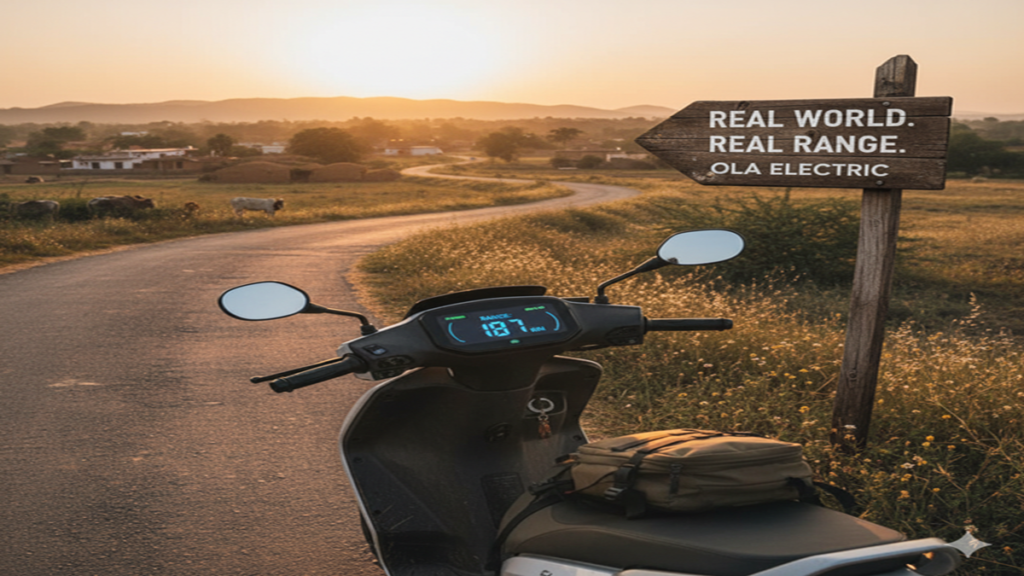
The Real-World Range Review: How Far Can an Ola Electric Scooter Actually Go?
Ola Electric stormed the Indian EV market with a blend of aggressive marketing, futuristic design, and headline-grabbing range figures. Claims of “181 km per charge” and “135 km true range” are plastered across their website and advertisements. But for the potential buyer navigating congested city traffic, planning a weekend getaway, or simply worrying about the next charging point, the critical question remains: What is the real-world battery life of an Ola S1 Pro, S1 Air, or S1 X?
This article cuts through the lab-tested, ideal-condition claims to deliver a grounded, practical understanding of Ola’s battery performance. We’ll dissect the factors that impact range, analyze user-reported data, and provide actionable advice to maximize your scooter’s battery life.
Ola Electric battery life real world
Understanding the Official Claims vs. The Real World
First, let’s establish the baseline. Ola, like all EV manufacturers, quotes its range figures based on the Indian Driving Cycle (IDC) or Modified IDC test standard. This is a standardized laboratory test conducted under controlled conditions—consistent speed (moderate), no sudden acceleration, ideal temperature (25-27°C), no hills, no headwinds, and minimal accessory use.
Official Claimed Ranges (as of mid-2024):
- Ola S1 Pro (Gen 2): 195 km IDC. Marketed as “True Range: 135 km.”
- Ola S1 Air: 151 km IDC. Marketed as “True Range: 125 km.”
- Ola S1 X+: 151 km IDC.
- Ola S1 X (4kWh): 110 km IDC.
- Ola S1 X (3kWh): 90 km IDC.
The key takeaway is the term “True Range.” Ola themselves acknowledge that the IDC figure is a maximum, and the “True Range” is a more realistic estimate. However, even this “True Range” is a best-case scenario. The real world is far messier.
The Six Major Real-World Factors That Slash Your Range
Your actual range will be a dynamic number, changing daily based on these critical factors:
1. Riding Mode: The Power Hunger Spectrum
This is the single most significant factor within your control.
- Hyper Mode (S1 Pro): An adrenaline-fueled drain. Using Hyper mode extensively can reduce your range by 40-50% compared to the claimed figures. It’s for short bursts, not daily commutes.
- Sport Mode: Delivers strong acceleration and higher top speed. Expect a 25-35% reduction in range. It’s fun for spirited riding but costly on the battery.
- Normal Mode: The sweet spot for most. Balances performance with efficiency. You might achieve 85-95% of the claimed “True Range” here.
- Eco Mode: Maximizes range by capping speed (around 45 km/h) and softening acceleration. In ideal conditions, you can meet or even exceed the “True Range” claim. This is your “range anxiety” mode.
Real-World Example: An S1 Pro Gen 2 with a claimed 135 km “True Range” might deliver:
* Eco Mode: 120-140 km
* Normal Mode: 110-125 km
* Sport Mode: 85-100 km
* Hyper Mode: 65-80 km
2. Rider Weight, Payload, and Terrain
Physics is unforgiving. Carrying a pillion rider, a heavy backpack, or groceries adds significant load. A combined weight of 150kg vs. 70kg can easily reduce range by 15-20%. Similarly, riding in a hilly area consumes substantially more energy than on flat plains—climbing uses immense power, and even regenerative braking on descines doesn’t recoup all that loss.
3. Traffic and Riding Style
Stop-and-go city traffic is a major range killer. Frequent acceleration from a standstill consumes high current. A smooth, anticipatory riding style—gradual acceleration, using regen braking early, maintaining steady speeds—can improve range by 10-15% compared to an aggressive, stop-start style. Ironically, a consistent 60 km/h run on open roads is more efficient than a 25 km/h average in bumper-to-bumper traffic.
4. Ambient Temperature and Battery Chemistry
Lithium-ion batteries have a thermal sweet spot (20-35°C). Extreme heat (above 40°C) can cause battery management system (BMS) throttling to cool the pack and increase parasitic drain from thermal management. Extreme cold (below 15°C) increases the battery’s internal resistance, reducing its ability to deliver and accept charge, potentially cutting range by 10-25% in peak winter, especially on cold mornings.
5. Use of Accessories and Features
The Ola MoveOS suite is feature-rich, but everything consumes energy.
- Regen Level: Higher regen (like “Hyper Regen”) slows the scooter more aggressively, putting energy back into the battery, but it can also encourage a less smooth riding style. It’s generally a net positive for range.
- Music, Speakers, Mood Lights: These are minor drains individually but collectively contribute. Having the speaker at full volume with mood lights on for an hour-long ride might shave off 2-3 km.
- Standby Drain: A point of concern in earlier Ola software versions. Modern MoveOS updates have significantly reduced phantom drain, but it’s wise not to leave the scooter at 0% for weeks.
6. Tyre Pressure and Maintenance
Under-inflated tyres increase rolling resistance. A drop of just 5 PSI can affect range by 3-5%. Regular maintenance, including brake caliper cleaning (to prevent drag) and chain lubrication (for S1 X), is essential for optimal efficiency.
User-Reported Data: The Crowdsourced Truth
Aggregating experiences from owner forums, long-term reviews, and community groups paints a consistent picture:
- Ola S1 Pro (Gen 2) Owners consistently report achievable ranges of 100-125 km in Normal mode under mixed city conditions with a single rider. Eco mode pushes this to 120-140 km. Hyper/Sport mode-heavy usage brings it down to 70-95 km.
- Ola S1 Air/S1 X+ Owners see ranges of 95-115 km in Normal mode, aligning closely with its “True Range” claim.
- Daily Commute Reality: For a typical urban commute of 20-30 km round trip, even the S1 X (3kWh) is sufficient for 2-3 days of riding between charges for most users. Range anxiety is largely a psychological barrier for daily use, but a real consideration for longer, unplanned trips.
- Highway Riding: At sustained speeds of 70-80 km/h, aerodynamic drag becomes a major factor. Range on a highway run can be 15-20% lower than a city ride at lower average speeds.
Battery Health and Longevity: Will It Last?
Beyond daily range, owners worry about battery degradation—the gradual loss of maximum capacity over time and charge cycles.
- Ola’s Warranty: Ola offers an 8-year/unlimited km warranty on the battery, but it’s pro-rata after the first 3 years/40,000 km, and has a 70% State of Health (SoH) threshold. This means they guarantee the battery won’t fall below 70% of its original capacity within the warranty period under normal use.
- Real-World Degradation Reports: Since the oldest Ola scooters are only around 3 years old, long-term data is scarce. Early adopters report varying experiences. Most users see a minimal drop (1-3%) in perceived range in the first year. Aggressive fast-charging habits and consistently draining to 0% are likely to accelerate degradation.
- BMS and Software Updates: Ola has used software updates to manage battery health, sometimes capping top-end performance or altering charging curves to preserve longevity—a practice that has drawn mixed reactions from users.
Actionable Tips to Maximize Your Real-World Range
- Master the Modes: Use Eco for max range, Normal for daily use. Treat Sport/Hyper as a “fun button,” not a default.
- Charging Habits: Avoid regularly charging to 100% if you don’t need the full range. For daily use, setting a limit to 80-90% in the app can improve long-term battery health. Avoid letting the battery sit at 0%.
- Tyre Pressure is Key: Check and maintain the recommended tyre pressure (often 32-36 PSI) weekly. It’s the simplest efficiency hack.
- Ride Smoother, Not Slower: Anticipate traffic. Use regen braking by letting off the throttle early instead of rushing to a stop and using the mechanical brakes.
- Plan for Extremes: In very hot weather, park in the shade. In cold weather, understand that the first few kilometers will show a drastic drop, which stabilizes as the battery warms up.
The Verdict: Is It Enough?
For the overwhelming majority of urban and suburban users, the real-world range of Ola Electric scooters—even at the lower end of the realistic spectrum—is more than sufficient. The average daily commute in India is under 20 km. Even with a 30% buffer, most models offer a 3-4 day range between charges.
The range challenge isn’t about daily adequacy; it’s about:
- Unplanned Long Trips: The need for spontaneous 80+ km journeys requires planning and awareness of riding mode.
- Charging Infrastructure Reliance: While the Ola Hypercharger network is growing, dependence on it for inter-city travel is still a calculated risk compared to the ubiquity of petrol pumps.
- Psychological Buffer: The “displayed range” on the instrument cluster, which fluctuates wildly based on recent riding style, can cause anxiety. It’s better to trust the percentage and understand your personal consumption pattern (km per %).
In conclusion, Ola Electric scooters deliver a compelling real-world package. While you should mentally discount the glamorous “up to” figures by 20-40% depending on your use case, what remains is a practical, fun, and efficient electric vehicle. The key is to align your expectations with reality, understand the factors you can control, and ride accordingly. The future of urban mobility is electric, and Ola’s real-world range, while not perfect, is firmly in the “good enough to adopt” territory for millions.
Frequently Asked Questions (FAQ)
Q1: I only get 90 km on my S1 Pro in Normal mode, but Ola claims 135 km “True Range.” Is my battery faulty?
A: Not necessarily. The “True Range” claim is a best-case estimate under ideal conditions. If you regularly ride with a pillion, in heavy traffic, use accessories, or have a sporty throttle hand, 90 km is within the expected real-world variance. To diagnose, try a controlled Eco mode ride on a flat road with a single rider. If you still get significantly less than 110 km, then a service center check for battery health (State of Health) is advisable.
Q2: Does frequent fast charging (Hypercharging) damage the Ola battery and reduce its life?
A: Yes, consistently relying only on DC fast charging can accelerate long-term battery degradation compared to slow, AC home charging. The high heat and current from fast charging stress the battery cells. The best practice is to use home charging (0-100% in ~6.5 hrs for S1 Pro) for your daily top-ups and reserve Hypercharging for longer trips or emergencies. Ola’s BMS is designed to manage this, but for maximum battery lifespan, slow and steady wins the race.
Q3: What is the real cost of charging an Ola scooter at home vs. a petrol scooter?
A: The running cost is where EVs shine dramatically. An Ola S1 Pro with a 3.97 kWh battery (usable) costs roughly ₹25-40 to charge fully at home (depending on your electricity rate of ₹6-10/unit). For a real-world range of 110 km, that’s ₹0.23 – ₹0.36 per km. A comparable 125cc petrol scooter (40-50 kmpl) with petrol at ₹110/litre costs ₹2.20 – ₹2.75 per km. The electric scooter is 6-10 times cheaper per kilometer to run.
Q4: How accurate is the “Range” displayed on the instrument cluster?
A: It is a dynamic estimate, often called a “Guess-o-meter” by the EV community. It calculates range based on your immediate past riding efficiency (last ~10 km). If you just finished a highway sprint, it will show a low range. If you were in Eco mode in the city, it will show a high range. Do not treat it as a fixed guarantee. Rely more on the battery State of Charge (SoC) percentage and learn your own average consumption (e.g., “I get 1.2 km per % in Normal mode”).
Q5: What happens to the range after 2-3 years? How much battery degradation should I expect?
A: Based on general lithium-ion trends and early adopter reports, a well-cared-for Ola battery can be expected to retain 90-95% of its original capacity after 2-3 years of typical use (~10,000 km/year). Aggressive usage patterns (constant fast charging, deep discharges, exposure to extreme heat) could push this to 85-90%. Ola’s 8-year warranty guarantees the battery won’t fall below 70% capacity, providing a long-term safety net. Regular software updates also play a key role in managing long-term battery health.