


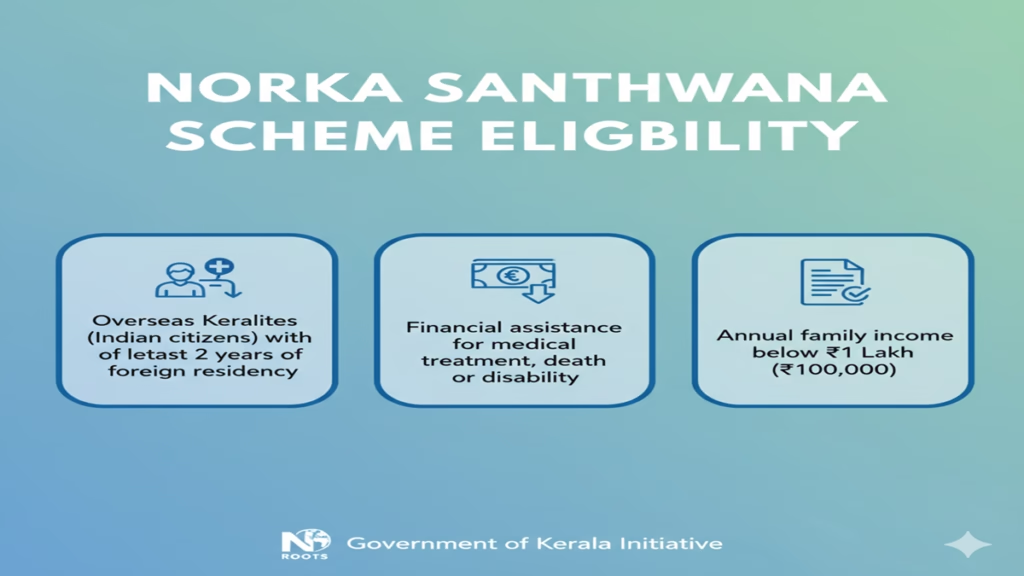
Norka Santhwana Scheme Eligibility: वापस लौटे प्रवासियों के लिए सहारा! जानिए कौन ले सकता है नोर्का सांत्वना योजना का लाभ?
Norka Santhwana Scheme Eligibility 2026: Introduction: आज 22 अप्रैल 2026 है और दुनिया भर में काम करने वाले केरल के प्रवासियों के लिए राज्य सरकार कई कल्याणकारी योजनाएं चला रही है। इनमें से सबसे महत्वपूर्ण है “Santhwana Scheme”। अक्सर विदेश से लौटने के बाद कई प्रवासियों को आर्थिक तंगी या स्वास्थ्य समस्याओं का सामना करना पड़ता है। ऐसे में NORKA Roots की यह सांत्वना योजना एक ढाल की तरह काम करती है।
यदि आप “Norka Santhwana Scheme Eligibility” के बारे में विस्तार से जानना चाहते हैं, तो यह लेख आपको बताएगा कि इस योजना के तहत ₹1,00,000 तक की वित्तीय सहायता कैसे प्राप्त की जा सकती है और इसके लिए कौन-कौन से मापदंड जरूरी हैं।
1. नोर्का सांत्वना योजना क्या है? (What is Norka Santhwana?)
Norka Santhwana Scheme Eligibility 2026: यह योजना केरल के उन प्रवासियों के लिए है जो कम से कम 2 साल विदेश में काम करने के बाद वापस लौट आए हैं। यह योजना उन परिवारों को एकमुश्त वित्तीय सहायता प्रदान करती है जो बीमारी, मृत्यु या शारीरिक विकलांगता जैसे संकटों का सामना कर रहे हैं।
2. पात्रता मानदंड (Eligibility Criteria 2026)
Norka Santhwana Scheme Eligibility 2026: योजना का लाभ लेने के लिए आवेदक को निम्नलिखित शर्तें पूरी करनी होंगी:
- प्रवासी अनुभव: आवेदक ने विदेश में न्यूनतम 2 वर्ष तक काम किया होना चाहिए।
- वापसी की अवधि: विदेश से लौटने के बाद का समय आवेदक के विदेश में काम करने के कुल समय से अधिक नहीं होना चाहिए, या अधिकतम 10 वर्ष (जो भी कम हो) होना चाहिए।
- आय सीमा (Income Limit): परिवार की कुल वार्षिक आय ₹1.5 लाख से अधिक नहीं होनी चाहिए। (कुछ विशेष परिस्थितियों में आय प्रमाण पत्र की गहन जांच होती है)।
- निर्भर सदस्य: इस योजना का लाभ न केवल स्वयं प्रवासी, बल्कि उनके आश्रित (Dependents) जैसे पति/पत्नी या बच्चे भी ले सकते हैं।
3. मिलने वाली आर्थिक सहायता (Financial Benefits)
सांत्वना योजना के तहत अलग-अलग श्रेणियों में मदद दी जाती है:
- मृत्यु सहायता: प्रवासी की मृत्यु होने पर परिवार को अधिकतम ₹1,00,000।
- गंभीर बीमारी (Critical Illness): कैंसर, हृदय रोग या किडनी की बीमारी के इलाज के लिए ₹50,000 तक।
- अन्य बीमारी: अन्य सामान्य बीमारियों के इलाज के लिए ₹20,000 तक।
- विवाह सहायता: प्रवासी की बेटी की शादी के लिए ₹15,000।
- उपकरण: व्हीलचेयर, कृत्रिम अंग या बैसाखी खरीदने के लिए ₹10,000 तक।
4. आवश्यक दस्तावेज (Documents Required)
आवेदन करते समय आपके पास निम्नलिखित दस्तावेज स्कैन किए हुए होने चाहिए:
- पासपोर्ट की कॉपी: पासपोर्ट का फ्रंट और एड्रेस पेज (एमिग्रेशन स्टैम्प के साथ)।
- आय प्रमाण पत्र: विलेज ऑफिसर द्वारा जारी हालिया सर्टिफिकेट।
- राशन कार्ड: परिवार की पहचान के लिए।
- मेडिकल रिकॉर्ड: बीमारी के मामले में अस्पताल के बिल और डॉक्टर का सर्टिफिकेट।
- डेथ सर्टिफिकेट: मृत्यु सहायता के मामले में।
- रिलेशनशिप सर्टिफिकेट: यदि आश्रित आवेदन कर रहे हैं।
5. आवेदन कैसे करें? (How to Apply Online)
2026 में प्रक्रिया पूरी तरह डिजिटल हो चुकी है:
- सबसे पहले NORKA Roots की आधिकारिक वेबसाइट पर जाएं।
- Pravasi ID Card के लिए पंजीकरण करें (यदि पहले से नहीं किया है)।
- ‘Schemes’ सेक्शन में ‘Santhwana’ चुनें और ‘Apply Online’ पर क्लिक करें।
6. 2026 में प्रवासियों के लिए नई तकनीक और सेवाएं
आज के दौर में केवल सरकारी योजनाएं ही नहीं, बल्कि डिजिटल सेवाएं भी प्रवासियों की मदद कर रही हैं। उदाहरण के लिए, Solaris Digital जैसे प्लेटफॉर्म अब प्रवासियों को अपने दस्तावेज सुरक्षित रखने (Digital Locker) और ऑनलाइन आवेदन करने में तकनीकी सहायता प्रदान कर रहे हैं।
इसके अलावा, वापस लौटे प्रवासी अब उद्यमिता की ओर भी बढ़ रहे हैं। नासिक जैसे शहरों में Prajwal Auto EV जैसे शोरूम्स के माध्यम से कई प्रवासियों ने इलेक्ट्रिक वाहन डीलरशिप में अपना निवेश किया है, जिससे उन्हें एक स्थायी आय का स्रोत मिला है।
4. अक्सर पूछे जाने वाले प्रश्न (FAQs)
Q1: क्या मैं एक से अधिक बार इस योजना का लाभ ले सकता हूँ?
Ans: नहीं, सांत्वना योजना आमतौर पर एक बार दी जाने वाली सहायता (One-time relief) है।
Q2: आवेदन की स्थिति (Status) कैसे चेक करें?
Ans: आप अपने लॉगिन पोर्टल पर जाकर ‘Track Application’ के माध्यम से स्टेटस देख सकते हैं।
Q3: सहायता राशि बैंक खाते में कब आती है?
Ans: दस्तावेजों के सफल सत्यापन के बाद राशि सीधे आवेदक के बैंक खाते (DBT) में भेजी जाती है।
Conclusion: प्रवासियों का सच्चा मित्र—सांत्वना
Norka Santhwana Scheme Eligibility को समझना उन परिवारों के लिए बहुत जरूरी है जो संकट की घड़ी में हैं। केरल सरकार की यह पहल सुनिश्चित करती है कि देश के विकास में योगदान देने वाले प्रवासी लौटने के बाद खुद को अकेला न महसूस करें।
Navigating Financial Relief: A Comprehensive Guide to Norka Santhwana Scheme Eligibility
Introduction: A Lifeline for Malayalees in Distress
Norka Santhwana Scheme Eligibility The Norka Santhwana Scheme, a pioneering initiative by the Government of Kerala through its Department of Non-Resident Keralites Affairs (NORKA), stands as a testament to the state’s commitment to its global diaspora. Translated as “Norka Comfort,” the scheme is designed to provide critical financial assistance and rehabilitation support to Non-Resident Keralites (NRKs) and their dependents who have been forced to return to the state due to unforeseen crises abroad. Whether due to workplace exploitation, medical emergencies, political instability, or natural disasters, the scheme aims to cushion the economic and psychological impact of such traumatic returns.
Understanding the eligibility criteria in detail is paramount, as it ensures that the aid reaches the intended beneficiaries efficiently and transparently. This comprehensive guide delves into every facet of the Norka Santhwana Scheme’s eligibility requirements, providing clarity for potential applicants.
Chapter 1: Core Eligibility Criteria – Who Can Apply?
The foundation of the scheme rests on a set of primary conditions that an applicant must satisfy. These are non-negotiable and form the first checkpoint in the application process.
1. Residency Status of the Beneficiary:
- Primary Beneficiary: The applicant must be a Non-Resident Keralite (NRK). An NRK is defined as a citizen of India who is a native of Kerala (or dependent of such a person) and who is employed or resides outside India for the purpose of employment or residence.
- Secondary Beneficiary: In the tragic event of the NRK’s death or permanent incapacitation, the legal spouse or dependent children are eligible to apply. Dependent parents can also be considered in specific circumstances, particularly if they were financially reliant on the NRK.
2. Reason for Return: Compelling and Unforeseen Hardship
Norka Santhwana Scheme Eligibility The core premise of the scheme is distress. The return to Kerala must not be voluntary or pre-planned. The following are the approved categories of hardship:
- Employment-Related Issues: Illegal termination, severe workplace exploitation, physical or mental torture by employers, non-payment of salaries for extended periods, or fraudulent recruitment.
- Medical Grounds: The NRK suffering from a serious life-threatening illness or a severe disability incurred during employment abroad, necessitating return for long-term treatment.
- Victim of Unforeseen Calamities: Becoming a victim of natural disasters (like floods, earthquakes), political conflicts, wars, or epidemics in the host country.
- Death or Permanent Incapacitation: The family can apply if the NRK has died abroad due to accidents, illness, or assault, or has become permanently disabled.
3. Mandatory Registration with NORKA Roots
Norka Santhwana Scheme Eligibility This is a crucial and often overlooked prerequisite. The NRK must have been registered with the NORKA Roots portal (roots.norka.gov.in) prior to the occurrence of the distressing event. Registration after the crisis has occurred typically disqualifies the application. This underscores the importance of proactive registration for all NRKs.
4. Financial Ceiling and Need-Based Assessment
The scheme is targeted at those in genuine financial distress. Therefore, applicants and their families must not have an annual family income exceeding Rs. 6 lakhs from all sources within India. Documentary evidence like Income Certificates, IT returns, or affidavits may be required.
Chapter 2: Detailed Eligibility Scenarios & Documentation
Norka Santhwana Scheme Eligibility Eligibility is often scenario-specific. Here’s a breakdown based on common situations:
Scenario A: The Returning NRK Applicant (Alive)
- Eligibility Proof: Copy of passport with exit/entry stamps, visa pages, and a detailed report on the circumstances of return.
- Distress Proof: Documentation supporting the claim. This could be:
- For employment issues: Complaints to embassy/labor court, termination letters, salary non-payment proofs, police reports (if exploitation/abuse).
- For medical reasons: Medical certificates from recognized hospitals abroad and in India, detailing the condition and recommendation for repatriation.
- NORKA Roots ID: Printed copy of the pre-crisis registration.
Scenario B: Application by Family in Case of Death/Permanent Disability
- Eligibility Proof: Death Certificate (attested by Indian Mission) or Medical Board certificate confirming 40% or more permanent disability.
- Legal Heir Proof: Succession Certificate, Legal Heirship Certificate, or relevant court orders.
- Distress Proof: Police report, post-mortem report (if death was due to accident/assault), employer’s report.
Scenario C: Special Considerations
- Women NRKs: Special attention is given to women who return due to gender-based violence, harassment, or pregnancy-related issues abroad.
- Migrant Workers in Gulf Countries: Given their vulnerability, documented cases of cheating by recruitment agents (“visa trading”) or confinement by sponsors are strongly considered.
- Victims of Major Calamities: Group applications are possible, like for Keralites repatriated from conflict zones like Ukraine or Kuwait during the Gulf War.
Chapter 3: The Application Process – A Step-by-Step Guide
Norka Santhwana Scheme Eligibility Knowing you are eligible is half the battle; navigating the process is the other.
Step 1: Immediate Reporting
Upon return or upon occurrence of the event, inform NORKA or the nearest NORKA Roots helpdesk. In cases of death or imprisonment abroad, the family in Kerala should immediately contact NORKA.
Step 2: Document Collection
Meticulously gather all documents mentioned in Chapter 2. Ensure all foreign documents are translated (if not in English/Malayalam) and properly attested by the concerned Indian Embassy/Consulate.
Step 3: Application Submission
- Portal: The primary mode is the NORKA Roots Portal. Log in with your existing Roots ID and navigate to the Santhwana scheme section.
- Offline: Application forms can be submitted at the District NORKA Roots offices (usually located at the District Collectorate) or at the NORKA headquarters in Thiruvananthapuram.
Step 4: Field Inquiry & Verification
Norka Santhwana Scheme Eligibility A designated officer (often a Village Officer or a NORKA official) will conduct a field visit to verify the applicant’s details, the authenticity of the distress, and the family’s financial situation.
Step 5: Approval and Disbursement
Norka Santhwana Scheme Eligibility The application, along with the verification report, is scrutinized by a multi-level committee at NORKA. Upon approval, the financial assistance is directly transferred to the beneficiary’s bank account linked with their Aadhaar.
Chapter 4: Financial Assistance: What Does the Scheme Offer?
Norka Santhwana Scheme Eligibility The aid is not uniform; it is calibrated based on the nature of the distress:
- General Distress Repatriation: Up to Rs. 100,000 for rehabilitation and immediate needs.
- Medical Repatriation (Serious Illness): Up to Rs. 150,000 for treatment and support.
- In Case of Death: A ex-gratia payment of Rs. 500,000 to the legal heirs.
- Permanent Disability (40% and above): Up to Rs. 300,000 for rehabilitation.
- Additional Support: The scheme may also cover costs related to the transportation of mortal remains, legal aid abroad, and counseling services.
Norka Santhwana Scheme Eligibility Awareness of pitfalls can strengthen an application:
- Late or No NORKA Roots Registration: The single biggest cause of rejection. Register on NORKA Roots the day you get your visa.
- Insufficient Proof of Distress: Vague statements are insufficient. Provide official, documented proof of the crisis.
- Income Exceeding the Limit: Ensure your income certificate is accurate and reflects all family sources.
- Incomplete Documentation: Submit a checklist with your application. Follow up to ensure no document is missing from your file.
- Voluntary Return Without Hardship: Returning at the end of a contract or for a family visit does not qualify.
Chapter 6: Beyond Eligibility: The Scheme’s Impact and Future
Norka Santhwana Scheme Eligibility The Norka Santhwana Scheme is more than a financial stopgap. It is a holistic rehabilitation program that, when combined with other state initiatives like entrepreneurship loans or job fairs, can help returnees rebuild their lives with dignity. It reaffirms Kerala’s social contract with its diaspora, ensuring that those who ventured out to build the state’s economy are not abandoned in their darkest hours.
For the scheme to evolve, continuous feedback is essential. Streamlining the verification process, increasing awareness about pre-registration, and potentially revising income ceilings are areas for future development.
Conclusion
Norka Santhwana Scheme Eligibility The Norka Santhwana Scheme is a vital safety net, but its effectiveness hinges on the diaspora’s awareness of its pre-emptive requirement: NORKA Roots registration. For every Malayalee planning to go abroad, registration should be as routine as getting a passport. For those who have returned in distress, this guide serves as a roadmap to access the support you are entitled to. By understanding the detailed eligibility matrix and preparing a robust application, beneficiaries can navigate this process smoothly, allowing them to focus on what matters most—recovery and rebuilding.
Frequently Asked Questions (FAQ)
Q1: I returned from abroad due to a job loss. Can I apply immediately?
A: First, check if you were registered on the NORKA Roots portal before you lost your job. If yes, you can apply, provided you can document the involuntary nature of your job loss (e.g., unfair termination notice, complaint to embassy). Voluntary resignation usually does not qualify.
Q2: My relative died abroad, and he was not registered with NORKA Roots. Can the family still apply?
A: Unfortunately, no. Pre-registration of the deceased NRK with NORKA Roots is a mandatory eligibility criterion. The scheme cannot process applications without this.
Q3: What is the income limit for eligibility? Is it only the applicant’s income?
A: The annual family income limit is Rs. 6 lakhs. This includes the income of the applicant (if in India), spouse, and dependent children from all sources within India. You will need a valid Income Certificate from the village office.
Q4: How long does it take to receive the financial aid after applying?
A: The timeline varies based on case complexity and verification speed. Typically, it can take anywhere from 2 to 6 months from the date of submission of a complete application with all documents.
Q5: Can I apply if I am stuck abroad in a crisis and haven’t returned to Kerala yet?
A: Yes, but the application is usually processed upon your return. However, in extreme cases like detention or hospitalization abroad, your family in Kerala can initiate the process by contacting NORKA directly with all relevant proofs. The key is to establish communication with NORKA or the Indian Mission immediately.