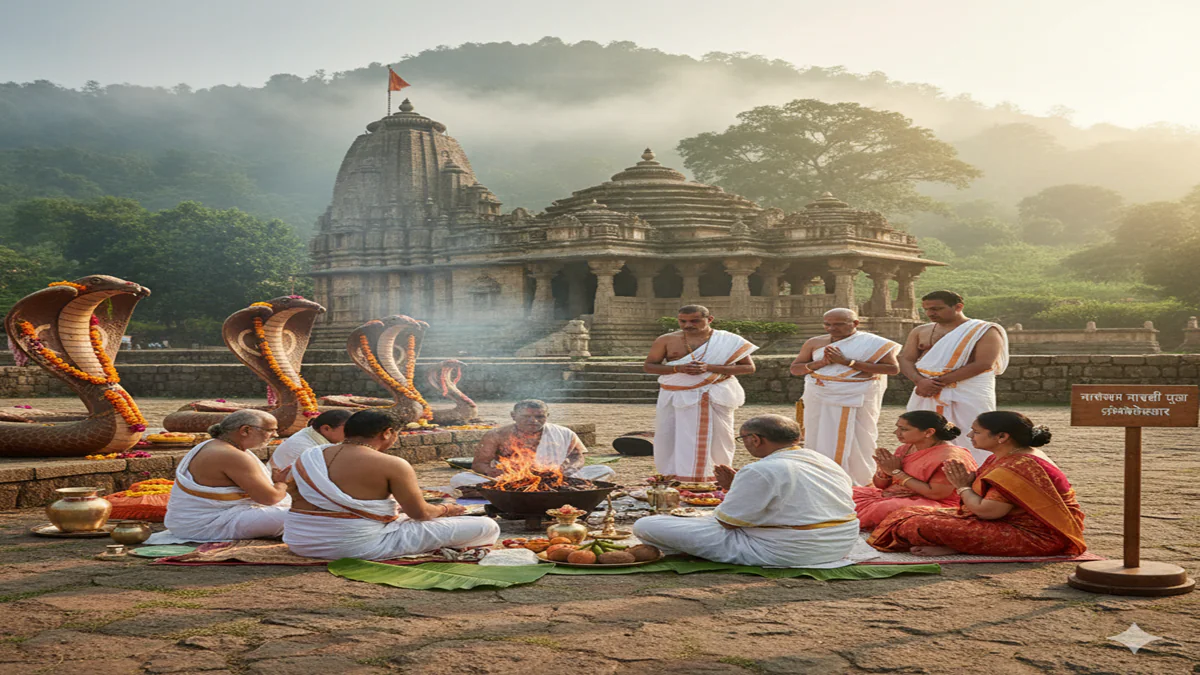
Narayan Nagbali Puja Near Trimbakeshwar Temple: क्या है नारायण नागबली पूजा? जानें त्र्यंबकेश्वर में इसके नियम, विधि और लाभ की पूरी जानकारी!
Narayan Nagbali Puja Near Trimbakeshwar Temple: Introduction: नाशिक के पास स्थित त्र्यंबकेश्वर ज्योतिर्लिंग मंदिर न केवल अपनी वास्तुकला के लिए प्रसिद्ध है, बल्कि यह वह पवित्र स्थान भी है जहाँ पितृदोष और अन्य दोषों के निवारण के लिए विशेष पूजा की जाती है। इनमें “Narayan Nagbali Puja” का स्थान सर्वोपरी है। यदि आपके जीवन में उन्नति रुक गई है, संतान प्राप्ति में बाधा आ रही है या परिवार में अशांति रहती है, तो ज्योतिषी अक्सर त्र्यंबकेश्वर में इस पूजा की सलाह देते हैं।
आज के इस लेख में हम जानेंगे कि त्र्यंबकेश्वर मंदिर के पास Narayan Nagbali Puja कैसे की जाती है, इसमें कितना समय और खर्च लगता है, और 2026 में इसकी बुकिंग की क्या प्रक्रिया है।
1. नारायण नागबली पूजा क्या है? (What is Narayan Nagbali Puja?)
Narayan Nagbali Puja Near Trimbakeshwar Temple: यह पूजा दो अलग-अलग विधियों का मेल है:
- नारायण बलि: यह पूजा पितृदोष (पूर्वजों की अतृप्त आत्माओं) की शांति के लिए की जाती है।
- नागबली: अनजाने में मारे गए नाग या सांप की हत्या के दोष (सर्प दोष) से मुक्ति पाने के लिए नागबली की जाती है।
त्र्यंबकेश्वर ही एकमात्र ऐसा स्थान है जहाँ यह दोनों विधियाँ एक साथ संपन्न की जाती हैं, क्योंकि यहाँ भगवान शिव के साथ-साथ भगवान ब्रह्मा और विष्णु का भी अंश मौजूद है।
2. यह पूजा किसे करानी चाहिए? (Who should perform it?)
- जिनके परिवार में असमय मृत्यु हुई हो।
- संतान प्राप्ति में अत्यधिक विलंब या बाधा हो।
- व्यापार और करियर में लगातार असफलता मिल रही हो।
- जिनकी कुंडली में ‘पितृदोष’ या ‘कालसर्प दोष’ का प्रभाव हो।
3. नारायण नागबली पूजा की विधि और समय (Procedure & Duration)
Narayan Nagbali Puja Near Trimbakeshwar Temple: त्र्यंबकेश्वर में नारायण नागबली पूजा 3 दिनों तक चलती है:
- पहला दिन: पूजा की शुरुआत होती है और मुख्य संकल्प लिया जाता है। पवित्र कुशा (घास) का उपयोग करके नारायण और नाग की प्रतीकात्मक प्रतिमा बनाई जाती है।
- दूसरा दिन: मुख्य विधी और श्राद्ध कर्म किए जाते हैं। इसमें 16 अलग-अलग प्रकार के पूजन शामिल होते हैं।
- तीसरा दिन: अंतिम दिन भगवान गणेश की पूजा, नाग पूजा और दान-पुण्य के साथ विधी का समापन होता है।
महत्वपूर्ण नियम: इस पूजा के दौरान पुरुषों को धोती और महिलाओं को सूती साड़ी पहनना अनिवार्य है। यह पूजा अहिल्या गोदावरी संगम या मंदिर के पास स्थित विशेष हॉल में की जाती है।
4. त्र्यंबकेश्वर में पूजा का खर्च (Cost of Puja 2026)
Narayan Nagbali Puja Near Trimbakeshwar Temple: नारायण नागबली पूजा का खर्च इस बात पर निर्भर करता है कि आप किस प्रकार की व्यवस्था चुनते हैं।
- सामान्य पूजा: ₹7,000 से ₹15,000 तक (इसमें सामग्री और दक्षिणा शामिल होती है)।
- व्यवस्था: यदि आप रहने और भोजन की व्यवस्था के साथ पैकेज लेते हैं, तो यह खर्च थोड़ा बढ़ सकता है। (नोट: हमेशा ताम्रपत्रधारी अधिकृत पंडितों से ही पूजा कराएं ताकि विधी शास्त्रोक्त तरीके से संपन्न हो।)
Narayan Nagbali Puja Near Trimbakeshwar Temple: त्र्यंबकेश्वर मंदिर के आसपास कई धर्मशालाएं और होटल्स उपलब्ध हैं।
- बुकिंग: बेहतर होगा कि आप कम से कम 15-20 दिन पहले पंडित जी से संपर्क कर मुहूर्त बुक कर लें।
- लोकेशन: अधिकांश पूजा स्थान त्र्यंबकेश्वर मुख्य मंदिर से पैदल दूरी पर स्थित हैं।
4. अक्सर पूछे जाने वाले प्रश्न (FAQs)
Q1: क्या यह पूजा मंदिर के अंदर होती है?
Ans: नहीं, नारायण नागबली पूजा मंदिर के बाहर विशेष रूप से बनाए गए पूजा गृहों या अहिल्या गोदावरी संगम के पास की जाती है।
Q2: क्या अविवाहित व्यक्ति यह पूजा कर सकता है?
Ans: हाँ, अविवाहित व्यक्ति भी यह पूजा कर सकता है, लेकिन कुछ विधी विधान विवाहित जोड़ों के लिए अलग होते हैं।
Q3: पूजा के लिए कौन से मुहूर्त सबसे अच्छे होते हैं?
Ans: वैसे तो त्र्यंबकेश्वर में हर दिन शुभ है, लेकिन पितृपक्ष, अमावस्या या विशिष्ट ज्योतिषीय मुहूर्त में इस पूजा का फल अधिक मिलता है।
Conclusion: आध्यात्मिक शांति का मार्ग!
Narayan Nagbali Puja Near Trimbakeshwar Temple कराना आपके जीवन की कई बाधाओं को दूर करने का एक प्रभावी मार्ग हो सकता है। श्रद्धा और शास्त्रोक्त विधी के साथ की गई यह पूजा परिवार में सुख-समृद्धि लाती है। यदि आप नाशिक की इस यात्रा की योजना बना रहे हैं, तो नियमों का पालन करें और सात्विक भाव के साथ भगवान त्र्यंबकेश्वर की शरण में जाएं।
Finding the Guiding Light: A Comprehensive Guide to the Best Pandit for Narayan Nagbali Puja Near Trimbakeshwar Temple
Narayan Nagbali Puja Near Trimbakeshwar Temple Home to the Jyotirlinga where the sacred Godavari River originates, it is a destination for souls seeking liberation, peace, and resolution of profound karmic burdens. Among the most intricate and spiritually significant rituals performed here are the Narayan Nagbali Puja and Tripindi Shraddha. These are not ordinary ceremonies; they are prescribed for specific, severe life problems believed to stem from unresolved ancestral karma (Pitru Dosha), curses, or unfulfilled desires of departed souls.
Performing these pujas with utmost precision, correct intention (Sankalpa), and spiritual potency is paramount. The linchpin of this entire sacred process is the Pandit or Priest who conducts it. Finding the right one is not just a matter of convenience; it is the very foundation of the ritual’s efficacy. This guide will illuminate the path to identifying a truly knowledgeable and authentic Pandit for Narayan Nagbali Puja in the vicinity of Trimbakeshwar Temple.
Understanding the Gravity: Narayan Nagbali and Tripindi Shraddha
Narayan Nagbali Puja Near Trimbakeshwar Temple: Before embarking on the search for a Pandit, one must appreciate the gravity of these rituals.
- Narayan Nagbali: This is a three-day ritual that addresses issues arising from sins like killing a snake (Naga) or a Brahmin (Brahma Hatya), severe ancestral curses, and the plight of souls who died an unnatural or premature death (Akala Mrityu). It involves the symbolic sacrifice of a wheat-flour effigy to appease these spirits and fulfill unresolved desires, followed by its “liberation.”
- Tripindi Shraddha: Often performed alongside or as a part of Nagbali, this rite is for ancestors who died without descendants or whose lineage has ended. It aims to provide them a place in the ancestral world and free the living from their haunting influence.
Narayan Nagbali Puja Near Trimbakeshwar Temple: The procedures are detailed in ancient scriptures, involve complex Vedic chants, precise timings, and specific offerings. An error or lack of sincerity in performance is believed to be futile or even counterproductive. Hence, the role of the Pandit is that of aspiritual surgeon, guide, and conduit.
The Hallmarks of an Authentic and Knowledgeable Pandit
Narayan Nagbali Puja Near Trimbakeshwar Temple: The “best” Pandit is not necessarily the most advertised or the most expensive. He is one who embodies tradition, knowledge, and integrity. Here are the key criteria to evaluate:
1. Lineage and Traditional Training (Gurukul / Sampradaya):
Narayan Nagbali Puja Near Trimbakeshwar Temple: A genuine Pandit for such advanced rituals typically comes from a family lineage of priests (Shukla Yajurvedi Brahminspredominantly in Trimbak) or has undergone rigorous training under a revered Guru (Gurukul). This ensures he hasn’t just learned the steps but has imbibed the spiritual essence and the correct pronunciation of potent Vedic mantras.
2. Specialization and Experience:
Narayan Nagbali Puja Near Trimbakeshwar Temple: Not all priests in Trimbakeshwar perform Narayan Nagbali. It is a specialization. Look for a Pandit who has conducted these pujas for many years, with a deep understanding of thePuranicstories and scriptural injunctions behind them. Experience brings the ability to handle subtle nuances and guide devotees through the emotionally and physically demanding process.
3. Clarity and Transparency:
Narayan Nagbali Puja Near Trimbakeshwar Temple: An authentic Pandit will firstlisten to your problems– be it persistent failures, mental distress, health issues, or dreams about ancestors. He will explainwhyhe thinks Narayan Nagbali is needed, not just agree to perform it because you asked. He will provide a clear, itemized breakdown of the costs involved (Dakshina, materials, temple fees, helper costs) without hidden charges.
4. Holistic Guidance, Not Commercial Transaction:
Narayan Nagbali Puja Near Trimbakeshwar Temple: The best priests view this as a spiritual responsibility. They will guide you on the necessary pre-requisites likeKalbhairav Puja,Ganesh Puja, or a simpleGodavari Snan(holy dip) before the main ritual. They will instruct you on the strict fasting (Vrat), dietary restrictions, and mental preparation required over the three days. Their focus is on the successful completion of your spiritual goal.
5. Reputation and Word-of-Mouth:
Narayan Nagbali Puja Near Trimbakeshwar Temple: In the digital age, traditional reputation still holds supreme weight in religious hubs. If possible, seek references from trusted sources, family, or friends who have performed the puja. Genuine satisfaction and spiritual relief experienced by past devotees are the strongest testimonials.
The Search Process: Navigating Trimbakeshwar
Narayan Nagbali Puja Near Trimbakeshwar Temple: Step 1: Initial Research and Shortlisting
- Online Directories & Websites: Many authentic priests or their families now have simple websites or are listed on platforms like Justdial, Sulekha, etc. Look for ones that provide detailed information about the rituals, not just contact numbers. Avoid flashy, overly commercial websites that feel like package tours.
- Temple-Approved Priests: The Trimbakeshwar Temple administration sometimes has a list of authorized priests. Inquiring at the temple’s information desk can be a starting point, but be cautious, as not all authorized priests may specialize in Nagbali.
Step 2: The Crucial Personal Interaction (Phone/In-Person)
Narayan Nagbali Puja Near Trimbakeshwar Temple: Once shortlisted, have a detailed conversation. This is your most important due diligence.
- Ask Questions: Don’t hesitate to ask about his experience, lineage, and understanding of your specific situation.
- Gauge His Interest: Is he patient, listening, and explanatory, or is he rushed and immediately talking about money?
- Request a Meeting: If feasible, arrive a day early and meet the Pandit in person. Observe his demeanor, his own lifestyle, and the respect he commands locally.
Step 3: Evaluating the Proposal
Narayan Nagbali Puja Near Trimbakeshwar Temple: He will provide aSankalp(statement of purpose) and cost estimate.
- Cost Structure: A typical Nagbali Puja cost near Trimbakeshwar can range from ₹25,000 to ₹75,000 or more, depending on the Pandit’s reputation, the completeness of materials (quality of ghee, rice, clothes, etc.), and donations to the temple and helpers. The “Dakshina” for the main Pandit is a separate significant component.
- Beware of Extremes: Excessively low quotes may compromise on material quality or scriptural completeness. Exorbitantly high quotes don’t guarantee spirituality.
Recommended Approach: Building Trust
Narayan Nagbali Puja Near Trimbakeshwar Temple: Consider a two-step engagement:
- First, a Consultation Puja: You could request a smaller, preliminary puja (like a Ganesh Puja or a simple Tripindi Shraddha for a single ancestor) to observe the Pandit’s method, sincerity, and the overall arrangement.
- Then, the Main Ritual: If satisfied, you can proceed to schedule the main three-day Narayan Nagbali Puja with greater confidence and trust.
The Role of the Devotee (Yajman)
Narayan Nagbali Puja Near Trimbakeshwar Temple: Remember, the Pandit is a guide, but the primary responsibility lies with the devotee (Yajman). Your faith, discipline in following the rules, mental focus, and purity of intention (Bhav) are the fuels that make the ritual fire burn bright. The best Pandit will repeatedly emphasize this partnership.
Conclusion: A Journey of Resolution
Narayan Nagbali Puja Near Trimbakeshwar Temple: The search for the right Pandit for Narayan Nagbali Puja in Trimbakeshwar is itself a part of the spiritual cleansing process. It requires discernment, patience, and a prayerful heart. By prioritizing traditional knowledge, transparent conduct, and a non-commercial demeanor over glossy marketing, you align yourself with the sacred energy of Trimbakeshwar. When you find a priest who embodies the solemnity of these ancient rites, you secure not just a ritual performer, but a true guide on your journey to resolve the past and liberate your future.
May your search be guided by Lord Trimbakeshwar Himself, leading you to the right spiritual anchor for this profound voyage.
FAQ: Narayan Nagbali Puja in Trimbakeshwar
Q1: How many days does the complete Narayan Nagbali Puja take, and what is the general schedule?
Narayan Nagbali Puja Near Trimbakeshwar Temple: A:The complete ritual typically spansthree full days. The schedule is rigorous and fixed by tradition:
- Day 1: Kalbhairav Puja (for protection), Godavari Snan (holy dip), Sankalp (statement of purpose), and the beginning of rites at a designated location.
- Day 2: The main day involving the symbolic offerings (Nag Bali and Narayan Bali) at the sacred Brahma Ghat or an assigned spot. This is the most intense day.
- Day 3: Completion rites, Tripindi Shraddha (for three generations of ancestors), and final offerings. The Pandit will guide you on specific post-puja observances.
Q2: What is the approximate total cost, and what does it include?
Narayan Nagbali Puja Near Trimbakeshwar Temple: A:The total cost can vary widely from₹25,000 to over ₹75,000. This should include:
- Dakshina (Honorarium) for the main Pandit and assisting priests.
- Samagri (Materials): Cost of all ritual items like specific grains, ghee, clothes, effigies, flowers, etc.
- Temple Fees: Donations and offerings at Trimbakeshwar Temple and other associated sites.
A trustworthy Pandit will provide a clear, written breakdown.
Q3: Can women perform or participate in Narayan Nagbali Puja?
Narayan Nagbali Puja Near Trimbakeshwar Temple: A:Yes, women can and often do participate as the primaryYajman(performer) if the karmic issue pertains to them or their lineage. They must observe the same strict fasting and rules. However, during certain phases of the ritual (like when the effigy is prepared), there may be traditional restrictions which the Pandit will explain. Participation is always subject to the guidance of the specific priest and tradition he follows.
Q4: How do I prepare myself physically and mentally for the puja?
Narayan Nagbali Puja Near Trimbakeshwar Temple: A:Preparation is key:
- Physically: Maintain a simple, Satvik diet (no onion, garlic, meat, alcohol) for at least a week before. Be prepared for strict fasting (Vrat) during the three days, often consuming only fruits, milk, or specific meals once a day.
- Mentally: Introspect on the purpose. It is a penitential ritual. Practice detachment from daily worries. Bring a focused and surrendered mind. The Pandit will give specific instructions regarding sleep, thoughts, and interactions.
Q5: What are the immediate and long-term signs that the puja has been effective?
A: Spiritual effects are subtle and personal. Some commonly reported experiences include:
- Immediate: A profound sense of peace, relief, or emotional release during or right after the ritual. Vivid dreams of ancestors appearing content.
- Long-term: The gradual lifting of the specific problems that led you to the puja (e.g., improvement in mental peace, stagnation lifting, health improvements). A feeling of moving forward in life without unseen hindrances.
Faith and patience are essential. The puja is a remedy that sets the karmic correction in motion; its fruits (Phala) manifest over time in accordance with one’s own destiny.