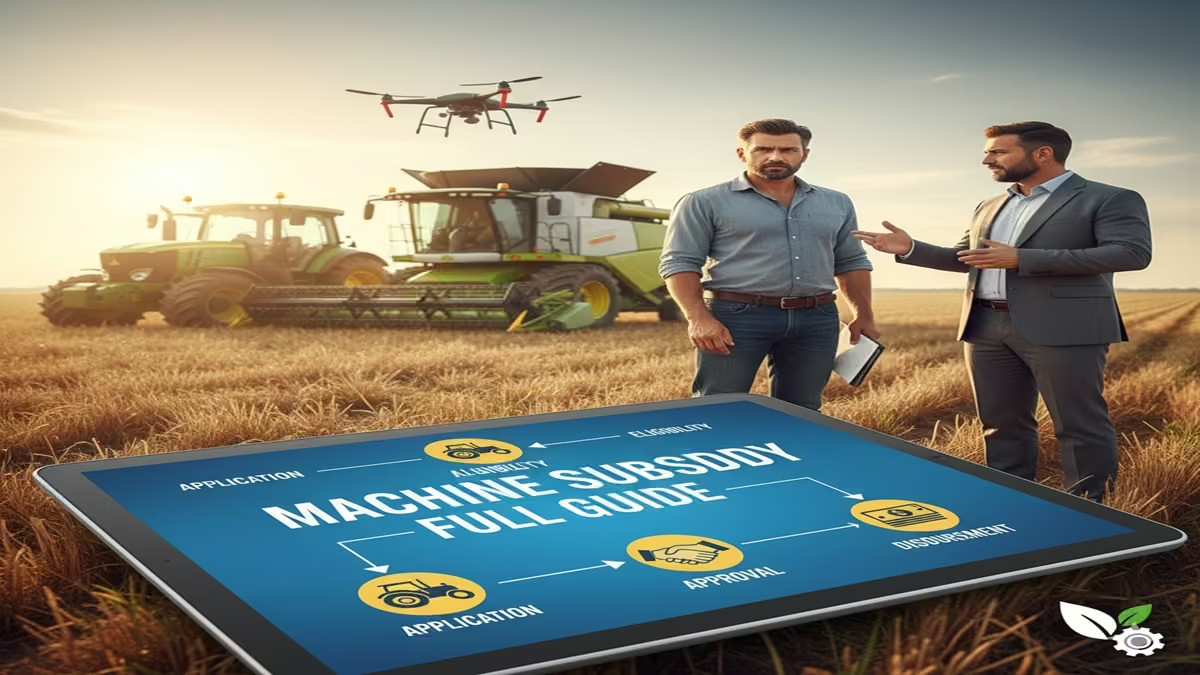
Machine Subsidy Kaise Milegi: A Comprehensive Guide to Securing Government Subsidies for Machinery in India
Introduction
Machine Subsidy Kaise Milegi Full Guide In the rapidly industrializing landscape of India, acquiring modern machinery is a critical step for entrepreneurs, farmers, and small business owners aiming to enhance productivity, improve quality, and remain competitive. However, the high capital cost of machinery often poses a significant barrier. To address this, the Government of India, along with various state governments, has instituted a robust framework of subsidy schemes designed to make machinery affordable. This guide, “Machine Subsidy Kaise Milegi,” serves as a complete roadmap to navigate the intricate process of securing financial assistance for purchasing equipment across sectors like agriculture, manufacturing, MSMEs, and more.
Securing a subsidy is not merely about receiving funds; it’s about leveraging government support to catalyze growth, adopt new technologies, and contribute to the nation’s economic vision of “Aatmanirbhar Bharat” (Self-Reliant India). This article will demystify the process, outline key schemes, and provide a step-by-step action plan to turn the question “Subsidy Kaise Milegi?” into a successful financial grant.
Chapter 1: Understanding Machine Subsidies – The What and Why
What is a Machine Subsidy?
A machine subsidy is a financial grant or incentive provided by the government to cover a certain percentage of the cost of purchasing machinery or equipment. It is not a loan; it is a direct financial support that does not require repayment, reducing the effective capital investment required from the beneficiary. Subsidies can beCapital Subsidies(percentage of machinery cost),Interest Subventions(reduction in loan interest), orCredit-Linked Grants.
Why Do Governments Offer These Subsidies?
The primary objectives are multi-faceted:
- Promote Modernization:Encourage the adoption of advanced, efficient, and often environmentally friendly technology.
- Boost Sectoral Growth:Target key sectors like agriculture (to ensure food security), MSMEs (the backbone of the economy), and manufacturing (to create jobs).
- Empower Specific Groups:Support Scheduled Castes (SC), Scheduled Tribes (ST), women entrepreneurs, and farmers from marginalized communities.
- Achieve Policy Goals:Further initiatives like sustainable farming, digital India, and waste management.
Chapter 2: Major Central Government Schemes for Machine Subsidies
A plethora of schemes exist under different ministries. Here are some of the most prominent:
1. For Agriculture and Farmers:
- tractors and harvesters to seed drills and laser land levelers. Implementation is often through state agriculture departments or agencies like NABARD.
- PM-KUSUM (Pradhan Mantri Kisan Urja Suraksha evam Utthaan Mahabhiyan):While focused on solar pumps, Component C of this scheme promotes solarization of agricultural feeders, indirectly supporting related machinery.
2. For MSMEs and Industries:
- Credit Linked Capital Subsidy Scheme (CLCSS) – Now subsumed but legacy and revised versions exist:Historically provided a 15% subsidy (up to Rs. 15 lakhs) on institutional finance for technology upgradation. While the old CLCSS is closed, its principles continue in various forms under theMSME Ministry’s initiatives.
- Stand-Up India Scheme:Facilitates bank loans between Rs. 10 lakh and Rs. 1 crore for SC/ST and women entrepreneurs for greenfield projects in manufacturing, services, or trading. This can include machinery purchase.
- Technology Upgradation Fund Scheme (TUFS) for Textile Industry:Provides capital subsidy and interest reimbursement for modernizing machinery in the textile sector.
3. For Renewable Energy and Sustainability:
- Various Schemes by the Ministry of New and Renewable Energy (MNRE):Offer subsidies for machinery related to biogas plants, solar panel manufacturing equipment, and waste-to-energy plants.
4. For Food Processing:
Chapter 3: State-Specific Schemes and the Importance of Local Governance
While central schemes provide the framework,implementation is largely state-driven. State governments often launch their own, sometimes more lucrative, versions aligned with local industrial and agricultural priorities.
- Examples:
- Punjab:Offers separate subsidies for agricultural machinery alongside SMAM.
- Maharashtra:Has specific schemes for grape growers, dairy farmers, and textile units.
- Tamil Nadu & Gujarat:Proactive industrial subsidies for MSMEs under state industrial policies.
- Key Implementing Agencies at State Level:
- District Industries Centres (DICs)
- State Agriculture/Horticulture Departments
- State Khadi and Village Industries Boards (KVIB)
- State Nodal Agencies for specific sectors (e.g., Food Processing, Textiles)
It is imperative to check both the central and your state government’s official portals for the most relevant and updated schemes.
Chapter 4: The Step-by-Step Guide to Availing Subsidy (Subsidy Kaise Milegi?)
This is the core action plan. Follow these steps meticulously:
Step 1: Identify the Correct Scheme and Eligibility
- Sector & Activity:Precisely define your business (e.g., organic farming, textile spinning, food packaging).
- Check Eligibility:Scrutinize criteria like:
- Category:SC/ST/Women/General/Startup.
- Enterprise Size:Micro, Small, or Medium (based on investment in plant & machinery).
- Location:Some schemes are for rural, backward, or industrial cluster areas.
- Income/Farm Landholding Limits:Especially for agriculture schemes.
- Best Sources:Official websites ofMinistries, State Departments, and NABARD. Use portals likemySchemefor discovery.
Step 2: Business Plan and Project Report Preparation
A detailed project report (DPR) is often mandatory. It should include:
- Business overview and promoter details.
- Market and technical feasibility.
- Detailed machinery quotation(Make, Model, Cost from an authorized dealer).
- Total project cost, means of finance (your margin + bank loan + subsidy).
- Profitability and cash flow projections.
Step 3: Choose the Right Machinery and Supplier
- Ensure the machinery/model isapproved under the scheme(many schemes have an approved list of technology).
- Purchase from anauthorized dealer or manufacturer. Get a proper, detailed invoice.
Step 4: Approach the Right Financial Institution
- Most subsidies arecredit-linked, meaning you must first secure a loan from a recognized bank, Regional Rural Bank (RRB), or cooperative society.
- Discuss the subsidy scheme with the bank manager upfront. Many banks have dedicated cells for government schemes.
- Submit the DPR and loan application.
Step 5: Application and Documentation
Apply through the designated channel—often online via a dedicated portal (e.g., State Agro Portals, Udyami Mitra for MSMEs). Core documents typically include:
- Duly filled application form.
- Aadhaar Card, PAN Card, Caste/Category Certificate (if applicable).
- Business registration proof (MSME/Udyam Certificate, GST, Shop Act License).
- Quotations and detailed invoice of machinery.
- Bank loan sanction letter.
- Land-related documents (Lease/Rental/Ownership proof).
- Passport-size photographs.
Step 6: Inspection, Approval, and Disbursement
- Field Verification:After application, an official (from DIC, Agriculture Dept.) will inspect the premises.
- Installation:Upon loan disbursal and pre-approval, you purchase and install the machinery. An installation report/photograph may be needed.
- Final Verification:A post-installation inspection confirms the machinery is operational.
- Subsidy Disbursement:The subsidy amount is typicallysent directly to the bankand adjusted against your loan principal. In some cases, it may be reimbursed to you.
Chapter 5: Common Pitfalls and Pro-Tips for Success
Pitfalls to Avoid:
- Buying Machinery First:Never purchase machinery before applying and understanding the process. The “subsidy-first” approach is crucial.
- Ignoring Eligibility:Applying for ineligible schemes wastes time.
- Incomplete Documentation:The most common reason for rejection.
- Choosing Unapproved Machinery:Ensure the equipment is on the scheme’s approved list.
- Lack of Follow-Up:Regularly follow up with the bank and department officials.
Pro-Tips:
- Get an MSME/Udyam Registration:This is a gateway to many benefits and adds credibility.
- Consult Experts:Approach your localDIC, KVIB office, or Agriculture Extension Officer. They are paid to guide you.
- Use Online Resources Wisely:Rely only on official government websites (
.gov.in,.nic.in) for information. - Maintain a File:Keep duplicates of every submitted document.
- Network:Connect with industry associations or farmer producer organizations (FPOs) that often facilitate group applications.
Conclusion: Empowering Your Enterprise with Strategic Support
The path to securing a machine subsidy, while procedural, is a powerful testament to leveraging public policy for private growth. It requires diligence, patience, and meticulous attention to detail. The question “Machine Subsidy Kaise Milegi?” is answered not with a single step, but with a strategic journey: from identifying the right opportunity and preparing a solid business case to navigating the application and verification process.
By effectively utilizing these subsidies, you are not just reducing your financial burden; you are aligning your enterprise with national priorities, adopting better technologies, and enhancing your long-term sustainability and competitiveness. Start your research today, reach out to the relevant government office, and take the first step towards transforming your operational capabilities with the support you are entitled to.
Frequently Asked Questions (FAQs)
1. क्या मैं मशीन खरीदने के बाद भी सब्सिडी के लिए आवेदन कर सकता हूँ?
नहीं, ज्यादातर योजनाओं में सब्सिडीखरीद से पहले के अनुमोदनपर निर्भर करती है। पहले मशीन खरीद लेने पर आप सब्सिडी के पात्र नहीं रह जाते। हमेशा प्रक्रिया शुरू करें, लोन मंजूरी लें, और फिर ही मशीन की खरीदारी करें।
2. सब्सिडी की राशि सीधे मेरे बैंक खाते में कब तक मिलती है?
सब्सिडी राशि आमतौर पर सीधे आपके खाते में नहीं, बल्किआपके ऋण देने वाले बैंक को भेजी जाती हैऔर आपके लोन की मूल राशि (प्रिंसिपल) में कटौती कर दी जाती है। इसकी समयसीमा अंतिम निरीक्षण के बाद 30 से 90 दिन हो सकती है, जो राज्य और योजना पर निर्भर करता है।
3. क्या एक ही व्यवसाय के लिए मैं केंद्र और राज्य दोनों की सब्सिडी योजनाओं का लाभ ले सकता हूँ?
आमतौर परनहीं। केंद्र और राज्य की समान उद्देश्य वाली योजनाओं में आपको किसी एक को चुनना पड़ता है। हालांकि, कभी-कभार अलग-अलग उद्देश्यों वाली योजनाएं (जैसे ऊर्जा बचत के लिए अलग और मशीनरी खरीद के लिए अलग) संयोजित की जा सकती हैं। इसकी पुष्टि अधिकारियों से अवश्य कर लें।
4. सब्सिडी के लिए ऑनलाइन आवेदन कैसे करें और कहाँ करें?
ज्यादातर योजनाओं के लिए आवेदन अब ऑनलाइन ही हैं। संबंधित विभाग केआधिकारिक पोर्टलपर जाएँ। उदाहरण के लिए, कृषि यंत्रों के लिए आपके राज्य के कृषि विभाग का पोर्टल, एमएसएमई के लिए ‘उद्यम मित्र’ (Udyami Mitra) पोर्टल या ‘माई स्कीम’ (myScheme) पोर्टल स्कीम ढूंढने के लिए एक अच्छी शुरुआत है।
5. अगर मेरा आवेदन अस्वीकार हो जाता है, तो क्या मैं दोबारा आवेदन कर सकता हूँ?
हां, आप दोबारा आवेदन कर सकते हैं, लेकिन पहलेअस्वीकृति का कारणजानना जरूरी है। यदि कारण दस्तावेजों की कमी या त्रुटि जैसा सुधारने योग्य है, तो उसे ठीक करके पुनः आवेदन करें। कुछ योजनाओं में अपील करने का भी प्रावधान होता है।