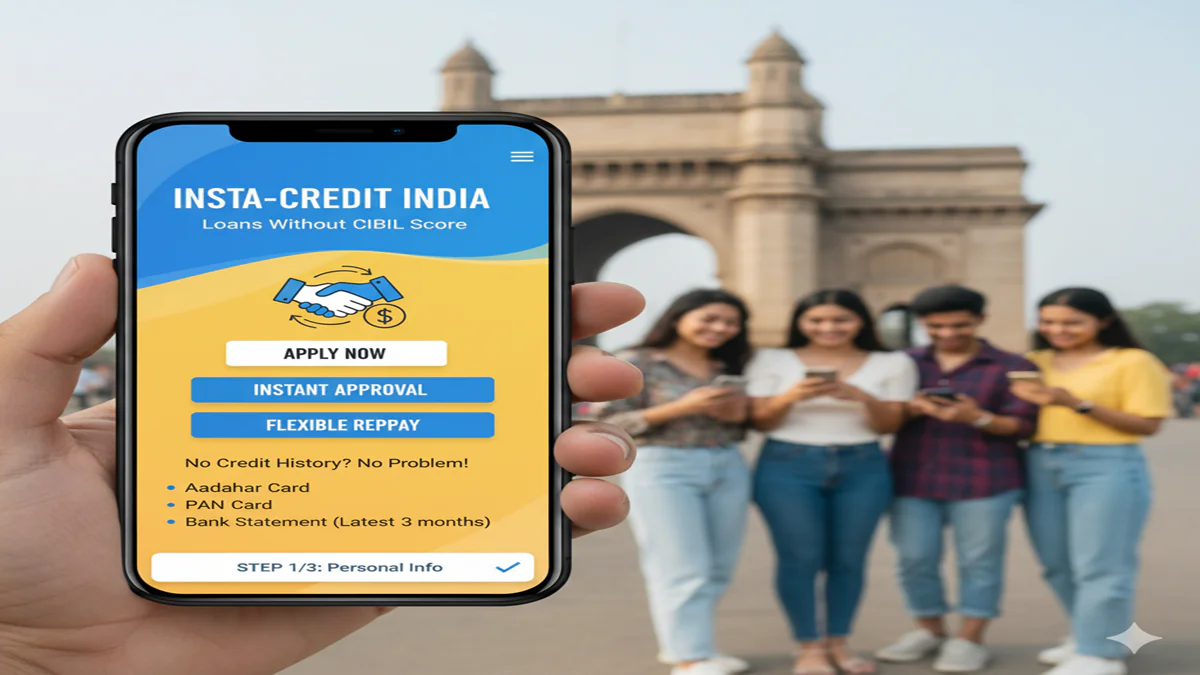
Loan App Without Cibil Score India: सिबिल स्कोर खराब है? इन 5 ऐप्स से मिल सकता है इंस्टेंट पर्सनल लोन, जानें पूरी प्रक्रिया!
Loan App Without Cibil Score India: Introduction: आजकल अचानक पैसों की जरूरत पड़ने पर हम सबसे पहले लोन के बारे में सोचते हैं। लेकिन पारंपरिक बैंक लोन देने से पहले आपका CIBIL Score चेक करते हैं। यदि आपका स्कोर 750 से कम है या आप पहली बार लोन ले रहे हैं (Zero CIBIL), तो बैंक अक्सर आवेदन खारिज कर देते हैं।
परेशान न हों! 2026 में भारत का डिजिटल लेंडिंग बाजार बदल चुका है। अब कई RBI Regulated ऐप्स आपके ‘सोशल लोन कोशिएंट’ और ‘बैंक स्टेटमेंट’ के आधार पर लोन देते हैं। इस लेख में हम Best Loan App Without Cibil Score India के बारे में विस्तार से जानेंगे।
1. बिना सिबिल स्कोर लोन देने वाले टॉप 5 ऐप्स (Top 5 Apps)
Loan App Without Cibil Score India: ये ऐप्स सिबिल के बजाय आपकी कमाई और डिजिटल व्यवहार को प्राथमिकता देते हैं:
- Loan App Without Cibil Score India: mPokket (छात्रों और कम वेतन वालों के लिए):
- यह ऐप विशेष रूप से कॉलेज के छात्रों और छोटी नौकरी करने वालों के लिए है। यह ₹500 से ₹45,000 तक का छोटा लोन देता है।
- खासियत: इसके लिए किसी सिबिल हिस्ट्री की जरूरत नहीं होती, बस कॉलेज आईडी या सैलरी स्लिप काफी है।
- Moneyview (फ्लेक्सिबल एलिजिबिलिटी):
- Moneyview का अपना क्रेडिट मॉडल है जो 600-650 जैसे कम सिबिल स्कोर वालों को भी लोन देने पर विचार करता है।
- लोन राशि: ₹5,000 से ₹10 लाख तक।
- Loan App Without Cibil Score India: KreditBee (युवा पेशेवरों की पसंद):
- यह ऐप ‘First-time Borrowers’ के लिए बेहतरीन है। अगर आप पहली बार लोन ले रहे हैं, तो यह आपको छोटे लोन देकर आपका क्रेडिट स्कोर बनाने में मदद करता है।
- Olyv (SmartCoin):
- यह ऐप स्वरोजगार (Self-employed) और छोटे दुकानदारों के लिए बहुत लोकप्रिय है। इसकी प्रक्रिया पूरी तरह डिजिटल है और कम स्कोर पर भी लोन अप्रूव हो जाता है।
- CASHe (सैलरीड प्रोफेशनल के लिए):
- CASHe एक विशेष एल्गोरिदम का उपयोग करता है जिसे ‘Social Loan Quotient’ कहा जाता है। यह आपके सोशल मीडिया प्रोफाइल और करियर स्थिरता को देखता है।
2. जरूरी दस्तावेज (Documents Required)
Loan App Without Cibil Score India: सिबिल न होने पर भी आपको अपनी पहचान और आय साबित करनी होगी:
- पैन कार्ड (PAN Card): अनिवार्य।
- आधार कार्ड (Aadhaar Card): ई-केवाईसी (e-KYC) के लिए।
- बैंक स्टेटमेंट: पिछले 3 से 6 महीने का स्टेटमेंट (पीडीएफ फॉर्मेट में)।
- आय का प्रमाण: सैलरी स्लिप या बिजनेस प्रूफ।
3. सावधान: फर्जी ऐप्स से कैसे बचें? (Safety Alert)
Loan App Without Cibil Score India: आजकल प्ले स्टोर पर कई ऐसे ‘7 दिन वाले’ फर्जी ऐप्स हैं जो बिना सिबिल के लोन का लालच देकर लोगों को ब्लैकमेल करते हैं। सुरक्षित रहने के लिए ये टिप्स अपनाएं:
- NBFC चेक करें: हमेशा देखें कि ऐप का पार्टनर लेंडर (NBFC) कौन है और क्या वह RBI की वेबसाइट पर लिस्टेड है।
- कांटेक्ट लिस्ट एक्सेस: कोई भी सुरक्षित ऐप आपके पर्सनल कांटेक्ट या गैलरी का एक्सेस नहीं मांगता।
- प्रोसेसिंग फीस: लोन मिलने से पहले कभी भी कोई पैसा न चुकाएं।
4. अक्सर पूछे जाने वाले प्रश्न (FAQs)
प्रश्न 1: सिबिल स्कोर के बिना लोन पर ब्याज दर कितनी होती है?
उत्तर: चूंकि इसमें रिस्क ज्यादा होता है, इसलिए ब्याज दर थोड़ी अधिक हो सकती है (वार्षिक 18% से 36% तक)।
प्रश्न 2: क्या हाउसवाइफ को बिना सिबिल के लोन मिल सकता है?
उत्तर: हाँ, यदि उनके पास कोई नियमित आय का स्रोत है या वे जॉइंट लोन (Co-applicant) के लिए आवेदन करती हैं।
प्रश्न 3: लोन चुकाने के लिए कितना समय मिलता है?
उत्तर: इन ऐप्स पर आपको 3 महीने से लेकर 60 महीने तक का समय मिल सकता है।
Conclusion: सोच-समझकर लें फैसला!
Loan App Without Cibil Score India के विकल्प उन लोगों के लिए वरदान हैं जिन्हें बैंक से मदद नहीं मिलती। लेकिन याद रखें, समय पर भुगतान करना बहुत जरूरी है। एक बार आप इनका लोन चुका देते हैं, तो आपका सिबिल स्कोर अपने आप सुधरने लगता है और भविष्य में आपको बैंक से सस्ता लोन मिल सकता है।
Unlocking Finance: A Comprehensive Guide to Loan Apps Without CIBIL Score in India (2026)
Loan App Without Cibil Score India In the traditional tapestry of Indian finance, a three-digit number has long held disproportionate power: the CIBIL score. Ranging from 300 to 900, this numerical snapshot of credit history has been the gatekeeper to formal loans, credit cards, and financial inclusion. For millions of Indians—new entrants to the workforce, self-employed individuals with unconventional income proofs, or those recovering from past financial missteps—a low or non-existent CIBIL score has been a formidable barrier. However, a digital revolution is quietly dismantling this wall. The emergence of loan apps without CIBIL score checks is creating a parallel, inclusive credit ecosystem, promising swift financial access but demanding informed navigation.
Loan App Without Cibil Score India: This guide delves deep into this burgeoning financial niche, exploring its mechanisms, benefits, risks, and the crucial knowledge needed to harness it safely.
The CIBIL Conundrum: Why “No-CIBIL” Loans Exist
Loan App Without Cibil Score India: To understand the rise of these platforms, one must first grasp the credit gap they fill. According to TransUnion CIBIL, as of 2023, only about88 million Indians have a credit score above 700in a country of over 1.4 billion. A vast population is either credit-invisible (no formal credit history) or has a subprime score (below 650). Traditional banks and NBFCs deem them “high-risk,” leading to outright rejection or exorbitant interest rates.
Loan App Without Cibil Score India: Enter fintech. Leveraging theJAM Trinity(Jan Dhan, Aadhaar, Mobile) and advanced technology, a new wave of loan apps is adopting alternative underwriting models. They argue that a CIBIL score, while useful, is a lagging indicator and doesn’t capture the full financial picture of a digitally-active individual. Their premise is simple:Your financial behaviour extends beyond just loan repayments.
The New Underwriting Engine: What Apps Check Instead of CIBIL
Loan App Without Cibil Score India: When you apply for a loan on these platforms, you’re not bypassing scrutiny; you’re being evaluated on a different dataset. The approval hinges onAlternative DataandDigital Footprint Analysis:
- Bank Statement Analysis (via Account Aggregators): Apps use your bank statement data (with your explicit consent) to analyze cash flows, income regularity, spending patterns, EMI commitments, and savings habits. Regular salary credits or consistent business revenues are strong positive signals.
- GST & Business Data: For self-employed applicants, GST returns, turnover, and the digital footprint of their business on platforms like Amazon, Flipkart, or Udyam can serve as credibility proof.
- Social & Professional Profile: While not used for direct discrimination, linked LinkedIn profiles or educational qualifications can sometimes form part of a composite score.
- and even repayment reminders.
- E-KYC & Aadhaar Verification: Serves as the bedrock for identity and address proof, integrated with DigiLocker for document access.
The Landscape: Types of “No-CIBIL” Loan Apps
Loan App Without Cibil Score India: Not all apps in this space are created equal. They primarily fall into three categories:
- Digital-First NBFCs & Fintech Lenders: These are regulated entities (partnering with RBI-registered NBFCs or banks) that have built their entire underwriting around alternative data. Examples include MoneyTap, EarlySalary, Fibe (formerly EarlySalary for personal loans), and KreditBee. They offer structured products within RBI’s digital lending guidelines.
- Peer-to-Peer (P2P) Lending Platforms: Platforms like LenDenClub, Faircent, and Lendbox connect individual lenders with borrowers. The platform’s algorithm assesses risk, but individual lenders may have varying risk appetites. Rates are often market-driven.
- Buy Now, Pay Later (BNPL) Providers: While not pure “loan apps,” BNPL services like Simpl, Lazypay, and Paytm Postpaid offer instant, small-ticket credit at merchant checkouts without hard credit checks, building a micro-credit history.
The Stark Trade-Off: Benefits vs. Inherent Risks
Benefits:
- Access & Inclusion: The foremost benefit. They provide a lifeline to those excluded from traditional credit.
- Minimal Documentation: Typically requires only PAN, Aadhaar, and bank account details, with consent for bank statement analysis.
- Building Credit History: Responsible repayment on these loans is increasingly reported to CIBIL and other bureaus. This is their most transformative aspect—they can be a stepping stone to rebuild or build a credit score for future, cheaper credit.
Risks & Criticisms:
- Exorbitant Interest Rates: This is the biggest caveat. With APRs ranging from 12% to 36% per annum (and sometimes higher), the cost of credit is significantly greater than a bank personal loan (10-15%).
- Aggressive Recovery Practices: While the RBI has cracked down on unfair practices, some apps have been notorious for using harassment, shaming, and unethical recovery tactics against defaulters.
- Data Privacy Concerns: The extent of data harvested—SMS, contacts, app list—raises serious privacy questions. It’s vital to use only apps that comply with RBI’s data privacy norms and have clear data usage policies.
- for long-term needs.
- Potential for Over-borrowing: The ease of access can lead to multiple, simultaneous loans from different apps, spiraling into unmanageable debt.
Navigating Safely: A Borrower’s Due Diligence Checklist
- Verify RBI Registration: Ensure the app discloses its partnering RBI-registered NBFC or bank. Check the entity’s name on the RBI website.
- Read the Fine Print: Understand the TMF (Total cost, Moratorium, Fine print). Know the Annual Percentage Rate (APR), which includes all fees, processing charges, and GST.
- Check Data Permissions: Be wary of apps demanding unnecessary permissions (like access to contacts or photos). Prefer apps using the Account Aggregator framework for secure, consent-based data sharing.
- Research Reviews & Complaints: Look beyond app store reviews. Search for user experiences on platforms like RBI’s Sachet portal, Trustpilot, or consumer forums.
- Start Small: Treat your first loan as a test. Borrow a minimal amount, repay it diligently before the due date, and observe the app’s behaviour.
- Ensure CIBIL Reporting: Confirm with the lender that they will report your repayment to credit bureaus. This turns a high-cost loan into an investment in your future creditworthiness.
- Beware of Predatory Lending: Avoid apps that guarantee approval, ask for upfront fees, or have opaque terms.
The Regulatory Shield: RBI’s Digital Lending Guidelines
Loan App Without Cibil Score India: In response to malpractices, theReserve Bank of India issued stringent Digital Lending Guidelines in 2022. Key protections now in place:
- All loan disbursals and repayments must flow directly between the borrower’s and lender’s bank accounts, eliminating third-party handling of funds.
- Apps cannot access mobile phone resources like files, media, contact lists, or call logs.
- A mandatory Key Fact Statement (KFS) must be provided upfront, detailing the APR, recovery agent details, and grievance officer.
- A Cooling-off/Look-up Period during which borrowers can exit loans by paying only the principal and proportionate APR.
- All digital lending apps must be listed on RBI’s Sachet portal.
The Future: Building a Score, One Responsible Repayment at a Time
Loan App Without Cibil Score India: The ultimate goal for any borrower using these platforms should be tograduate out of them. Use them as a tool forCredit Building:
- Take a small, manageable loan.
- Set up auto-debit or multiple reminders.
- Repay in full, before the due date.
- After 6-12 months of such responsible behaviour, check your CIBIL score. You will likely see a significant improvement.
- With an improved score (e.g., above 700), you become eligible for traditional loans with far lower interest rates.
Conclusion
Loan App Without Cibil Score India: Loan apps without CIBIL checks are a double-edged sword, emblematic of India’s fintech-led financial democratization. They are not a replacement for traditional credit but a vital, if costly, supplement for the credit-invisible. They represent a paradigm shift from“credit history” to “creditworthiness”assessed in real-time.
Loan App Without Cibil Score India: For the borrower, the mantra must be“informed caution.”Used strategically and repaid diligently, these apps can be the key that unlocks the door to formal finance, turning a credit void into a healthy credit score. Used recklessly, they can deepen financial distress. In the dynamic landscape of Indian finance, they are a powerful tool—and with great power, as the adage goes, comes great responsibility. The onus is on both the regulator to ensure fair play and the borrower to practice disciplined financial hygiene.
FAQ: Loan Apps Without CIBIL Score in India
Q1: Is it truly “no CIBIL check,” or is it a soft check?
Loan App Without Cibil Score India: Most apps perform a“soft inquiry”on your credit report. A soft inquiry does not affect your CIBIL score and is only visible to you. This allows them to see if you have a score, but they base their decision primarily on alternative data. A “hard inquiry,” which can slightly lower your score, is typically not done.
Q2: What is the typical loan amount and tenure for first-time borrowers?
Loan App Without Cibil Score India: For first-time users with no credit history, loan amounts are usually conservative, ranging from₹3,000 to ₹50,000. Tenures are short-term, typically from3 months to 12 months. As you build a good repayment track record with the app, you become eligible for higher limits and longer tenures.
Q3: How fast is the disbursal after approval?
Loan App Without Cibil Score India: Disbursal is remarkably fast. Once your application is approved (which can take minutes), the funds are typically transferred to your linked bank accountwithin a few minutes to 4 hours. Many apps boast “instant disbursal” within 10-15 minutes of approval.
Q4: Will repaying these loans help improve my CIBIL score?
Loan App Without Cibil Score India: Yes, absolutely.This is one of the key benefits. Provided the lender reports to the credit bureaus (which most reputable ones do), yourconsistent and timely repayments will be reported and will positively impact your CIBIL score. Always confirm this with the lender before taking the loan.
Q5: What are the biggest red flags to watch out for in such apps?
Loan App Without Cibil Score India: Demanding Upfront Fees:No legitimate lender asks for processing or security fees before disbursal.
Unclear or Exorbitant Interest Rates:If the APR is not clearly stated in a Key Fact Statement (KFS), it’s a major red flag.
Excessive Data Permissions:Apps demanding constant access to SMS, contacts, or gallery without clear reason.
No Clear Lender Details:If the app does not clearly state the name of its partnering RBI-registered NBFC or bank, do not proceed.
Unsolicited Loan Offers:Be wary of calls or messages from unknown numbers offering pre-approved loans without your application.