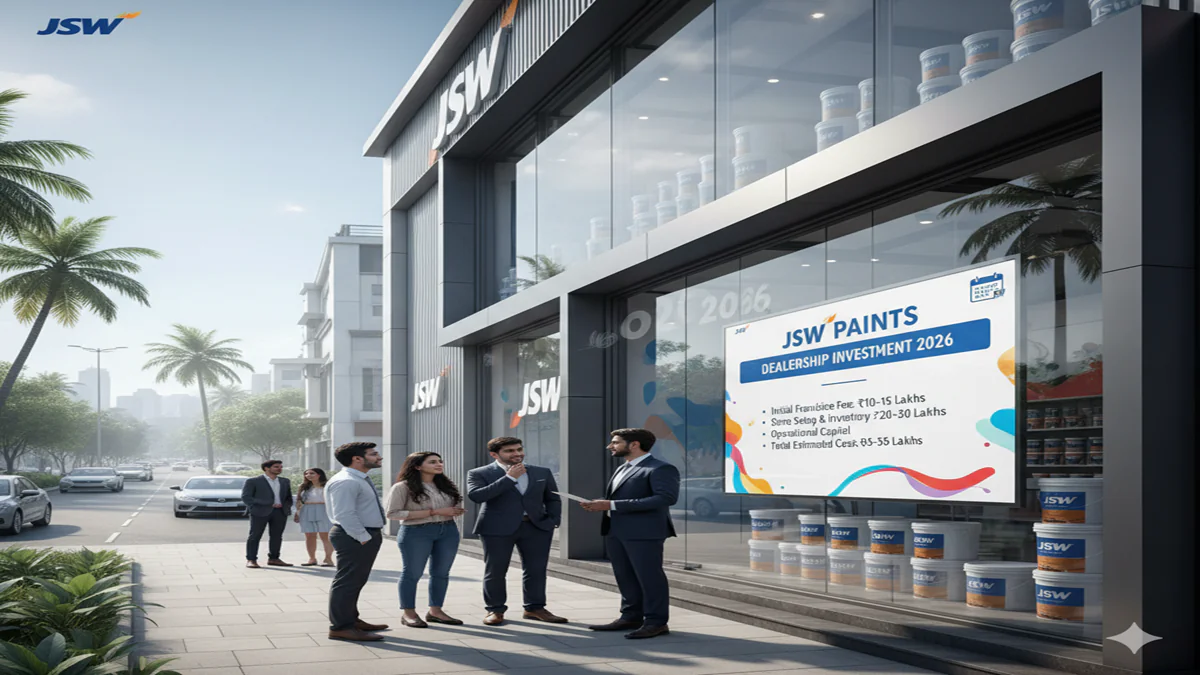
JSW Paints Dealership Cost 2026: पेंट्स बिजनेस से कमाएं लाखों; जानें JSW पेंट्स डीलरशिप लेने का खर्च, मार्जिन और पूरी प्रक्रिया!
Introduction:
JSW Paints Dealership Cost 2026: भारत में कंस्ट्रक्शन और होम डेकोर का बाजार तेजी से बढ़ रहा है। हर घर को सुंदर दिखने के लिए पेंट की जरूरत होती है। पेंट्स की दुनिया में JSW Paints ने अपनी “Any Colour, One Price” (कोई भी रंग, एक ही दाम) की अनोखी रणनीति से तहलका मचा दिया है। यदि आप 2026 में एक ऐसा बिजनेस शुरू करना चाहते हैं जिसकी डिमांड कभी कम न हो, तो “JSW Paints Dealership Cost” और इसकी प्रक्रिया को समझना आपके लिए बहुत जरूरी है।
JSW ग्रुप का हिस्सा होने के कारण इस कंपनी पर लोगों का अटूट भरोसा है। आइए जानते हैं कि आप इस कंपनी के साथ जुड़कर अपना खुद का सफल बिजनेस कैसे शुरू कर सकते हैं।
1. JSW पेंट्स डीलरशिप ही क्यों चुनें? (Why Choose JSW Paints?)
- One Price Policy: कंपनी सभी रंगों के लिए एक ही बेस प्राइस रखती है, जिससे स्टॉक मैनेज करना और बेचना आसान होता है।
- मजबूत ब्रांड: JSW समूह भारत के सबसे बड़े औद्योगिक घरानों में से एक है।
- इको-फ्रेंडली प्रोडक्ट्स: इनके पेंट्स वाटर-बेस्ड और गंधहीन (Odorless) होते हैं, जिसकी आज के समय में बहुत मांग है।
2. JSW पेंट्स डीलरशिप लागत (Investment Breakdown)
JSW Paints Dealership Cost 2026: JSW पेंट्स की डीलरशिप अन्य बड़े ब्रांड्स (जैसे एशियन या बर्जर) की तुलना में थोड़ी किफायती मानी जाती है।
| खर्च का विवरण | संभावित लागत (₹) |
| सिक्योरिटी डिपॉजिट | ₹1.5 लाख – ₹3 लाख |
| कलर टिंटिंग मशीन | ₹2 लाख – ₹4 लाख |
| शुरुआती स्टॉक (Inventory) | ₹5 लाख – ₹8 लाख |
| दुकान का इंटीरियर/फर्नीचर | ₹1 लाख – ₹2 लाख |
| कुल निवेश (Total Investment) | ₹10 लाख – ₹15 लाख (लगभग) |
(नोट: यदि आपके पास पहले से हार्डवेयर की दुकान है, तो यह खर्च काफी कम हो सकता है।)
3. जगह की जरूरत (Space Requirements)
JSW Paints Dealership Cost 2026: JSW पेंट्स डीलरशिप के लिए आपके पास एक अच्छी लोकेशन पर दुकान होनी चाहिए:
- दुकान का एरिया: कम से कम 300 से 500 वर्ग फुट।
- गोदाम (Godown): पेंट के डिब्बों को रखने के लिए अलग से 200-300 वर्ग फुट की जगह हो तो बेहतर है।
- लोकेशन: दुकान मुख्य बाजार या हार्डवेयर मार्केट में होनी चाहिए जहाँ ग्राहकों की आवाजाही अधिक हो।
4. प्रॉफिट मार्जिन (Profit Margin)
पेंट बिजनेस में मुनाफा आपकी सेल की मात्रा (Volume) पर निर्भर करता है।
- रिटेल मार्जिन: आमतौर पर 5% से 10% तक।
- स्कीम्स और बोनस: कंपनी समय-समय पर सेल टारगेट पूरा करने पर 3% से 5% तक अतिरिक्त बोनस और कैशबैक देती है।
- कुल मुनाफा: महीने की ₹10 लाख की सेल पर आप आसानी से ₹80,000 से ₹1,20,000 तक कमा सकते हैं।
5. आवेदन प्रक्रिया (How to Apply Online)
JSW Paints Dealership Cost 2026: JSW पेंट्स की डीलरशिप के लिए आप इन तरीकों से संपर्क कर सकते हैं:
- वेबसाइट: आधिकारिक वेबसाइट
www.jswpaints.inपर जाएं। - Contact Us: ‘Partner With Us’ या ‘Contact’ सेक्शन में जाकर अपनी जानकारी भरें।
- टोल-फ्री नंबर: आप उनके कस्टमर केयर नंबर
1800-121-5797पर कॉल करके डीलरशिप के लिए सेल्स ऑफिसर का नंबर मांग सकते हैं। - सेल्स ऑफिसर विजिट: आपके क्षेत्र का सेल्स मैनेजर आपकी दुकान का दौरा करेगा और दस्तावेजों की जांच के बाद प्रक्रिया आगे बढ़ाएगा।
6. जरूरी दस्तावेज (Important Documents)
- व्यक्तिगत: आधार कार्ड, पैन कार्ड और पासपोर्ट साइज फोटो।
- बिजनेस: जीएसटी (GST) नंबर, ट्रेड लाइसेंस और दुकान का रेंट एग्रीमेंट या मालिकाना हक के कागज।
- बैंक: पिछले 6 महीने का बैंक स्टेटमेंट और कैंसिल्ड चेक।
4. अक्सर पूछे जाने वाले प्रश्न (FAQs)
Q1: क्या JSW पेंट्स डीलरशिप के लिए टिंटिंग मशीन लेना अनिवार्य है?
Ans: हाँ, क्योंकि ग्राहक अपनी पसंद का शेड तुरंत बनवाना चाहते हैं। मशीन के बिना आप सभी शेड्स उपलब्ध नहीं करा पाएंगे।
Q2: क्या कंपनी मार्केटिंग में मदद करती है?
Ans: हाँ, JSW पेंट्स दुकान के बोर्ड, ग्लो-साइन बोर्ड और स्थानीय विज्ञापनों में पूरी मदद करती है।
Q3: क्या मैं अन्य ब्रांड्स के साथ JSW पेंट्स बेच सकता हूँ?
Ans: शुरुआत में आप मल्टी-ब्रांड आउटलेट रख सकते हैं, लेकिन एक्सक्लूसिव डीलर बनने पर कंपनी अधिक फायदे देती है।
Conclusion: सुनहरे भविष्य का बिजनेस!
JSW Paints Dealership Cost को देखते हुए यह कहा जा सकता है कि यह मध्यम बजट वाले उद्यमियों के लिए एक बेहतरीन अवसर है। कंपनी की आधुनिक सोच और “One Price” मॉडल आने वाले समय में बाजार पर बड़ी पकड़ बनाने वाला है। यदि आप मेहनत करने के लिए तैयार हैं, तो पेंट्स का यह बिजनेस आपको सालों-साल शानदार मुनाफा देगा।
The Complete Guide to JSW Paints Dealership Cost & Opportunity for 2026
JSW Paints Dealership Cost 2026: The Indian paints industry is a vibrant battlefield of legacy giants and ambitious disruptors. In this dynamic landscape, JSW Paints has emerged not just as another player, but as a formidable challenger with a philosophy rooted in innovation, value, and partnership. For entrepreneurs and established business owners looking to dive into this lucrative sector, a JSW Paints dealership represents a compelling opportunity. As we look ahead to 2026, understanding the financial commitment, operational model, and market potential is crucial.
This guide provides a detailed, forward-looking projection of the total investment required for a JSW Paints dealership in 2026, breaking down the costs and outlining the roadmap to building a profitable venture.
The JSW Paints Proposition: Why Now?
JSW Paints Dealership Cost 2026: Before delving into numbers, it’s essential to grasp the “why.” JSW Group, a colossal $24 billion conglomerate, entered the paints segment in 2019 with a long-term vision. Unlike incumbents, JSW leveraged its expertise in manufacturing, supply chain, and raw materials to offer:
- Quality at Value: High-performance products that often undercut market leaders on price without compromising on quality.
- Innovative Portfolio: A strong focus on water-based, eco-friendly products, staying ahead of regulatory curves and consumer trends.
- Partner-Centric Approach: They emphasize dealer profitability through better margins, training, and support, positioning their dealers as true partners.
- Aggressive Growth Plans: With a current footprint of over 150+ experience centers (dealerships) and 4000+ retail touchpoints, JSW Paints is in a rapid expansion phase, aiming to double or triple its presence by 2026.
JSW Paints Dealership Cost 2026: For a dealer, this translates to entering a growth-oriented ecosystem with strong backing, competitive products, and a significant first-mover advantage in many emerging markets.
Projected JSW Paints Dealership Cost Breakdown for 2026
JSW Paints Dealership Cost 2026: The total investment can be categorized intoFixed (One-time) CostsandRecurring (Working Capital) Costs. The figures projected for 2026 account for estimated inflation, market expansion, and potential enhancements in JSW’s dealer requirements.
Part 1: Fixed / One-Time Investment (Estimated: ₹25 Lakhs – ₹40 Lakhs)
JSW Paints Dealership Cost 2026: This is the capital required to set up the dealership’s physical and operational foundation.
1. Dealership Security Deposit (Franchise Fee):
- 2026 Projection: ₹8 Lakhs – ₹15 Lakhs
- This is a refundable or adjustable deposit paid to JSW Paints. It acts as a security for the partnership and commitment. The range may widen by 2026 based on city tier (Tier-1 metros being at the higher end) and the scale of operations (premium experience center vs. standard store). This deposit is typically recoverable upon termination of the agreement under specified conditions.
2. Store Infrastructure & Interior Fit-Out:
- JSW Paints Dealership Cost 2026: 2026 Projection: ₹10 Lakhs – ₹18 Lakhs
- JSW Paints mandates a specific store format called the “JSW Paints Experience Centre.” This isn’t just a warehouse; it’s a customer-facing space designed for engagement. Costs include:
- Rental Advance: Typically 3-6 months of rent as advance. Monthly rent itself varies wildly: ₹25,000-₹80,000+ depending on location and city.
- Technology Setup: Computers, billing software, POS systems, and digital color-matching tools.
3. Initial Inventory Purchase:
- JSW Paints Dealership Cost 2026: 2026 Projection: ₹5 Lakhs – ₹10 Lakhs
- While inventory is a revolving cost, the initial stock to launch the store falls under the one-time setup. JSW will likely provide a recommended stock-keeping unit (SKU) list encompassing their full portfolio: interior emulsions, exterior paints, primers, putties, enamels, and wood coatings.
4. Licenses, Registrations, and Legal Formalities:
- 2026 Projection: ₹1 Lakh – ₹2 Lakhs
- This includes GST registration, shop & establishment license, local municipal trade license, and any other region-specific permits.
Part 2: Recurring / Working Capital (Estimated: ₹15 Lakhs – ₹25 Lakhs per month cycle)
JSW Paints Dealership Cost 2026: This is the capital needed to keep the business running smoothly on a month-to-month basis.
1. Inventory Replenishment:
- JSW Paints Dealership Cost 2026: 2026 Projection: ₹10 Lakhs – ₹20 Lakhs per cycle
- This is the most significant component of working capital. As sales happen, you need to replenish stock. A healthy turnover ratio (selling and restocking inventory 4-6 times a year) is key. The requirement will grow with your sales volume.
2. Operational Expenses:
- JSW Paints Dealership Cost 2026: 2026 Projection: ₹3 Lakhs – ₹5 Lakhs per month
- This umbrella covers:
- A team of 4-6 is typical for a mid-sized dealership.
- Rent & Utilities: The ongoing monthly rent, electricity, water, and internet bills.
- Marketing & Promotion: Local advertising, homeowner meets, painter meets, and digital marketing campaigns.
- Logistics & Transportation: Cost of delivering products to customer sites or sub-dealers.
3. Contingency & Growth Fund:
- JSW Paints Dealership Cost 2026: 2026 Projection: ₹2 Lakhs – ₹5 Lakhs
- A prudent business always sets aside a buffer for unforeseen expenses, slow months, or opportunistic bulk purchases.
Total Estimated Investment Summary for 2026
- JSW Paints Dealership Cost 2026: Minimum Estimated Investment:₹40 Lakhs (Fixed: ₹25L + Working: ₹15L)
- Comfortable/Recommended Investment: ₹55 Lakhs – ₹65 Lakhs (Fixed: ₹30L-₹40L + Working: ₹25L)
- Premium/Large Scale Investment (Metro): ₹70 Lakhs – ₹1 Crore+
Key Insight: The “security deposit” is often a major point of focus, but the real engine of the business is the working capital. Sufficient working capital ensures you can service large orders, maintain a wide product range, and capitalize on credit terms with builders and contractors.
The Revenue & Profitability Picture
JSW Paints Dealership Cost 2026: An investment is only as good as its returns. Here’s the potential upside:
1. Revenue Streams:
- Walk-in Retail Customers: For home painting projects.
- B2B Contracts: With builders, contractors, and real estate developers.
- Institutional Sales: To government projects, hotels, offices, and factories.
- Sub-dealer Network: Supplying to smaller paint shops in your designated area.
2. Margins:
- JSW Paints Dealership Cost 2026: JSW Paints is known for offering attractive dealer margins to gain market share. Typically, dealers can expect:
- Gross Margins: 15% – 25% on MRP, depending on the product category and sales volume.
- Additional Incentives: Performance-based bonuses, volume discounts, and promotional schemes can add 3-5% to the bottom line.
3. Break-Even & ROI:
- JSW Paints Dealership Cost 2026: Given the competitive market and initial push required to build a customer base, a well-run dealership can aim to break even in12-18 months.
- A steady-state, profitable dealership in a good location can target an annual Return on Investment (ROI) of 20-30%+ post the break-even period, making it a financially attractive proposition.
The Application & Selection Process for 2026
JSW Paints Dealership Cost 2026: The process is likely to become more streamlined yet competitive by 2026.
- Expression of Interest: Submit an online application via the JSW Paints “Partner With Us” portal.
- Primary Screening: Evaluation of financial capability, business experience, and proposed location.
- Business Plan Discussion: Presenting your market understanding and growth strategy.
- Site Verification: JSW team approves the physical location.
- Agreement & Onboarding: Signing the dealership agreement, payment of security deposit, and commencement of training and setup.
5 Critical FAQs for Prospective JSW Paints Dealers (2026 Edition)
FAQ 1: What is the exact, fixed dealership fee for a JSW Paints outlet in 2026?
This is not a classic franchise fee but a safety deposit for the stock and partnership. The final amount is negotiable based on your market potential, city classification, and the scale of the dealership you propose. The total setup cost including store fit-out, initial stock, and licenses will be significantly higher, as detailed above.
FAQ 2: Does JSW Paints offer financial assistance or bank loan partnerships for the investment?
JSW Paints does not directly provide loans. However, they typically have tie-ups with leading banks and NBFCs (Non-Banking Financial Companies) to facilitate easy financing for their prospective dealers. The business model and JSW’s brand strength often make it easier for dealers to secure business loans. You will need to prepare a solid project report, factoring in the 2026 cost estimates, to present to these financial institutions.
FAQ 3: What is the exclusive territory provided, and how does JSW protect from competition between its own dealers?
JSW Paints allots a defined operational territory, usually based on pin codes or municipal wards, to each dealership. The agreement includes clauses that protect this territory, meaning JSW will not appoint another authorized experience center within your designated area. This ensures you can build your customer base without internal competition. Your focus then becomes competing with other brands and unorganized players in your territory.
FAQ 4: What kind of training and ongoing support can I expect from the company?
JSW Paints invests heavily in dealer success. Support includes:
- Comprehensive Training: Technical training on products, application techniques, and sales/marketing training.
- Marketing & Lead Generation: National advertising campaigns, co-op marketing funds for local activities, and digital lead generation support.
- Technical Field Force: Dedified company personnel who assist with large project bids, painter meets, and on-site problem-solving.
FAQ 5: What are the biggest challenges for a new JSW Paints dealer, and what traits make for success?
Challenges:
- Brand Switching: Convincing customers and painters to move from established legacy brands.
- Working Capital Management: Balancing inventory levels with cash flow is perpetual.
- Intense Local Competition: From both organized rivals and local paint shops.
Success Traits:
- Entrepreneurial Drive: Actively pursuing B2B contracts and building a sub-dealer network, not just waiting for walk-ins.
- Technical Affinity: Understanding paint products to provide credible advice.
- Strong Local Networks: Existing connections with builders, contractors, and painters are a huge advantage.
- Customer Service Focus: Building trust through reliable service, color consultancy, and after-sales support.
Conclusion: Is a JSW Paints Dealership in 2026 a Wise Investment?
The paints industry in India is poised for steady growth, driven by housing, infrastructure, and renovation. JSW Paints, with its aggressive growth strategy, quality products, and dealer-friendly policies, is positioned to capture a significant share of this market.
The projected total investment of ₹55-65 lakhs for a robust dealership in 2026 is substantial but aligns with the potential of the industry and the brand’s trajectory. It is an investment not just in a retail space, but in a growing brand with systemic support.
The key to success lies beyond the initial capital. It hinges on the dealer’s ability to leverage JSW’s support, manage operations efficiently, and build deep roots in the local community. For the entrepreneur with business acumen, a passion for the building materials space, and a willingness to execute a long-term plan, a JSW Paints dealership in 2026 represents a timely and potentially highly rewarding business venture.
Disclaimer: The costs and projections mentioned in this article are educated estimates for the year 2026 based on current trends, inflation, and industry analysis. The actual figures, policies, and requirements will be solely determined by JSW Paints at the time of application. Prospective dealers must contact the official JSW Paints dealership team for the final, authoritative terms and conditions.