


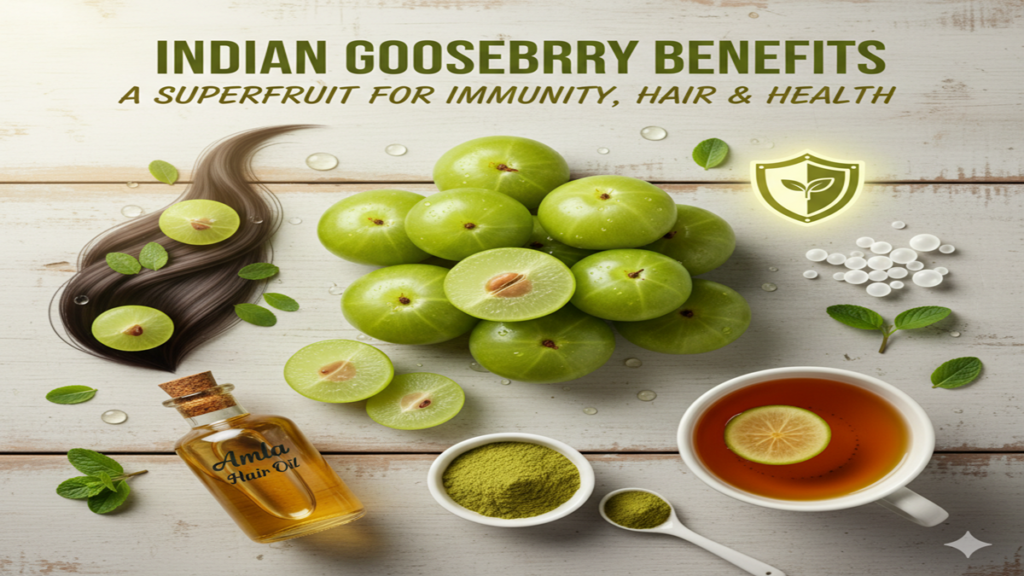
Indian Gooseberry (Amla): सेहत का वरदान! आंवला खाने के जबरदस्त फायदे और उपयोग करने का सही तरीका।
Indian Gooseberry (Amla): Introduction: भारतीय आयुर्वेद में Indian Gooseberry यानी ‘आंवला’ को ‘अमृतफल’ माना गया है। स्वाद में खट्टा, कसैला और थोड़ा मीठा यह फल केवल एक फल नहीं, बल्कि सैकड़ों बीमारियों की एक दवा है। आंवला विटामिन C का सबसे बड़ा प्राकृतिक स्रोत है। आपको जानकर हैरानी होगी कि एक छोटे से आंवले में एक संतरे की तुलना में 20 गुना अधिक विटामिन C होता है।
आज की भागदौड़ भरी जिंदगी में अपनी रोग प्रतिरोधक क्षमता (Immunity) बढ़ाने के लिए Indian Gooseberry Benefits को जानना बहुत जरूरी है। इस लेख में हम आंवले के फायदे, इसके पोषक तत्व और इसे खाने के सही तरीके के बारे में विस्तार से चर्चा करेंगे।
1. आंवले के पोषक तत्व (Nutrition Facts)
Indian Gooseberry (Amla): 100 ग्राम ताजे आंवले में निम्नलिखित पोषक तत्व पाए जाते हैं:
- विटामिन C: 450-600 मिलीग्राम (प्रचुर मात्रा में)
- फाइबर: 3.4 ग्राम
- कैलोरी: 58
- अन्य: आयरन, कैल्शियम, फास्फोरस और एंटीऑक्सीडेंट्स।
2. आंवला खाने के मुख्य फायदे (Health Benefits)
Indian Gooseberry (Amla): 1. रोग प्रतिरोधक क्षमता बढ़ाना (Immunity Booster): आंवले में एंटी-बैक्टीरियल और एंटी-वायरल गुण होते हैं। रोजाना आंवले का सेवन करने से शरीर को सर्दी, खांसी और बार-बार होने वाले संक्रमणों से लड़ने की शक्ति मिलती है।
2. बालों की समस्याओं का समाधान (Hair Growth): बालों का झड़ना, समय से पहले सफेद होना या डैंड्रफ की समस्या में आंवला रामबाण है। इसमें मौजूद आयरन और कैरोटीन बालों की जड़ों को मजबूत बनाते हैं। आंवले का तेल या पाउडर लगाने से बाल काले, घने और चमकदार होते हैं।
Indian Gooseberry (Amla): 3. पाचन तंत्र में सुधार (Digestion): आंवले में फाइबर की मात्रा अधिक होती है, जो कब्ज (Constipation) और एसिडिटी की समस्या में राहत दिलाता है। सुबह खाली पेट आंवले का जूस पीने से पेट पूरी तरह साफ होता है और मेटाबॉलिज्म बढ़ता है।
4. आंखों की रोशनी के लिए (Eye Health): विटामिन A और C से भरपूर आंवला आंखों की रोशनी बढ़ाने में मदद करता है। यह मोतियाबिंद के खतरे को कम करने और आंखों की जलन को शांत करने के लिए बहुत फायदेमंद है।
Indian Gooseberry (Amla): 5. शुगर लेवल को नियंत्रित करना (Diabetes Control): मधुमेह के रोगियों के लिए आंवला बहुत लाभकारी है। यह इंसुलिन के कार्य को सक्रिय करता है, जिससे रक्त में शुगर का स्तर बना रहता है।
3. आंवले का उपयोग कैसे करें? (How to Consume)
- ताजा आंवला: थोड़ा नमक लगाकर आप इसे सीधे खा सकते हैं।
- आंवला जूस: रोजाना सुबह 10-20 मिली आंवला जूस गुनगुने पानी में मिलाकर पिएं।
- आंवला चूर्ण: रात को सोने से पहले आधा चम्मच चूर्ण पानी के साथ लेने से पाचन ठीक रहता है।
- आंवला कैंडी/मुरब्बा: अगर आपको खट्टा पसंद नहीं है, तो आप मुरब्बा या सूखी कैंडी खा सकते हैं।
4. सावधानियां और नुकसान (Side Effects)
- जरूरत से ज्यादा आंवला खाने से कुछ लोगों को एसिडिटी या कब्ज की शिकायत हो सकती है।
- जिनकी सर्जरी होने वाली हो, उन्हें कुछ दिन पहले आंवला बंद कर देना चाहिए क्योंकि यह रक्त के बहाव को प्रभावित कर सकता है।
5. अक्सर पूछे जाने वाले प्रश्न (FAQs)
Q1: एक दिन में कितने आंवले खाने चाहिए?
Ans: एक स्वस्थ व्यक्ति दिन में 1 से 2 ताजे आंवले खा सकता है। जूस की मात्रा 20 मिली से ज्यादा न रखें।
Q2: क्या खाली पेट आंवला खाना सही है?
Ans: हाँ, सुबह खाली पेट आंवला खाना सबसे ज्यादा फायदेमंद माना जाता है क्योंकि यह शरीर को डिटॉक्स करने में मदद करता है।
Q3: क्या आंवला खाने से बाल काले होते हैं?
Ans: नियमित रूप से आंवला खाने और बालों में आंवले का लेप लगाने से सफेद बाल धीरे-धीरे प्राकृतिक रूप से काले होने लगते हैं।
Conclusion: स्वस्थ जीवन की कुंजी ‘आंवला’!
Indian Gooseberry एक प्राकृतिक चमत्कार है। अगर आप लंबे समय तक जवान दिखना चाहते हैं और बीमारियों से दूर रहना चाहते हैं, तो आंवले को अपनी डाइट का हिस्सा जरूर बनाएं। यह सिर्फ एक फल नहीं, बल्कि संपूर्ण स्वास्थ्य का सुरक्षा कवच है।
Indian Gooseberry Benefits: A Superfruit for Immunity, Hair & Health
Indian Gooseberry Benefits: In the lush, biodiverse landscapes of India, a humble fruit has been venerated for millennia, not just as food but as a fundamental pillar of wellness. The Indian gooseberry, known as Amla in Hindi and Sanskrit, and scientifically as Phyllanthus emblica, is a small, greenish-yellow berry that punches far above its weight in nutritional and therapeutic value.
From ancient Ayurvedic texts like the Charaka Samhita to modern scientific journals, Amla’s reputation as a “superfruit” has only solidified with time. This article delves into the profound, multifaceted benefits of this remarkable fruit, exploring its role as a powerhouse for immunity, a boon for hair health, and a cornerstone for overall vitality.
Indian Gooseberry Benefits:
The Amla Legacy: From Ancient Wisdom to Modern Science
Indian Gooseberry (Amla): Amla holds a sacred place in Indian culture and Ayurveda, where it is considered a Rasayana—a rejuvenating substance that promotes longevity and vitality.Traditionally, every part of the plant—fruit, seed, leaves, root, and bark—has been used to treat a spectrum of ailments, from digestive issues to chronic disease. Modern science has begun to validate this ancient wisdom, uncovering a dense profile of bioactive compounds responsible for its effects.
The Nutritional Powerhouse
Indian Gooseberry (Amla): What makes this tart, fibrous berry so special? Its benefits stem from an exceptional nutritional composition:
- Vitamin C in Abundance: Amla is one of the richest natural sources of vitamin C. Remarkably, it contains up to 600-700 mg per fruit—nearly 20 times that of an orange. Crucially, its vitamin C is heat-stable, surviving cooking and processing due to the presence of tannins, which protect it from degradation.
- Antioxidant Arsenal: Beyond vitamin C, Amla is loaded with potent antioxidants like flavonoids (quercetin), polyphenols (gallic acid, ellagic acid), and tannins (emblicanin A & B). These compounds neutralize harmful free radicals, reducing oxidative stress—a root cause of aging and chronic diseases.
- Mineral-Rich: It provides essential minerals such as chromium, zinc, copper, and iron.
- Phytonutrients: It contains other vital phytonutrients and is a good source of dietary fiber.
Unpacking the Benefits: A Multisystem Tonic
1. The Immunity Colossus
Indian Gooseberry (Amla): In an age where immune resilience is paramount, Amla stands as a natural fortress-builder.
- White Blood Cell Booster: Its high vitamin C content stimulates the production and activity of white blood cells (leukocytes), the body’s primary defense against pathogens.
- Antimicrobial Properties: Studies show extracts of Amla possess antibacterial and antiviral properties, helping the body fend off common infections.
- Anti-Inflammatory Action: Chronic, low-grade inflammation weakens the immune system. Amla’s polyphenols effectively modulate inflammatory pathways in the body.
- Adaptogenic Support: In Ayurveda, Amla is known to help the body adapt to stress (physical and mental), which is crucial since chronic stress is a known suppressant of immune function.
2. Hair Health: The Natural Elixir
Indian Gooseberry (Amla): Amla is a cornerstone of traditional Indian hair care for compelling reasons:
- Prevents Premature Greying: Its powerful antioxidants combat oxidative stress that can lead to the loss of hair pigment (melanin).
- Strengthens and Promotes Growth: Vitamin C is essential for collagen production, a protein vital for hair structure and strength. The iron content helps prevent anemia, a common cause of hair loss.
- Conditions and Reduces Dandruff: Amla oil or paste is a superb natural conditioner that adds shine and softness without heaviness. Its antibacterial and antifungal properties help maintain a healthy scalp, reducing dandruff.
- Traditional Use: For generations, Amla powder has been used in hair masks or with Shikakai for cleansing, preserving hair’s natural luster and strength.
3. Digestive and Metabolic Health
Indian Gooseberry (Amla): Amla is a classic digestive tonic (Deepana and Pachana in Ayurveda).
- Digestive Fire: It kindles Agni (digestive fire), enhancing appetite and improving the breakdown and assimilation of nutrients.
- Detoxification: It supports gentle liver detoxification, aiding in the elimination of toxins. Research indicates it has a hepatoprotective effect.
- Blood Sugar Regulation: Several studies suggest Amla can help lower blood sugar levels by improving insulin sensitivity and slowing carbohydrate absorption, making it beneficial for managing type 2 diabetes.
- Cholesterol Management: The fruit’s antioxidants help reduce the oxidation of LDL (“bad”) cholesterol, a key step in plaque formation. It also can help lower overall serum cholesterol and triglyceride levels.
4. Heart Health Guardian
Indian Gooseberry (Amla): By addressing oxidative stress, inflammation, cholesterol, and blood pressure, Amla offers comprehensive cardiovascular support. Its chromium content is also believed to contribute to heart muscle strengthening.
5. Vision and Eye Health
Rich in vitamin A and carotene, Amla is traditionally used to improve eyesight and prevent cataracts.
6. Skin Radiance from Within
Indian Gooseberry (Amla): The same antioxidant and vitamin C prowess that benefits hair also revitalizes the skin. Amla promotes collagen synthesis for firmness, fights free radicals that cause wrinkles, and helps purify the blood, leading to a clearer complexion.
7. Cognitive Function
Ayurvedic texts hail Amla as a Medhya Rasayana (brain rejuvenator). Preliminary research suggests its antioxidants may protect against neurodegenerative processes, potentially enhancing memory and slowing age-related cognitive decline.
How to Incorporate Amla into Your Daily Routine
Indian Gooseberry (Amla): The versatility of Amla allows for easy integration into your diet and wellness regimen:
- Fresh Fruit: The most potent form, though extremely tart. Can be eaten with a pinch of salt or in chutneys.
- Powder (Churna): Dried and powdered Amla is widely available. Mix ½ to 1 teaspoon in warm water, honey, or smoothies.
- Juice: A concentrated source of benefits. Dilute 1-2 tablespoons in water, preferably on an empty stomach in the morning.
- Pickles and Candies (Murabba): Traditional preparations that preserve the fruit. Be mindful of added sugar in murabba.
- Supplements: Available in capsule or tablet form for standardized dosage.
- Topical Application: Use Amla oil for hair massage or mix the powder with water/honey for hair and face masks.
Important Note: While Amla is generally safe for most, individuals on blood-thinning medication or with specific kidney stone concerns should consult a doctor before high-dose supplementation due to its potential vitamin K and vitamin C content, respectively.
Conclusion
Indian Gooseberry is not a fleeting health fad but a timeless superfruit whose efficacy is woven into ancient tradition and increasingly backed by modern science. It exemplifies a holistic approach to health, offering not a single magic bullet but a symphony of benefits that harmonize immunity, enhance beauty from hair to skin, and foster foundational wellness. By embracing Amla, we connect with a legacy of natural wisdom and empower our bodies with one of nature’s most complete and potent gifts.
Frequently Asked Questions (FAQs)
1. Can Amla really help prevent colds and flu?
Yes, due to its exceptionally high and bioavailable vitamin C content and immune-modulating properties, regular consumption of Amla can significantly bolster your body’s natural defenses. It helps reduce the severity and duration of common infections by enhancing white blood cell function and providing direct antimicrobial effects.
2. What is the best way to take Amla for hair growth?
For holistic hair benefits, a two-pronged approach works best:
- Internal: Consume 1 tsp of Amla powder daily with water or in a smoothie to nourish hair follicles from within.
- Topical: Apply Amla oil (infused with the fruit extract) to your scalp and hair 1-2 times a week, leaving it on for at least an hour or overnight before washing. You can also make a paste with Amla powder and water for a deep-conditioning hair mask.
3. Is it safe to consume Amla daily?
Yes, consuming Amla in food-grade quantities (e.g., 1 fruit, 1 tsp powder, or 10-20 ml juice daily) is generally very safe for most people. However, if you are considering high-dose supplements for therapeutic purposes, have a known medical condition (like diabetes, where it can lower blood sugar), or are on medication (especially blood thinners), it is advisable to consult with a healthcare provider first.
4. Does cooking or processing destroy the nutrients in Amla?
A unique property of Amla is that its vitamin C is remarkably heat-stable, largely protected from destruction during cooking or processing by its natural tannins. While some nutrient loss is possible with extreme processing, products like dried powder, preserves (murabba), and cooked dishes still retain significant therapeutic value.
5. Can Amla help with weight loss?
Amla can be a supportive component in a weight management plan. Its high fiber content promotes satiety, aids digestion, and helps regulate blood sugar spikes that can lead to cravings. Furthermore, by improving metabolism and detoxification, it supports the body’s natural weight-regulating mechanisms. However, it is not a “magic pill” for weight loss and should be combined with a balanced diet and regular exercise.