


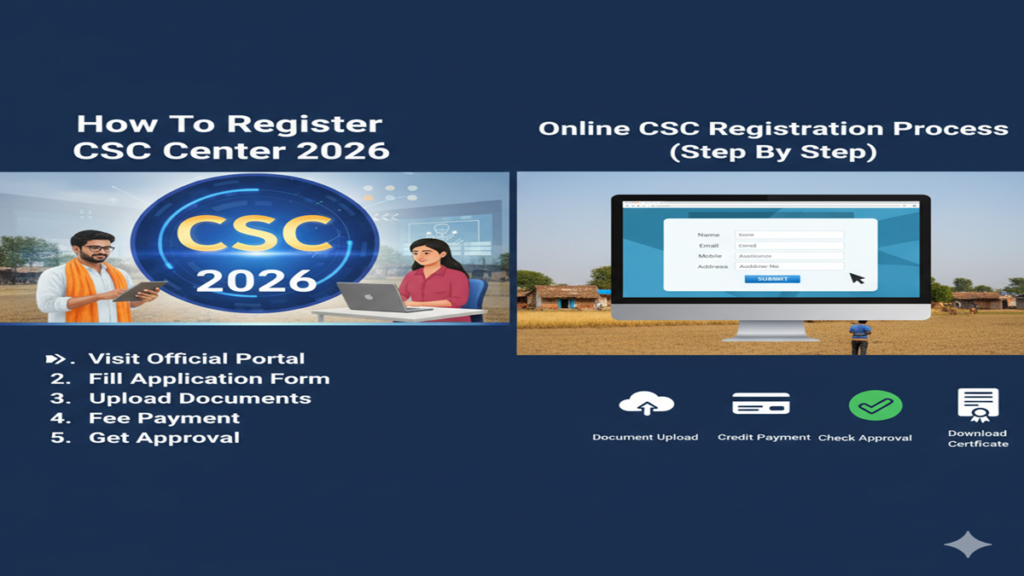
How To Register CSC Center 2026: अपना खुद का डिजिटल सेवा केंद्र कैसे खोलें? जानिए पूरी ऑनलाइन प्रोसेस!
How To Register CSC Center 2026: Dosto, आज के दौर में जहाँ सब कुछ डिजिटल हो रहा है, गांव और छोटे शहरों में सरकारी सेवाओं (Government Services) को लोगों तक पहुँचाना एक बड़ा बिजनेस बन गया है। अगर आप अपने इलाके में रहकर लोगों की मदद करना चाहते हैं और साथ ही अच्छी कमाई करना चाहते हैं, तो CSC (Common Service Center) खोलना आपके लिए सबसे बेस्ट ऑप्शन है।
लेकिन 2026 में CSC ID लेना पहले जितना आसान नहीं रहा। अब सरकार ने इसके नियमों में कुछ बदलाव किए हैं। आज के इस ब्लॉग में हम देखेंगे How To Register CSC Center Step-by-Step ताकि आपको बिना किसी गलती के अपनी CSC ID मिल सके।
1. CSC सेंटर खोलने के लिए जरूरी चीजें (Requirements)
How To Register CSC Center 2026: रजिस्ट्रेशन शुरू करने से पहले आपके पास ये चीजें होनी चाहिए:
- Infrastructure: एक छोटा कमरा (दुकान), कम से कम एक कंप्यूटर/लैपटॉप, प्रिंटर, स्कैनर और अच्छा इंटरनेट कनेक्शन।
- Education: आप कम से कम 10वीं पास होने चाहिए।
- TEC Certificate: यह सबसे जरूरी है। बिना इसके आप CSC के लिए अप्लाई नहीं कर सकते।
2. TEC Certificate क्या है और कैसे लें?
How To Register CSC Center 2026: CSC रजिस्ट्रेशन के लिए ‘Telecentre Entrepreneur Course’ (TEC) सर्टिफिकेट अनिवार्य है।
- CSC TEC Portal पर जाएं।
- अपना नाम, मोबाइल और आधार डिटेल्स भरकर रजिस्टर करें।
- लगभग ₹1479 की फीस ऑनलाइन जमा करें।
- आपको कुछ मॉड्यूल्स पढ़ना होगा और एक ऑनलाइन असेसमेंट देना होगा।
- एग्जाम क्लियर करने के बाद आपको TEC Number मिल जाएगा, जो CSC फॉर्म में लगेगा।
3. Step-by-Step: CSC Registration Process 2026
Step 1: Official Portal पर जाएं सबसे पहले CSC Register Portal पर जाएं और ‘VLE Registration’ (Apply > New Registration) पर क्लिक करें।
Step 2: Application Type चुनें ‘Select Application Type’ में ‘CSC VLE’ चुनें। यहाँ अपना TEC Certificate Number और मोबाइल नंबर डालें।
Step 3: OTP वेरिफिकेशन आपके मोबाइल पर एक OTP आएगा, उसे दर्ज करें। इसके बाद अपनी ईमेल आईडी को भी वेरीफाई करें।
Step 4: Personal & Kiosk Details भरें यहाँ आपको अपना नाम, आधार नंबर, जेंडर और जन्म तिथि भरनी होगी। इसके साथ ही आपको अपनी दुकान (Kiosk) का नाम और पता (Address) डालना होगा।
Step 5: Geolocation (Latitude/Longitude) यह सबसे महत्वपूर्ण स्टेप है। आपको अपनी दुकान की लोकेशन मैप पर मार्क करनी होगी। ध्यान रहे, आप जहाँ सेंटर खोलना चाहते हैं, वहीं खड़े होकर यह फॉर्म भरें ताकि लोकेशन सही आए।
Step 6: Bank & PAN Details अपना पैन कार्ड नंबर (Individual/Company) डालें और बैंक खाते की जानकारी (Cancel Cheque अपलोड करना होगा) भरें।
Step 7: Documents अपलोड करें अपनी फोटो, आधार कार्ड, पैन कार्ड और दुकान के अंदर-बाहर की फोटो अपलोड करें। फॉर्म सबमिट करने के बाद आपको एक Application Reference Number मिलेगा।
4. एप्लीकेशन स्टेटस और अप्रूवल
How To Register CSC Center 2026: फॉर्म भरने के बाद आपकी फाइल आपके जिले के DM (District Manager) के पास जाती है।
- DM आपकी दुकान पर आकर फिजिकल वेरिफिकेशन करेंगे।
- अगर सब कुछ सही रहा, तो 15 से 45 दिनों के अंदर आपकी CSC ID और Password आपकी ईमेल पर आ जाएगा।
5. CSC सेंटर से कितनी कमाई होती है?
How To Register CSC Center 2026: एक CSC VLE (Village Level Entrepreneur) कई तरह की सेवाओं से पैसे कमाता है:
- Government Services: पैन कार्ड, आधार अपडेट, राशन कार्ड, वोटर आईडी।
- Banking: मिनी बैंक (BC) बनकर पैसे निकालना और जमा करना।
- Insurance: बाइक, कार और स्वास्थ्य बीमा बेचना।
- Utility Bills: बिजली, पानी और गैस बिल का भुगतान। औसतन एक सक्रिय CSC संचालक महीने के ₹20,000 से ₹50,000 तक आसानी से कमा सकता है।
6. Top 5 FAQs (CSC Center Registration)
Q1. क्या CSC आईडी के लिए कोई फीस लगती है?
Ans: CSC रजिस्ट्रेशन पूरी तरह Free है। हालांकि, आपको TEC सर्टिफिकेट के लिए लगभग ₹1479 की फीस देनी होती है।
Q2. क्या मैं घर से CSC सेंटर चला सकता हूँ?
Ans: हाँ, यदि आपके पास एक अलग कमरा है जहाँ लोग आ सकें, तो आप घर से भी इसकी शुरुआत कर सकते हैं।
Q3. CSC ID मिलने में कितना समय लगता है?
Ans: सामान्य तौर पर इसमें 1 से 2 महीने का समय लगता है, जो आपके डिस्ट्रिक्ट मैनेजर के वेरिफिकेशन पर निर्भर करता है।
Q4. क्या एक गांव में दो CSC सेंटर हो सकते हैं?
Ans: हाँ, आबादी के हिसाब से एक गांव या वार्ड में एक से अधिक सेंटर हो सकते हैं।
Q5. अगर मेरी एप्लीकेशन रिजेक्ट हो जाए तो क्या करें?
Ans: रिजेक्शन का कारण ईमेल पर आता है। उसे सुधारें और अपने डिस्ट्रिक्ट मैनेजर से संपर्क करके दोबारा अप्लाई करें।
Conclusion: डिजिटल सेवा का हिस्सा बनें!
How To Register CSC Center की यह प्रोसेस 2026 के नए नियमों के अनुसार है। यह न केवल स्वरोजगार का एक साधन है, बल्कि डिजिटल इंडिया को सफल बनाने में आपकी भागीदारी भी है। आज ही अपना TEC सर्टिफिकेट लें और रजिस्ट्रेशन की प्रक्रिया शुरू करें।
The Complete Guide to Registering a CSC Center in 2026: Step-by-Step Online Process
Introduction: The Digital Revolution Through CSCs
How To Register Csc Center 2026 In an era where digital inclusion has become paramount for national development, Common Service Centers (CSCs) stand as critical infrastructure bridging the digital divide between urban and rural India. As we approach 2026, the CSC scheme continues to evolve, offering unprecedented entrepreneurial opportunities while delivering essential digital services to India’s farthest corners. This comprehensive guide provides everything you need to know about registering a CSC center in 2026, detailing the streamlined online process that has transformed how digital entrepreneurs join this national movement.
How To Register CSC Center 2026: CSCs are more than just service delivery points; they represent access points for digital empowerment, offering government, private, and social sector services to citizens in their local languages. With over 5 lakh centers already operational, the 2026 expansion aims to deepen digital penetration while creating sustainable livelihood opportunities for Village Level Entrepreneurs (VLEs).
Part 1: Understanding the CSC Ecosystem in 2026
What Are Common Service Centers?
How To Register CSC Center 2026: Common Service Centers are physical facilities enabling the delivery of digital services to citizens, especially in rural and remote areas. Operating under the Ministry of Electronics and Information Technology (MeitY), CSCs provide a platform for service providers—both government and private—to reach citizens through a collaborative framework.
Evolution for 2026: New Focus Areas
How To Register CSC Center 2026: The CSC model for 2026 incorporates several strategic enhancements:
- AI-Enabled Service Delivery: Integration of artificial intelligence for personalized service recommendations
- Green CSC Initiative: Emphasis on solar-powered centers and digital sustainability
- Expanded Service Portfolio: Inclusion of telemedicine, precision agriculture advisory, and skill development modules
- Enhanced Commission Structure: Revised revenue-sharing models with increased transparency
- Digital Infrastructure Upgrades: Mandatory high-speed connectivity and digital security protocols
Benefits of Becoming a CSC VLE in 2026
- Sustainable Revenue Streams: Access to 300+ government and private services with commission earnings
- Social Impact: Direct contribution to digital literacy and inclusion
- Government Partnerships: Priority access to new e-governance initiatives
- Training and Certification: Free capacity-building programs from CSC Academy
- Technological Support: Regular upgrades to digital infrastructure and software
- Community Leadership: Recognition as a digital change agent in your locality
Part 2: Pre-requisites for CSC Registration 2026
How To Register CSC Center 2026: Before beginning the online registration process, ensure you meet these essential criteria:
Eligibility Requirements
- Age: Minimum 18 years, maximum with no upper limit if physically fit
- Education: Minimum 10th standard pass (higher qualifications preferred for certain services)
- Location: Proposed center must be in a service-deficient area (verified through CSC geo-mapping portal)
- Space: Minimum 100-150 sq. ft. dedicated commercial space
- Infrastructure: Basic computer setup with webcam, printer, scanner, and uninterrupted power supply
- Digital Literacy: Basic computer operation skills (certification from recognized institution preferred)
- Financial Investment: Minimum ₹50,000 – ₹1,00,000 for setup (varies by center type)
Document Checklist
How To Register CSC Center 2026: Prepare these digital copies (scanned, clear, under 2MB each) before starting registration:
- Identity Proof: Aadhaar Card (mandatory), PAN Card
- Address Proof: Utility bill, property tax receipt, or rental agreement
- Educational Certificates: 10th marksheet and higher qualifications
- Photographs: Two recent passport-sized color photographs
- Business Proof: If already operating, GST registration or trade license
- Bank Details: Canceled cheque or bank passbook front page
- Location Proof: Google Maps location pin, external and internal photographs of proposed center
- Caste Certificate: If applying under reserved categories
Technical Requirements
- Device: Computer or smartphone with camera
- Internet: Stable broadband or 4G connection
- Browser: Latest version of Chrome, Firefox, or Edge
- Software: PDF reader, image editing tools for document optimization
- Digital Signature: Not mandatory for initial registration but recommended
Part 3: Step-by-Step Online Registration Process for 2026
How To Register CSC Center 2026: Follow this detailed guide to navigate the CSC registration portal successfully:
Step 1: Portal Access and Initial Registration
- Visit the official CSC registration portal (csc.gov.in) and click “Register as VLE”
- Select “New Registration for 2026 Cycle”
- Choose your state and district from the dropdown menus
- Enter your 12-digit Aadhaar number for OTP verification
- Validate your mobile number and email address through OTP authentication
- Create a secure password following the 2026 security protocols (minimum 12 characters with special symbols)
Step 2: Detailed Application Form Filling
How To Register CSC Center 2026: The online form comprises eight sections:
Section A: Personal Information
- Complete name (as per Aadhaar), father’s/mother’s name, date of birth
- Gender, marital status, and category (General/OBC/SC/ST)
- Complete communication and permanent addresses
- Disability status (if applicable) with certificate upload
Section B: Educational and Professional Background
- Highest educational qualification with year of passing
- Prior work experience (if any) in relevant fields
- Digital literacy certifications completed
- Entrepreneurial experience details
Section C: Proposed Center Details
- Exact center address with Google Maps location sharing
- Type of premises (owned/rented) with agreement details
- Distance from nearest existing CSC (system automatically validates through geo-tagging)
- Infrastructure details: computer specifications, power backup, internet connectivity
- Proposed center photographs (external, internal, seating area)
Section D: Service Selection
- Choose primary service categories (minimum 5 from government services list)
- Select optional premium services (financial, insurance, education, etc.)
- Declare your service delivery commitment hours (minimum 8 hours/day)
Section E: Financial Details
- Investment capacity declaration
- Bank account details with IFSC code
- Source of funding (personal savings/loan/etc.)
Section F: Document Upload
- Upload all prepared documents in specified formats
- Use the portal’s document validation tool to check clarity and format
- Ensure all uploaded documents are below the 2MB size limit
Section G: Declaration and Undertaking
- Read and agree to the 2026 VLE agreement terms
- Undertake to maintain service quality standards
- Commit to completing mandatory training within 30 days of approval
- Declare the accuracy of all provided information
Section H: Final Submission and Payment
- Review the complete application through the preview option
- Pay the non-refundable application fee of ₹500 (plus GST) through integrated payment gateway
- How To Register CSC Center 2026: Download and save the acknowledgment receipt with your 17-digit application number
Step 3: Post-Submission Process
- Application Tracking: Use your application number to track status through the portal
- Field Verification: Local CSC district team conducts physical verification (2026 process includes video verification option)
- Training Notification: Receive login credentials for mandatory online training upon verification clearance
- Training Completion: Complete 40-hour foundational training within 30 days with minimum 80% score
- Final Approval: Receive VLE ID, login credentials, and welcome kit upon training completion
- How To Register CSC Center 2026: Onboarding: Access to CSC digital services portal and commission structure
Part 4: Post-Approval Setup and Operations
Center Setup Guidelines for 2026
- Digital Infrastructure: Install CSC-approved software suite and security protocols
- Branding: Display mandatory signboards, service lists, and fee charts as per 2026 guidelines
- Service Activation: Activate your chosen services through the VLE portal
- How To Register CSC Center 2026: Community Outreach: Register your center with local authorities and begin community awareness
Key Operational Protocols
- Service Delivery Hours: Minimum 8 hours daily, 6 days a week
- Transaction Records: Maintain digital logs through the CSC system
- Grievance Redressal: Display customer complaint mechanism prominently
- Quarterly Reporting: Submit service delivery reports through the portal
- How To Register CSC Center 2026: Continuous Training: Complete 20 hours of refresher training annually
Revenue Model and Commission Structure
The 2026 commission structure includes:
- Government Services: 2-5% transaction value
- Financial Services: 0.5-2% per transaction
- Telemedicine Consultations: ₹50-100 per session
- Skill Development Registrations: ₹200-500 per candidate
- Digital Literacy Training: ₹100 per certified candidate
- How To Register CSC Center 2026: Performance Incentives: Quarterly bonuses for top performers
Part 5: Troubleshooting Common Registration Issues
Frequent Challenges and Solutions
- How To Register CSC Center 2026: Document Rejection: Use the portal’s document validation tool before submission
- Location Conflict: The portal’s real-time mapping shows existing centers; choose underserved areas
- Technical Errors: Clear browser cache, use recommended browsers, or try incognito mode
- Payment Failures: Ensure sufficient balance, use net banking for higher success rates
- Verification Delays: Proactively contact district CSC manager after 15 working days
Support Channels for 2026 Registration
- How To Register CSC Center 2026: Helpline: Toll-free number 1800-121-3466 (operational 8 AM to 8 PM)
- Live Chat: Available on CSC portal during business hours
- Email Support: csc.help2026@digitalindia.gov.in (response within 48 hours)
- District Coordinators: Contact details available on state CSC websites
- Video Tutorials: Complete registration guide available on CSC YouTube channel
FAQs: CSC Registration 2026
Q1: What are the major changes in the 2026 CSC registration process compared to previous years?
How To Register CSC Center 2026: The 2026 registration introduces several enhancements: mandatory video verification option alongside physical verification, integration of AI-based application assessment for faster processing, a simplified single-form application replacing multiple forms, real-time location conflict detection through advanced geo-mapping, and blockchain-based document verification for enhanced security. The training component has also been expanded with augmented reality modules for practical learning.
Q2: Can I register a CSC center in an urban area, or is it restricted to rural locations only?
How To Register CSC Center 2026: While CSCs traditionally focused on rural areas, the 2026 expansion includes urban and semi-urban locations with specific criteria. Urban applications are evaluated based on service gaps in the locality, population density, and proximity to existing centers. Priority remains for underserved urban clusters, peri-urban areas, and digital service deserts in cities. The portal’s location analyzer provides real-time feedback on your proposed location’s eligibility.
Q3: What is the expected timeline from application submission to becoming operational?
How To Register CSC Center 2026: The streamlined 2026 process aims for 30-45 days completion: application processing (5-7 days), verification (7-10 days), training and certification (15-20 days), and onboarding (3-5 days). Complex cases or those requiring additional documentation may take up to 60 days. Applicants can track real-time status through the portal dashboard with estimated completion dates.
Q4: Are there any subsidies or financial assistance available for setting up a CSC center in 2026?
How To Register CSC Center 2026: Yes, several financial support mechanisms exist: SC/ST applicants can access up to 50% subsidy on equipment through specific government schemes, women entrepreneurs receive priority in certain state-sponsored schemes, aspirational district locations qualify for additional setup grants, and tie-ups with financial institutions offer CSC VLEs preferential loan terms with lower interest rates. The portal includes a financial assistance eligibility checker based on your profile.
Q5: What happens if my application is rejected? Can I reapply?
How To Register CSC Center 2026: Rejected applicants receive detailed reasons through the portal with suggestions for improvement. Common reasons include location conflicts, incomplete documentation, or insufficient infrastructure. You may reapply after 30 days, addressing the cited deficiencies. The 2026 system allows saving draft applications, so corrections can be made without starting over. Three rejections within a year trigger a 6-month cooling-off period before reapplying.
Conclusion: Your Path to Digital Entrepreneurship
Registering a CSC center in 2026 represents more than just a business opportunity—it’s a chance to become an architect of digital India at the grassroots level. The streamlined online process has democratized access to this transformative initiative, making it possible for digitally passionate individuals across the country to participate in nation-building while creating sustainable livelihoods.
As India accelerates toward its Digital India 2.0 goals, CSCs will play an increasingly vital role in service delivery, digital literacy, and community empowerment. The 2026 framework, with its enhanced technological integration and support systems, offers the most robust platform yet for aspiring Village Level Entrepreneurs.
Begin your journey today by visiting the official CSC portal, thoroughly preparing your documents, and following this step-by-step guide. Your path to becoming a change agent in India’s digital revolution awaits.
Disclaimer: This guide is for informational purposes based on existing CSC processes and anticipated 2026 enhancements. Always refer to the official CSC portal (csc.gov.in) for the most current information, as processes and requirements may evolve. The Ministry of Electronics and Information Technology reserves the right to modify registration criteria and processes without prior notice.