


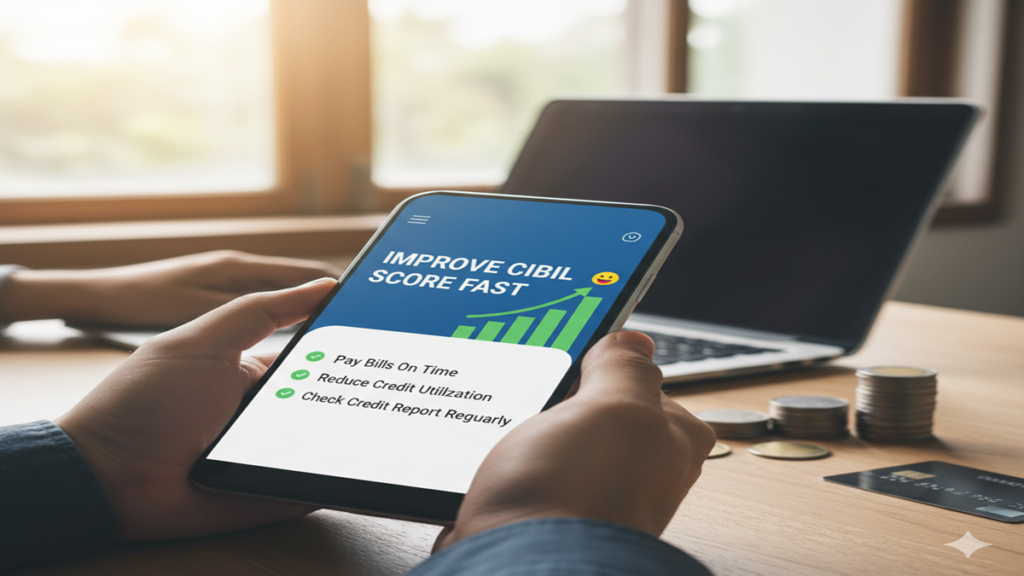
How To Improve Cibil Score Fast: खराब सिबिल स्कोर को रॉकेट की तरह कैसे बढ़ाएं? जानें 2026 के लेटेस्ट टिप्स!
How To Improve Cibil Score Fast: Introduction: आज के दौर में पैसा कमाना जितना जरूरी है, उतना ही जरूरी है अपना CIBIL Score अच्छा बनाए रखना। चाहे आपको नया घर खरीदना हो, कार लेनी हो या पर्सनल लोन की जरूरत हो, बैंक सबसे पहले आपका सिबिल स्कोर ही चेक करता है। यदि आपका स्कोर 750 से कम है, तो बैंक आपके आवेदन को खारिज कर सकता है या आपसे बहुत ज्यादा ब्याज दर वसूल सकता है।
अक्सर लोग पूछते हैं— “How To Improve Cibil Score Fast?” क्या वास्तव में सिबिल स्कोर को कुछ ही महीनों में सुधारा जा सकता है? इसका जवाब है— हाँ! सही रणनीति और अनुशासन के साथ आप अपने क्रेडिट स्कोर को तेजी से बढ़ा सकते हैं।
1. सिबिल स्कोर क्या है और यह क्यों गिरता है?
How To Improve Cibil Score Fast: है। 750 से ऊपर का स्कोर ‘बेहतरीन’ माना जाता है।
स्कोर गिरने के मुख्य कारण:
- ईएमआई (EMI) या क्रेडिट कार्ड बिल के भुगतान में देरी।
- अपनी क्रेडिट लिमिट का बहुत ज्यादा उपयोग करना (High Credit Utilization)।
- एक साथ कई लोन के लिए आवेदन करना।
- किसी दूसरे के लोन में ‘गारंटर’ बनना और उसका भुगतान न होना।
2. सिबिल स्कोर तेजी से सुधारने के 5 अचूक तरीके (Fastest Ways)
How To Improve Cibil Score Fast: क. समय पर भुगतान करें (Payment Timelines): सिबिल स्कोर में 35% हिस्सा आपके पेमेंट हिस्ट्री का होता है। यदि आप अपनी EMI या क्रेडिट कार्ड बिल की तारीख से एक दिन पहले भी भुगतान करते हैं, तो आपका स्कोर तेजी से ऊपर जाता है। इसके लिए ‘Auto-debit’ सुविधा का उपयोग करें।
ख. क्रेडिट यूटिलाइजेशन रेश्यो (CUR) को 30% से कम रखें: यदि आपकी क्रेडिट कार्ड लिमिट ₹1 लाख है, तो कोशिश करें कि आप महीने में ₹30,000 से ज्यादा खर्च न करें। बैंक को लगता है कि आप ‘क्रेडिट के भूखे’ (Credit Hungry) नहीं हैं, जिससे आपके स्कोर में सुधार होता है।
ग. पुराने क्रेडिट कार्ड बंद न करें: जितना पुराना आपका क्रेडिट इतिहास (Credit History) होगा, सिबिल स्कोर उतना ही मजबूत होगा। अपने पुराने क्रेडिट कार्ड को बंद करने की गलती न करें, भले ही आप उसे कम इस्तेमाल करते हों।
How To Improve Cibil Score Fast: घ. ‘Secure Loan’ और ‘Unsecure Loan’ का सही मिश्रण: केवल पर्सनल लोन या क्रेडिट कार्ड (Unsecure) लेना जोखिम भरा दिखता है। यदि आपके पास एक होम लोन या गोल्ड लोन (Secure) है, तो यह आपकी विश्वसनीयता बढ़ाता है।
ङ. अपनी सिबिल रिपोर्ट की गलतियों को सुधारें: कभी-कभी बैंक की गलती से आपकी रिपोर्ट में ‘Late Payment’ दिख जाता है जो आपने किया ही नहीं। हर 3 महीने में अपनी रिपोर्ट चेक करें और कोई गलती होने पर CIBIL Dispute पोर्टल पर शिकायत दर्ज करें।
3. 2026 में सिबिल सुधारने का नया तरीका: ‘Credit Builder’ कार्ड
How To Improve Cibil Score Fast: यदि आपका सिबिल बहुत खराब है और कोई बैंक लोन नहीं दे रहा, तो आप FD (Fixed Deposit) के बदले क्रेडिट कार्ड ले सकते हैं। इस कार्ड का इस्तेमाल करें और समय पर बिल भरें। यह आपके सिबिल स्कोर को सुधारने का सबसे फास्ट ट्रैक तरीका है।
4. सिबिल स्कोर सुधारने का टाइम-टेबल (Expected Timeline)
- 30 दिन: यदि आपने बकाया बिल चुका दिए हैं, तो पहले महीने में 20-30 अंकों का उछाल दिख सकता है।
- 90 दिन: लगातार समय पर भुगतान करने से स्कोर 100 अंक तक बढ़ सकता है।
- 6 महीने: अनुशासन के साथ आप 600 से 750+ तक पहुँच सकते हैं।
4. अक्सर पूछे जाने वाले प्रश्न (FAQs)
Q1: क्या बार-बार सिबिल चेक करने से स्कोर गिरता है?
Ans: यदि आप खुद अपना स्कोर चेक करते हैं (Soft Inquiry), तो स्कोर नहीं गिरता। लेकिन यदि कई बैंक आपका स्कोर चेक करते हैं (Hard Inquiry), तो स्कोर कम हो सकता है।
Q2: क्या लोन सेटलमेंट (Settlement) करने से सिबिल बढ़ता है?
Ans: बिल्कुल नहीं! लोन सेटलमेंट करने से सिबिल रिपोर्ट में ‘Settled’ लिखा आता है, जो अगले 7 सालों तक आपके रिकॉर्ड को खराब रखता है। हमेशा ‘Full Payment’ करें।
Q3: मेरा सिबिल 500 है, क्या मुझे क्रेडिट कार्ड मिलेगा?
Ans: सामान्य कार्ड मिलना मुश्किल है, लेकिन आप FD के बदले मिलने वाला ‘Secured Credit Card’ लेकर शुरुआत कर सकते हैं।
Conclusion: अनुशासन ही सफलता की कुंजी है!
How To Improve Cibil Score Fast केवल एक ट्रिक नहीं है, बल्कि एक वित्तीय अनुशासन है। अपनी उधारी को कम करें, भुगतान समय पर करें और धैर्य रखें। एक अच्छा सिबिल स्कोर न केवल आपको लोन दिलाएगा, बल्कि आपके हजारों रुपये ब्याज के रूप में भी बचाएगा।
How To Improve Cibil Score Fast Improving your CIBIL score is crucial for securing loans and credit at favorable terms, yet many individuals find themselves struggling to achieve a strong score. A CIBIL score, which ranges from 300 to 900, serves as a vital indicator of your creditworthiness to lenders, affecting everything from interest rates to approval chances. Fortunately, there are several strategies you can implement to enhance your score quickly. In this article, we will explore essential tips and actionable steps that can help you boost your CIBIL score efficiently, empowering you to take control of your financial future.
Definition of CIBIL Score
How To Improve Cibil Score Fast: The CIBIL Score is like your financial report card, given by the Credit Information Bureau (India) Limited, that ranges from 300 to 900. A higher score suggests you’re good at managing money, while a lower score might raise a few eyebrows among lenders. Think of it as your financial Yelp review—nobody wants one star!
Importance of CIBIL Score in Financial Transactions
How To Improve Cibil Score Fast
How To Improve Cibil Score Fast: Your CIBIL Score can be the difference between a dream home and a “maybe next time” notice from the bank. Lenders use this magical number to assess your creditworthiness. A strong score opens doors to lower interest rates and favorable loan terms, while a poor score might leave you stuck in the “no credit for you” zone. So, it’s basically your golden ticket to financial opportunities.
Factors Affecting Your CIBIL Score
Payment History
How To Improve Cibil Score Fast: Your payment history is like your credit score’s gossip column—everyone talks about it! Timely payments boost your score, while late payments and defaults drag it down. So, keep the gossip positive by paying your bills on time!
Credit Utilization Ratio
How To Improve Cibil Score Fast: This is a fancy term for how much credit you’re using compared to how much you have available. If you’re maxing out your credit cards, it’s like wearing a bright red “I love debt” T-shirt. Aim to keep your utilization below 30% to keep things looking sharp.
Length of Credit History
The longer your credit history, the better! Think of it as having a long-standing relationship with your credit. If you’ve been responsibly using credit for years, lenders see you as a reliable partner. If you’ve only just met, they might be a bit hesitant!
Types of Credit Accounts
How To Improve Cibil Score Fast: Mixing it up is key! Having a healthy variety of credit accounts—like credit cards, loans, and mortgages—shows lenders you know how to juggle. Just don’t go overboard; remember, too many flaming torches can lead to a circus act!
Recent Credit Inquiries
Every time you apply for credit, it’s like sending out an invitation to lenders, asking them to peek at your financial life. Too many inquiries in a short timeframe can make lenders suspicious. Limit your applications to keep the party under control.
Steps to Improve Your CIBIL Score Quickly
Set Up Automatic Payments
How To Improve Cibil Score Fast: Want to ensure you never miss a payment? Set up automatic payments! It’s like putting your bills on autopilot, allowing you to sip your coffee with peace of mind. Just be sure to keep an eye on your bank account to avoid any surprises!
Pay Off Outstanding Debts
Got debts? Time to tackle them head-on. Paying off outstanding debts not only improves your score but also gives you that delightful feeling of being financially unshackled. It’s like the ultimate spring cleaning for your wallet!
Increase Credit Limits
How To Improve Cibil Score Fast: Ask your bank to increase your credit limit—just be sure not to use it all! A higher limit can help lower your credit utilization ratio, making you look even more responsible. It’s like flexing your financial muscles without breaking a sweat.
Use a Secured Credit Card
If your score needs a bit of TLC, consider getting a secured credit card. It’s like having training wheels for your credit journey, allowing you to build a stronger score without the risk of falling flat!
Timely Payments: The Key to a Healthy Score
Understanding Due Dates
How To Improve Cibil Score Fast: Keep a calendar or set reminders—whatever it takes to ensure you never miss a date. Treat them like an appointment with your favorite celebrity; you wouldn’t let that slip, would you?
Impact of Late Payments
Late payments are like a bad hangover; they linger long after the party is over. Even one late payment can ding your score significantly, so consider it your financial nemesis. Beat it by staying punctual with your payments!
Creating a Payment Schedule
How To Improve Cibil Score Fast: Crafting a payment schedule is like mapping out the route to your financial success. This’ll help you stay organized and prevent any sneaky late fees from crashing the party. Get it done, and your future self will thank you!
Reducing Credit Utilization Ratio
What is Credit Utilization?
Think of it like filling a jug with water—if you fill it to the brim (or beyond), you’re going to run into some problems. Ideally, you want to keep this ratio below 30% to show lenders that you’re not over-relying on credit.
Strategies to Lower Utilization
How To Improve Cibil Score Fast: 1. **Pay Down Existing Balances**: One quick win! If you have outstanding balances, tackle those high-interest debts first. 2. **Increase Your Credit Limit**: Call up your credit card company and ask for a limit increase. Just don’t go on a spending spree with that extra credit! 3. **Spread Out Your Spending**: Instead of maxing out one card, spread your purchases across multiple cards to keep individual utilization ratios low.
Balancing Multiple Credit Accounts
If you have several credit accounts, keeping them balanced can be your secret weapon. Use each credit line but keep the balances reasonable. This way, you’re not only managing your utilization but also showing lenders that you can juggle multiple accounts like a pro—no circus training required!
Checking Your Credit Report for Errors
How to Obtain Your Credit Report
How To Improve Cibil Score Fast: You can get your credit report for free once a year from each of the major credit bureaus. Simply visit AnnualCreditReport.com, fill out a form, and voilà—your report will land in your inbox. It’s like ordering a pizza, but way less cheesy!
Identifying and Disputing Errors
Once you’ve got your report, scan it for any inaccuracies. Did you see a payment reported late that was on time? Or a mysterious account you didn’t open? Note them down! Disputing errors is essential; sending a formal dispute letter to the credit bureau is your next step—like sending a strongly worded letter to the customer service department, but with actual consequences!
Understanding the Dispute Process
How To Improve Cibil Score Fast: Once your dispute is filed, the credit bureau typically investigates within 30 days. If it’s an error, they’ll correct it. If not, you’ll receive an explanation. Just like waiting for your ex to text back, you have to be patient, but at least in this case, the results might actually be worth it!
Avoiding Common Credit Mistakes
Applying for Multiple Loans at Once
How To Improve Cibil Score Fast: Well, applying for multiple loans at once is like smashing all those eggs at once. Lenders will see this as a red flag, suggesting you’re desperate for credit. Pick one or two loans at a time to keep your score from looking like a roller coaster ride!
Ignoring Credit Card Balances
Ignoring your credit card balances is like ignoring your laundry pile; eventually, it’s going to smell problematic. Make it a habit to check your balances regularly and pay them down promptly.
Closing Old Accounts Prematurely
How To Improve Cibil Score Fast: Closing old credit accounts can do more harm than good. Those ancient accounts contribute to your credit history length, which is a factor in your score. Think of them as that comfy old sweater you can’t quite bear to part with—sentimental, but it’s also keeping you warm and cozy in the credit world!
Monitoring Your Progress: Tools and Resources
Credit Monitoring Services
Think of them as your personal credit watchdog, barking whenever something new happens. Some paid services offer detailed insights, but there are free options out there too, so you don’t have to break the bank!
Free Resources for Tracking Your Score
Websites like Credit Karma and Experian offer free credit score tracking tools. These services can give you a snapshot of your credit score without any hidden fees. Just remember—this isn’t a game of hide and seek, it’s about keeping that score in check!
Setting Realistic Improvement Goals
Set achievable goals for your credit score improvement—like shooting for a 20-point increase over six months instead of a “get rich quick” scheme. Celebrate those small victories along the way, just like finishing a tough workout or finally getting that sock out from under the couch!In conclusion, improving your CIBIL score may take time and effort, but the benefits are well worth it.
By understanding the factors that influence your score and implementing the strategies outlined in this article, you can make significant progress in a relatively short period. Remember to stay vigilant in monitoring your credit and practice good financial habits to maintain a healthy score over time. Taking these steps will not only enhance your creditworthiness but also open up more opportunities for financial growth and stability in the future.