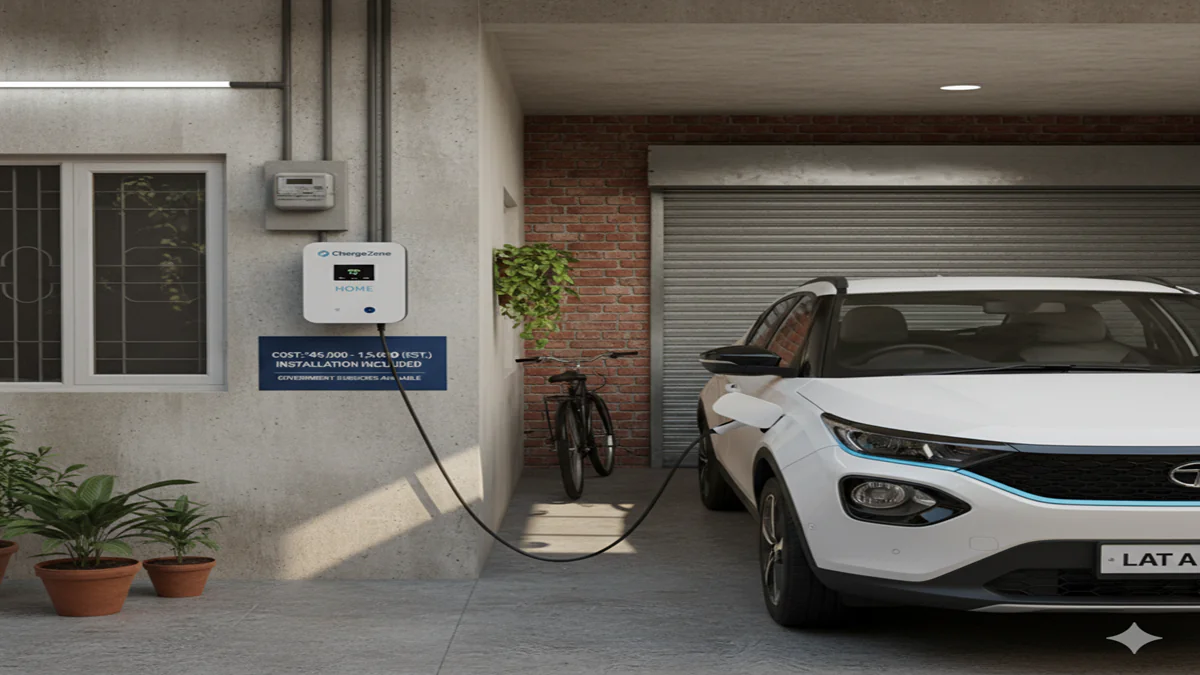
Home EV Charging Setup Cost in India 2026: घर पर ईव्ही चार्जर लगवाने का पूरा खर्च और प्रक्रिया; क्या आपको सब्सिडी मिल सकती है?
Home Ev Charging Setup Cost India 2026: Introduction: क्या आपने हाल ही में इलेक्ट्रिक कार या स्कूटर खरीदी है? अगर हाँ, तो सबसे पहला ख्याल आपके मन में यह आया होगा कि इसे रोज कहाँ चार्ज करेंगे? पब्लिक चार्जिंग स्टेशन्स पर निर्भर रहने के बजाय, घर पर अपना ‘पर्सनल ईव्ही चार्जिंग सेटअप‘ होना न केवल सुविधाजनक है,
बल्कि यह समय और पैसा दोनों बचाता है। लेकिन, “Home EV Charging Setup Cost in India” के बारे में सही जानकारी न होने के कारण कई लोग इसे टालते रहते हैं। 2026 में भारत सरकार की नई नीतियों के बाद, घर पर चार्जर सेटअप करना पहले से कहीं ज्यादा आसान और सस्ता हो गया है। आइए, इस पूरे सेटअप के खर्च और प्रक्रिया को विस्तार से समझते हैं।
1. होम ईव्ही चार्जिंग सेटअप का खर्च (Cost Breakdown)
Home Ev Charging Setup Cost India 2026: घर पर चार्जर लगवाने का कुल खर्च मुख्य रूप से तीन चीजों पर निर्भर करता है: चार्जर का प्रकार, बिजली के काम (Electrical Work) और इंफ्रास्ट्रक्चर।
A. चार्जर यूनिट की कीमत (Charger Unit Cost):
- पोर्टेबल चार्जर (3.3 kW): आमतौर पर यह ईव्ही के साथ मुफ्त आता है। यदि आप अलग से खरीदते हैं, तो ₹10,000 – ₹15,000.
- वॉल-माउंटेड AC चार्जर (7.4 kW): यह सबसे ज्यादा इस्तेमाल होने वाला चार्जर है। इसकी कीमत ₹25,000 से ₹50,000 के बीच होती है।
- फास्ट AC चार्जर (11 kW – 22 kW): यदि आपके घर में थ्री-फेज कनेक्शन है, तो यह विकल्प बेहतरीन है। इसकी कीमत ₹40,000 से ₹80,000 तक हो सकती है।
B. इंस्टालेशन और सिविल वर्क (Installation Expenses):
- मानक इंस्टालेशन (Standard Installation): यदि पार्किंग स्पॉट मुख्य इलेक्ट्रिकल पैनल (DB) के पास है, तो ₹5,000 से ₹15,000 तक का खर्च आता है।
- जटिल इंस्टालेशन (Complex Setup): यदि तारों को बहुत लंबी दूरी तक बिछाना हो या कंक्रीट की खुदाई (Civil Work) करनी पड़े, तो यह खर्च ₹15,000 से ₹30,000 तक जा सकता है।
C. इलेक्ट्रिकल इंफ्रास्ट्रक्चर अपग्रेड:
- Home Ev Charging Setup Cost India 2026: यदि आपका मौजूदा लोड कम है, तो आपको बिजली विभाग से ‘लोड एनहांसमेंट’ (Load Enhancement) के लिए आवेदन करना होगा। इसके लिए ₹5,000 से ₹15,000 तक का सरकारी शुल्क लग सकता है।
2. इंस्टालेशन की स्टेप-बाय-स्टेप प्रक्रिया
- Home Ev Charging Setup Cost India 2026: साइट सर्वे (Site Survey): सबसे पहले आप जिस कंपनी का चार्जर ले रहे हैं, उनके इंजीनियर को घर बुलाकर पार्किंग एरिया का मुआयना करवाएं।
- लोड की जांच (Load Feasibility): घर के मुख्य मीटर में पर्याप्त लोड (Sanctioned Load) है या नहीं, यह चेक करवाएं।
- इलेक्ट्रिकल पैनल अपग्रेड: यदि आवश्यक हो, तो आरसीसीबी (RCCB/MCB) जैसे सुरक्षा उपकरण लगवाएं।
- वायरिंग और माउंटिंग: दीवार पर चार्जर फिक्स करना और सुरक्षित केबल बिछाना।
- टेस्टिंग: इंस्टालेशन के बाद चार्जर का वोल्टेज और अर्थिंग चेक करना।
3. सरकारी सब्सिडी और फायदे (Subsidies 2026)
Home Ev Charging Setup Cost India 2026: भारत सरकार की ‘PM E-DRIVE’ जैसी योजनाओं के तहत चार्जिंग इंफ्रास्ट्रक्चर को बढ़ावा दिया जा रहा है। कई राज्य सरकारें (जैसे महाराष्ट्र, दिल्ली, कर्नाटक) आवासीय ईव्ही चार्जर के लिए सब्सिडी प्रदान करती हैं। अपने राज्य की ‘EV Policy’ चेक करें ताकि आप 20% से 30% तक का रिफंड प्राप्त कर सकें।
4. ध्यान रखने योग्य महत्वपूर्ण बातें (Pro-Tips)
- Home Ev Charging Setup Cost India 2026: सुरक्षा (Safety First): हमेशा ISI प्रमाणित तारों और MCB (Miniature Circuit Breaker) का उपयोग करें।
- अर्थिंग (Earthing): ईव्ही चार्जर के लिए ‘डेडिकेटेड अर्थिंग’ होना बहुत जरूरी है, वरना बैटरी लाइफ पर असर पड़ सकता है।
- स्मार्ट चार्जिंग: कोशिश करें कि आप ऐसे ‘स्मार्ट चार्जर’ चुनें जो ऐप के जरिए कंट्रोल हो सकें। इससे आप बिजली की खपत को ट्रैक कर पाएंगे।
- सोसायटी की अनुमति: यदि आप अपार्टमेंट में रहते हैं, तो RWA (Resident Welfare Association) से लिखित में एनओसी (NOC) लेना न भूलें।
4. अक्सर पूछे जाने वाले प्रश्न (FAQs)
Q1: क्या मुझे चार्जर के लिए अलग मीटर की जरूरत है?
Ans: जरूरी नहीं, लेकिन अगर आप बिजली बिल अलग रखना चाहते हैं, तो ‘सब-मीटर’ लगवाना एक अच्छा विचार है।
Q2: 7.4 kW चार्जर और 3.3 kW चार्जर में क्या फर्क है?
Ans: 3.3 kW चार्जर को फुल चार्जिंग के लिए 8-10 घंटे लगते हैं, जबकि 7.4 kW चार्जर 4-6 घंटे में काम पूरा कर देता है।
Q3: क्या मैं पोर्टेबल चार्जर से रोज चार्ज कर सकता हूँ?
Ans: हाँ, लेकिन वॉल-माउंटेड चार्जर अधिक सुरक्षित और टिकाऊ होते हैं। पोर्टेबल चार्जर का इस्तेमाल इमरजेंसी के लिए ही करें।
Conclusion: यह एक समझदारी भरा निवेश है!
Home EV Charging Setup Cost in India ₹40,000 से ₹1,20,000 के बीच हो सकती है, जो आपके द्वारा चुने गए चार्जर पर निर्भर करती है। यह निवेश न केवल आपकी गाड़ी की बैटरी लाइफ बढ़ाता है, बल्कि आपको पेट्रोल पंपों की लंबी लाइनों से भी मुक्ति दिलाता है। अगर आप ईव्ही के मालिक हैं, तो घर पर चार्जिंग सेटअप होना भविष्य के लिए सबसे बेहतरीन कदम है!
Electric vehicles are taking over Indian roads faster than ever. Sales jumped by over 50% last year, with millions now ditching petrol pumps. But relying on public stations can be a hassle, especially in traffic-choked cities like Delhi or Bangalore. That’s why more owners want home EV charging setups. This guide breaks down every cost you need to know for a smooth install in 2025, so you can charge your car overnight without breaking the bank.
EV Charging Equipment: Charger Types and Initial Purchase Price
Home Ev Charging Setup Cost India 2026: Your home charging starts with the right gear. Without solid hardware, the whole setup fails. Let’s look at what you need and how much it hits your wallet.
AC vs. DC Chargers for Residential Use
Home Ev Charging Setup Cost India 2026: Most homes stick to AC chargers since DC ones are for quick public stops. Level 1 chargers use your regular wall socket and add about 2-3 km of range per hour—slow but simple. Level 2 AC units, though, crank it up to 20-30 km per hour with dedicated power. In India, 7.2 kW Level 2 chargers suit most families. They need a pro install but save time on daily charges. DC chargers? Skip them for home; they’re too powerful and pricey for garages.
Cost Breakdown of Standard Home Charging Units (Wall Boxes)
Home Ev Charging Setup Cost India 2026: Expect to pay Rs 25,000 to Rs 60,000 for a good wall box. Basic models from brands like Tata Power EZ start at Rs 28,000. Add smart features like app alerts or Wi-Fi, and prices climb to Rs 45,000 for a Bolt unit. ChargeZone offers mid-tier options around Rs 35,000 with built-in surge protection. Prices vary by shop or online deals—check Amazon or Flipkart for discounts. Always pick BIS-certified ones to avoid fakes that could spark fires.
Essential Accessories (Cables, Connectors, Mounting)
Home Ev Charging Setup Cost India 2026: Don’t forget the extras that make charging safe and easy. A 5-meter Type 2 cable runs Rs 2,000 to Rs 5,000. Holster mounts, which hold the plug neatly, add Rs 1,500. Connectors must match your car’s port—most EVs use Type 2 in India. Total for accessories? Budget Rs 5,000 to Rs 10,000. These bits ensure no loose wires trip you up or damage your ride.
Electrical Infrastructure Assessment and Upgrades
Home Ev Charging Setup Cost India 2026: Your home’s wiring might not handle an EV charger yet. Many older houses need tweaks to avoid overloads. Skipping this step risks blackouts or worse—fires.
Home Wiring Capacity Check and Load Balancing
Home Ev Charging Setup Cost India 2026: Start with a pro check on your main breaker. If it’s just 32A, it won’t cut it for a 7.2 kW charger that pulls 32A steady. Upgrade to 63A or more for balance. Load balancing spreads power so your AC and lights don’t flicker during charges. In a typical Indian home, this assessment costs Rs 1,000 to Rs 2,000 alone. Get it done early to spot issues like weak panels.
Required Electrical Components (MCB, Wiring Gauge, Earthing)
Home Ev Charging Setup Cost India 2026: Safety comes first with the right parts. Install a dedicated MCB rated at 40A for the charger line—about Rs 500 to Rs 1,000. Use 4mm copper wiring for runs under 10 meters; thicker 6mm for longer ones to cut voltage drop. Earth Leakage Circuit Breakers (ELCBs) at Rs 2,000 prevent shocks. Proper earthing grounds stray current—essential in humid spots like Mumbai. Total components? Rs 5,000 to Rs 15,000, depending on your setup.
Case Study Analysis: Apartment vs. Independent House Upgrades
Home Ev Charging Setup Cost India 2026: Standalone homes make life easier. You access the main board without fuss, keeping upgrades simple and cheap—often under Rs 20,000 total. Apartments? Trickier. You might need society nods and shared wiring checks, hiking costs by 30%. In a Delhi high-rise, one owner spent Rs 35,000 extra for floor runs. Independent houses save time and cash, but both need certified electricians to meet norms.
Installation and Labor Charges in Indian Metro Cities
Home Ev Charging Setup Cost India 2026: Hiring pros ensures everything works right. DIY? Not smart—codes demand experts. Costs swing based on where you live and how far wires run.
Standard Installation vs. Complex Trenching/Long Runs
Home Ev Charging Setup Cost India 2026: A basic install, with the panel nearby, takes a day and costs Rs 5,000 to Rs 10,000. Wires under 5 meters? That’s standard. But trenching through a garden or walls adds Rs 15,000—think digging tools and permits. In multi-floor homes, vertical runs push it to Rs 20,000. Keep distances short to save; plan your garage spot wisely.
Technician Certification and Labor Rate Variations
Home Ev Charging Setup Cost India 2026: Go for EV-certified techs; they charge Rs 800 to Rs 1,200 per hour versus Rs 500 for regular ones. Mumbai and Bangalore rates top Rs 12,000 for full jobs due to high living costs. In Pune or smaller towns, it’s Rs 8,000—still reliable but cheaper. Certification from bodies like ARAI guarantees safe work. Ask for quotes from three pros to compare.
Permits and Society Approvals (Where Applicable)
Home Ev Charging Setup Cost India 2026: In gated communities, RWAs often require nods—paperwork fees hit Rs 1,000 to Rs 3,000. Some charge for shared meter tweaks. Standalone homes skip this, saving hassle. Check local rules; Delhi’s might need BESCOM approval for high loads. Factor in 10-20% extra time for bureaucracy in cities.
Understanding Total Estimated Cost Ranges (All-Inclusive)
Home Ev Charging Setup Cost India 2026: Now, let’s add it up. Your total home EV charging setup cost in India depends on needs. From basic to fancy, here’s what to expect in 2025.
Budget Setup Estimate (Level 1 Equivalent / Slow Charging)
Home Ev Charging Setup Cost India 2026: For slow overnight charges, use your car’s portable unit—no big buys needed. Add a socket upgrade: Rs 5,000 to Rs 10,000 total. Wiring check included. This suits light drivers under 50 km daily. It’s cheap but takes 8-10 hours to full charge. Ideal if your home wiring is solid already.
Mid-Range Standard Installation Cost (7.2 kW Smart Charger)
Most folks go here: Rs 50,000 to Rs 1,00,000 all-in. That covers a Rs 35,000 charger, Rs 10,000 wiring, and Rs 15,000 labor. Smart app control included. In metros, hit the higher end; suburbs save Rs 10,000. This setup charges a Tata Nexon in 6-8 hours—perfect for work commutes.
Premium/High-Capacity Setup (Heavy Upgrades or Load Sharing Required)
Home Ev Charging Setup Cost India 2026: Big upgrades? Think Rs 1,20,000 to Rs 2,00,000. Panel swaps to 100A, long cable runs, or load sharers for multiple EVs push prices. Useful for families with two cars or weak grids. Add solar tie-ins for Rs 50,000 more. It’s worth it if you drive 100+ km daily and want future-proofing.
Government Subsidies, Tax Benefits, and Long-Term Savings
Home Ev Charging Setup Cost India 2026: Good news: Uncle Sam—er, the government—helps cut costs. Incentives make home EV charging setup more affordable. Plus, savings pile up over time.
Current Central and State Government Rebates on Charging Hardware
Home Ev Charging Setup Cost India 2026: Under FAME III, extended into 2025, you get up to 25% off on chargers—Rs 10,000 subsidy for units under Rs 40,000. States like Maharashtra offer Rs 5,000 extra via MSEDP. Tamil Nadu rebates installation up to Rs 3,000. Check pmgov.in or state EV sites for forms. These cut your bill by 20% easy.
Income Tax Benefits on EV Infrastructure Investment
Home Ev Charging Setup Cost India 2026: Section 80EEB lets you deduct loan interest up to Rs 1,50,000 for EV buys, including chargers. If you finance the setup, save Rs 10,000-15,000 in taxes yearly. It’s for individuals; file with your ITR. Gujarat and Karnataka add state perks. Talk to a CA to max this out.
Calculating Return on Investment (ROI) Against Fuel Costs
Pay Rs 80,000 upfront? Earn it back in 3-4 years. Home charging costs Rs 1-2 per km versus Rs 7-10 for petrol. Drive 15,000 km yearly? Save Rs 1,00,000 on fuel. Add low maintenance—no oil changes. Over 5 years, ROI hits 25%. It’s like free miles after payback.
Conclusion: Making the Final Investment Decision
Setting up home EV charging in India costs Rs 10,000 to Rs 2,00,000, based on your home, charger choice, and location. Wiring upgrades often surprise folks most, but subsidies soften the blow. Long-term, it pays off big against fuel bills.
Before you buy:
- Get a free wiring audit from a certified electrician.
- Compare three charger quotes online or at auto shows.
- Apply for rebates early to lock in savings.
Charge at home, drive worry-free—your EV deserves it. Ready to plug in? Start with that audit today.