


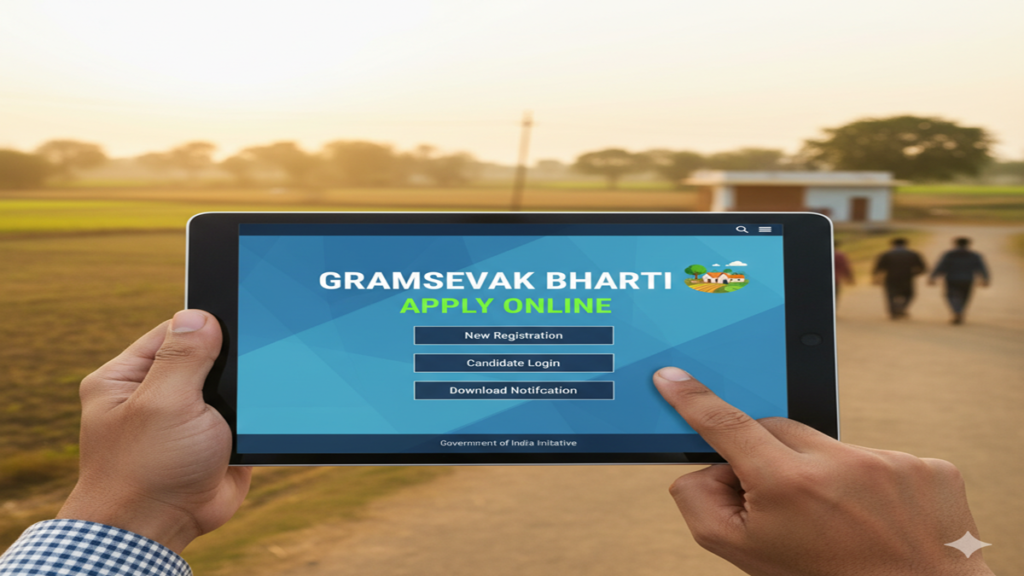
Gramsevak Bharti Apply Online Date 2026: ग्रामसेवक भर्ती के ऑनलाइन आवेदन कब से शुरू होंगे? जानें महत्वपूर्ण तारीखें, पात्रता और आवेदन प्रक्रिया!
Gramsevak Bharti Apply Online Date 2026: Introduction: सरकारी नौकरी की राह देख रहे युवाओं के लिए साल 2026 एक नई उम्मीद लेकर आया है। महाराष्ट्र राज्य के ग्रामीण विकास विभाग ने जिला परिषदों (Zilla Parishad) के माध्यम से ‘ग्रामसेवक’ (Gramsevak) के रिक्त पदों को भरने की प्रक्रिया तेज कर दी है। सबसे ज्यादा पूछा जाने वाला सवाल यही है कि—“Gramsevak Bharti Apply Online Date” क्या है?
ग्रामसेवक का पद न केवल एक सुरक्षित सरकारी नौकरी है, बल्कि यह सीधे ग्रामीण विकास और पंचायत राज व्यवस्था से जुड़ने का अवसर भी प्रदान करता है। इस लेख में हम आपको आवेदन शुरू होने की तारीख, अंतिम तिथि और फॉर्म भरने की पूरी विधि विस्तार से बताएंगे।
1. ग्रामसेवक भर्ती 2026: महत्वपूर्ण तारीखें (Important Dates)
Gramsevak Bharti Apply Online Date 2026: विभिन्न जिला परिषदों द्वारा जारी संभावित समय-सारणी के अनुसार, आवेदन की तिथियां नीचे दी गई हैं:
- आधिकारिक अधिसूचना (Notification) जारी: मार्च 2026 के दूसरे सप्ताह में।
- ऑनलाइन आवेदन शुरू होने की तारीख (Apply Online Start Date): [संभावित: 20 मार्च 2026]।
- आवेदन की अंतिम तिथि (Last Date to Apply): [संभावित: 15 अप्रैल 2026]।
- प्रवेश पत्र (Admit Card) जारी होने की तारीख: परीक्षा से 7 दिन पहले।
- परीक्षा की संभावित तारीख (Exam Date): मई-जून 2026।
नोट: उम्मीदवारों को सलाह दी जाती है कि वे अपने संबंधित जिले की जिला परिषद की आधिकारिक वेबसाइट को नियमित रूप से चेक करते रहें, क्योंकि तारीखों में आंशिक बदलाव संभव है।
2. पात्रता मापदंड (Eligibility Criteria)
Gramsevak Bharti Apply Online Date 2026: फॉर्म भरने से पहले यह सुनिश्चित करें कि आप निम्नलिखित शर्तों को पूरा करते हैं:
- शैक्षणिक योग्यता: 12वीं (HSC) में कम से कम 60% अंक या कृषि में डिप्लोमा/बी.एससी. (Agriculture)।
- कंप्यूटर ज्ञान: MS-CIT या समकक्ष प्रमाणपत्र अनिवार्य है।
- आयु सीमा: 18 से 38 वर्ष (आरक्षित श्रेणियों के लिए सरकारी नियमानुसार 5 साल की छूट)।
3. ऑनलाइन आवेदन कैसे करें? (Step-by-Step Guide to Apply Online)
Gramsevak Bharti Apply Online Date 2026: स्टेप 1: आधिकारिक पोर्टल पर जाएं सबसे पहले ‘IBPS/TCS’ के अधिकृत भर्ती पोर्टल या अपनी जिला परिषद की वेबसाइट पर जाएं।
स्टेप 2: नया पंजीकरण (Registration) ‘New Registration’ बटन पर क्लिक करें। अपना नाम, मोबाइल नंबर और ईमेल आईडी दर्ज करें। आपको एक प्रोविजनल रजिस्ट्रेशन नंबर और पासवर्ड प्राप्त होगा।
स्टेप 3: व्यक्तिगत जानकारी भरें लॉग-इन करने के बाद अपनी शैक्षणिक योग्यता, पता और जाति की जानकारी सावधानीपूर्वक भरें।
स्टेप 4: दस्तावेज अपलोड करें अपनी हालिया पासपोर्ट साइज फोटो, हस्ताक्षर (Signature) और बाएं हाथ के अंगूठे का निशान (Left Thumb Impression) स्कैन करके अपलोड करें।
स्टेप 5: आवेदन शुल्क का भुगतान (Application Fee)
- सामान्य वर्ग (General): ₹1,000 (लगभग)
- आरक्षित वर्ग (Reserved): ₹900 (लगभग) भुगतान ऑनलाइन (UPI/Debit Card/Net Banking) के माध्यम से करें।
स्टेप 6: प्रिंट आउट लें सफलतापूर्वक सबमिट करने के बाद आवेदन पत्र और ई-रसीद (e-Receipt) का प्रिंट आउट जरूर लें।
4. फॉर्म भरते समय इन बातों का रखें ध्यान (Pro-Tips)
- Gramsevak Bharti Apply Online Date 2026: अंतिम समय की भीड़ से बचें: अक्सर आवेदन की आखिरी तारीख को वेबसाइट का सर्वर धीमा हो जाता है, इसलिए आवेदन शुरू होते ही पहले हफ्ते में फॉर्म भर दें।
- दस्तावेजों की जांच: सुनिश्चित करें कि आपके सभी प्रमाण पत्र (जाति, आय, नॉन-क्रीमी लेयर) मार्च 2026 तक अपडेटेड हों।
- ईमेल और मोबाइल: अपना वह मोबाइल नंबर दें जो हमेशा सक्रिय रहता है, क्योंकि परीक्षा से जुड़ी सभी महत्वपूर्ण सूचनाएं एसएमएस के जरिए भेजी जाती हैं।
4. अक्सर पूछे जाने वाले प्रश्न (FAQs)
Q1: क्या ग्रामसेवक भर्ती 2026 के लिए आवेदन शुरू हो गए हैं?
Ans: आधिकारिक नोटिफिकेशन जल्द ही जारी होने वाला है। संभावित तारीख मार्च 2026 का तीसरा सप्ताह है।
Q2: क्या मैं एक साथ दो जिलों के लिए आवेदन कर सकता हूँ?
Ans: आमतौर पर उम्मीदवार एक ही पद के लिए एक ही जिले से आवेदन कर सकते हैं। अधिक जानकारी के लिए नोटिफिकेशन की शर्तों को ध्यान से पढ़ें।
Q3: आवेदन के लिए कौन सी वेबसाइट का उपयोग करें?
Ans: जिला परिषदों की आधिकारिक वेबसाइट या IBPS के ऑनलाइन पोर्टल का उपयोग करें।
Conclusion: तैयारी शुरू करने का सही समय!
Gramsevak Bharti Apply Online Date का इंतजार करने के बजाय, यह सही समय है कि आप अपने सिलेबस को पूरा करने पर ध्यान दें। ग्रामसेवक की परीक्षा में प्रतिस्पर्धा बढ़ रही है, इसलिए समय पर आवेदन करें और अपनी पढ़ाई को गति दें। यह अवसर आपके जीवन को एक नई दिशा दे सकता है।
Gramsevak Bharti 2026: Your Ultimate Guide to Online Application Dates, Process, and Strategy
Gramsevak Bharti Apply Online Date The position of a Gramsevak (Village Development Officer) is more than just a government job; it is the cornerstone of rural administration and the primary interface between the government and the village community. As the executive arm of the Panchayati Raj system, a Gramsevak plays a pivotal role in implementing welfare schemes, managing land records, and driving local development. Consequently, the announcement of Gramsevak recruitment drives attracts lakhs of candidates across states like Maharashtra, Gujarat, Madhya Pradesh, and others.
A critical and often confusing aspect of this recruitment is the online application date. Unlike a centralized all-India exam, Gramsevak recruitment is conducted by individual state governments, leading to varying schedules. This article serves as your definitive guide, demystifying the application timeline, the process, and providing a strategic roadmap to secure this prestigious position.
Understanding the Recruitment Ecosystem
Gramsevak Bharti Apply Online Date 2026: Before delving into dates, it’s crucial to understand the recruiting bodies. The recruitment is typically handled by:
- State Panchayati Raj Departments: The primary authority, often conducting mass recruitment drives.
- District Panchayats/Officials: For decentralized, district-level vacancies.
- State Examination Authorities: Like the Maharashtra Zilla Parishad Service Examination Board, which conducts the “Gram Sevak Exam” for Maharashtra.
The notification is officially called the “Gramsevak Bharti Notification” or “Village Development Officer Recruitment Notification.” It is published on the official website of the concerned state’s Panchayati Raj department or the designated examination board.
The Elusive “Online Application Date”: A State-Wise Breakdown
Gramsevak Bharti Apply Online Date 2026: There is no single nationwide date. The application window opens when a state releases its official notification. Here’s a generalized timeline and state-wise pattern based on previous recruitment cycles:
Typical Annual Recruitment Cycle:
- Notification Release: Often between March and June for many states, coinciding with the start of the financial year.
- Online Application Start Date: Usually within 7-10 days after the notification is published.
- Application End Date: Generally remains open for 3 to 4 weeks.
- Exam Date: Scheduled 2 to 3 months after the application window closes.
State-Specific Trends (Based on Previous Years):
- Gramsevak Bharti Apply Online Date 2026: Maharashtra: The Maharashtra Zilla Parishad Gram Sevak exam is highly systematic. Notifications often appear in Q1 (January-March). The application for the 2023 cycle, for instance, was active in March-April 2023.
- Gujarat: The Gujarat Panchayat Seva Selection Board (GPSSB) conducts recruitment. Notifications can be more periodic, sometimes in the latter half of the year.
- Madhya Pradesh: Recruitments are conducted by the MP Panchayat Raj and Rural Development Department. Notifications have been observed in spring or monsoon seasons.
- Other States (Karnataka, Andhra Pradesh, Telangana, etc.): Follow their own schedules, often announced post-budget allocations for rural development.
Gramsevak Bharti Apply Online Date 2026: For the 2024/2025 Cycle: What to Expect
While exact dates are speculative until the official notification, candidates should be on high alert from February 2024 onwards. Proactive preparation is key.
Step-by-Step Guide to the Online Application Process
Gramsevak Bharti Apply Online Date 2026: Once the notification is out, follow this meticulous process to ensure error-free application:
Step 1: Scrutinize the Official Notification
Download the PDF. Pay utmost attention to:
- Eligibility Criteria: Educational Qualification (typically a Diploma in Agriculture/Animal Husbandry/Rural Development or a Bachelor’s degree), Age Limit (usually 18-38, with relaxations), and Domicile Requirements.
- Application Dates: Note the exact start and end date and time.
- Application Fee: Varies by category (General/OBC/SC/ST). It is usually nominal (₹200 – ₹1000).
Step 2: Document Preparation (Do This NOW)
Gramsevak Bharti Apply Online Date 2026: Gather and scan these documents in the prescribed format (usually JPEG/PDF, under 200KB-500KB):
- Recent passport-sized photograph (white background).
- Signature.
- Left Thumb Impression.
- Educational Certificates (Mark sheets, Degree/Diploma).
- Domicile Certificate.
- Caste/Category Certificate (if applicable).
- ID Proof (Aadhaar Card is mandatory in most cases).
Step 3: Registration on the Portal
- Gramsevak Bharti Apply Online Date 2026: Visit the official website (e.g.,
mahagramsevak.mahaonline.gov.infor MH,gpssb.gujarat.gov.infor Gujarat). - Click on “Apply Online” or “New Registration.”
- A Registration ID/Password will be generated and sent to your mobile/email.
Step 4: Filling the Application Form
Gramsevak Bharti Apply Online Date 2026: Log in with your credentials. Fill in the exhaustive form with:
- Personal Details
- Educational Qualifications (from SSC/HSC onwards)
- Address for Communication
- Preference of Districts/Zillas (Choose wisely, as transfers are difficult later).
- Upload all scanned documents.
Step 5: Payment of Application Fee
Gramsevak Bharti Apply Online Date 2026: Proceed to pay the fee via:
- UPI
- Sometimes through Bank Challan at designated banks.
Save the payment receipt.
Step 6: Final Submission and Printout
Review the entire form preview. Submit. Download and print the final submitted application form for your records. It is mandatory for future stages.
Beyond the Date: A Strategic Preparation Blueprint
Gramsevak Bharti Apply Online Date 2026: Merely applying on time is not enough. Your preparation must begin months in advance.
1. Master the Syllabus & Exam Pattern:
- General Knowledge & Current Affairs: Focus on National/International events, awards, sports, and especially schemes related to Rural Development, Agriculture, and Panchayati Raj (e.g., MGNREGA, PMAY-G, National Rural Livelihood Mission).
- Gramsevak Bharti Apply Online Date 2026: Rural Development & Panchayati Raj: History, 73rd Constitutional Amendment, Functions of Gram Panchayat, Gram Sevak’s role, Government schemes.
- Local Language & English: Grammar, comprehension, vocabulary.
2. Resource Curation:
- Gramsevak Bharti Apply Online Date 2026: Books: Standard books for state-specific Gram Sevak exams (e.g., “Granthali” or “Arihant” publications for Maharashtra), NCERT books for basic subjects.
- Online Portals: Use government websites (Ministry of Panchayati Raj, NIRD&PR) for authentic information on rural schemes.
3. The Power of Mock Tests and Previous Papers:
Gramsevak Bharti Apply Online Date 2026: It reveals the question trend, difficulty level, and important topics.
Common Pitfalls to Avoid During Application
- Ignoring the Domicile Clause: Applying for a state where you do not fulfill the residency requirement.
- Last-Minute Rush: Server crashes are common on the last day. Apply in the first week itself.
- Incorrect Document Size/Format: Rejection due to technical non-compliance.
- Mismatch in Details: Name spellings, dates on certificates must match the form entries.
- Not Preserving the Printout: The submitted form and fee receipt are crucial for the admit card and document verification.
The Road Ahead: After the Application
- Gramsevak Bharti Apply Online Date 2026: Admit Card: Released 2-3 weeks before the exam. Download it from the same portal.
- Written Examination: Usually an OMR-based or Computer-Based Test (CBT).
- Document Verification & Interview: Some states have an interview or personality test.
- Final Merit List & Appointment: Based on marks in the written exam and interview.
Conclusion: Your Journey from Applicant to Gramsevak
Gramsevak Bharti Apply Online Date 2026: The Gramsevak Bharti online application date is your starting gun. Success belongs to those who have begun their preparation long before the notification hits the headlines. Treat the application process as your first test—one of attention to detail and procedural adherence. By combining timely application with relentless, syllabus-focused preparation, you don’t just apply for a job; you take the first concrete step towards becoming an agent of change in India’s rural landscape. Stay vigilant on official websites, prepare diligently, and embark on this rewarding career path with confidence.
Frequently Asked Questions (FAQs)
1. Q: Is there a single all-India Gramsevak exam with a common application date?
A: No. There is no unified all-India exam for Gramsevak recruitment. Each state government (e.g., Maharashtra, Gujarat, Madhya Pradesh) conducts its own recruitment process through its Panchayati Raj Department or designated board. Therefore, the online application dates are state-specific and announced separately through individual state notifications.
2. Q: When can we expect the Gramsevak Bharti 2024 notification and application to start?
A: While subject to government discretion, based on previous years’ trends, many states release notifications in the first quarter (January-March) or second quarter (April-June) of the financial year. Candidates should start actively monitoring the official websites of their target state’s Panchayati Raj department from February 2024 onwards to avoid missing the short application window.
3. Q: What are the most crucial documents required for the online application?
A: The mandatory documents typically include:
Scanned Photograph & Signature
Educational Certificates (Diploma/Degree mark sheets)
Domicile Certificate of the state
Caste/Category Validity Certificate (if applicable for reservation)
Aadhaar Card
Important: Ensure all documents are scanned in the prescribed size and format (usually JPEG/PDF under 500KB) mentioned in the notification to avoid technical rejection.
4. Q: I made a mistake in my submitted application form. Can I correct it later?
A: Most recruitment boards open a correction window for a limited period (usually 2-5 days) after the application process closes. This allows candidates to rectify minor errors in personal details, photo/signature uploads, or category. However, major changes like date of birth or educational qualification are often not allowed. Always double-check before the final submission.
5. Q: What is the best strategy to prepare for the exam while waiting for the application date?
A: Do not wait for the notification to start preparing. Begin now by:
Analyzing Previous Syllabus: Get the syllabus from the last recruitment notification of your state.
Building Current Affairs Knowledge: Focus on rural development schemes, agricultural news, and state-specific current affairs from the past year.
Strengthening Basics: Work on fundamental mathematics, reasoning, and grammar.
Resource Collection: Identify standard books and online resources. This proactive approach will give you a significant edge once the application process begins.