


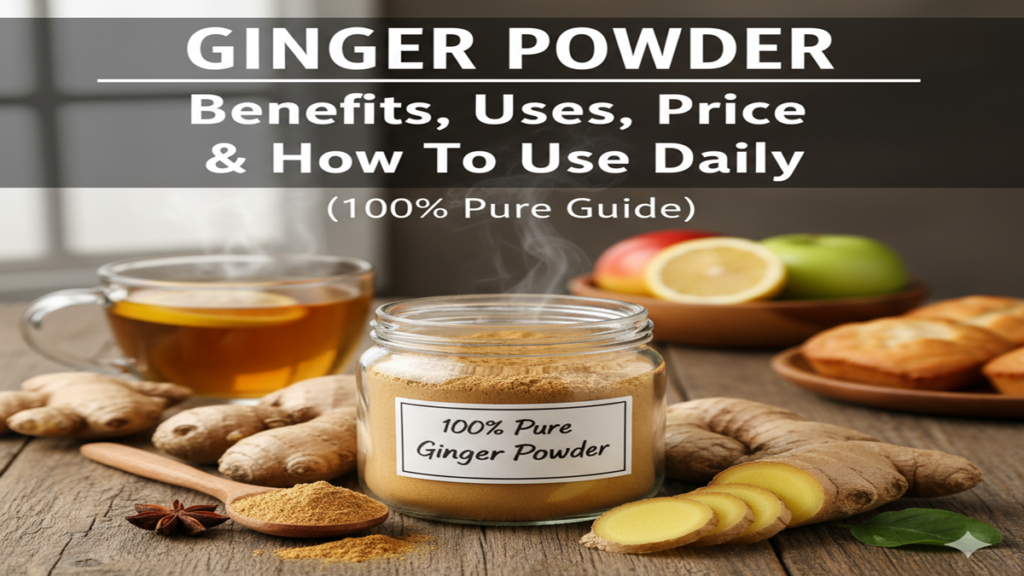
Ginger Powder (सोंठ): सेहत का खजाना है अदरक का पाउडर! जानें इसके बेमिसाल फायदे, उपयोग और बनाने की विधि।
Introduction: ताजी अदरक के फायदों के बारे में तो हम सभी जानते हैं, लेकिन जब अदरक को सुखाकर उसका पाउडर बनाया जाता है, तो इसके औषधीय गुण और भी बढ़ जाते हैं। इसे हिंदी में ‘सोंठ’ (Sonth) कहा जाता है। आयुर्वेद में सोंठ को ‘विश्वरोग निवारक’ माना गया है, यानी कई रोगों को दूर करने वाली औषधि।
मसालों के रूप में इस्तेमाल होने वाला Ginger Powder केवल स्वाद ही नहीं बढ़ाता, बल्कि यह गंभीर बीमारियों से लड़ने में भी शरीर की मदद करता है। इस लेख में हम विस्तार से जानेंगे कि Ginger Powder Benefits क्या हैं और आप इसका सही तरीके से उपयोग कैसे कर सकते हैं।
1. सोंठ का पोषण मूल्य (Nutritional Value of Ginger Powder)
ताजी अदरक की तुलना में सोंठ में ‘जिंजरोल’ (Gingerol) और ‘शोगोल’ (Shogaol) जैसे सक्रिय तत्व अधिक केंद्रित मात्रा में होते हैं। इसमें भरपूर मात्रा में:
- एंटी-इंफ्लेमेटरी गुण
- एंटीऑक्सीडेंट्स
- विटामिन B6 और मैग्नीशियम
- फाइबर पाए जाते हैं।
2. सोंठ (Ginger Powder) के मुख्य फायदे (Key Benefits)
१. पाचन तंत्र के लिए वरदान (Improves Digestion): सोंठ का सबसे बड़ा फायदा पाचन को सुधारने में है। यह पेट की गैस, सूजन (Bloating) और अपच की समस्या को दूर करता है। भोजन के बाद एक चुटकी सोंठ पाउडर गुनगुने पानी के साथ लेने से मेटाबॉलिज्म तेज होता है।
२. वजन घटाने में सहायक (Aid in Weight Loss): अदरक पाउडर शरीर में गर्मी पैदा करता है (Thermogenesis), जो फैट को बर्न करने में मदद करती है। यह भूख को नियंत्रित करता है और शुगर लेवल को स्थिर रखता
३. जोड़ों के दर्द और अर्थराइटिस में राहत (Relief from Joint Pain): सोंठ में प्राकृतिक सूजनरोधी (Anti-inflammatory) गुण होते हैं। घुटनों या जोड़ों के दर्द से परेशान लोगों के लिए सोंठ का सेवन और इसके लेप का इस्तेमाल दर्द को काफी हद तक कम कर सकता है।
४. सर्दी, खांसी और गले की खराश (Cure for Cold & Cough): बदलते मौसम में होने वाली सर्दी और खांसी के लिए सोंठ और शहद का मिश्रण सबसे पुराना और प्रभावी घरेलू नुस्खा है। यह फेफड़ों से कफ को बाहर निकालने में मदद करता है।
५. पीरियड्स के दर्द में कमी (Reduces Menstrual Pain): महिलाओं के लिए सोंठ बहुत फायदेमंद है। मासिक धर्म के दौरान होने वाले पेट दर्द और मरोड़ को कम करने में सोंठ की चाय बहुत राहत देती है।
3. सोंठ का उपयोग कैसे करें? (How to Use Ginger Powder)
- सोंठ की चाय: उबलते पानी में आधा चम्मच सोंठ पाउडर और थोड़ा सा गुड़ मिलाएं। इसे पीने से थकान और तनाव दूर होता है।
- सोंठ और शहद: खांसी होने पर आधा चम्मच सोंठ पाउडर में एक चम्मच शहद मिलाकर दिन में दो बार लें।
- दूध के साथ: रात को सोने से पहले गरम दूध में एक चुटकी सोंठ पाउडर डालकर पिएं। यह रोग प्रतिरोधक क्षमता (Immunity) बढ़ाने के लिए बेहतरीन है।
- खाना पकाने में: दाल, सब्जी या सूप में सोंठ पाउडर का इस्तेमाल स्वाद और सेहत दोनों बढ़ाता है।
4. घर पर सोंठ पाउडर कैसे बनाएं? (How to Make at Home)
बाजार के मिलावटी पाउडर से बचने के लिए आप घर पर शुद्ध अदरक पाउडर बना सकते हैं:
- ताजी अदरक को अच्छे से धोकर छील लें।
- इसे पतले स्लाइस में काट लें।
- २-३ दिन तक तेज धूप में सुखाएं जब तक कि वह पूरी तरह कुरकुरी न हो जाए।
- अब इसे मिक्सी में पीसकर बारीक पाउडर बना लें और एयरटाइट जार में स्टोर करें।
5. सावधानियां और नुकसान (Precautions & Side Effects)
- गर्भावस्था: गर्भवती महिलाएं सोंठ का सेवन सीमित मात्रा में करें या डॉक्टर से सलाह लें।
- अधिक सेवन: एक दिन में १-२ ग्राम से ज्यादा सोंठ का सेवन न करें, वरना सीने में जलन या पेट में गर्मी हो सकती है।
- मधुमेह: जो लोग शुगर की दवा ले रहे हैं, वे सावधानी बरतें क्योंकि यह ब्लड शुगर को कम कर सकता है।
4. अक्सर पूछे जाने वाले प्रश्न (FAQs)
Q1: क्या सोंठ ताजी अदरक से बेहतर है?
Ans: दोनों के अपने फायदे हैं, लेकिन सोंठ में औषधीय गुण अधिक केंद्रित होते हैं और इसे लंबे समय तक स्टोर किया जा सकता है।
Q2: क्या सोंठ पाउडर से बालों का झड़ना रुकता है?
Ans: सोंठ पाउडर का पेस्ट नारियल तेल के साथ स्कैल्प पर लगाने से रक्त संचार बढ़ता है, जो बालों की ग्रोथ में मदद कर सकता है।
Q3: सोंठ की तासीर क्या है?
Ans: सोंठ की तासीर ‘गर्म’ होती है, इसलिए इसे सर्दियों में या बरसात के मौसम में लेना अधिक फायदेमंद होता है।
Conclusion: सेहत का छोटा पैकेट, बड़ा धमाका!
Ginger Powder (सोंठ) आपकी रसोई का वह मसाला है जो औषधि के रूप में काम करता है। पाचन से लेकर इम्यूनिटी बढ़ाने तक, इसके फायदे अनगिनत हैं। बस ध्यान रखें कि इसका सेवन संतुलित मात्रा में करें। आज ही शुद्ध सोंठ पाउडर को अपनी जीवनशैली का हिस्सा बनाएं।
The Complete Guide to Ginger Powder: Benefits, Uses, Daily Integration & Price Guide (100% Pure)
Introduction
For thousands of years, ginger has been celebrated as both a culinary treasure and a medicinal powerhouse. Today, its powdered form offers the same remarkable benefits in a convenient, shelf-stable format that can transform your health, cooking, and daily wellness routines. This comprehensive guide explores everything you need to know about 100% pure ginger powder—from its impressive health benefits and versatile uses to practical daily integration strategies and fair pricing insights.
Ginger powder isn’t simply dried ginger; it’s a concentrated form of the root’s bioactive compounds, including gingerol, shogaol, and zingerone, which are responsible for its distinctive flavor and therapeutic properties. Whether you’re seeking digestive relief, anti-inflammatory support, or simply a warming spice for your culinary creations, ginger powder delivers in ways that make it an indispensable addition to any modern kitchen or wellness regimen.
What is Ginger Powder?
Ginger powder is made by peeling, drying, and finely grinding fresh ginger rhizomes (Zingiber officinale). The drying process concentrates both the flavor and the beneficial compounds, creating a versatile powder that retains approximately 2-4% of the essential oils found in fresh ginger. High-quality ginger powder should be pale yellow to light brown with the characteristic aromatic, slightly sweet, and pungent flavor profile of fresh ginger.
The Production Process
- Harvesting: Mature ginger roots (9-10 months old) are harvested
- Cleaning and peeling: Roots are thoroughly washed and peeled
- Slicing: Ginger is sliced thinly for uniform drying
- Drying: Slices are dried using sun-drying, air-drying, or dehydrators at controlled temperatures (typically 60-70°C) to preserve active compounds
- Grinding: Dried slices are ground into fine powder
- Packaging: Powder is stored in airtight, light-resistant containers
The quality of ginger powder depends on the ginger variety, cultivation methods, drying technique, and storage conditions. Organic ginger powder ensures the absence of pesticide residues and often contains higher concentrations of beneficial compounds.
Health Benefits of Ginger Powder
1. Powerful Anti-Inflammatory and Antioxidant Properties
Ginger powder contains over 100 identified compounds, with gingerols being the most prominent bioactive components. These compounds inhibit the production of pro-inflammatory cytokines and prostaglandins, making ginger powder particularly beneficial for:
- Arthritis relief: Multiple studies demonstrate ginger’s effectiveness in reducing osteoarthritis and rheumatoid arthritis symptoms
- Chronic inflammation: Regular consumption may lower markers of inflammation like CRP (C-reactive protein)
The antioxidant capacity of ginger powder helps neutralize free radicals, potentially reducing oxidative stress associated with chronic diseases and aging.
2. Digestive Health Superstar
Ginger powder has been used for centuries to address digestive issues:
- Nausea relief: Particularly effective for morning sickness, chemotherapy-induced nausea, and motion sickness
- Gastric emptying: Accelerates stomach emptying, which can benefit those with indigestion and functional dyspepsia
- Antispasmodic effects: Relaxes intestinal muscles, reducing cramping and discomfort
- Prebiotic properties: Some research suggests ginger may support beneficial gut bacteria
3. Cardiovascular Support
Regular ginger powder consumption may contribute to heart health through:
- Blood pressure regulation: Mild hypotensive effects through calcium channel blockade
- Cholesterol management: May reduce LDL cholesterol and triglyceride levels
- Blood thinning: Natural antiplatelet activity that may reduce clotting risk (consult doctor if on blood thinners)
4. Immune System Enhancement
Ginger powder’s antimicrobial properties and ability to promote sweating make it valuable for:
- Cold and flu prevention: May reduce severity and duration of respiratory infections
- Fever reduction: Promotes sweating which can help lower fever
- Antimicrobial action: Effective against various bacteria and viruses in laboratory studies
5. Metabolic and Weight Management Benefits
Emerging research suggests ginger powder may support metabolic health by:
- Appetite regulation: May increase satiety and reduce hunger
- Thermogenic effect: Slightly increases body temperature and metabolic rate
- Blood sugar regulation: May improve insulin sensitivity and fasting blood sugar levels
6. Cognitive Function and Mood
The antioxidants in ginger powder may protect brain health by:
- Neuroprotection: Reducing oxidative stress in brain tissue
- Memory enhancement: Animal studies show improved cognitive function
- Anti-depressant effects: May boost serotonin and dopamine levels
Culinary and Practical Uses of Ginger Powder
In the Kitchen
Ginger powder’s concentrated flavor makes it ideal for numerous culinary applications:
Baking:
- Gingerbread, cookies, cakes, and muffins
- Add 1/2 to 1 teaspoon per cup of flour in recipes
- Pairs wonderfully with cinnamon, nutmeg, and cloves
Cooking:
- Marinades for meats, tofu, and vegetables
- Soups, stews, and curries (add early in cooking for deeper flavor)
- Stir-fries and sauces
- Salad dressings and vinaigrettes
Beverages:
- Golden milk (with turmeric and black pepper)
- Herbal teas and infusions
- Smoothies and juices
- Cocktails and mocktails
Preservation:
- Pickling spice blends
- Fruit preserves and chutneys
Home Remedies and Wellness Applications
Digestive aid tea: 1/2 teaspoon ginger powder, juice of 1/2 lemon, hot water, and raw honey
Inhalation for congestion: Add 1 tablespoon ginger powder to bowl of hot water, cover head with towel, and inhale steam
Anti-inflammatory paste: Mix ginger powder with coconut oil for topical application on sore joints (patch test first)
Morning wellness shot: 1/4 teaspoon ginger powder, 1 tablespoon apple cider vinegar, splash of lemon juice, and water
Beauty and Personal Care
Face mask: Mix with honey and yogurt for brightening effect
Hair growth treatment: Combine with carrier oil for scalp massage
How to Use Ginger Powder Daily: Practical Integration Strategies
Starting Your Day
Morning Ginger Tea:
- Add 1/4 to 1/2 teaspoon ginger powder to cup of hot water
- Steep for 5-10 minutes
- Add lemon and raw honey to taste
- Benefits: Kickstarts digestion, provides antioxidant boost, and enhances mental clarity
Golden Morning Smoothie:
- 1/2 teaspoon ginger powder
- 1/2 teaspoon turmeric
- Pinch of black pepper (enhances absorption)
- 1 cup plant-based milk
- 1/2 banana
- 1 tablespoon almond butter
- Blend until smooth
With Meals
Ginger-Infused Cooking Oil:
- Add 1 tablespoon ginger powder to 1 cup olive or coconut oil
- Heat gently for 5 minutes (do not boil)
- Strain and use for cooking or dressings
- Lasts 2-3 weeks refrigerated
Universal Seasoning Blend:
- 3 tablespoons ginger powder
- 2 tablespoons garlic powder
- 1 tablespoon onion powder
- 2 teaspoons sea salt
- 1 teaspoon black pepper
- Use on vegetables, proteins, and grains
Evening Routine
Digestive After-Dinner Tea:
- 1/4 teaspoon ginger powder
- 1/4 teaspoon fennel seeds
- 1/4 teaspoon chamomile
- Steep in hot water for 10 minutes
- Benefits: Reduces bloating and prepares body for rest
Warming Nighttime Drink:
- 1/4 teaspoon ginger powder
- 1/4 teaspoon cinnamon
- Warm milk of choice
- Optional: dash of nutmeg and honey
Recommended Daily Intake
For general wellness: 1/4 to 1 teaspoon daily (approximately 1-4 grams)
For therapeutic purposes: Up to 2 teaspoons daily (8 grams), preferably divided into 2-3 doses
Maximum recommended: 4 grams daily for general population; pregnant women should limit to 1 gram daily
Important: Start with smaller amounts and increase gradually. Those with gallstone issues, bleeding disorders, or scheduled surgeries should consult healthcare providers before regular use.
Price Guide: What Should You Pay for Quality Ginger Powder?
Factors Influencing Price
- Organic certification: Organic ginger powder typically costs 20-50% more than conventional
- Origin: Indian and Jamaican ginger often command premium prices
- Processing method: Freeze-dried ginger retains more volatile oils but costs more than conventionally dried
- Packaging: Light-resistant, airtight packaging adds to cost but preserves quality
- Quantity: Bulk purchases (1 lb or more) offer better value per ounce
Price Ranges (2024 Market)
Conventional ginger powder:
- Small quantities (2-4 oz): $4-$8
- Medium quantities (8-16 oz): $8-$15
- Bulk (1 lb or more): $12-$25 per pound
Organic ginger powder:
- Small quantities (2-4 oz): $6-$12
- Medium quantities (8-16 oz): $12-$22
- Bulk (1 lb or more): $18-$35 per pound
Specialty ginger powder:
- Freeze-dried: $25-$45 per pound
- Specific origin (Jamaican, Indian): 20-40% premium
- Therapeutic grade: $30-$60 per pound
How to Identify Quality Ginger Powder
- Color: Pale yellow to light brown (not bright yellow or white)
- Aroma: Strong, fresh, spicy scent without mustiness
- Texture: Fine powder without clumps (clumping may indicate moisture contamination)
- Taste: Pungent, warm, slightly sweet with characteristic ginger heat
- Certifications: Look for USDA Organic, Non-GMO Project Verified, or third-party testing
- Packaging: Airtight, light-resistant container with manufacturing/expiration date
Value Tips
- Buy in bulk if you use regularly (properly stored, ginger powder lasts 2-3 years)
- Consider growing and drying your own ginger for ultimate control and freshness
- Compare price per ounce rather than package price
- Subscribe-and-save programs often offer 10-15% discounts
Storage and Preservation
Proper storage maximizes shelf life and preserves bioactive compounds:
- Container: Airtight glass jar with tight-fitting lid
- Location: Cool, dark pantry away from heat sources and sunlight
- Temperature: Ideally below 70°F (21°C)
- Moisture protection: Add rice grains or silica packets to absorb humidity
- Shelf life: 2-3 years with proper storage, though potency gradually decreases
Signs of deterioration: Loss of aroma, faded color, musty smell, or clumping.
Safety Considerations and Potential Side Effects
Ginger powder is generally safe for most people but consider these precautions:
Contraindications
- Gallstones: May increase bile production
- Bleeding disorders: May enhance bleeding risk
- Diabetes: May lower blood sugar (monitor levels if on medication)
- Heart conditions: May interact with blood pressure and heart medications
- Pregnancy: Limit to 1 gram daily and consult healthcare provider
- Surgery: Discontinue at least 2 weeks before scheduled procedures
Possible Side Effects (typically with excessive consumption)
- Heartburn or gastrointestinal discomfort
- Mouth irritation
- Increased menstrual flow
- Skin irritation with topical use (always patch test)
Drug Interactions
- Anticoagulants (warfarin, aspirin)
- Diabetes medications
- Blood pressure medications
- Antacids and H2 blockers (may increase acid production)
Always consult your healthcare provider before beginning any new supplement regimen, especially if you have existing health conditions or take medications.
Ginger Powder vs. Fresh Ginger: When to Use Which
Choose Ginger Powder When:
- Convenience and long shelf life are priorities
- You want uniform flavor distribution in baked goods
- Making spice blends or rubs
- Traveling or need portable option
- You prefer milder, less fibrous texture
Choose Fresh Ginger When:
- You need the enzymatic activity for certain recipes
- Preparing Asian stir-fries or dishes where texture matters
- Making juices or fresh preparations
- Maximum potency of gingerol is desired
- Preparing traditional remedies that call specifically for fresh ginger
Conversion: 1 tablespoon fresh grated ginger ≈ 1/4 teaspoon ginger powder (adjust to taste as powder is more concentrated)
Frequently Asked Questions
1. How much ginger powder should I take daily for health benefits?
For general wellness, 1/4 to 1 teaspoon (1-4 grams) daily is recommended. For specific therapeutic purposes like arthritis pain or nausea relief, up to 2 teaspoons (8 grams) daily in divided doses may be used. Always start with smaller amounts and consult with a healthcare provider for personalized recommendations, especially if you have underlying health conditions.
2. Can ginger powder help with weight loss?
Ginger powder may support weight management through several mechanisms: its thermogenic properties slightly increase metabolism, it may help regulate blood sugar levels reducing cravings, and it can promote feelings of satiety. However, it should be considered a supplement to a balanced diet and regular exercise rather than a standalone solution. Some studies suggest ginger may help reduce waist-to-hip ratio and fasting blood sugar when combined with lifestyle changes.
3. Is there a difference between regular and organic ginger powder?
Yes, the primary differences are cultivation methods and potential contaminant levels. Organic ginger is grown without synthetic pesticides, herbicides, or fertilizers, which may result in higher concentrations of beneficial compounds and absence of chemical residues. Conventional ginger may contain pesticide residues, though usually within “safe” limits. Organic certification also typically involves stricter processing standards. If budget allows or if you consume ginger powder regularly, organic is generally recommended.
4. Can I use ginger powder on my skin?
Yes, ginger powder has topical applications but should be used cautiously. Its antioxidant and anti-inflammatory properties may benefit the skin when used in masks or scrubs. Always perform a patch test first: apply a small amount of your ginger preparation to your inner forearm and wait 24 hours to check for irritation. Popular applications include mixing with honey for an antibacterial face mask or with oil for a circulation-boosting body scrub. Avoid using on broken skin or sensitive areas.
5. How long does ginger powder last and how can I tell if it’s gone bad?
Properly stored in an airtight container in a cool, dark place, ginger powder maintains optimal quality for 2-3 years. Signs of deterioration include: faded color (from golden to dull tan), loss of characteristic spicy aroma, musty smell, or clumping from moisture exposure. While expired ginger powder isn’t typically dangerous, it loses potency and flavor. To maximize shelf life, buy in smaller quantities if you use it infrequently, and always seal the container immediately after use.
Conclusion
Ginger powder represents one of nature’s most versatile and potent wellness tools, offering centuries of traditional use supported by growing scientific validation. From its remarkable anti-inflammatory properties to its culinary flexibility, this humble spice delivers exceptional value whether measured in health benefits, flavor enhancement, or cost-effectiveness.
By integrating high-quality ginger powder into your daily routine—through morning teas, culinary creations, or targeted wellness applications—you harness an accessible form of preventive healthcare that bridges ancient wisdom with modern needs. The key lies in selecting pure, quality powder, starting with moderate amounts, and consistently incorporating it into your lifestyle.
As with any wellness practice, individual responses vary, so listen to your body and consult healthcare professionals when needed. With proper knowledge and application, ginger powder can become more than just another spice in your cabinet—it can transform into a daily ritual supporting your journey toward sustained vitality and well-being.
Disclaimer : This article is for informational ,purposes only &
does not, constitute medical advice.
Always consult with a qualified healthcare professional before making changes to your diet, supplement regimen, or health practices, particularly if you have pre-existing conditions or are taking medications.