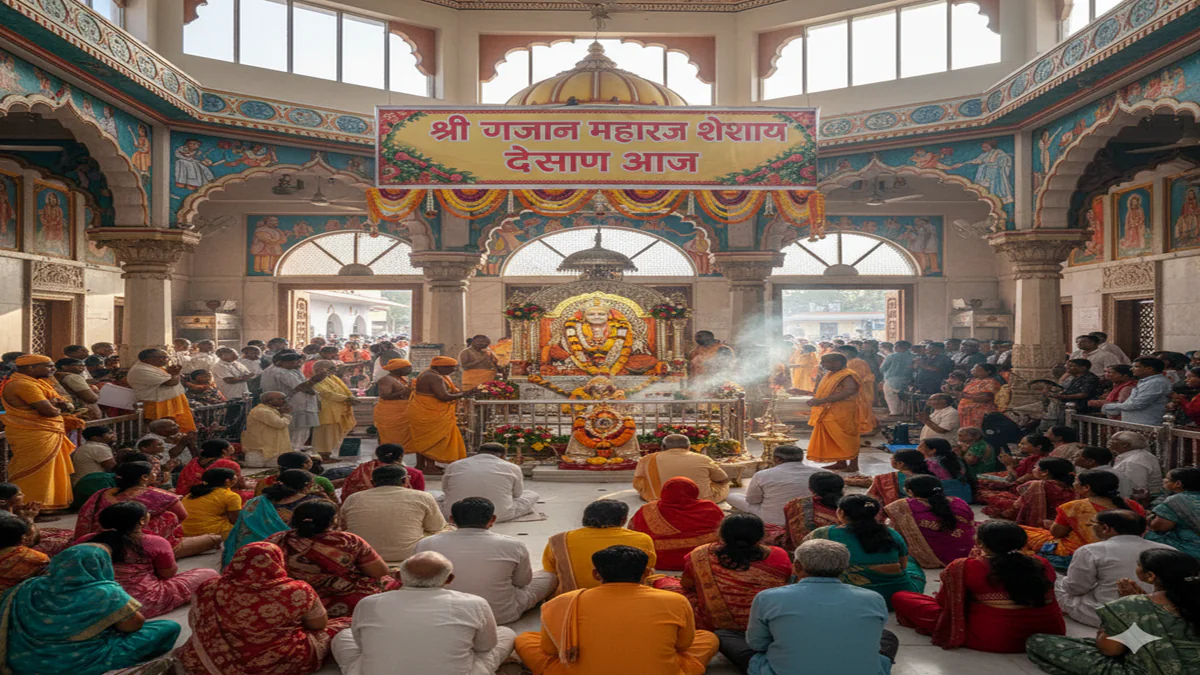
Gajanan Maharaj Shegaon Darshan Today: आजचे शेगाव दर्शन, मंदिराच्या वेळा आणि भक्तांसाठी महत्त्वाच्या अपडेट्स!
Gajanan Maharaj Shegaon Darshan Today: Introduction: “गण गण गणांत बोते” च्या गजराने निनादणारे शेगाव हे विदर्भातील पंढरपूर मानले जाते. संत श्री गजानन महाराज यांच्या दर्शनासाठी दररोज हजारो भक्त शेगावात येतात. जर तुम्ही आज (२५ फेब्रुवारी २०२६) किंवा लवकरच शेगावला जाण्याचा विचार करत असाल, तर Gajanan Maharaj Shegaon Darshan Today बद्दलची ही माहिती तुमच्यासाठी अत्यंत महत्त्वाची आहे.
शेगाव संस्थानचे नियोजन हे संपूर्ण भारतात प्रसिद्ध आहे. स्वच्छता, शिस्त आणि भक्ती यांचा संगम येथे पाहायला मिळतो. आजच्या या लेखात आपण दर्शनाच्या वेळा, प्रसादाची वेळ आणि राहण्याची व्यवस्था याबद्दल सविस्तर माहिती घेणार आहोत.
१. आजच्या दर्शनाच्या वेळा (Temple Timings Today)
Gajanan Maharaj Shegaon Darshan Today: शेगाव येथील मंदिर पहाटेपासून रात्रीपर्यंत भक्तांसाठी उघडे असते:
- मंदिर उघडण्याची वेळ: पहाटे ५:०० वाजता.
- काकड आरती: पहाटे ५:३० वाजता.
- नित्य पूजा आणि अभिषेक: सकाळी ६:०० ते ८:००.
- मध्यान्ह आरती: दुपारी १२:०० वाजता.
- सायंकाळची आरती: संध्याकाळी ७:०० ते ८:००.
- शयन आरती: रात्री ९:३० वाजता (यानंतर दर्शन बंद होते).
२. आजची गर्दीची स्थिती (Current Queue Status)
- साधारण दिवस: जर आज कोणताही विशेष सण नसेल, तर साधारणतः १ ते २ तासांत दर्शन पूर्ण होते.
- सुट्टीचे दिवस (शनिवार/रविवार): सुट्टीच्या दिवशी गर्दी वाढते, अशा वेळी दर्शनासाठी ३ ते ५ तास लागू शकतात.
- पारायण आणि उत्सव: प्रकट दिन किंवा पालखी सोहळा असेल तर गर्दी मोठ्या प्रमाणात असते.
३. महाप्रसाद आणि भोजन (Mahaprasad Timings)
Gajanan Maharaj Shegaon Darshan Today: शेगाव संस्थानमध्ये मिळणारा महाप्रसाद हा अतिशय पवित्र मानला जातो.
- वेळ: सकाळी १०:०० ते दुपारी २:३० आणि संध्याकाळी ६:०० ते रात्री ९:००.
- ठिकाण: श्री गजानन महाराज संस्थानचे मुख्य भोजन कक्ष.
- टीप: येथे मिळणारी पिठलं-भाकरी आणि ठसका ही भक्तांची लाडकी असते.
४. राहण्याची सोय (Accommodation in Shegaon)
Gajanan Maharaj Shegaon Darshan Today: संस्थानमार्फत भक्तांसाठी अत्यंत कमी दरात निवासाची व्यवस्था केली जाते:
- भक्त निवास: येथे तुम्ही ऑनलाईन किंवा ऑफलाईन रूम बुक करू शकता.
- आनंद विहार आणि विसावा: ही संकुले रेल्वे स्टेशनपासून जवळ आहेत.
- ऑनलाईन बुकिंग: अधिकृत वेबसाईटवरून तुम्ही आधीच बुकिंग करणे सोयीचे ठरते, कारण ऐनवेळी रूम मिळणे कठीण असते.
५. आनंद सागर अपडेट २०२६ (Anand Sagar Status)
Gajanan Maharaj Shegaon Darshan Today: अनेक भक्त ‘आनंद सागर’ (Anand Sagar Shegaon) सुरू आहे की नाही हे विचारत असतात. २०२६ च्या ताज्या अपडेटनुसार, आनंद सागरचा काही भाग दुरुस्तीनंतर पर्यटकांसाठी आणि भक्तांच्या फिरण्यासाठी मर्यादित स्वरूपात खुला करण्यात आला आहे. मात्र, जाण्यापूर्वी स्थानिक चौकशी करणे उत्तम.
६. सतत विचारले जाणारे ५ प्रश्न (FAQs)
Q1: शेगाव दर्शनासाठी ई-पास (E-Pass) आवश्यक आहे का?
Ans: सध्या थेट दर्शनाची सोय आहे, पण विशेष उत्सवांच्या वेळी संस्थान ई-पासची सुविधा सुरू करू शकते.
Q2: रेल्वे स्टेशनपासून मंदिर किती लांब आहे?
Ans: रेल्वे स्टेशनपासून मंदिर अवघ्या १-२ किलोमीटरवर आहे. संस्थानच्या मोफत बस सेवा (Blue Bus) स्टेशनवरून सतत उपलब्ध असतात.
Q3: गजानन महाराज प्रकट दिन कधी आहे?
Ans: २०२६ मध्ये गजानन महाराज प्रकट दिन १० फेब्रुवारी २०२६ रोजी साजरा झाला आहे. पुढील मोठ्या उत्सवांची माहिती संस्थानच्या कॅलेंडरमध्ये पहा.
Q4: ऑनलाइन रूम बुकिंग कसे करावे?
Ans: तुम्ही श्री गजानन महाराज संस्थानच्या अधिकृत पोर्टलवर (gajananmaharaj.org) जाऊन नोंदणी करू शकता.
Q5: वृद्धांसाठी दर्शनाची काही वेगळी सोय आहे का?
Ans: हो, ज्येष्ठ नागरिक आणि दिव्यांगांसाठी स्वतंत्र रांगेची व्यवस्था केली जाते जेणेकरून त्यांना त्रास होऊ नये.
Conclusion: तुमची वारी सुखाची होवो!
Gajanan Maharaj Shegaon Darshan हे केवळ एक धार्मिक पर्यटन नसून ती एक मनःशांतीची अनुभूती आहे. श्री गजानन महाराज की जय! तुमच्या प्रवासाचे नियोजन करण्यापूर्वी वरील वेळा आणि नियम नक्की तपासा.
Gajanan Maharaj Shegaon Darshan Today: A Pilgrimage to the Abode of Annadata
The Eternal Embrace: Experiencing Gajanan Maharaj Shegaon in the Modern Day
Gajanan Maharaj Shegaon Darshan Today Nestled in the fertile plains of Maharashtra’s Buldhana district, the town of Shegaon transcends its geographical confines to become a state of consciousness for millions. At its heart is the serene and powerful presence of Sant Gajanan Maharaj, a saint who embodied the very essence of simplicity, compassion, and the divine grace that feeds and sustains all—Annadata.
A visit to Shegaon today is not merely a pilgrimage; it is a journey into living faith, a testament to a legacy that grows more radiant with each passing day. This article explores what “darshan” (sacred viewing) means in Shegaon now, guiding you through the spiritual, practical, and transformative experience of connecting with Gajanan Maharaj in the present era.
The Eternal Saint: A Brief Legacy
Gajanan Maharaj Shegaon Darshan Today: Before stepping into today’s Shegaon, one must understand the timeless saint it venerates. Gajanan Maharaj appeared in Shegaon around the late 19th century, his origins shrouded in divine mystery. He spoke little, yet his silence was eloquent. His actions were his teachings: he lived on alms, often at the doorstep of a Mahar (Dalit) family, breaking societal hierarchies.
Gajanan Maharaj Shegaon Darshan Today: His miracles were not of grandeur but of intimate provision—endlessly multiplying food (Annapurna), curing the afflicted, and offering unwavering solace to the distressed. He taught that God is present in every being and that true worship lies in selfless service, humility, and remembering the divine name. Hismaha-samadhi(conscious departure) in 1910 only made his perceived presence stronger. The Shri Gajanan Maharaj Sansthan, the trust managing the temple, was formed by his devotees to perpetuate his mission of service.
The Darshan Experience Today: A Tapestry of Devotion and Order
Gajanan Maharaj Shegaon Darshan Today: Walking into the temple complex today is to witness a beautiful symphony of ancient devotion and impeccable modern organization. The air thrums with the constant chant of “Shri Gurudev Datta” and “Gajanan Maharaj Ki Jai!“
1. The Main Temple (Sansthan):The heart of the pilgrimage is the sanctum sanctorum where the saint’s paduka (footwear) and other personal artifacts are enshrined. The silvermahadwar(main gate) gleams under countless lights. The darshan line, while often long, moves with a surprising fluidity, managed efficiently by sevaks (volunteers).
Gajanan Maharaj Shegaon Darshan Today: The atmosphere inside is electric—a collective surge of anticipation that culminates in a few, profoundly peaceful seconds before the shrine. For those precious moments, the world outside ceases to exist. The deity is the saint himself, and his darshan is felt as a personal audience, a moment of receiving his silent, benevolent gaze.
Gajanan Maharaj Shegaon Darshan Today: 2. The Divine Kitchen (Maha Prasadalaya):Perhaps the most direct experience of Gajanan Maharaj’sAnnadataprinciple is the massive community kitchen. It operates 24/7, serving simple, satvik, and delicious meals tothousands of devotees every day, free of cost. Partaking in this prasad is not just about eating; it is a sacred act of receiving grace, a literal taste of the saint’s boundless provisioning. The scale, hygiene, and devotion with which this operation runs is a modern miracle in itself.
3. The Peaceful Oasis: Gajanan Maharaj Temple & Garden (New Temple): A short distance from the bustling Sansthan lies a sprawling, immaculately maintained garden complex centered around a stunning white temple. This is a place for contemplative darshan. The serene idol of Maharaj here, often adorned with fresh flowers, invites silent prayer and meditation. The lush gardens, musical fountains, and the tranquil Nirmalya Kund (a water body) offer spaces for families and seekers to sit, reflect, and absorb the peace.
Gajanan Maharaj Shegaon Darshan Today: 4. The Spiritual & Service Hub:The Sansthan is a universe of service. It runs a 900-bed super-specialty hospital offering free or highly subsidized care, educational institutions, water projects, and housing initiatives. For a devotee, participating in any seva (service)—be it volunteering in the kitchen, donating, or simply keeping the premises clean—becomes an active form of worship, a truekarma yogapreached by the saint.
Navigating Your Visit: Practical Guidance for Today’s Pilgrim
- Best Time for Darshan: Early mornings (5:00 AM – 8:00 AM) on weekdays are generally less crowded. Avoid major festivals like Gurupushya, Samadhi Din, and Sundays for a quicker darshan if you are short on time.
- Accommodation: The Sansthan manages several clean, affordable guesthouses (Dharma-shalas) like Anand Sagar, Sheti Bhawan, and Gajanan Nagri. Booking in advance online via the Sansthan’s official website is highly recommended.
- Connectivity: Shegaon is well-connected by rail (on the main Delhi-Chennai line) and road. The nearest airport is in Nagpur or Aurangabad. Auto-rickshaws and cycle-rickshaws are readily available for local transport.
- Digital Darshan: For those unable to travel, the Sansthan offers a 24/7 live webcast of the main shrine, allowing for virtual darshan from anywhere in the world—a testament to how tradition embraces modernity.
The Unchanging Core: What Makes Shegaon Timeless
Gajanan Maharaj Shegaon Darshan Today: Amidst all the organization and infrastructure, the soul of Shegaon remains unchanged. It is in the tear-filled eyes of an elderly devotee, in the hopeful prayers of a young student, in the quiet contentment of a laborer partaking of the free meal.
It is in the unwavering belief that here, at the feet of Annadata, no one goes hungry—neither in body nor in spirit. The darshan today is as potent as it was a century ago because it connects the individual to a living lineage of grace. It is an experience that simplifies the complex, quiets the mind, and reaffirms that in a world of constant change, there exists a sanctuary of unconditional love and sustenance.
Conclusion: More Than a Destination
Gajanan Maharaj Shegaon Darshan Today: A darshan at Shegaon today is a pilgrimage that begins long before you reach the town and continues long after you leave. It is an invitation to witness spirituality in action, where devotion is seamlessly translated into massive humanitarian service.
You come seeking the darshan of the saint’s form, but you leave with the darshan of his principles: compassion, service, and humility. In the end, Shegaon does not just give you a glimpse of the divine; it inspires you to become a vessel of that divinity in your own world. As the omnipresent chant echoes—“Shri Gajanan Maharaj Ki Jai!”—you realize that the true darshan is the transformation that quietly unfolds within your own heart.
Frequently Asked Questions (FAQs)
1. What are the temple timings for darshan at the main Sansthan in Shegaon?
Gajanan Maharaj Shegaon Darshan Today: The main temple is open24 hours a day, 365 days a year. However, for specific rituals likeKakad Aarti(early morning),Madhyan Aarti(noon), andShej Aarti(night), timings are fixed. The general darshan continues around these brief ritual closures. It’s best to check the official Sansthan website for the exact Aarti timings on your day of visit.
2. How can I book accommodation online, and what are the options?
Gajanan Maharaj Shegaon Darshan Today: Accommodation can be booked online through the official website ofShri Gajanan Maharaj Sansthan, Shegaon. Options range from basic dormitory-style rooms inSheti Bhawanto more comfortable AC and non-AC rooms in complexes likeAnand SagarandGajanan Nagri. Due to high demand, especially on weekends and festivals, booking well in advance (up to a month) is strongly advised.
3. Is there any dress code to be followed for darshan?
Gajanan Maharaj Shegaon Darshan Today: While there is no strict, enforced dress code, traditional, modest Indian attire is recommended and respected as a sign of reverence. For both men and women, covering the head inside the main sanctum is a common practice. Shoes and leather items must be deposited at the designated, free cloak rooms before entering the temple complex.
4. What is the best way to participate in seva (voluntary service)?
Gajanan Maharaj Shegaon Darshan Today: The Sansthan welcomes voluntary service. You can directly participate in seva at theMaha Prasadalaya(helping in serving or cleaning) by contacting their office. Other forms include donating to specific projects (health, education), offering to clean the temple premises, or contributing to theAnnadan(food donation) scheme. Inquiries can be made at the Seva office within the temple complex.
5. Besides the main temple, what are the other must-visit places in Shegaon?
Gajanan Maharaj Temple & Garden (New Temple):For its serene idol, beautiful gardens, and light & music fountain show in the evening.
Nirmalya Kund:A sacred water tank within the garden complex.
Gajanan Vivek Gram (Model Village):A showcase of sustainable rural development initiated by the Sansthan.
The Super Specialty Hospital:To witness the magnificent scale of the Sansthan’s medical seva, a true extension of the saint’s healing grace.
Walk through the town lanes:Experience the simple devotion in the local shops selling prasad, pictures, and memoirs of the saint.