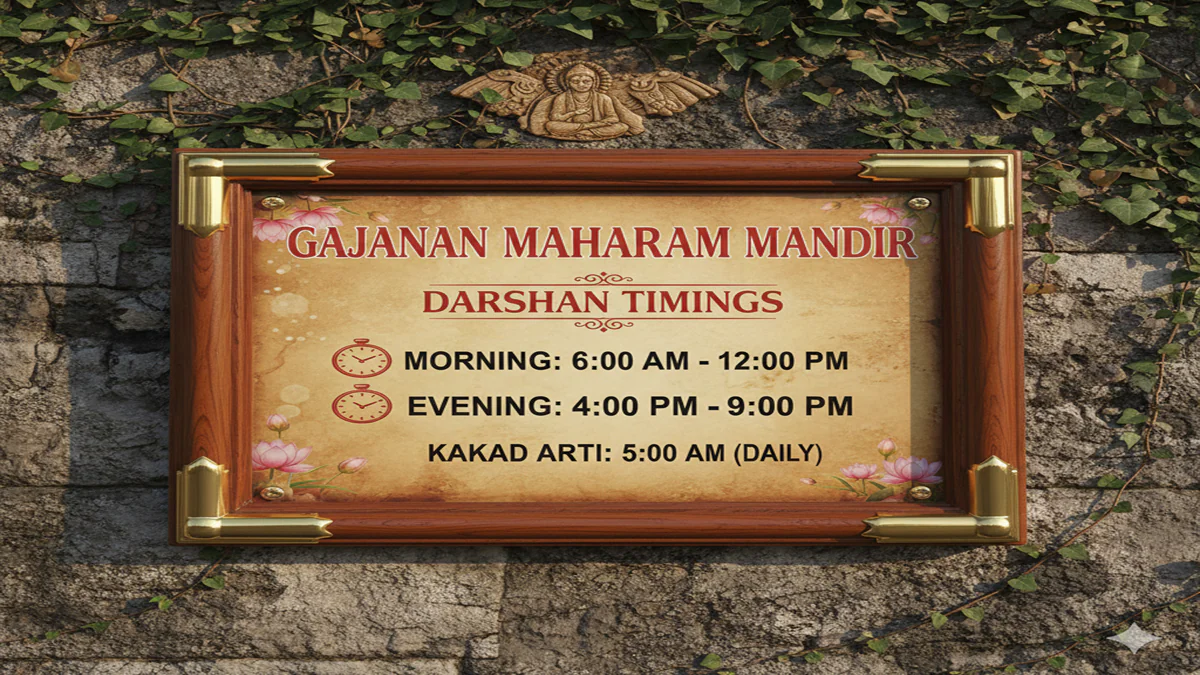
Gajanan Maharaj Darshan Timing: शेगाव श्री गजानन महाराज मंदिर दर्शन वेळ, आरती आणि महाप्रसादाची संपूर्ण माहिती!
Gajanan Maharaj Darshan Timing 2026: Introduction: “गण गण गणांत बोते” या मंत्राने अवघ्या महाराष्ट्राला भक्तीच्या रसात न्हाऊ घालणारे संत श्री गजानन महाराज यांचे शेगाव (जि. बुलढाणा) येथील मंदिर हे लाखो भक्तांचे श्रद्धास्थान आहे. शेगावच्या या पावन भूमीत महाराजांच्या दर्शनासाठी दररोज हजारो भाविक येत असतात.
जर तुम्हीही शेगावला जाण्याचा विचार करत असाल, तर तुम्हाला Gajanan Maharaj Darshan Timing म्हणजेच मंदिराच्या वेळा माहिती असणे अत्यंत आवश्यक आहे. कारण, श्री गजानन महाराज संस्थान आपल्या शिस्तीसाठी जगप्रसिद्ध आहे. आजच्या या लेखात आपण दर्शनाच्या वेळा, आरतीची वेळ, महाप्रसाद आणि निवासाची सविस्तर माहिती घेणार आहोत.
१. दर्शनाची मुख्य वेळ (Main Temple Timings)
Gajanan Maharaj Darshan Timing 2026: शेगाव येथील मंदिर भाविकांसाठी पहाटे लवकर उघडले जाते.
- मंदिर उघडण्याची वेळ: पहाटे ५:०० वाजता.
- मंदिर बंद होण्याची वेळ: रात्री ९:३० ते १०:०० वाजता (शेजारतीनंतर).
- दर्शनासाठी वेळ: पहाटे ५:३० पासून रात्री ९:३० पर्यंत भाविक रांगेत उभे राहून दर्शन घेऊ शकतात.
टीप: सुट्ट्यांच्या दिवशी किंवा पालखीच्या वेळी दर्शनासाठी ४ ते ५ तास लागू शकतात, एरवी १ ते २ तासात दर्शन होते.
२. आरतीच्या वेळा (Aarti Timings)
Gajanan Maharaj Darshan Timing 2026: महाराजांच्या मंदिरात दिवसातून तीन वेळा मुख्य आरती केली जाते, जी अनुभवणे अत्यंत चैतन्यदायी असते:
- काकड आरती: पहाटे ५:०० ते ६:०० (मंदिर उघडल्यानंतर).
- मध्यान्ह आरती: दुपारी १२:०० वाजता.
- सायं आरती: सायंकाळी सूर्यास्ताच्या वेळी (साधारण ७:०० ते ८:०० दरम्यान).
- शेजारती: रात्री ९:३० वाजता (यानंतर दर्शन बंद होते).
३. महाप्रसाद वेळ (Mahaprasad Timings)
Gajanan Maharaj Darshan Timing 2026: शेगावच्या महाप्रसादाचे महत्त्व खूप मोठे आहे. शिस्तबद्धरीतीने येथे हजारो लोक एकाच वेळी प्रसादाचा लाभ घेतात.
- दुपारचा महाप्रसाद: सकाळी १०:०० ते दुपारी २:३० पर्यंत.
- संध्याकाळचा महाप्रसाद: संध्याकाळी ६:०० ते रात्री ९:०० पर्यंत.
- प्रसाद शुल्क: महाप्रसाद पूर्णपणे मोफत किंवा नाममात्र शुल्कात उपलब्ध असतो.
४. आनंद सागर दर्शन वेळ (Anand Sagar Timing)
Gajanan Maharaj Darshan Timing 2026: शेगावला आल्यावर भाविक ‘आनंद सागर’ या आध्यात्मिक उद्यानाला नक्कीच भेट देतात.
- वेळ: सकाळी १०:०० ते संध्याकाळी ६:०० पर्यंत.
- मुख्य आकर्षण: येथील ध्यान केंद्र, कारंजे आणि सुंदर परिसर मनाला शांतता देतो.
५. निवास आणि शिस्तीचे नियम (Stay & Rules)
Gajanan Maharaj Darshan Timing 2026: शेगाव संस्थानने भक्तांसाठी ‘भक्त निवास’ची उत्तम सोय केली आहे.
- चेक-इन: तुम्ही २४ तास कधीही रूम बुक करू शकता (उपलब्धतेनुसार).
- नियम: मंदिरात मोबाईल नेण्यास सक्त मनाई आहे. तुमचे साहित्य ठेवण्यासाठी फ्री काउंटरची सोय बाहेर दिलेली आहे.
- रांग: दर्शनासाठी पुरुष आणि महिलांसाठी स्वतंत्र रांगा आहेत.
६. शेगावला कसे पोहोचायचे? (How to Reach)
- रेल्वेने: शेगाव रेल्वे स्टेशन हे हावडा-मुंबई मार्गावर आहे. स्टेशनपासून मंदिर फक्त १५ मिनिटांच्या अंतरावर आहे.
- रस्त्याने: नागपूर, पुणे आणि मुंबईवरून शेगावसाठी थेट बस सेवा उपलब्ध आहे.
Conclusion: दर्शनाला जाण्यापूर्वी ‘हे’ लक्षात ठेवा!
Gajanan Maharaj Darshan Timing लक्षात घेऊन तुम्ही प्रवासाचे नियोजन केले तर तुमचा वेळ वाचेल आणि तुम्ही शांतपणे दर्शन घेऊ शकाल. शेगावची स्वच्छता आणि शिस्त पाहून प्रत्येक भाविक भारावून जातो. “गजानन महाराज की जय” म्हणत एकदा तरी या पावन भूमीला नक्की भेट द्या.
A Complete Guide to Gajanan Maharaj Darshan Timings: Planning Your Pilgrimage to Shegaon
Gajanan Maharaj Darshan Timing 2026: The serene town of Shegaon in Maharashtra’s Buldhana district holds a unique place in the hearts of millions. It is the sacred abode ofSant Gajanan Maharaj, a saint whose life was a testament to simplicity, service, and the profound philosophy “Anandache Shlok Gaja”(The verses of bliss are supreme). For devotees, a pilgrimage to Shegaon is not merely a journey but a spiritual homecoming. Central to this experience is the act ofdarshan– the auspicious viewing of the saint’s sacredsamadhi(final resting place).
Understanding the Gajanan Maharaj darshan timing is crucial for a smooth and fulfilling pilgrimage. This guide provides a detailed, up-to-date overview of the regular, festive, and special darshan schedules, along with essential tips to enhance your spiritual visit.
The Significance of Darshan at Shegaon
Gajanan Maharaj Darshan Timing 2026: Before delving into the timings, it’s important to grasp the context. Gajanan Maharaj, who arrived in Shegaon in the late 19th century, preached a casteless, ritual-less path to the divine, emphasizing inner purity and service (seva). Hissamadhiat theShri Gajanan Maharaj Sansthanis not a tomb but a living center of energy. Devotees believe that his benevolent presence (sakshat) is perpetually felt here.
The darshan involves walking through the beautifully maintained temple complex, culminating in a moment of quiet contemplation before the silver-plated samadhi. The atmosphere, often filled with the rhythmic chanting of “Shri Gajanan Maharaj Ki Jai! The timings are structured to maintain order, accommodate the massive daily influx (averaging 15,000-20,000 devotees, swelling to lakhs on festivals), and allow for necessary rituals and cleaning.
Detailed Gajanan Maharaj Darshan Timings (Regular Schedule)
Gajanan Maharaj Darshan Timing 2026: The Sansthan operates with meticulous precision. The general darshan timings are consistent throughout the year but are subject to change during major festivals and special events. It is always advisable to check the official website a day before your visit.
1. Morning (Prabhat) Darshan:
- Opening: 4:30 AM
- Closing: 12:00 PM (Noon)
- Details: This is the longest darshan window. The samadhi temple opens with morning aarti and rituals. The early hours (5 AM to 8 AM) are usually less crowded, offering a more tranquil darshan experience. The queue management is highly efficient, but wait times can increase as the morning progresses, especially on weekends.
2. Afternoon (Madhyahn) Darshan:
- Opening: 3:00 PM
- Closing: 9:30 PM
- Details: The temple reopens after a three-hour break for cleaning and Bhog (food offering). The evening period often includes the spectacular Shej Aarti (night prayer ceremony), a deeply moving ritual with rhythmic cymbals and lamps. Darshan during the sunset and evening hours is particularly popular.
Gajanan Maharaj Darshan Timing 2026: Important Note:There isNO darshan between 12:00 PM and 3:00 PM. This break is essential for the sanctum sanctorum’s maintenance. The temple premises, including the surrounding gardens, meditation halls, and the Anand Sagar lake complex, remain open for devotees.
Special Rituals and Their Timings (Integral to the Darshan Experience)
Gajanan Maharaj Darshan Timing 2026: Witnessing or participating in these rituals can be the highlight of your visit. They are woven into the darshan schedule.
- Kakad Aarti (Morning Prayer): Around 4:30 AM. The first ritual of the day, marking the opening of the sanctum.
- Madhyahn Aarti (Noon Prayer): Conducted just before the 12:00 PM closure.
- Dhoop Aarti (Evening Prayer): Typically around 6:00 PM (varies slightly with sunset).
- Shej Aarti (Night Prayer): Around 9:15 PM, just before the final closure. A must-see ceremony.
Festive and Special Occasion Darshan Timings
During major festivals, the Sansthan accommodates lakhs of devotees. The darshan timings are often extended, and sometimes Maha Puja or special Abhishek ceremonies are held. Key dates include:
- Gajanan Maharaj Punyatithi (Samadhi Day): Falls on 6th Dashra (Vijayadashami). This is the most significant day. Darshan usually starts as early as 2:00 AM or 3:00 AM and continues almost non-stop with brief closures for rituals. Expect massive crowds and plan accordingly.
- Gurupournima (July/August): A day dedicated to the Guru. Extended hours and special discourses are common.
- Ram Navami, Hanuman Jayanti: These festivals see increased attendance and sometimes early morning or midnight special darshans.
- Public Holidays & Weekends: Sundays and national holidays (like Gandhi Jayanti, Diwali) witness a significant surge. Arriving for the first morning darshan is highly recommended.
On these days, the Sansthan often makes live announcements and deploys extra volunteers. The official website and social media channels publish detailed schedules well in advance.
Planning Your Visit: Pro-Tips for a Smooth Darshan
- Verify Online: Always check the official Shri Gajanan Maharaj Sansthan website or their verified social media pages for any last-minute changes.
- Beat the Crowd: For the shortest queues, aim for the 5:00 AM – 7:00 AM slot or between 3:00 PM – 5:00 PM. Avoid late mornings on weekends.
- Dress Code & Decorum: Dress modestly. The Sansthan insists on traditional, conservative attire. Shorts, sleeveless tops, and revealing clothing are discouraged for both men and women.
- Security & Prohibited Items: There is a strict security check. Mobile phones, cameras, bags, belts with metal buckles, and electronic items are NOT allowed inside the samadhi temple complex. Use the extensive and well-managed cloakrooms (Cloak Room) free of charge.
- Accommodation & Prasad: The Sansthan runs massive, clean Dharmashalas (guest houses) at nominal costs. Book in advance if possible. The Mahaprasad (community meal) is a sublime experience of equality and service, served daily in the enormous annachhatra (dining hall).
- Explore Anand Sagar: Don’t miss the breathtaking Anand Sagar, a 400-acre spiritual and recreational complex built by the Sansthan, featuring temples, musical fountains, boat rides, and lush landscapes. It has separate entry timings (usually 9:00 AM to 8:00 PM).
The Experience Beyond the Clock
While knowing the Gajanan Maharaj darshan timing is practical, the true essence of Shegaon lies in absorbing its spirit. Spend time in the meditation hall (Dhyan Mandir), listen to the kirtans (devotional songs), or simply sit in quiet reflection in the gardens. The principle of “seva” is paramount; consider volunteering for a few hours in the kitchen or dining hall—an act considered the highest form of devotion to the saint who lived to serve.
The timings are a framework, but your pilgrimage is defined by your devotion. Whether you get a fleeting moment or five minutes before the samadhi, the belief is that Gajanan Maharaj’s grace is instantaneous and boundless.
Frequently Asked Questions (FAQ)
Q1. Are the darshan timings different on weekdays and weekends?
However, the crowd density is significantly higher on Saturdays, Sundays, and public holidays, which can affect your waiting time. The schedule only changes during major festivals.
Q2. Can we take darshan at night or during the break (12 PM – 3 PM)?
A2. No. There is strictly no darshan between12:00 PM and 3:00 PMfor the afternoon break. The last entry for evening darshan is at 9:30 PM. The only exception for night darshan is on rare, specific festive occasions like the Punyatithi, for which special announcements are made.
Q3. What is the best time to visit to avoid long queues?
A3. The absolute best time isas soon as the temple opens at 4:30 AM. The queues are shortest, and the experience is very peaceful. The next best slot is thefirst hour after the afternoon reopening at 3:00 PM.
Q4. Is online booking or token system available for darshan?
A4. No, there is no online booking or token system for the generalsamadhidarshan. It operates on a first-come, first-served queue system. However, for specialpujasorsevas(like Abhishek), advance booking can sometimes be made through the Sansthan’s office.
Q5. What should we absolutely not carry inside thesamadhitemple?
A5. The following items are strictly prohibited inside the core darshan area:
Mobile phones and cameras.
Any bags (handbags, purses, backpacks).
Electronic gadgets (smartwatches, headphones, power banks).
Leather items (wallets, belts).
Food items.
Utilize the free and efficient cloakroom facilities at the entrance. It is recommended to carry only essential items like a handkerchief and minimal cash in your pocket.
Conclusion:
A pilgrimage to Shegaon is a journey of the soul. By aligning your visit with the Gajanan Maharaj darshan timing and planning with the tips above, you can ensure that your focus remains on devotion and spiritual experience, undisturbed by logistical hurdles. Embrace the discipline of the schedule as part of the saint’s teaching of order and humility. Ultimately, in the words of the devotees, “Baba calls those whom He wills.” Your visit is considered a part of that divine call. Shri Gajanan Maharaj Ki Jai!