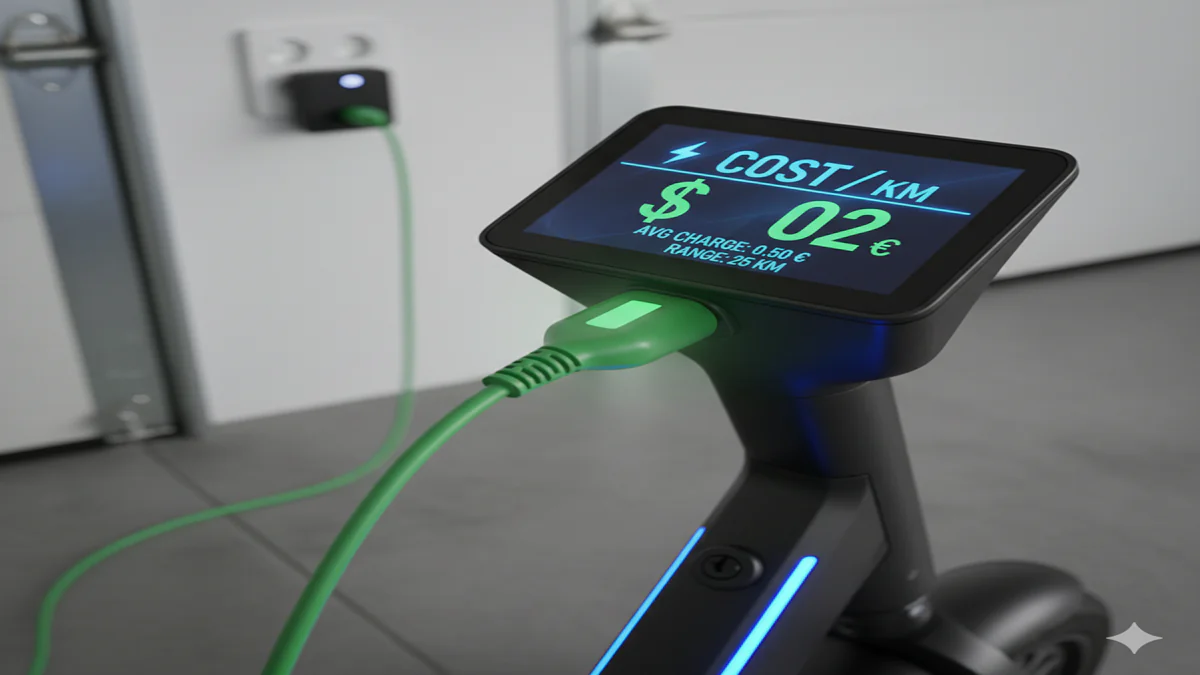
Electric Scooter Charging Cost Per KM: पेट्रोलच्या तुलनेत इलेक्ट्रिक स्कूटर किती स्वस्त पडते? पाहा प्रति किलोमीटर खर्चाचे पूर्ण गणित!
Electric Scooter Charging Cost Per KM: वाढत्या पेट्रोलच्या किमतींमुळे आज सर्वसामान्यांचे बजेट कोलमडले आहे. अशा परिस्थितीत इलेक्ट्रिक स्कूटर (Electric Scooter) हा एक उत्तम पर्याय म्हणून समोर आला आहे. पण अनेकांच्या मनात एक प्रश्न असतो – “इलेक्ट्रिक स्कूटर चार्ज करण्यासाठी किती वीज लागते आणि एका किलोमीटरचा खर्च (Charging Cost Per KM) किती येतो?”
१. इलेक्ट्रिक स्कूटर चार्जिंगचा खर्च कसा मोजायचा?
Electric Scooter Charging Cost Per KM: ई-स्कूटरचा खर्च मोजण्यासाठी आपल्याला दोन गोष्टी माहिती असणे गरजेचे आहे:
- बॅटरीची क्षमता (Battery Capacity): जी ‘kWh’ (Units) मध्ये मोजली जाते.
- विजेचा दर (Electricity Tariff): तुमच्या भागात प्रति युनिट विजेचा दर किती आहे.
उदाहरण: जर तुमच्या स्कूटरची बॅटरी 3 kWh असेल आणि प्रति युनिट दर ₹७ असेल, तर फुल चार्ज करण्यासाठी $3 \times 7 = 21$ रुपये खर्च येईल.
२. प्रति किलोमीटर खर्च (Charging Cost Per KM)
Electric Scooter Charging Cost Per KM: समजा तुमची ई-स्कूटर फुल चार्जवर (३ युनिटमध्ये) १०० किलोमीटर धावते.
तर १ किलोमीटरचा खर्च खालीलप्रमाणे असेल:
$$\text{खर्च} = \frac{\text{एकूण चार्जिंग खर्च}}{\text{एकूण रेंज}} = \frac{21}{100} = \text{₹0.21}$$
म्हणजेच, इलेक्ट्रिक स्कूटर चालवण्याचा खर्च फक्त २० ते ३० पैसे प्रति किलोमीटर येतो.
३. पेट्रोल स्कूटर वि. इलेक्ट्रिक स्कूटर (तुलना)
| वैशिष्ट्य | पेट्रोल स्कूटर (Activa इ.) | इलेक्ट्रिक स्कूटर (Ola/Ather) |
| इंधन दर | ₹१०५ – ₹११० (प्रति लिटर) | ₹७ – ₹१० (प्रति युनिट) |
| मायलेज/रेंज | ४५ – ५० किमी/लिटर | १०० – १५० किमी/चार्ज |
| १ किमी खर्च | ₹२.२० ते ₹२.५० | ₹०.२० ते ₹०.३० |
| महिन्याचा खर्च (५०० किमी) | ₹१,२०० – ₹१,३०० | ₹१०० – ₹१५० |
४. चार्जिंग खर्च ठरवणारे घटक
- बॅटरी क्षमता: मोठ्या बॅटरीला जास्त युनिट्स लागतात, पण ती रेंजही जास्त देते.
- चार्जिंगची जागा: घरगुती वीज स्वस्त असते, मात्र कमर्शियल चार्जिंग स्टेशनवर दर जास्त असू शकतात.
- रायडिंग मोड: जर तुम्ही ‘Sports Mode’ मध्ये गाडी चालवली, तर बॅटरी लवकर संपते आणि प्रति किलोमीटर खर्च थोडा वाढतो.
- हवामान: अति थंडी किंवा उष्णतेमध्ये बॅटरीच्या परफॉर्मन्सवर परिणाम होतो.
५. तुमची वार्षिक बचत किती होईल?
Electric Scooter Charging Cost Per KM: जर तुम्ही दिवसाला ३० किमी प्रवास करत असाल, तर वर्षाला तुम्ही साधारण १०,००० किमी प्रवास करता.
- पेट्रोल गाडीचा खर्च: साधारण ₹२५,००० प्रति वर्ष.
- इलेक्ट्रिक गाडीचा खर्च: साधारण ₹२,५०० प्रति वर्ष.
- एकूण बचत: ₹२२,५०० प्रति वर्ष!
याचा अर्थ असा की, ५-६ वर्षात तुम्ही वाचवलेल्या पैशातून नवीन इलेक्ट्रिक स्कूटर खरेदी करू शकता.
निष्कर्ष (Conclusion)
Electric Scooter Charging Cost Per KM हा पेट्रोलच्या तुलनेत नगण्य आहे. जरी ई-स्कूटरची खरेदी किंमत सुरुवातीला जास्त वाटत असली, तरी दीर्घकाळात ही तुमची मोठी आर्थिक बचत करते. पर्यावरणाचे रक्षण आणि पैशांची बचत या दोन्ही दृष्टीने इलेक्ट्रिक स्कूटर हा २०२६ मधील सर्वोत्तम निर्णय आहे.
Electric Scooter Charging Cost Per KM As electric scooters continue to rise in popularity as a convenient and eco-friendly mode of transportation, understanding the financial implications of their use becomes increasingly important for riders and potential buyers alike. One essential aspect that often goes overlooked is the cost associated with charging these electric vehicles per kilometer traveled.
Electric Scooter Charging Cost Per KM: This article delves into the various factors that influence charging costs, provides a detailed breakdown of calculations, and offers insights on how these expenses compare to other forms of transport. By gaining a clearer understanding of electric scooter charging costs, users can make more informed decisions and optimize their riding experience while minimizing their expenses.
Electric Scooter Charging Cost Per KM
Understanding Electric Scooter Charging Costs
Overview of Electric Scooter Technology
Electric Scooter Charging Cost Per KM: Electric scooters have become the cool and eco-friendly way to zip around town, and they run on battery power—usually lithium-ion, which sounds fancy but basically means you can’t charge it with a potato. These scooters convert electrical energy into motion, making them not just green but efficient. Understanding how they work can shed light on what affects charging costs: the type of battery, the scooter’s design, and its overall performance.
Importance of Charging Cost Awareness
Electric Scooter Charging Cost Per KM: Knowing how much it costs to charge your electric scooter is kind of like knowing the price of coffee in your favorite café—it can save you from unexpected budget blows. Charging costs can impact your overall expenses, especially if you’re riding your scooter daily. Being aware of these costs helps you make smarter choices about when and how much to charge, ensuring you’re less of a “charging zombie” who drains the battery at the most inconvenient times!
Factors Influencing Charging Costs
Battery Capacity and Efficiency
Electric Scooter Charging Cost Per KM: The heart of your electric scooter is its battery, and just like how you can’t run on a flimsy breakfast, neither can your scooter! A larger battery capacity generally means more range but also more charging costs. Efficiency, however, is like that friend who finishes their food—you want a battery that makes the most out of every watt. A scooter that uses energy wisely will cost less per kilometer.
Charging Infrastructure and Availability
Electric Scooter Charging Cost Per KM: Finding a charging station can be as elusive as finding a decent parking spot in the city. The availability and type of charging infrastructure can greatly affect your charging costs. Some places offer free charging (thank you, kind-hearted cafe owners!), while others might charge you up to your eyeballs. If you’re frequently charging at public stations, consider scouting out those with better rates or, dare we say, even better coffee options!
Geographical Variability in Electricity Prices
Electric Scooter Charging Cost Per KM: Electricity prices aren’t the same everywhere. They can fluctuate like a teenager’s mood swings, depending on where you live. Urban areas might have higher rates compared to rural spots, and utility companies often have different pricing structures. So, if you’re on the move, it’s worth checking local electricity costs to avoid feeling shocked (pun intended) when it’s time to pay the bill.
Average Cost of Electricity per Kilowatt-hour
Current Trends in Electricity Pricing
Electric Scooter Charging Cost Per KM: Electricity pricing trends are about as stable as a tightrope walker during a strong wind. As of now, average costs can range significantly based on several factors including location, time of use, and prevailing market conditions. Keeping up with these trends can help you predict your charging expenses and adjust your habits accordingly—because who wants a billing surprise during “Electric Scooter Awareness Month?”
Comparison of Residential vs. Public Charging Rates
Electric Scooter Charging Cost Per KM: Think of it as the difference between cooking a meal at home versus dining out. While home rates can be a steal, public stations might have varying costs, sometimes leading to an unexpected splurge. It can help to do a little comparison research to see if the convenience of a public charger is worth the extra dollars or if you should just wait until you get home to power up.
Calculating Cost per Kilometer for Electric Scooters
Step-by-Step Cost Calculation Method
Electric Scooter Charging Cost Per KM: Calculating your electric scooter’s cost per kilometer is easier than it sounds. Start by determining your battery’s capacity (in kWh) and your average electricity cost (per kWh). Next, find out how many kilometers you can travel on a full charge. The formula is: (Cost per kWh × Battery Capacity) ÷ Total Range. Voilà, you’ve just made math your new best friend!
Real-World Examples of Cost Analysis
Electric Scooter Charging Cost Per KM: Let’s break it down with some relatable examples. Suppose you’ve got a scooter with a 1.5 kWh battery and electricity costs $0.15 per kWh. That would mean charging your scooter costs $0.225 to fully charge it. If you can travel 40 km on a full charge, your cost per kilometer would be around $0.0056—practically pennies! Of course, real-world conditions might throw a wrench into your calculations, like dodging that pesky rain or a hill that feels like Mount Everest. Keep it flexible and enjoy the ride!
Comparing Charging Costs with Other Modes of Transport
Cost Comparison with Electric Cars
Electric Scooter Charging Cost Per KM: When you think of electric vehicles, the dollar signs can start to flash faster than a neon sign in Vegas. However, when you break it down, charging an electric scooter is often a much lighter affair. On average, charging an electric car can run about $5-$15 for a full charge, depending on battery size and local energy rates. In contrast, charging electric scooters typically costs just a couple of bucks, making them the tiny, fuel-efficient David to the electric car’s Goliath. Scooters are great for short trips—so you’ll hardly break the bank as you zip around town.
Cost Comparison with Traditional Gasoline Vehicles
Electric Scooter Charging Cost Per KM: Now, if we zoom out and look at traditional gasoline vehicles, the comparison is even more staggering. The average cost of gas sits somewhere between $3 and $4 per gallon (and let’s be honest, we don’t need to see those digits again). The fuel economy for gas vehicles varies, but on average, you might get about 25 miles per gallon. So, if you’re covering a mile, it could cost around $0.12 to $0.16. In contrast, an electric scooter might cost you as little as $0.01 to $0.03 per km to charge. Spoiler alert: scooters win, and your wallet will thank you.
Tips for Reducing Charging Costs
Optimal Charging Times
Electric Scooter Charging Cost Per KM: Timing can be everything—even in the electric world! Avoid charging during peak hours when energy prices can skyrocket faster than a toddler on a sugar rush. Instead, consider charging overnight or during off-peak hours when rates are lower. Many energy companies offer special rates just for the night owls, so your electric scooter can wake up to a full charge without waking up your wallet!
Utilizing Renewable Energy Sources
Electric Scooter Charging Cost Per KM: If you’re really looking to cut down costs and do your part for Mother Earth, consider harnessing renewable energy. Solar panels can be a smart investment if you live in a sunny region. You’ll be charging your scooter with energy generated right from your roof—free energy, anyone? Plus, you can confidently glide around knowing your ride is powered by the sun!
Maintenance Tips for Battery Longevity
Electric Scooter Charging Cost Per KM: A happy battery means lower charging costs! To keep your electric scooter running like a champ, make sure to keep it clean and store it in a moderate temperature—no sauna for your ride! Regular maintenance checks, like ensuring connections are tight and the battery isn’t overcharged, can go a long way in extending battery life. After all, a healthy battery is a cost-saving battery.
The Environmental Impact of Electric Scooter Charging
Carbon Footprint of Electric Scooter Use
Electric Scooter Charging Cost Per KM: The emissions associated with charging are generally lower for scooters, especially if you’re using renewable energy. So as you zip around town, you’re not just saving on charging costs, you’re also giving Mother Earth a well-deserved hug!
Benefits of Electric Mobility for Urban Areas
Electric Scooter Charging Cost Per KM: Urban areas face unique challenges—traffic jams, pollution, and lack of parking. Enter electric scooters: the urban superhero we didn’t know we needed. By opting for two wheels over four, we can reduce congestion and pollution, making cities more livable. And let’s be honest: no one wants to be stuck in traffic. Scooters are the ultimate space savers, letting you glide past gridlock while everyone else is fuming in their cars.
Future Trends in Electric Scooter Charging Technologies
Advancements in Fast-Charging Solutions
Get ready, because the future of charging is looking speedy! Manufacturers are racing against the clock to develop fast-charging solutions, meaning you can juice up your scooter in a fraction of the time it currently takes. Imagine grabbing a coffee and your scooter being charged before you finish that last latte sip. Talk about efficient!
Emerging Battery Technologies
The world of batteries is buzzing with innovation. Say goodbye to bulky and heavy batteries and hello to lighter, longer-lasting options, like solid-state batteries or even those cool graphene-based ones. These advancements promise not only to enhance the riding range but also to cut down on charging time and costs. Your future scooter may just be a science fiction dream come true!
Impact of Smart Grids on Charging Costs
Smart grids are the tech-savvy cousins of the regular electric grid, optimizing energy distribution and making charging even more cost-effective. With real-time data, smart grids can adjust energy prices based on demand and usage. Prepare for a world where your wallet can breathe easy while you zip through the streets!
In conclusion, understanding the charging costs of electric scooters is crucial for maximizing the benefits of this modern mode of transportation. By considering the factors that influence these costs and applying the tips for reducing expenses, riders can enjoy a more economical and environmentally friendly journey. As the technology continues to evolve, staying informed about charging solutions and advancements will empower users to make smart choices that enhance their commuting experience. Embracing electric scooters not only contributes to personal savings but also supports a greener future.
Frequently Asked Questions
How much does it typically cost to charge an electric scooter?
The cost to charge an electric scooter can vary based on electricity rates and the scooter’s battery capacity, but on average, it ranges from 1 to 3 cents per kilometer.
Can I charge my electric scooter at home?
Yes, most electric scooters come with a standard charger that can be plugged into any regular electrical outlet at home, making it convenient for daily charging.
How can I reduce my electric scooter charging costs?
To minimize charging costs, consider charging during off-peak hours when electricity rates are lower, utilizing renewable energy sources, and maintaining your scooter’s battery to ensure efficiency.
Are there public charging stations for electric scooters?
Yes, many cities are increasingly installing public charging stations for electric scooters, making it easier for riders to charge their vehicles while on the go.