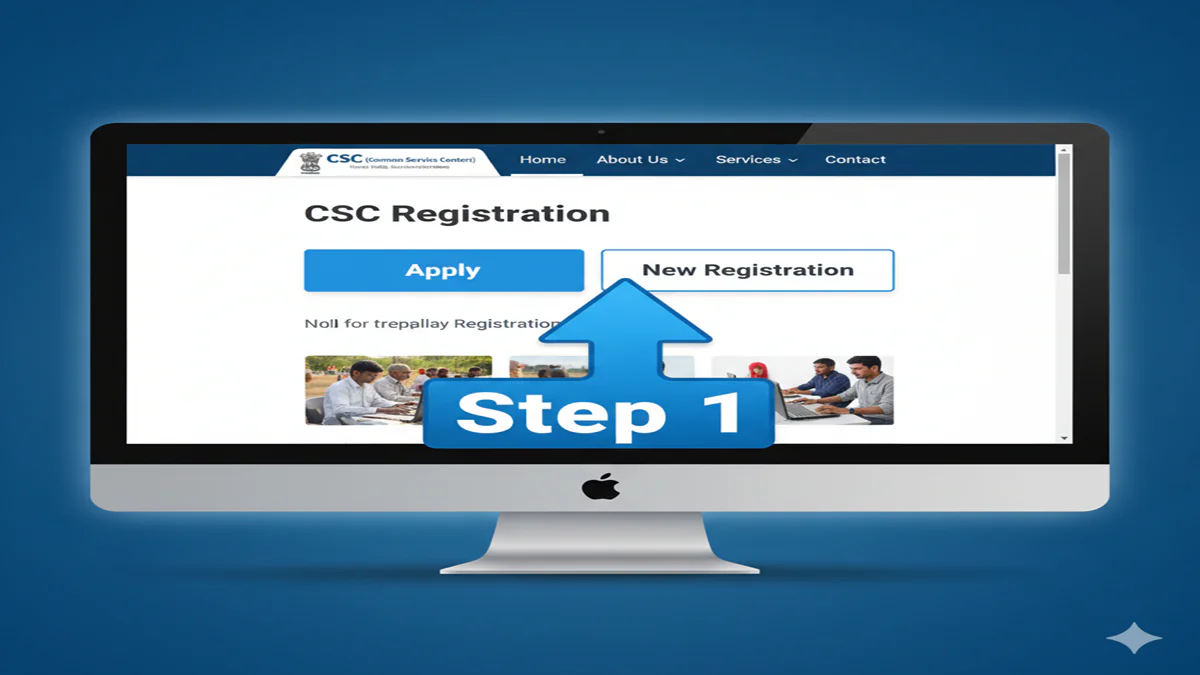
The Ultimate Step-by-Step Guide to CSC Registration for Demat & Trading in India
Csc Registration Step By Step Guide In the digital age of investing, a Demat account is as essential as a bank account. In India, the Central Securities Depository (CSD) Limited, commonly known as CDSL (Central Depository Services (India) Limited) is one of the two national depositories (the other being NSDL). This guide will demystify the process, clarifying thatCSC (Common Service Centre)is a government access point for services, whileCSD/CDSLis the depository. For most investors, “CSC registration” refers to the process ofopening a Demat and Trading account through a broker, which is linked to a depository (CDSL/NSDL).
This 2500-word guide provides a meticulous, step-by-step walkthrough of the entire account opening process, the role of depositories, and how CSCs can facilitate services in rural areas.
Part 1: Understanding the Key Players
Before diving into the steps, it’s crucial to understand the ecosystem:
- Depository Participant (DP):This is your stockbroker (e.g., Zerodha, Angel One, ICICI Securities, HDFC Sec). They are the intermediary registered with a depository to offer Demat and trading services to you.
- Depository (CDSL/NSDL):This is the central holding house where your securities (shares, bonds, ETFs, etc.) are held in electronic form. It maintains the ownership records.
- Common Service Centre (CSC):A government initiative to deliver digital and financial services to rural and remote areas. ACSC VLE (Village Level Entrepreneur)can assist individuals in opening accounts, including Demat accounts, often for a small fee, bridging the digital divide.
- Trading Account:The account through which you place buy/sell orders on stock exchanges.
- Demat Account:The account that holds your purchased securities electronically. It is linked to your trading account.
The Process Flow: You choose a DP (Broker) → Fill their application (Online/Offline/CSC) → The broker opens your Trading + Demat account → The Demat account is linked to a Depository (CDSL/NSDL) → You receive unique Beneficiary Owner ID (BO ID) for your Demat holdings.
Part 2: Step-by-Step Guide to Registration (Online & Offline)
Phase 1: Preparation – Before You Begin
- Choose a Depository Participant (Broker):Research based on brokerage fees (flat fee vs. percentage), platform usability, customer service, and account maintenance charges.
- Documents Required:
- PAN Card:Mandatory for all financial transactions.
- Aadhaar Card:For e-KYC and address proof.
- Address Proof:(If address differs from Aadhaar) Passport, Voter ID, Driving License, Utility Bills (not older than 3 months).
- Income Proof:(For trading in F&O) Salary slips, ITR, Bank Statements.
- Cancelled Cheque / Bank Statement:For bank account details.
- Passport-sized Photographs.
- Bank Account:Ensure you have an active savings bank account. It will be linked to your trading account for funds transfer.
Phase 2: The Registration Process
Method A: Online Registration (Most Common & Fastest)
- Visit Broker’s Website/App:Go to the official website of your chosen DP (e.g.,zerodha.com) and locate “Open an Account.”
- Initiate Application:Enter your basic details: Name, Email, Mobile Number. Verify mobile via OTP.
- E-KYC Process:
- PAN Verification:Enter your PAN details.
- Aadhaar Verification (CKYC):You will be redirected to the UIDAI website.
- This auto-fills your name, date of birth, and address.
- Personal & Financial Details:
- Fill in educational qualification, occupation, annual income, net worth. This is mandatory for SEBI compliance.
- Declare you are not a US/Canadian taxpayer (for FATCA compliance).
- Bank Account Linking:Provide your bank account details. Most brokers use an escrow service for instant validation.
- In-Person Verification (IPV):This is the final step. The broker will initiate a live video call where you must show your PAN card and a copy of the application. Some brokers use a portal where you can upload a short selfie video.
- Digital Signing:You will be prompted to digitally sign the application using an Aadhaar-based OTP.
- Account Activation:Once all steps are verified (usually 24-48 hours), you will receive three crucial pieces of information:
- Trading Account ID.
- Demat Account BO ID(a 16-digit number for CDSL, an 8-digit alphanumeric for NSDL).
- Client Code.You can now log in, set up your trading platform, and transfer funds to start investing.
Method B: Offline Registration (Via Branch or CSC)
This is ideal for individuals uncomfortable with digital processes or with limited internet access.
- Visit a Point of Service:This could be abroker’s physical branch officeor aCommon Service Centre (CSC).
- Obtain Physical Form:Request the account opening form (Demat & Trading combined).
- Fill & Submit with Documents:Fill the form carefully and attach self-attested copies of all required documents (PAN, Aadhaar, etc.).
- Physical Verification:The branch/CSC executive will verify the original documents. At a CSC, the VLE will scan and upload the documents.
- Processing:The forms are couriered to the broker’s back office for processing. The timeline is longer (5-7 working days).
- Receipt of Welcome Kit:Upon approval, a physical welcome kit containing your account details, BO ID, and agreements is mailed to your registered address.
Part 3: Post-Registration Essentials
- Linking Bank Account:While done during application, ensure you can seamlessly transfer funds (via UPI, NEFT, IMPS) from your bank to your trading account.
- Understanding the Platform:Familiarize yourself with the broker’s trading platform (web and mobile). Learn how to place orders (market, limit), view holdings, and access reports.
- Nominations:This is critical.Add a nominee to your Demat account. This can usually be done online by providing the nominee’s details and their consent.
- Trading Password & PIN:Set up secure passwords and transaction PINs. Never share them.
Part 4: The Role of Common Service Centres (CSCs) in Demat Registration
CSCs play a vital role in financial inclusion. A CSC VLE can:
- Act as a facilitator for account opening with partner brokers/banks.
- Assist in filling forms, uploading documents, and completing IPV for those unfamiliar with the technology.
- Charge a nominal fee for this service (as per CSC guidelines).
- Help in servicing requests like address updates or submitting physical documents later.
To open via a CSC: Locate your nearest CSC (find on csc.gov.in), visit with original documents, and the VLE will guide you through their specific partner broker’s process, which is a hybrid of the offline and online methods.
Frequently Asked Questions (FAQ)
1. Is CSC and CDSL the same thing?
No, they are fundamentally different. CSC (Common Service Centre) is a physical government kiosk that provides access to various services, including assistance in opening Demat accounts. CDSL (Central Depository Services Ltd.) is one of the two central depositories in India that holds securities in electronic form. Think of CSC as a service delivery point and CDSL as a digital vault for your shares.
2. I have a Demat account BO ID. How do I know if it’s with CDSL or NSDL?
You can identify the depository from your BO ID:
- CDSL:The Beneficiary Owner ID (BO ID) is a16-digit numericnumber.
- NSDL:The BO ID is an8-digit alphanumericcode, typically starting with ‘IN’ (e.g., IN12345678).
You can also check your account statement or welcome kit from your broker, which clearly states the depository name.
3. Can I have two Demat accounts? Is there a charge?
Yes, you can open multiple Demat accounts with the same or different Depository Participants (brokers). However, each account incurs its own set of charges:
- Account Opening Fees:Some brokers charge it, many offer it free.
- Annual Maintenance Charges (AMC):Typically ranges from ₹0 to ₹750 + GST per year per account. You must pay AMC for each active Demat account you hold.
4. What is the difference between a Trading Account and a Demat Account?
This is the most crucial distinction:
- Trading Account:It’s the“transaction account.”You use it to execute buy and sell orders on the stock exchange. It’s like the trading floor.
- Demat Account:It’s the“storage account.”Once you buy shares, they are delivered and stored here in electronic form. When you sell, shares are debited from here. It’s like your digital locker for securities.
They are linked but serve separate purposes. You cannot trade without a trading account, and you cannot hold shares without a Demat account.
5. I am an NRI. What is the process for me?
The process for NRIs has additional layers:
- Account Type:You must open anNRO (Non-Resident Ordinary)orNRE (Non-Resident External)Demat & Trading account. NRO is for investments from income earned in India, NRE from funds repatriated from abroad.
- Documentation:You need your PAN, overseas address proof, passport, visa, and a copy of the broker’s PIS (Portfolio Investment Scheme) approval letter from the bank.
- Broker Choice:Not all brokers offer services to NRIs. You must choose one that does.
- Repatriation:Funds from sales in an NRO account have certain restrictions, while NRE accounts allow full repatriation. The process is more document-intensive and is best initiated by directly contacting the NRI desk of a major broker.
Conclusion
Registering for a Demat and Trading account in India is a streamlined process designed for the digital era. Whether you choose the fully online route via a broker’s platform or utilize the assisted services of a CSC, the key lies in understanding the roles of the different entities—the Broker (DP), the Depository (CDSL/NSDL), and the service point (CSC). By preparing your documents, choosing a reputable DP, and carefully following the steps, you can unlock the door to the world of equities, mutual funds, and other securities, empowering your financial future. Remember, the journey doesn’t end with registration; continuous learning about markets and disciplined investing is the path to success.