


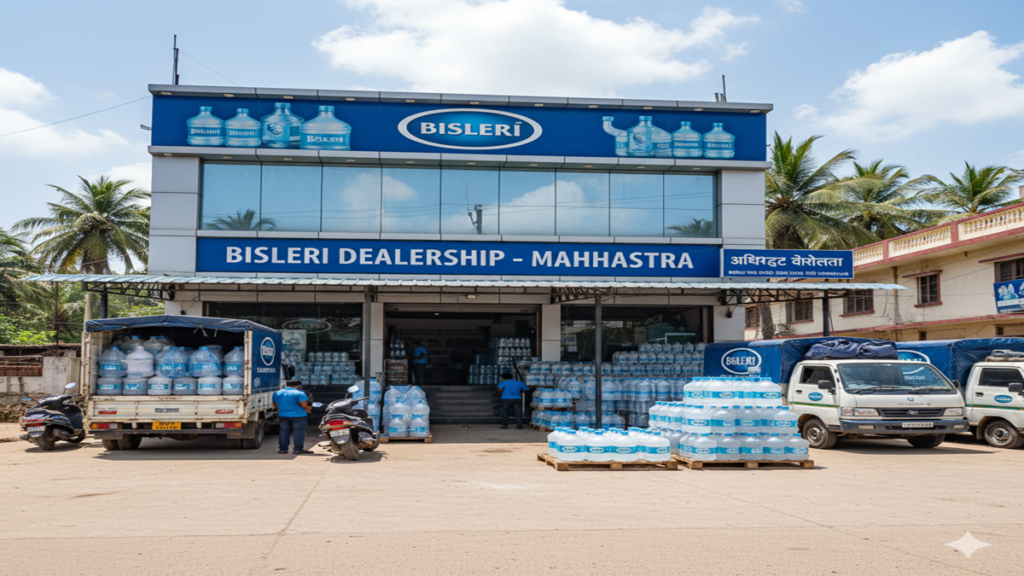
Bisleri Dealership In Maharashtra: महाराष्ट्र में बिसलेरी की डिस्ट्रीब्यूटरशिप कैसे लें? निवेश, पात्रता और आवेदन की पूरी जानकारी!
Bisleri Dealership In Maharashtra: Introduction: शुद्ध पेयजल (Pure Drinking Water) की मांग आज के समय में हर जगह है। भारत में जब भी मिनरल वाटर की बात आती है, तो सबसे पहला नाम ‘बिसलेरी’ (Bisleri) का आता है। महाराष्ट्र जैसे बड़े राज्य में, जहाँ मुंबई, पुणे, नागपुर और नासिक जैसे महानगर हैं, बिसलेरी उत्पादों की मांग बहुत ज्यादा है।
यदि आप महाराष्ट्र में एक स्थिर और लंबे समय तक चलने वाला बिजनेस शुरू करना चाहते हैं, तो Bisleri Dealership In Maharashtra आपके लिए एक शानदार मौका हो सकता है। इस लेख में हम जानेंगे कि आप बिसलेरी की एजेंसी कैसे ले सकते हैं, इसमें कितना निवेश लगेगा और आप कितना मुनाफा कमा सकते हैं।
1. बिसलेरी डीलरशिप के प्रकार (Types of Dealership)
Bisleri Dealership In Maharashtra: बिसलेरी मुख्य रूप से दो तरह के मॉडल पर काम करती है:
- डिस्ट्रीब्यूटर (Distributor): यहाँ आप कंपनी से स्टॉक लेते हैं और अपने क्षेत्र के रिटेलर्स और दुकानों को सप्लाई करते हैं।
- एजेंसी/फ्रेंचाइजी: इसमें आप बड़े स्तर पर काम करते हैं और कभी-कभी कंपनी प्लांट लगाने की भी अनुमति देती है (यह निवेश और जगह पर निर्भर करता है)।
2. आवश्यक जगह और इंफ्रास्ट्रक्चर (Space Requirement)
Bisleri Dealership In Maharashtra: महाराष्ट्र में डीलरशिप शुरू करने के लिए आपके पास पर्याप्त जगह होनी चाहिए:
- गोदाम (Warehouse): स्टॉक रखने के लिए कम से कम 1000 से 1500 स्क्वायर फीट जगह की आवश्यकता होती है।
- वाहन (Vehicle): डिलीवरी के लिए आपके पास कम से कम 1 या 2 छोटे ट्रक (जैसे Tata Ace या Mahindra Jeeto) होने चाहिए।
- लोकेशन: आपका गोदाम ऐसी जगह होना चाहिए जहाँ भारी ट्रक आसानी से आ-जा सकें।
3. निवेश का विवरण (Investment Cost)
Bisleri Dealership In Maharashtra: बिसलेरी की डीलरशिप लेने के लिए आपको निम्नलिखित निवेश करना पड़ सकता है:
- सिक्योरिटी डिपॉजिट: ₹2 लाख से ₹5 लाख (यह क्षेत्र के अनुसार बदल सकता है)।
- वाहन का खर्च: ₹5 लाख से ₹8 लाख (यदि आप नए ट्रक खरीदते हैं)।
- वर्किंग कैपिटल: स्टॉक खरीदने और स्टाफ की सैलरी के लिए ₹2 लाख से ₹3 लाख।
- कुल निवेश: लगभग ₹10 लाख से ₹15 लाख के बीच।
4. आवश्यक दस्तावेज (Documents Required)
आवेदन करने के लिए आपके पास ये कानूनी दस्तावेज होने चाहिए:
- पहचान प्रमाण: आधार कार्ड, पैन कार्ड, वोटर आईडी।
- पता प्रमाण: बिजली का बिल, राशन कार्ड या रेंट एग्रीमेंट।
- बिजनेस दस्तावेज: GST रजिस्ट्रेशन, ट्रेड लाइसेंस (Trade License) और FSSAI लाइसेंस।
- बैंक विवरण: कैंसिल्ड चेक और पिछले 6 महीने का बैंक स्टेटमेंट।
5. आवेदन कैसे करें? (How to Apply Online)
Bisleri Dealership In Maharashtra: महाराष्ट्र में बिसलेरी डीलरशिप के लिए आवेदन करने की प्रक्रिया सरल है:
- आधिकारिक वेबसाइट: सबसे पहले bisleri.com पर जाएं।
- Contact Us: वेबसाइट के नीचे दिए गए ‘Contact Us’ या ‘Partner with us’ लिंक पर क्लिक करें।
- फॉर्म भरें: अपना नाम, मोबाइल नंबर, ईमेल और महाराष्ट्र के उस शहर का नाम भरें जहाँ आप एजेंसी खोलना चाहते हैं।
- कंपनी कॉल: आपके आवेदन की जांच के बाद, कंपनी के सेल्स रिप्रेजेंटेटिव आपसे संपर्क करेंगे और आगे की प्रक्रिया समझाएंगे।
6. प्रॉफिट मार्जिन (Profit Margin)
Bisleri Dealership In Maharashtra: बिसलेरी उत्पादों पर प्रॉफिट मार्जिन उत्पाद के आकार पर निर्भर करता है:
- 20 लीटर जार: इसमें मार्जिन सबसे ज्यादा होता है क्योंकि यह बार-बार रिफिल होता है।
- 500ml/1 लीटर बोतल: इसमें वॉल्यूम ज्यादा होता है, इसलिए टर्नओवर पर अच्छा मुनाफा मिलता है।
- औसतन, एक डिस्ट्रीब्यूटर महीने में ₹50,000 से ₹1,50,000 तक आसानी से कमा सकता है, बशर्ते उसकी सप्लाई चेन मजबूत हो।
4. अक्सर पूछे जाने वाले प्रश्न (FAQs)
Q1: क्या बिसलेरी डीलरशिप के लिए अनुभव जरूरी है?
Ans: नहीं, लेकिन यदि आपको FMCG या डिस्ट्रीब्यूशन सेक्टर का अनुभव है, तो कंपनी आपको प्राथमिकता दे सकती है।
Q2: महाराष्ट्र के छोटे गांवों में डीलरशिप मिल सकती है?
Ans: हाँ, बिसलेरी अब ग्रामीण क्षेत्रों में भी अपनी पहुंच बढ़ा रही है। आप छोटे स्तर पर शुरुआत कर सकते हैं।
Q3: क्या कंपनी मार्केटिंग में मदद करती है?
Ans: हाँ, बिसलेरी ब्रांडिंग, होर्डिंग्स और मार्केटिंग मटेरियल प्रदान करती है जिससे आपकी सेल बढ़ती है।
Conclusion: सफल बिजनेस की शुरुआत
Bisleri Dealership In Maharashtra लेना एक सुरक्षित निवेश है क्योंकि पानी की खपत कभी कम नहीं होने वाली। महाराष्ट्र के बढ़ते शहरीकरण और बढ़ती गर्मी के कारण यह बिजनेस आपको सालों-साल मुनाफा देगा। बस सही लोकेशन और मजबूत डिलीवरी नेटवर्क पर ध्यान दें।
The Ultimate Guide to Securing a Bisleri Dealership in Maharashtra: Your Path to a Profitable Venture
Bisleri Dealership In Maharashtra In the bustling economic landscape of Maharashtra, where opportunity meets demand, a Bisleri dealership stands out as one of the most recognizable and potentially lucrative distribution businesses. For decades, Bisleri has been synonymous with packaged drinking water in India, commanding an unparalleled brand trust that translates directly into steady sales. As health consciousness rises and the need for safe, portable water expands from Mumbai’s corporate towers to the smallest villages in Marathwada, the demand for Bisleri products is pervasive. This article serves as a comprehensive 2000+ word guide to understanding, acquiring, and successfully operating a Bisleri dealership in the state of Maharashtra.
Why a Bisleri Dealership in Maharashtra is a Strategic Opportunity
Bisleri Dealership In Maharashtra: Maharashtra, India’s most industrialized state, presents a unique and fertile ground for a Bisleri dealership. The market dynamics create a perfect storm of favorable conditions:
- Massive Urban & Rural Demand: With a population exceeding 120 million, the sheer scale of consumers is immense. Metropolitan areas like Mumbai, Pune, Nagpur, and Nashik have a high concentration of offices, hotels, restaurants, institutions, and households that rely on packaged water. Concurrently, growing awareness in rural and semi-urban areas is opening new markets.
- Seasonal Consistency: Maharashtra’s climate, with its long, hot summers, ensures a year-round demand for drinking water, with predictable spikes during peak summer months (March-June).
- Infrastructure and Connectivity: The state’s extensive road network and logistic hubs facilitate efficient distribution, a critical factor for a business dealing in heavy, bulky products like water bottles.
- Brand Dominance: “Bisleri” is often used as a generic term for bottled water. This top-of-mind recall reduces marketing costs for dealers and ensures faster inventory turnover compared to newer brands.
Understanding the Bisleri Distribution Model
Bisleri Dealership In Maharashtra: Bisleri operates on a multi-tier distribution system. Understanding where a dealership fits is crucial:
- Bisleri International (Manufacturer) > Regional Distributors > Dealers/Wholesalers > Retailers > End Consumers.
- Your Role as a Dealer: As a dealer (or wholesaler), you act as the critical link between the authorized regional distributor and the vast retail network in your assigned territory. Your primary functions are bulk purchasing, storage, last-mile logistics, sales to retailers (kirana stores, supermarkets, hotels, etc.), and ensuring product availability.
Prerequisites and Eligibility Criteria for Applicants
Bisleri Dealership In Maharashtra: While Bisleri does not publish an official, uniform investment figure, as it varies by territory potential, certain baseline requirements are consistent:
- Financial Investment:
- Initial Capital: A significant investment is required, typically ranging from ₹25 lakhs to ₹75 lakhs or more, depending on the territory’s size and sales potential. This covers:
- Security Deposit: Payable to the company/distributor.
- Working Capital: For initial stock purchase (Primary Sales).
- Infrastructure Cost: Godown/warehouse, vehicles, etc.
- Bank Guarantee: May be required as part of the financial commitment.
- Initial Capital: A significant investment is required, typically ranging from ₹25 lakhs to ₹75 lakhs or more, depending on the territory’s size and sales potential. This covers:
- Infrastructure Requirements:
- Warehousing: A dedicated, clean, and dry godown with a minimum area of 500-1000 sq. ft. (or as specified) is essential. It must be capable of storing hundreds of crates of Bisleri bottles (1L, 2L, 5L, 20L jars) and cases of 250ml/500ml bottles. Proper ventilation and pest control are mandatory.
- Transportation Fleet: A minimum of 2-3 light commercial vehicles (LCVs) like Tata Ace or Bolero Pick-ups is necessary for timely delivery to retailers. The fleet size should match the territory’s delivery needs.
- Office Space: A basic office for managing orders, inventory, and staff.
- Business Acumen & Experience:
- Prior experience in FMCG distribution, logistics, or wholesale is a significant advantage.
- Understanding of local market dynamics, retailer relationships, and competitor activity.
- Strong management and accounting skills to handle operations, staff, and cash flow.
- Legal Formalities:
- GST Registration: Mandatory.
- Trade License: From the local municipal corporation.
- MSME/Udyam Registration: Optional but beneficial for potential future benefits.
Step-by-Step Application Process
Bisleri Dealership In Maharashtra: The process to secure a dealership is competitive and requires a proactive approach.
- Initial Inquiry & Expression of Interest (EOI):
- Visit the official Bisleri International website (www.bisleri.com).
- Navigate to the “Contact Us” or “Careers” section. Look for distributor/dealer-related information.
- Contact the Regional Office: For Maharashtra, reach out to the relevant regional office. Key offices are in Mumbai (Head Office), Pune, Nagpur, Aurangabad, etc. A direct inquiry shows seriousness.
- Submission of Formal Application:
- If an application form is available online, fill it meticulously.
- If not, prepare a detailed Business Proposal Document. This should include:
- Your personal/business profile.
- Proof of financial strength (Bank Statements, ITR).
- Details of proposed infrastructure (Godown photos/lease agreement, vehicle RC).
- Market analysis of the proposed territory.
- Your business plan and vision for the dealership.
- Background Check and Meetings:
- The Bisleri sales/distribution team will conduct a thorough background check on your financial and business credibility.
- Be prepared for multiple in-person meetings with area managers and zonal heads.
- Territory Allocation and Agreement:
- If approved, you will be assigned a specific territory (e.g., a set of PIN codes in a city or a cluster of towns).
- You will enter into a formal Dealer Agreement with the company or its authorized regional distributor. Read this document carefully, noting terms related to sales targets, deposit refunds, territory exclusivity, and code of conduct.
- Initial Stock Order and Launch:
- Make the required security deposit and place your first stock order.
- Set up your godown and logistics as per company guidelines.
- Begin operations by appointing salesmen/drivers and connecting with retailers.
Profitability and Business Model
Bisleri Dealership In Maharashtra: A Bisleri dealership operates on thin margins per unit but leverages high volume.
- Margin Structure: Dealers typically earn a margin ranging from 6% to 12% on the Maximum Retail Price (MRP), depending on the product SKU (e.g., jars may have different margins than bottles) and the agreement with the distributor.
- Key Revenue Drivers:
- Volume Sales: The core of the business. Achieving and exceeding monthly sales targets is critical.
- Secondary Sales Efficiency: Minimizing stock returns and managing expiry dates.
- Territory Coverage: Maximizing the number of active retail outlets in your area.
- Major Cost Heads:
- Rent for godown and office.
- Salary for staff (salesmen, drivers, loaders, accountant).
- Fuel, maintenance, and insurance for vehicles.
- Electricity, communication, and other overheads.
- Cost of capital (interest if loan is taken).
A rough monthly profitability illustration for a mid-sized dealership:
Monthly Sales Volume: 50,000 cases (assorted SKUs)
Average Margin: ₹8 per case
Gross Earnings from Margin: ₹4,00,000
Estimated Monthly Operating Costs: ₹2,50,000 (Salaries, Rent, Fuel, etc.)
Approximate Monthly Net Profit (Before Tax): ₹1,50,000
This is a simplified illustration. Actual figures vary dramatically based on location, scale, and operational efficiency.
Challenges and Mitigation Strategies
- Bisleri Dealership In Maharashtra: Intense Competition: From other branded water (Kinley, Aquafina) and local brands.
- Strategy: Leverage Bisleri’s brand strength. Ensure 100% availability. Offer excellent retailer service (timely delivery, credit management).
- High Operational Costs: Fuel and vehicle maintenance are major expenses.
- Strategy: Optimize delivery routes using software. Maintain vehicles rigorously. Consider CNG vehicles where feasible.
- Working Capital Management: Money is often tied up in stock and retailer credit.
- Strategy: Negotiate favorable credit terms with your distributor. Strictly manage credit to retailers. Use inventory management techniques to avoid overstocking.
- Bisleri Dealership In Maharashtra: Logistical Challenges: Traffic in cities like Mumbai/Pune, remote locations in rural areas.
- Strategy: Plan deliveries during off-peak hours. Use smaller vehicles for congested lanes. Develop a robust sub-distribution network for far-flung areas.
Success Mantras for a Bisleri Dealer in Maharashtra
- Bisleri Dealership In Maharashtra: Build Strong Retailer Relationships: Your retailers are your customers. Reliable service, prompt problem resolution, and occasional incentives build loyalty.
- Focus on the HoReCa Segment: Hotels, Restaurants, and Cafés are high-volume, consistent buyers. Dedicate effort to securing contracts with them.
- Adopt Technology: Use basic ERP or billing software for inventory, accounting, and route planning. Digital payment tracking reduces errors.
- Promote All SKUs: Don’t just focus on 1L bottles. Actively push the 20L jars for homes/offices and 250ml/500ml packs for instant consumption.
- Stay Compliant: Follow all Bisleri guidelines for storage and handling to maintain product quality.
Conclusion
Bisleri Dealership In Maharashtra: Securing and running a Bisleri dealership in Maharashtra is not a get-rich-quick scheme but a solid, reputable business built on effort and smart management. It offers the stability of an essential product category backed by India’s most trusted brand. While the initial hurdles of investment and approval are significant, the potential for long-term, stable income and growth is substantial. For an entrepreneur with grit, capital, and a passion for building a ground-level distribution network, a Bisleri dealership can be a fountainhead of lasting business success in the heart of India’s economic powerhouse.
Frequently Asked Questions (FAQ)
Q1: What is the exact total investment required to start a Bisleri dealership?
Bisleri Dealership In Maharashtra: There is no single fixed amount. The total investment depends heavily on the territory’s size and potential (e.g., a dealership in South Mumbai will require more capital than one in a smaller district). A realistic range is between ₹25 lakhs to ₹75 lakhs. This covers security deposit, working capital for initial stock, warehouse setup, and vehicles. You should have additional liquidity for operational expenses.
Q2: Can I get a Bisleri dealership without prior distribution experience?
Bisleri Dealership In Maharashtra: While possible, it is challenging. Bisleri and its distributors prefer candidates with a proven track record in FMCG, logistics, or wholesale. Experience demonstrates understanding of key aspects like inventory management, retailer relations, and handling a logistics workforce. If you are a newcomer, a strong financial background, a compelling business plan, and partnering with an experienced person can improve your chances.
Q3: How do I find out if a dealership is available in my desired city/town in Maharashtra?
Bisleri Dealership In Maharashtra: The best approach is to contact the Bisleri Regional Office for your zone (Mumbai, Pune, Nagpur, etc.) directly. You can find contact details on the official Bisleri website. Inquire about available territories or if there is a waiting list. Networking with existing distributors or dealers in nearby areas can also provide insights.
Q4: What kind of support does Bisleri provide to its dealers?
Bisleri provides strong brand advertising and consumer pull through national and regional marketing campaigns. Dealers also get support in the form of:
Promotional Materials: Point-of-sale items like posters, danglers, and display racks.
Sales Targets and Incentives: Structured targets with performance-based bonus schemes.
Training: Initial training on product knowledge and systems may be provided by the distributor.
Product Portfolio: Access to the entire range of trusted products.
Q5: What are the biggest operational challenges, and how can I overcome them?
The two biggest challenges are managing logistics costs and ensuring retailer loyalty in a competitive market.
For Logistics: Implement route optimization software, maintain vehicles properly, and consider a mixed fleet (e.g., use smaller vehicles for dense urban lanes). Negotiate fuel discounts with local pumps.
For Competition: Differentiate through exceptional service—reliable delivery times, a helpful sales team, and quick replacement of damaged stock. Building personal relationships with retailers is irreplaceable.