


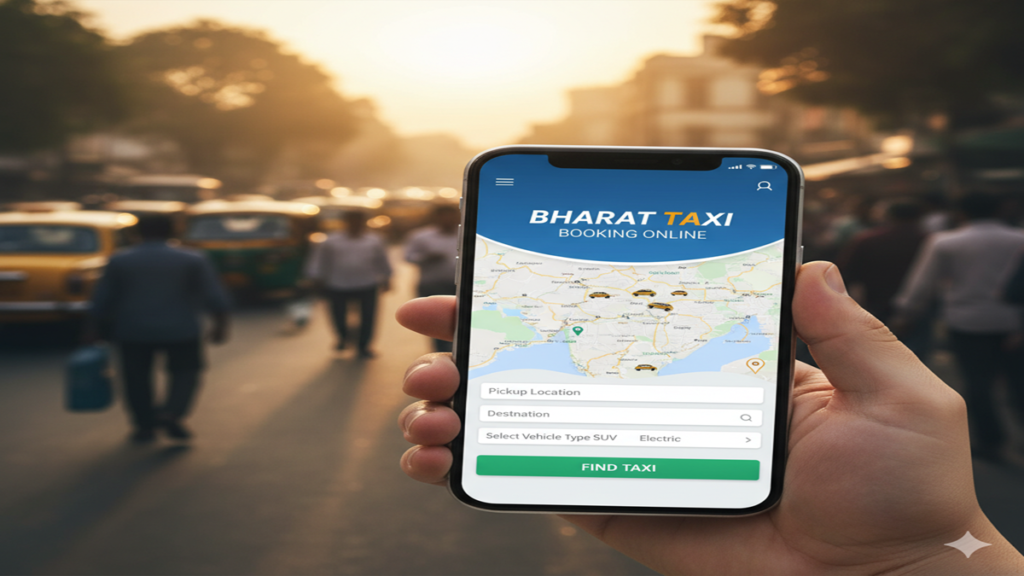
Navigating the Roads of India: Your Ultimate Guide to Bharat Taxi Booking Online
Bharat Taxi Booking Online India’s tapestry is woven with vibrant cities, ancient towns, serene hill stations, and sprawling coastal stretches. To explore this diversity, the humble taxi has long been a trusted companion. But the days of uncertain fares, roadside haggling, and unreliable service are fading into the rearview mirror. The revolution of Bharat Taxi Booking Online has transformed mobility, offering safety, convenience, and choice at your fingertips. This guide delves deep into the ecosystem of online taxi booking in India, helping you navigate your options for a seamless journey.
The Evolution: From Street Hails to App-Based Tails
Not long ago, booking a taxi meant standing on a busy street, waving at passing cabs, or calling a local taxi stand with hope more than assurance. Fares were often non-transparent, and for interstate or long-distance travel, the process was daunting.
The advent of smartphones and digital payment systems catalyzed a change. Companies like Ola, Uber, and later, a host of specialized services, redefined the market. They introduced GPS-based tracking, upfront pricing, digital receipts, and driver verification. Today, “Bharat Taxi Booking” is an umbrella term encompassing not just these global giants, but a plethora of regional and service-specific platforms catering to India’s unique needs.
The Pillars of Online Taxi Booking in India
The success of this model rests on four fundamental pillars:
- Convenience & Accessibility: The core promise. A ride is now just a few taps away on an app or website. You can book instantly for an immediate trip or schedule rides hours or even days in advance for flights, meetings, or events.
- Safety & Security: A paramount concern, especially for solo travelers and women. Features like ride sharing (trip details with loved ones), in-app emergency buttons, 24/7 customer support, driver background checks, and vehicle details provide layers of security previously unavailable.
- Transparency & Cashless Transactions: The end of “meter not working” debates. You see the estimated fare before booking, the route during the trip, and the final amount on your screen. Integrated digital wallets, UPI, and card payments make transactions seamless and recordable.
- Choice & Customization: The market offers a solution for every need and budget—from affordable bike-taxis and shared autos to premium sedans and spacious SUVs for family trips.
The Fleet Spectrum: Choosing Your Ride
Understanding the categories is key to a cost-effective and comfortable journey.
- Economy/Hatchback (Go/Mini/Prime Sedan): The workhorse for daily commutes. Compact, fuel-efficient cars like Swift, i10, or Tata Tiago. Best for 1-3 passengers with minimal luggage.
- Sedan/Prime (Premier): A step up in comfort and space. Cars like Honda City or Hyundai Verna. Ideal for airport drops, business travel, or longer city trips where extra legroom is welcome.
- SUV (XL/Rental): For larger groups (5-7 passengers) or those with substantial luggage. Vehicles like Innova Crysta, Xylo, or Ertis are the default choice for family outings, group travel, or hilly terrain.
- Luxury: For a premium experience. Brands like Mercedes, BMW, or Audi are available in metropolitan cities for special occasions or corporate travel.
- Shared Rides (Pool/Share): A budget and eco-friendly option where you share the cab with co-travellers heading in a similar direction. Perfect for solo commuters.
- Auto-Rickshaws (E-Auto): The iconic three-wheeler, now integrated into apps with fixed fares. Unbeatable for short, congested routes.
- Bike Taxis (Bike): Rapidly growing for ultra-short distances and beating traffic snarls in cities like Bangalore, Gurgaon, and Delhi. Helmets are provided.
- Outstation & Inter-City: A massive segment. You can book a taxi for a one-way drop or a round trip spanning multiple days. Packages often include driver allowances, with the customer covering tolls and state taxes.
Major Players in the Bharat Taxi Booking Arena
While Ola and Uber dominate mindshare, the landscape is rich with specialists.
- Ola: The homegrown leader. Offers the widest range of vehicles, including autos, bikes, and even electric vehicle options in some cities. Strong presence in Tier 2 and 3 cities. Features like Ola Outstation and Ola Rentals are highly popular.
- Uber: Known for its global consistency and user-friendly interface. Strong in metros and Tier 1 cities. Services like Uber Go, Premier, Intercity, and Uber Auto cater to diverse needs.
- Meru Cabs: One of the pioneers, known for reliable airport transfers and corporate travel with a focus on verified drivers.
- savaari.com: A specialist in outstation and inter-city cab bookings. Known for its extensive network across 2000+ cities, transparent pricing, and options for one-way drops without return charges.
- Makemytrip & Yatra: These travel aggregators have integrated cab booking modules, especially useful for bundling with hotel and flight bookings for complete travel packages.
- Regional & Niche Operators: Numerous local operators now have their own apps or robust WhatsApp booking systems, often competing on price and local knowledge.
The Booking Process: A Step-by-Step Walkthrough
The process is largely uniform across platforms:
- Enter Your Destination: Open the app/website. Allow location access or manually input your pickup and drop points.
- Choose Your Ride & See Fare: Select from the available vehicle categories. The app will display a fixed or estimated fare. For outstation trips, you may get a detailed price break-up.
- Schedule or Ride Now: Choose “Ride Now” for an immediate cab or “Schedule” for a future time (highly recommended for early morning airport trips).
- Confirm & Pay: Select your preferred payment method (UPI, wallet, card, cash). You can often apply coupons for discounts.
- Track & Ride: Once a driver is assigned, you can see their location, name, vehicle number, and rating. Track their arrival in real-time.
- During the ride, the in-app navigation guides the driver.
- Payment & Rating: At the end, the final fare is charged to your selected method (unless you chose cash). You rate the driver, and they rate you, maintaining ecosystem quality.
Pro-Tips for a Smoother Ride in India
- Book in Advance for Crucial Trips: Never leave an airport transfer or important interview commute to last-minute availability.
- Verify the Vehicle: Before boarding, always check the license plate, car model, and driver’s photo against app details.
- Use the In-App Navigation: It keeps the route transparent and helps avoid unnecessary detours.
- Leverage Share Ride Details: A non-negotiable safety feature. Always let someone know you’re en route.
- For Outstation Trips: Clarify all inclusions—driver’s food/lodging allowance, state taxes, return tolls. Get a written/email confirmation.
- Cash vs. Digital: While digital is safer, keep some cash for emergencies, especially for tolls on long trips if not included.
- Driver Etiquette: Be polite. A good rapport can make your journey more pleasant. Most drivers are friendly and can offer great local insights.
The Road Ahead: Electric, Sustainable, and Integrated
The future of Bharat Taxi Booking is electrifying and smart.
- Electric Vehicle (EV) Integration: Ola Electric, BluSmart (which operates an all-EV, no-surge fleet), and others are pushing sustainable travel.
- Multimodal Integration: Apps are beginning to combine metro, bus, and cab routes into a single planned journey and payment.
- Voice and Vernacular Support: To deepen penetration, apps are adding voice commands and support for Indian languages.
- Advanced Safety: AI-driven trip anomaly detection, more robust driver verification, and in-cabin audio recording are becoming more prevalent.
Conclusion
Bharat Taxi Booking Online is more than a service; it’s a testament to India’s digital leap. It has democratized transportation, empowered drivers as entrepreneurs, and given travelers unprecedented control and safety. Whether you’re a daily commuter navigating Bangalore’s traffic, a family heading to Shimla for a holiday, or a business professional rushing between meetings in Mumbai, the perfect cab is just a tap away. By understanding the options, using the features wisely, and traveling informed, you can turn every journey into a smooth, efficient, and enjoyable part of your Indian experience.
Frequently Asked Questions (FAQs)
1. What is the most cost-effective option for a daily office commute?
For a single passenger, bike taxis (where available) or shared cab/auto pools are the most budget-friendly. They split the cost and are excellent for beating traffic. For 2-3 people travelling together, a standard Economy/Mini cab often offers the best value for door-to-door convenience.
2. How reliable are online taxi bookings for very early morning trips (e.g., for a 5 AM flight)?
Extremely reliable, but always use the “Schedule” feature. Booking 12-24 hours in advance guarantees a driver is assigned. Reputable apps have dedicated drivers for pre-scheduled trips. It’s also advisable to call the driver the night before for reconfirmation. Avoid booking “on-demand” at 4 AM, as availability can be scarce.
3. For a long outstation trip (e.g., Delhi to Jaipur), what costs should I clarify before booking?
Get clear on the total package fare and what it includes. Key questions to ask:
- Does the price cover all tolls and parking fees?
- Is the driver’s food and accommodation allowance included, or do I pay separately?
- Are any inter-state taxes extra?
- What is the daily kilometre limit (e.g., 250 km/day), and what is the charge per extra kilometre?
Reputable platforms provide this breakdown upfront on their app/website.
4. What should I do if I feel unsafe or have a dispute during the ride?
Your safety is the priority. First, use the “Share Ride Details” feature so someone is tracking you. All major apps have an in-app emergency button that alerts safety response teams and can share location with authorities. For non-emergency disputes (route, fare, behaviour), avoid confrontation. You can note details and report the issue to customer support immediately after the trip via the app. They have the trip record and can take appropriate action.
5. Which is better for travel in small towns and rural areas: Ola/Uber or local operators?
In deep Tier 3 towns and rural areas, local taxi operators often have better network and availability than the national apps. You can find them via a quick web search (“Taxi in [Town Name]”) or through your hotel. However, for pricing transparency, try to get a quote via WhatsApp and insist on a fixed fare. In such areas, cash is still king. For slightly larger towns, Ola often has a presence, but Uber’s coverage may be thinner. It’s best to have both apps installed and check availability.