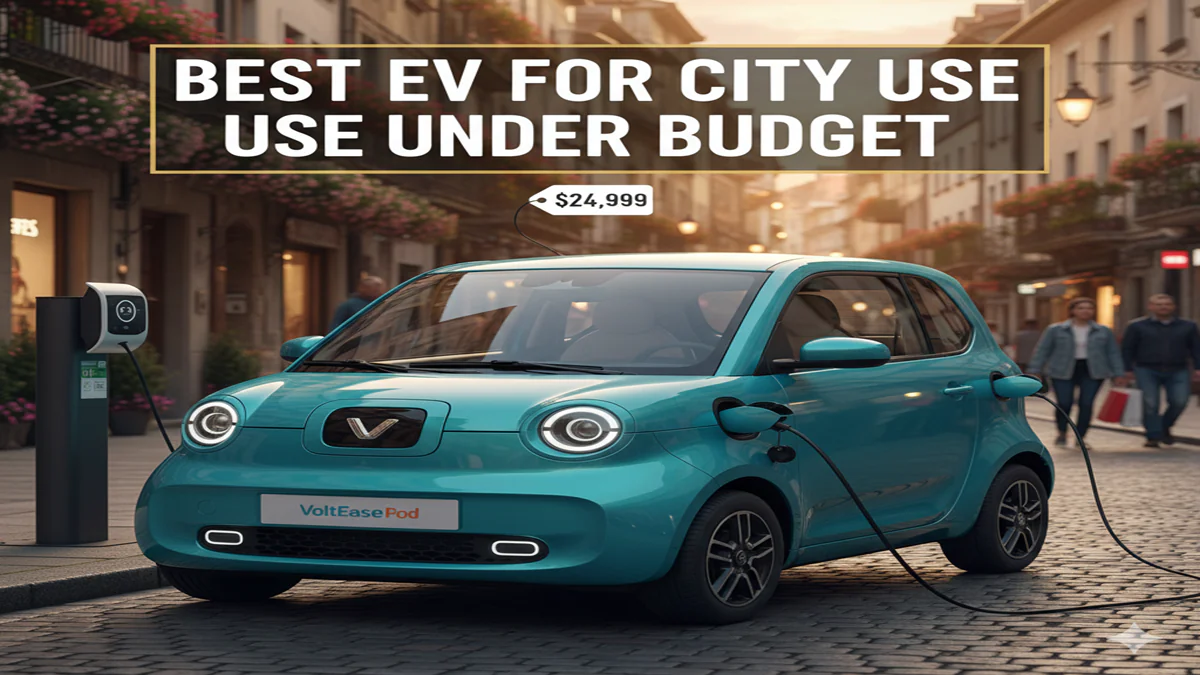
Picture this: you’re stuck in gridlock, fumes from the car ahead choke the air, and your gas gauge drops faster than your patience. Parking spots feel like rare gems, and filling up the tank hits your wallet hard each week. Urban driving drains you, but electric vehicles (EVs) under budget change that game. They cut costs, ease stress, and clean up your daily rides. This guide zeros in on compact, affordable EVs perfect for city streets. We skip the long-haul beasts and spotlight models that fit tight budgets and tighter parking.
Defining the Urban EV Sweet Spot: What to Prioritize Under $30,000
City life demands smart choices in EVs. You want something zippy for short trips, easy to charge, and nimble around corners. Budget caps at $30,000 keep options real for most folks. Focus here on what matters most for daily hustles.
The Crucial Role of Range vs. Daily Commute Needs
Most city drivers cover under 30 miles a day. Data from the U.S. Census shows average commutes hover around 27 miles round-trip. In the UK, it’s even less at about 20 miles. That means you don’t need a 300-mile range beast. A 150-mile option works fine and saves cash on the battery pack.
Think about your routine. Do you zip to work, grab lunch, then head home? Lower-range EVs like these fit that bill. They cost less upfront and recharge quicker overnight. Skip the overkill; match range to your miles.
Charging Infrastructure and Home Charging Feasibility
Not everyone has a garage plug. Many renters rely on standard outlets for Level 1 charging. It adds about 3-5 miles per hour, enough for short urban jaunts. In apartments, this setup shines without fancy installs.
Slower speeds suit city use. You plug in at night and wake up full. Public spots help too, but home options keep it simple. Check your building’s rules early. Feasibility wins over speed here.
Compact Dimensions and Maneuverability
Tight streets call for small footprints. Aim for cars under 170 inches long. That’s shorter than a Honda Civic, making parallel parking a breeze. Turning radius under 35 feet helps dodge bikes and buses.
Take the Fiat 500e: at 143 inches, it slips into spots others can’t. Maneuverability cuts stress in crowded lots. Test drive one; feel how it dances through traffic. Size matters in the urban jungle.
Top Contenders: The Best Budget Electric City Cars of the Year
Now, let’s meet the stars. These EVs stay under $30,000 new or used. They pack punch for city runs without breaking banks. We picked based on 2025 reviews and real-user feedback.
Deep Dive: Subcompact and Micro EV Leaders
The Nissan Leaf S leads with an MSRP around $28,000. It offers 149 miles of range, ideal for loops under 40 miles. Quick acceleration gets you through lights fast. Owners love its quiet cabin for podcasts on the go.
Next, the Chevrolet Bolt EV base model hits $26,500. With 259 miles, it overdelivers for the price. Regenerative braking feels natural in stop-go traffic. Chevy fixed early battery issues; now it’s reliable.
Don’t overlook the Mini Cooper SE at $30,000 even. Its 114-mile range suits short hops. Fun handling makes city drives joyful. These micro EVs prove small size packs big fun.
In Europe and Asia, the Renault Zoe or Smart EQ fortwo shine too. They start under $25,000 imported. Pick based on your market, but test local availability.
The Value Proposition of Used and Certified Pre-Owned (CPO) EVs
Buying used slashes costs. A 2023 Leaf S goes for $18,000, saving $10,000 off new. Two-year-old models show little wear from city miles. Batteries hold 90% capacity if charged right.
CPO programs add peace. Nissan and Chevy offer warranties up to 8 years on batteries. They inspect for urban dings like curb rash. Risk drops; value jumps.
Weigh pros: lower price, same features. Cons: slight battery fade, but city use barely touches it. Hunt deals on sites like Autotrader. Used EVs make green living accessible.
Focus Feature Comparison: Infotainment, Safety, and Practicality
Urban safety starts with eyes on screens. All top picks have backup cameras standard. The Bolt adds pedestrian alerts that beep at jaywalkers. Nissan Leaf’s ProPilot Assist eases lane changes in jams.
Infotainment keeps you connected. Apple’s CarPlay runs smooth in the Mini, streaming maps for detours. Touchscreens respond quick, no fumbling at red lights.
Practicality counts for errands. Leaf’s hatch opens wide for groceries. Bolt’s seats fold flat for bike hauls. Compare cargo: 24 cubic feet beats sedans. These features make daily life smoother.
Tallying the True Cost: Beyond the Sticker Price
Sticker price tells half the story. Factor in perks and savings to see real wins. EVs under budget pay off quick in cities.
Understanding Federal, State, and Local EV Incentives
Uncle Sam offers up to $7,500 federal tax credit for models like the Bolt. States pile on: California rebates $2,000 more. Check fueleconomy.gov for your zip code’s deals.
Local perks vary. New York gives free meters; Seattle waives HOV fees. Stack them to drop effective cost under $20,000. Visit the Department of Energy site to search incentives.
Act now; rules change yearly. In 2025, income limits apply, so verify eligibility. These cuts make budget EVs a no-brainer.
Operational Savings: Fuel, Maintenance, and Insurance Comparisons
Gas cars guzzle $1,500 yearly on fuel for 12,000 miles. EVs cost $400 on electricity. That’s $1,100 saved right there.
Maintenance? EVs skip oil changes, saving $500 a year. Brakes last longer from regen. Insurance dips 10-20% for small EVs like the Leaf, per AAA data.
Over five years, you pocket $10,000 plus. City drivers see biggest gains from low-mile perks. Track your numbers; savings add up fast.
Depreciation and Resale Value in the City EV Segment
EVs depreciate quick with new tech, but city models hold steady. Leafs keep 60% value after three years. Bolt fares better at 65% thanks to range.
Urban use helps: fewer highway miles mean less wear. Avoid flooded markets; pick popular brands. Resale shines if batteries stay strong.
Shop smart. Check Kelley Blue Book for trends. Good picks retain cash when you upgrade.
Optimizing City Charging: Strategy for the Non-Homeowner
No garage? No problem. Smart plans keep your EV juiced without hassle. Focus on easy, cheap options.
Leveraging Public Charging Networks Affordably
Public stations dot cities. Use apps like PlugShare to find Level 2 spots at $0.20 per kWh. That’s cheaper than gas.
DC fast chargers help in a pinch, but save for emergencies. Join Electrify America for $4 monthly unlimited 30-minute sessions. Subscriptions cut costs 30%.
Plan routes ahead. Charge during off-peak for deals. Networks like ChargePoint offer credits for frequent use.
Workplace Charging as a Hidden Perk
Ask HR about plugs. Many offices add them; Google offers free for staff. It tops you up during work hours, free.
If none, suggest it. Companies save on perks tax-free. One firm, a Seattle tech shop, installed for $5,000 and saw happy commuters.
Start small: email your boss with EV growth stats. It builds your case.
Battery Health Maintenance in Stop-and-Go Traffic
City driving stresses packs with quick starts. Keep charge between 20-80% to ease wear. Plug in often for partial fills.
Regen braking recharges on decels, perfect for traffic. Avoid full drains; they shorten life. Experts say 200,000 miles is common for city batteries.
Monitor via apps. Gentle habits keep your EV humming years.
Conclusion: Making the Smart Switch to Electric Urban Mobility
Switching to a budget EV transforms city commutes. You save money, breathe cleaner air, and park easier. Prioritize range under 200 miles, snag incentives, and test drive fits. These steps make urban EV life real.
Key takeaways:
- Match range to your daily miles—under 40? Go basic.
- Stack federal and local rebates to slash costs.
- Hunt used or CPO for max value.
- Plan charging around work and public spots.
Ready to go electric? Test a Leaf or Bolt this weekend. Your wallet and streets will thank you.