


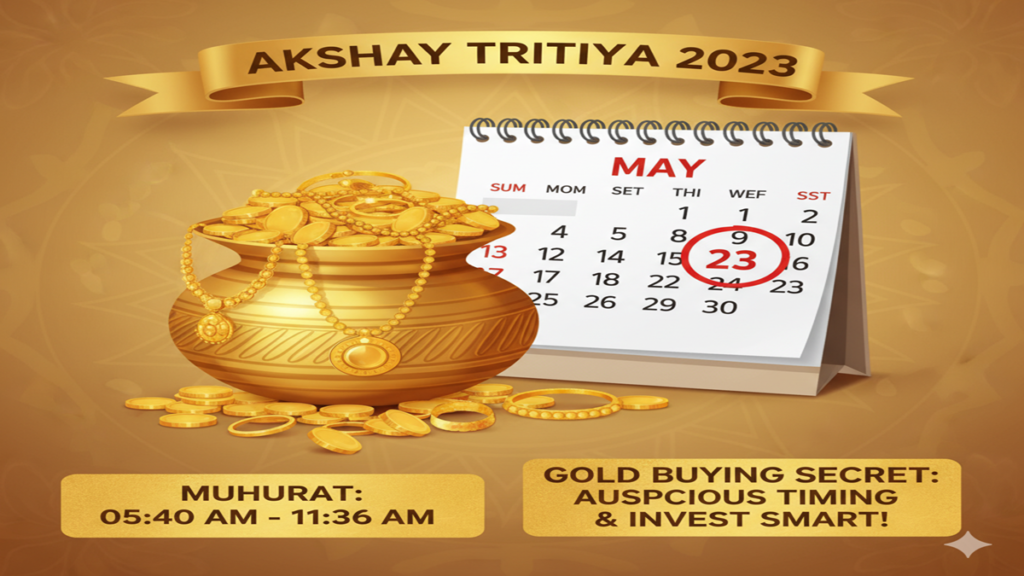
Akshaya Tritiya 2023: The Eternal Day of Auspicious Beginnings and the Secret Behind the Gold Rush
Akshay Tritiya 2023 Akshaya Tritiya, often called Akha Teej, is not just a date on the Hindu calendar; it is a phenomenon. It is a day where faith, culture, astrology, and commerce intersect in a vibrant tapestry of tradition. In 2023, this day carried a special significance, arriving in the midst of a global economic landscape that was both challenging and hopeful. This article delves into the essence of Akshaya Tritiya 2023, its precise astronomical timings, the profound rationale behind the iconic gold purchases, and the deeper spiritual secrets that make this day truly “Akshaya” (imperishable).
Part 1: Akshaya Tritiya 2023 – Date and Muhurat
In 2023, Akshaya Tritiya was celebrated on Saturday, April 22nd.
However, the observance of Hindu festivals is always guided by the tithi (lunar day). The Tritiya Tithi (third day) of the bright half (Shukla Paksha) of the lunar month of Vaishakha began on April 21, 2023, at 07:49 AM and ended on April 22, 2023, at 10:18 AM (IST).
Akshay Tritiya 2023
This created a unique window:
- Purva Muhurat (Early Auspicious Time): The tithi began on the 21st, but the main day of celebration was the 22nd.
- Primary Day: For the majority of India, especially for rituals and gold buying, Saturday, April 22nd, was considered the core day of Akshaya Tritiya.
The Auspicious Muhurat for 2023:
Given the tithi timings, the most potent and widely accepted time for performing puja, daan (charity), and making new purchases was during the Tritiya Tithi on April 22nd, before it ended at 10:18 AM. Many Panchangams (Hindu almanacs) recommended performing rituals during the Brahma Muhurat (roughly 1.5 hours before sunrise) for maximum spiritual benefit.
Why the Muhurat Matters:
The word “muhurat” signifies an auspicious moment when cosmic energies are most favorable. Initiating any venture—be it spiritual, personal, or financial—during this time is believed to imbue it with the “Akshaya” quality, ensuring it grows and never diminishes. Starting outside the tithi is considered to miss the unique spiritual potency of the day.
Part 2: The “Secret” Behind the Gold Buying Tradition
The sight of serpentine queues outside jewellery stores on Akshaya Tritiya is now a cultural staple. But is it mere superstition or savvy marketing? The truth is a blend of spiritual symbolism, astrological belief, and prudent economics.
1. The Spiritual and Mythological Foundation:
- Symbol of Lakshmi: Gold is considered a physical manifestation of Goddess Lakshmi, the deity of wealth and prosperity. Buying gold is an act of inviting her blessings into the home.
- The “Akshaya” Promise: Any asset acquired or deed performed on this day is believed to multiply. Buying gold, an eternal and durable asset, is a symbolic act of creating a foundation of wealth that is meant to grow and last for generations.
- Planetary Alignment: Akshaya Tritiya is one of the few days ruled by a conjunction of supremely auspicious planetary positions. It is believed that the Sun (soul) and Moon (mind) are at their radiant best, creating a window where negative astrological influences are nullified. This makes it a safe day for major financial decisions.
2. The Astrological “Free Pass”:
Unlike most Muhurats, which require individual astrological matching, Akshaya Tritiya is considered universally auspicious. It is Sade Teen Muhurat – one of the three and a half most auspicious days in the Hindu calendar where no individual Choghadiya or Panchang shuddhi (purification) is needed. This “free pass” makes it accessible to everyone, regardless of their personal chart.
3. The Practical and Economic Wisdom:
Beyond spirituality, there is timeless wisdom:
- Hedging and Saving: In agrarian societies, Akshaya Tritiya came after harvests. Buying gold was a prudent way to convert liquid cash into a stable store of value, a practice that continues as a hedge against inflation.
- Initiating Financial Discipline: The act marks the beginning of a savings cycle. A small gold coin or ornament bought each year accumulates into significant family wealth over a lifetime.
- Cultural Capital: Gold is not just money; it is heirloom, security, and social capital, especially in Indian families. Buying it on an auspicious day adds to its sentimental and ritualistic value.
The 2023 Context: In 2023, gold prices were volatile, influenced by global inflation and economic uncertainty. For many buyers, purchasing gold on Akshaya Tritiya was as much an act of faith in tradition as it was a strategic move in asset allocation, trusting in both divine grace and gold’s historical resilience.
Part 3: Beyond Gold – The Holistic Essence of Akshaya Tritiya
To reduce Akshaya Tritiya to just a gold-buying day is to miss its profound spiritual core. It is a day for sowing seeds of all kinds that yield imperishable results.
- Day of Sacred Beginnings: It marks the start of the Treta Yuga, the day Lord Vishnu took his Parashurama avatar, and when the Ganges descended to Earth. It is also the day when Sage Ved Vyasa began dictating the epic Mahabharata to Lord Ganesha. Thus, starting new ventures, education, or creative pursuits is highly favored.
- Day of Charity (Daan): The most potent “Akshaya” act is giving. Donating water, food, clothes, or grains (Anna Daan) is considered superior to all material purchases. The belief is that charity performed today creates an endless reserve of good karma.
- Day of Devotion: Worshipping Lord Vishnu and Goddess Lakshmi with tulsi leaves and lotus flowers, chanting the Vishnu Sahasranama, or fasting are central rituals. The fast is not one of denial but of focus, channeling energy into prayers for eternal prosperity and spiritual growth.
- Day of Personal Growth: It is an ideal time for Deva Puja (worship), Pitra Puja (honoring ancestors), and Griha Pravesh (housewarming). Many also use this day for Akshaya Patra installation—a symbolic pot of everlasting nourishment for the household.
Part 4: Frequently Asked Questions (FAQs)
1. I missed the Tritiya Tithi Muhurat on April 22nd morning. Could I still buy gold later in the day?
While the core tithi ended at 10:18 AM on April 22nd, the day of Akshaya Tritiya is still considered holistically auspicious. Many believe that the benevolent energies of the day persist. However, for strict adherence to tradition, actions performed within the tithi, especially during the morning hours, are deemed most potent. If you missed it, the intent matters most, but purists would advise waiting for another auspicious day.
2. Is it compulsory to buy gold? What if I cannot afford it?
Absolutely not. The essence of Akshaya Tritiya is Akshaya Kritya (imperishable acts), not Akshaya Sona (imperishable gold). Buying a silver coin, planting a tree, donating to a child’s education, purchasing a book for knowledge, or even buying a humble iron utensil for the kitchen are all excellent alternatives. The smallest act of charity or a sincere prayer holds far more spiritual value than a purchase made under financial strain.
3. Why do Jains celebrate Akshaya Tritiya?
For Jains, Akshaya Tritiya holds immense significance as the day when Lord Rishabhdev (Adinath), the first Tirthankara, broke his year-long fast by consuming sugarcane juice offered by King Shreyans. This is celebrated as Varshi Tapa Parana. It symbolizes the end of austerity and the importance of community and offering. For Jains, it is a day of fasting, prayer, and charitable acts, emphasizing non-material wealth.
4. Can I buy other things besides gold?
Yes, and traditionally, many do. This includes:
- Silver: Another precious metal associated with the Moon and prosperity.
- Property or a Vehicle: Considered a Mahadhan (big-ticket investment), initiating the process on this day is popular.
- Utensils (especially steel or iron): Symbolizing a full and nourished home.
- New Clothes or Books: Representing new beginnings in knowledge and personal growth.
5. How is Akshaya Tritiya different from Dhanteras?
While both are associated with wealth, their focus differs. Dhanteras (two days before Diwali) is specifically dedicated to Dhan (wealth) and the worship of Dhanvantari (Ayurveda) and Lakshmi. It is about acquiring wealth for the year ahead and protecting it. Akshaya Tritiya, occurring in the spring/summer, is about Akshaya (eternal, never-diminishing) growth. It’s more about beginnings, sowing seeds (literal and metaphorical), and ensuring perpetual growth and prosperity. Dhanteras is a Lakshmi festival; Akshaya Tritiya is a Muhurat festival.
Conclusion: The Eternal Truth of Akshaya Tritiya
Akshaya Tritiya 2023, on April 22nd, was more than a commercial event. It was a spiritual reminder in a material world. In its essence, the “gold-buying secret” is not about the metal itself, but about the conscious intention to create, grow, and preserve what is truly valuable.
Whether it was the glitter of gold in a showroom, the quiet humility of a devotee offering water to the thirsty, or a farmer sowing seeds in a field, the day unified millions in a shared belief: that some moments are inherently potent, and actions taken with pure intent during these windows carry the promise of eternity.
The ultimate “Akshaya” purchase one can make is that of good karma, wisdom, and compassion. These are the treasures that, once acquired on such an auspicious day, truly never diminish, yielding dividends across lifetimes.